
Why Ireland’s Ad Industry Is Stuck: The Untold Story Behind the Broken Investment Cycle That’s Killing Growth
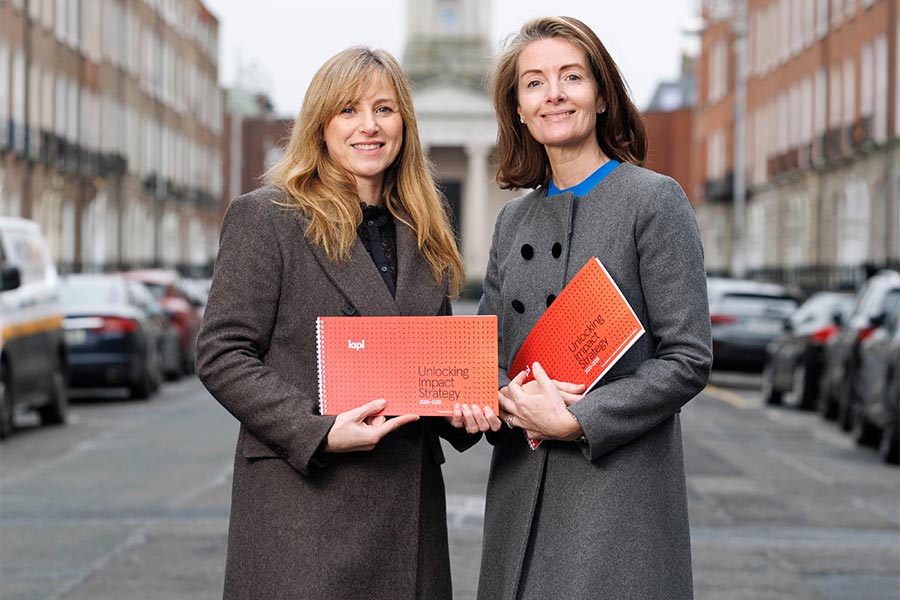
Isn’t it curious how Ireland, with its vibrant culture and booming economy, could be trailing the rest of the EU when it comes to advertising spend as a slice of GDP? You’d think in today’s competitive market, advertising would be treated like gold – yet, according to Siobhán Masterson of the Institute of Advertising Practitioners in Ireland (Iapi), it’s the first budget to get the axe when times tighten. This chronic underinvestment not only leaves the industry gasping for air but also stunts the growth of indigenous businesses that could otherwise thrive with the right marketing muscle. In a world where every euro counts, isn’t it time we flipped the script and recognized advertising as an investment powerhouse capable of sparking economic growth? The Iapi’s latest economic impact report, backed by Jim Power Economics, claims a staggering €6 return for every €1 spent on advertising, hinting at untapped potential if Ireland’s advertising budget even nudged closer to the EU average. So how do we stop playing catch-up and start harnessing this creative engine for Ireland’s future prosperity? Let’s dive into what’s holding us back and what could propel us forward in this crucial sector. LEARN MORE
Ireland lags behind other EU countries in terms of advertising expenditure as a proportion of GDP, and the wider industry is suffering as a result of chronic underinvestment, the head of the Institute of Advertising Practitioners in Ireland (Iapi) has said.
Speaking to BusinessPlus.ie, Siobhán Masterson said that the Irish advertising sector is “highly exposed” to the difficult trading conditions and global uncertainty affecting its clients in key industries such as FMCG, food, alcohol and financial services that tend to regard advertising spend as discretionary rather than essential or value-added.
As a result, in times of economic difficulty when budgets get squeezed, it’s advertising that “gets hit first,” according to Masterson.
Last week, Iapi published an economic impact report in association with Jim Power Economics to demonstrate the advertising industry’s potential to accelerate growth and outline the obstacles blocking its progress.
The report shows that the advertising sector generates €6 in economic value for every €1 invested in advertising.
It states that the market could grow to €3bn if advertising spend as a proportion of GDP rose to the EU average of 0.59% from 0.35% at present.
Masterson says the report tries to “reset the perspective on the value of advertising and communications.”
Such is the value of advertising that it should be the last budget line companies cut in periods of uncertainty, but the Iapi believes the sector needs to “come armed with evidence” to show its value in the face of age-old budget pressures.
Regarding wider underinvestment, Masterson puts it down to Ireland’s immaturity as an economy relative to the sector’s epicentres in London and New York as well as the wider economy’s reliance on foreign direct investment at the expense of indigenous businesses.
Such dependence on multinationals and external investment has “forgiven us from operating a well-functioning business model,” she believes, decrying Ireland’s lack of large homegrown enterprises that have scaled with the help of marketing and advertising.
“That’s not a feature of the Irish business model in any real way. You’ve got pockets of success such as Guinness; obviously, the food and drink [sector] has been very successful scaling internationally, but that is not a shared success story across other sectors and categories,” she continues.
“When you think about where Ireland goes to next from a business model perspective, the agenda is to try and create more reliance on Irish, indigenous success stories for the future, and everybody’s agreed that that’s a sustainable business model.
“Advertising and marketing spend would have a very significant role in achieving that success.”
Many major Irish advertisers are subsidiaries of larger global groups and are therefore constrained from exporting their services internationally by sister companies in other markets, but indigenous advertising firms can trade internationally with greater assistance from Enterprise Ireland.
“Looking at our creative success in other sectors in film and writing, perhaps that thread can also be woven through the commercial creative industry. I think there’s a big opportunity there,” says Masterson.
Some Iapi members are already members of Enterprise Ireland, but Masterson expresses concern at a lack of coordinated effort by government to “put its arms around the creative industry more generally.
“It’s still very fragmented in Ireland. If you look across at the UK in terms of the industrial policy in the UK — and I’m not holding that up as an example of best practice, by any means — but they have actually got one of the eight pillars is the creative industries, and they have really driven that agenda very successfully,” she added
“So we could borrow maybe some of that prioritisation from the UK, and really look at it more broadly. I’m not talking about just advertising communications in that regard, but there’s a whole range of businesses that fall into that commercial creative sector, right, including film.
“But also, you look at all of the other sectors [such as] gaming. Why not have a wrap around those factors and really go for it as a growth area for our economy, because we certainly have a sort of native talent in the space that perhaps we don’t lean into as much as we could.”
Iapi intends to develop a policy position with regard to tax breaks for the commercial creative sector with a possible view to making a submission to government ahead of Budget 2027, but the organisation’s position is not based on tax assistance.
“It’s predicated on a genuine ambition to ensure that the industry contributes to Ireland’s growth and its next chapter in terms of the business model,” says Masterson.
“There’s a genuine view within the industry that we’ve a lot more to contribute to Ireland’s success story.
“The report is about achieving recognition for the contribution … and the potential we have in the industry, but also trying to open some of the engagement channels with stakeholders across government and regulation to begin to recognise the role of commercial creative agencies and what we can deliver.”
Other major challenges facing the sector include technological disruption — although Masterson says advertisers have been at the vanguard of AI adoption – a lack of granular and official data, the high cost of pitching services and a “disproportionate” regulatory burden.
On the lack data, which is important for assessing the true state of the industry, Masterson would like the CSO to get involved and for the government to follow through on its commitment to generate a more coordinated approach to the digital industries through the Creative Ireland Initiative.
The business case has been done for that research, and all the groundwork has been done, but it “hasn’t got off the ground yet,” and Masterson believes that doing so in 2026 would provide the necessary platform to implement other policy objectives.
The pitching systems need reform, although it “cannot be expected of industry” to provide ideas and resources without a cost. Until an alternative system is developed, Masterson said the sector has to ensure it “operated fairly and transparently,” which currently isn’t the case.

She is also critical of “well-intentioned” EU regulations around languages and transparency in advertising, the cost of which to the industry is “probably underappreciated,” Masterson says.
“What I’m suggesting is that as part of the transposition of this legislation, that our industry is engaged [with] really proactively and in great detail.”
Photo: Siobhán Masterson. (Pic: File)

GNMN Active Noise Cancelling Ear Buds Wireless Earbuds 96hrs Playback Bluetooth Headphones Dual Battery Display Stereo Bass Earphones with Earhooks Microphone IPX7 Waterproof for Sports/Runing/Workout
$79.98 (as of October 23, 2026 03:33 GMT +00:00 - More infoProduct prices and availability are accurate as of the date/time indicated and are subject to change. Any price and availability information displayed on [relevant Amazon Site(s), as applicable] at the time of purchase will apply to the purchase of this product.)
Active Noise Cancelling Ear Buds Wireless Bluetooth Headphones 80H Playtime Display Charging Case 50dB ANC Over Ear Hooks Earbuds with Hi-Res Sound & Clear Calls for Sports Running Gym Workout Black
$89.99 (as of October 23, 2026 03:33 GMT +00:00 - More infoProduct prices and availability are accurate as of the date/time indicated and are subject to change. Any price and availability information displayed on [relevant Amazon Site(s), as applicable] at the time of purchase will apply to the purchase of this product.)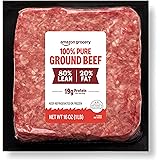
Amazon Grocery, Ground Beef, 80% Lean/20% Fat, 1 lb
(as of October 23, 2026 03:13 GMT +00:00 - More infoProduct prices and availability are accurate as of the date/time indicated and are subject to change. Any price and availability information displayed on [relevant Amazon Site(s), as applicable] at the time of purchase will apply to the purchase of this product.)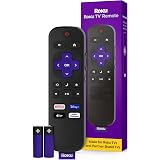
Roku TV Remote Control (Official Manufacturer Product) | Simple Setup & Pre-Set App Shortcuts - Replacement Remote Compatible with RokuTV Models ONLY (Not Roku Players)
$9.99 (as of October 23, 2026 03:23 GMT +00:00 - More infoProduct prices and availability are accurate as of the date/time indicated and are subject to change. Any price and availability information displayed on [relevant Amazon Site(s), as applicable] at the time of purchase will apply to the purchase of this product.)











Post Comment