
Unlock the Secret to the Irish Whiskey That Transforms Every Sip into Pure Gold – Your Tastebuds Will Thank You!
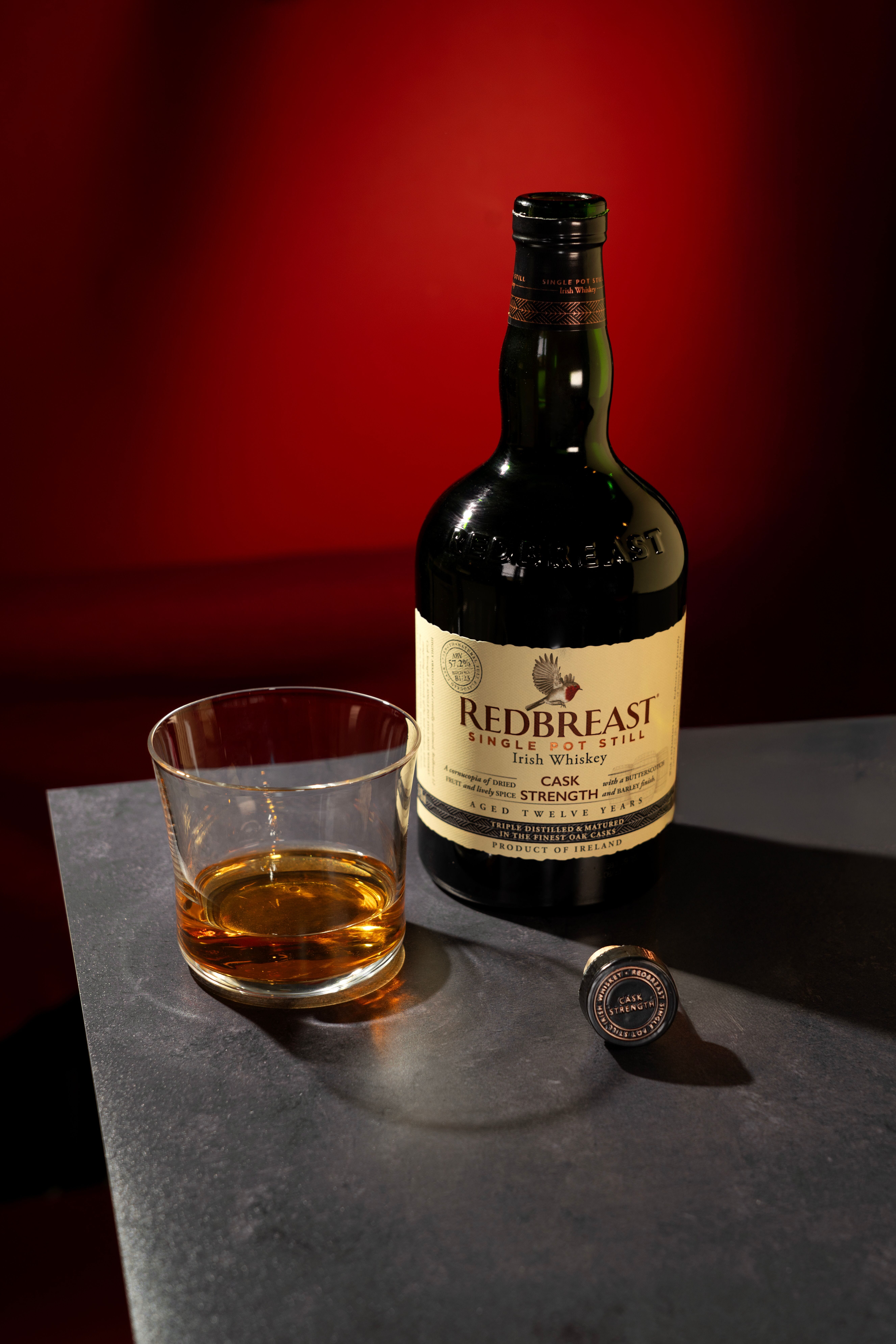
Ever found yourself reaching for that ubiquitous Irish whiskey that’s almost as common as a gym selfie on Instagram? You know the one—everywhere you turn, under $30, and somehow still disappointing that post-toast regret creeps in like an unwelcome craving. But here’s a cheeky question for you: why settle for the norm when you could be savoring something genuinely exceptional? Whiskey, much like your pre-workout ritual, isn’t meant to be just swallowed—it deserves to be celebrated. Enter Redbreast 12 Year Old Cask Strength Irish Whiskey—a bottle that demands a little extra commitment (and cash), but delivers a symphony of flavor that will have your taste buds thanking you. Curious why this $120 splurge might just be the best investment in your evening ritual? Stick with me. LEARN MORE
 4 min read
Close your eyes and think of Irish whiskey. I bet I can guess the brand of which you’re thinking. I won’t say it aloud, but it’s everywhere: bars, liquor stores, sporting events, posters in college dorm rooms, St. Patrick’s Day marketing materials. And the stuff is cheap too, perennially available for under $30 per bottle. But let’s be real. It’s not that good. It’s the kind of liquor you toss back then immediately regret doing so.
Whiskey is not something you should regret. It’s something you should savor. As such, you should feel comfortable spending more dollars for a bottle on a higher shelf. What you drop in cash, you pick up in flavor, in complexity, in sophistication, in, well, pretty much every category by which Irish whiskey is measured. And that bottle is Redbreast 12 Year Old Cask Strength Irish Whiskey.
Quick primer: “Irish whiskey” is a legally protected title. Not just anyone can make brown liquor and call it so. To be considered Irish whiskey, the juice must be made on Irish soil and matured for at least three years. Under that umbrella, there’s the “single pot still” category from which Redbreast hails, which refers to Irish whiskey made exclusively from barley at a single distillery. That stands in opposition to a blended whiskey, which can be made from casks full of different kinds of grain whiskeys produced at multiple distilleries.
Redbreast Cask Strength, specifically, is triple distilled in copper pot stills from a mash bill of 60/40 unmalted to malted barley. Then the spirit is aged in various ex-bourbon barrels and oloroso sherry casks for at least 12 years. “Cask strength” means that the whiskey was siphoned right from the barrel into the bottle. Without dilution from water, the whiskey has a higher proof point and stronger flavor profile.
All that’s to say, this whiskey is tremendously cared for, from still to shelf. Hence, the roughly $120 price point. Now, wait, don’t click away. That’s actually a good deal. Hear me out.
Imagine making a product that won’t stock shelves for at least 12 years. That’s a long time to wait, hoping and praying it sells eventually, right? Redbreast 12 isn’t even the longest-aged whiskey the brand makes, either.
“We need to know how much whiskey we’re making this year so in 30, 31, 32 years’ time, there is enough there to make something like Redbreast 27, which uses whiskeys over 30 years of age in it,” says David McCabe, master blender for parent company Irish Distillers.
Think of it this way: When a barrel is filled, it has much more liquid than when it’s emptied due to evaporation. That’s the “angel’s share” that whiskey folk talk about. Hence why, when making bottom- to mid-shelf whiskeys, distilleries use hundreds of casks per batch, then dilute with water to produce more bottles and make the ABV more palatable to mass-market drinkers. But because cask-strength whiskey is pulled from a smaller range of casks and isn’t diluted, there’s less total liquid to go around.
So yes, $120, but they can’t give it away for free, can they? Anyway, you’re paying for how it tastes. And how it tastes is, in one word, delightful. Upon first whiff, it’s supremely spicy, woody, and fruity. When I sip, it tastes like I dropped a huge dollop of whipped cream on a thick slice of fruit pie after Thanksgiving dinner. The notes stick around for quite a while, too, well after my dram is empty.
Those flavors arise from the casks in which the spirit aged. “Alcohol, by its very nature, is like a solvent,” says McCabe. “It just absorbs everything it’s in contact with.” The ex-bourbon American oak barrels add the spice, while sherry-seasoned oak butts supply the fruit.
Because McCabe and his team make a new batch from their remaining stock every year, ABV varies. But the one I own, at just over 56.2 percent, is a pretty hot whiskey. However, I find that it’s still approachable for those not used to high-proof liquor. If your palate is blown out after one sip, add a drop of water or an ice cube. That should mellow things down, although you’ll miss out on some of the subtler fruity, spicy notes that shine through at full strength. McCabe, however, is all for it.
“It gives you a bit of authority on what way you like to drink Redbreast,” he says. “At the end of the day, we’re making it for you as much as I make it for myself.”
All in all, it’s an Irish whiskey lover’s Irish whiskey. Critics agree—Redbreast 12 Cask Strength has won multiple gold medals at spirts competitions around the world. But anecdotally, it’s the bottle I bought as a gift for my buddy’s 30th birthday. It’s the bottle I brought to another friend’s house to toast to the announcement that he and his wife were expecting. It’s the bottle I reliably pull out during whiskey tastings in my basement, the one of which guests always ask for a second pour. In my opinion, that’s a bottle worth the splurge.
Fair warning: All those toasts and second pours mean it’ll be empty sooner rather than later. Better buy two next time.

JBL Vibe Beam 2 - Noise Cancelling Earbuds - Black | JBL Pure Bass sound, Active Noise Cancelling with Smart Ambient, 4 mics for crisp, clear calls, Water and dust resistant
(as of October 4, 2026 03:18 GMT +00:00 - More infoProduct prices and availability are accurate as of the date/time indicated and are subject to change. Any price and availability information displayed on [relevant Amazon Site(s), as applicable] at the time of purchase will apply to the purchase of this product.)
Propel, Kiwi Strawberry, Zero Calorie Sports Drinking Water with Electrolytes and Vitamins C&E, 16.9 Fl Oz (12 Count)
$9.97 (as of October 4, 2026 03:06 GMT +00:00 - More infoProduct prices and availability are accurate as of the date/time indicated and are subject to change. Any price and availability information displayed on [relevant Amazon Site(s), as applicable] at the time of purchase will apply to the purchase of this product.)
Amazon Fire TV Stick HD (newest model), free & live TV, Alexa Voice Remote, powered by the TV, effortless setup, find shows faster with Alexa+
$15.99 (as of October 4, 2026 03:18 GMT +00:00 - More infoProduct prices and availability are accurate as of the date/time indicated and are subject to change. Any price and availability information displayed on [relevant Amazon Site(s), as applicable] at the time of purchase will apply to the purchase of this product.)
The Farmer's Dog Snap Sticks, Human Grade Dog Treats, Beef & Apple 3oz | Human-Grade Dog Treats for Puppies and Adult Dogs, For All Ages, Sizes and Breeds
$11.99 (as of October 4, 2026 03:14 GMT +00:00 - More infoProduct prices and availability are accurate as of the date/time indicated and are subject to change. Any price and availability information displayed on [relevant Amazon Site(s), as applicable] at the time of purchase will apply to the purchase of this product.)














Post Comment