Could Building Muscle Be the Unexpected Key to Beating Depression—Here’s Why Women Might Benefit Most!
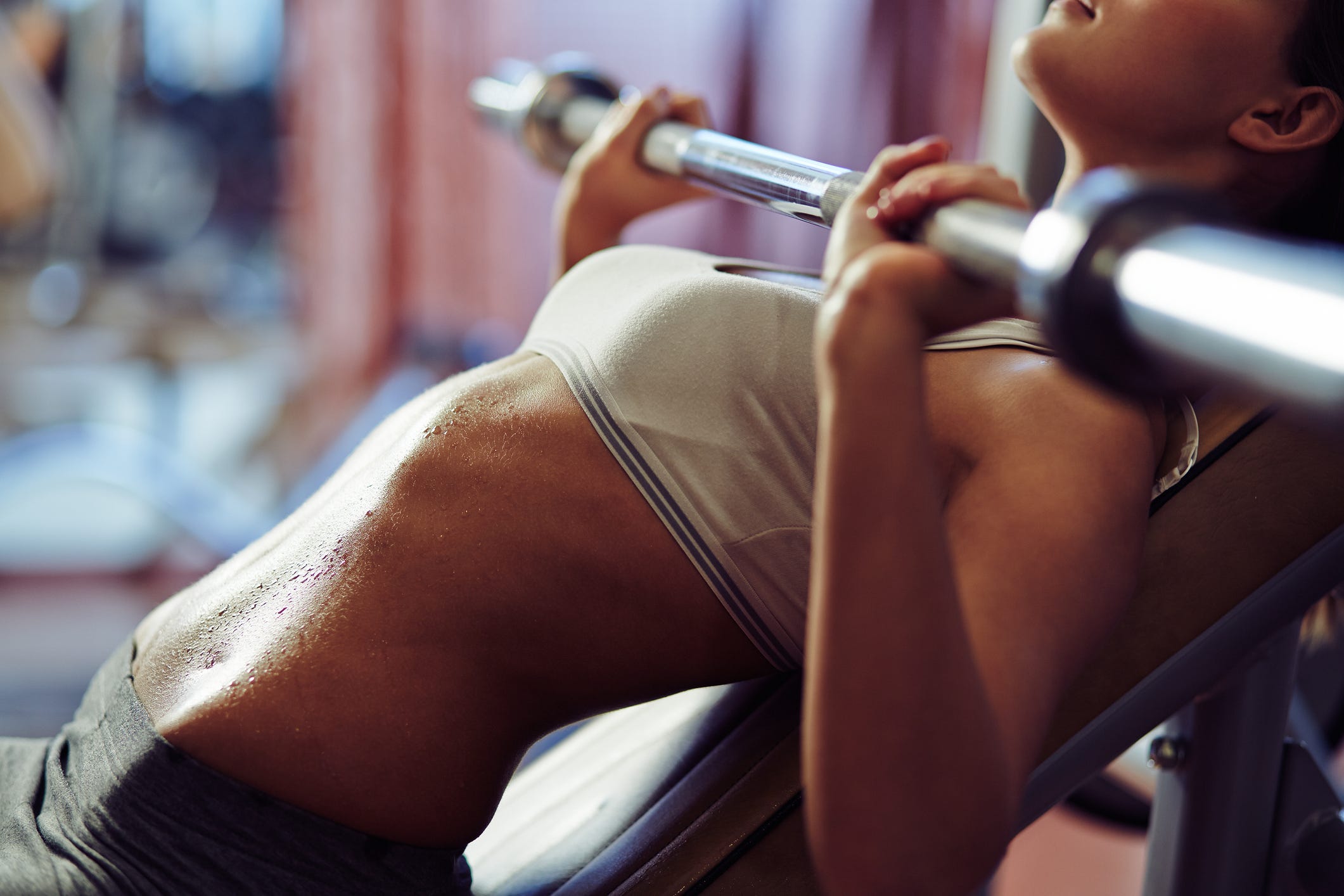
Could lifting weights actually lift your mood, too? It might sound like one of those “too good to be true” gym myths, but recent genetic research suggests there’s more muscle to this story than just physical gains. A fascinating study published in the Journal of Affective Disorders explored how muscle strength compares with cardio fitness when it comes to lowering the risk of depression. Spoiler alert: folks genetically wired for stronger muscles seem to fare better mentally, especially women. Now, before you swap all your cardio sessions for bicep curls, hang on—this study doesn’t tell you to ditch your run for good. Instead, it opens up a fresh perspective on why pumping iron might do more than sculpt your body; it could actually bolster your brain’s resilience against depression. Ready to find out why your next gym session might be the best therapy? LEARN MORE
 4 min read
A new study that looked at genetic predispositions to muscle strength vs. cardiorespiratory fitness found that those predisposed to have stronger muscles had a lower risk of depression.
Researchers found a stronger link for women than for men.
Experts say the takeaway is to focus on lifting and strength training, but emphasize that cardio is still important and offers health benefits.
Here’s yet another reason strength training may be worth prioritizing: It could be linked to better mental health. That’s the major takeaway from new research on the impact of different types of physical fitness on the risk of depression.
The study, which was published in the Journal of Affective Disorders, didn’t find the same association for cardiorespiratory fitness, raising all kinds of questions. Of course, the research isn’t suggesting that you ditch your current treatment for depression or cardio to focus exclusively on strength training. Instead, it can be an adjunct to what you’re already doing.
So, why might building muscle help combat symptoms of depression? Experts break it down.
Meet the experts: Amy Taylor, PhD, study co-author and senior research fellow in the Department of Surgery and Targeted Intervention at University College London; Michael Brustein, PsyD, a clinical psychologist in New York City; and Thea Gallagher, PsyD, clinical associate professor of psychology at NYU Langone Health.
What did the study find?
For the study, researchers analyzed data from more than 341,000 adults between the ages of 37 and 73 who participated in the UK Biobank, a long-term biomedical database.
The researchers then used a technique called Mendelian randomization to use natural genetic differences between people to test for association. “Because these genetic differences are randomly assigned at birth, the method helps overcome common issues in observational studies, such as confounding (where other factors such as education or diet may explain an apparent link) and reverse causality (where it is unclear what the direction of the relationship is)” explains Amy Taylor, PhD, study co-author and senior research fellow in the Department of Surgery and Targeted Intervention at University College London. “Here, we applied this approach to ask whether a genetic tendency towards greater muscle strength and better fitness is linked to mental health outcomes.”
The researchers specifically looked at genetic variants linked to cardiorespiratory fitness and genetic variants tied to grip strength, which was used as a proxy for overall muscle strength. The team also looked at depression based on the participants’ self-reported history and hospital records, along with specific symptoms of depression (measured from a questionnaire), to get a better sense of the participants’ mental health.
After analyzing the data, researchers found a significant association between having a higher grip strength and lower risk of depression. Specifically, for every 0.1 kilogram increase in grip strength per kilogram of body weight, participants were estimated to have a 14 percent lower risk of depression. They did not find a link between having genetic markers for cardiorespiratory fitness and a lower risk of depression or depressive symptoms.
A higher grip strength was also linked with a lower risk of certain depression symptoms, such as reduced ability to experience pleasure and changes in appetite. People with higher grip strength also had a lower risk of depressed mood, extreme fatigue, and trouble concentrating, which are all linked to depression.
There was a stronger link for women than men
Interestingly, Taylor says her team found “clear differences” between women and men in how much muscle strength is linked to certain symptoms of depression.
In women, an increase in grip strength of 0.1 kilograms per kilogram of body weight was linked to a 33 percent lower risk of an inability to find pleasure in activities, a 30 percent lower risk of depressed mood, and a 26 percent lower risk of issues with concentration. “In men, we did not see clear evidence that the same increase in grip strength was linked to these symptoms,” Taylor says.
Why might building muscle help with depression?
Taylor says she was “somewhat surprised” to find little evidence that cardio could impact symptoms of depression in this specific study, given that previous studies linked having better cardiorespiratory fitness with a lower risk of depression.
She says it might reflect other things at play, like people getting more social support when they do cardio, which can protect against depression. Taylor also mentions that reverse causation may play a role, where being depressed makes you less likely to engage in physical activity and cardio.
But it could also be that having muscle strength helps serve as a “biological buffer” against feeling lethargic or not finding pleasure in activities you used to love, says Michael Brustein, PsyD, a clinical psychologist in New York City.
“Cardio is often a game of endurance—the ability to withstand or ‘get through’ the day,” he says. “Strength is about agency—the ability to exert force. For someone struggling with the psychic paralysis of depression, the tactile, immediate feedback of moving a heavy object provides a sense of self-efficacy that a long, slow walk cannot replicate.” Being strong can also help people feel less like they’re coping and more like they’re capable, he says.
What should the takeaway be?
Hold up before you toss your cardio workout plans out the window. “This challenges the long-standing idea that cardiorespiratory fitness is a driver of depression risk,” she says. “It doesn’t contradict the idea that cardio—or all exercise—is good for mental health.”
Cardio still offers plenty of mental health perks, including reducing rumination. And, if you do cardio with other people, like a group fitness class or run club, you can also see mental health perks, Thea Gallagher, PsyD, clinical associate professor of psychology at NYU Langone Health, adds.
Ultimately, the findings make the case for strength training, but not at the expense of cardio. “We shouldn’t abandon cardio, but resistance training should be viewed as non-negotiable mental health hygiene,” Brustein says. “You don’t need to be a bodybuilder—aim for two to three sessions of resistance training per week to maintain the neurological ‘activation’ of strength.”
Gallagher agrees. “Don’t completely get rid of cardio,” she says. “There can be plenty of health benefits. But incorporate lifting into your routine.”
Korin Miller is a freelance writer specializing in general wellness, sexual health and relationships, and lifestyle trends, with work appearing in Men’s Health, Women’s Health, Self, Glamour, and more. She has a master’s degree from American University, lives by the beach, and hopes to own a teacup pig and taco truck one day.
Carina Hsieh, MPH, is the deputy features editor of Women’s Health. She has more than a decade’s worth of experience working in media and has covered everything from beauty, fashion, travel, lifestyle, pets, to health.
She began her career as an intern in the fashion closet at Cosmopolitan where she worked her way up to Senior Sex & Relationships Editor. While covering women’s health there, she discovered her passion for health service journalism and took a break to get her Masters in Public Health. Post-grad school, she worked as a freelance writer and as The Daily Beast’s first Beauty, Health, and Wellness Reporter.
Carina is an alum of the Fashion Institute of Technology and the Yale School of Public Health. She and her French Bulldog, Bao Bao, split their time between Brooklyn and Connecticut. She enjoys reformer Pilates, (slow) running, and smelling the fancy toiletries in boutique fitness class locker rooms.
Sleek Socket Original & Patented Flat Ultra-Thin Outlet Concealer with Extension Cord Kit, Multi Outlets Power Strip, Ideal for Home Improvement, Hide Bulky and Messy Cords, 3ft
$21.95 (as of September 12, 2026 03:24 GMT +00:00 - More infoProduct prices and availability are accurate as of the date/time indicated and are subject to change. Any price and availability information displayed on [relevant Amazon Site(s), as applicable] at the time of purchase will apply to the purchase of this product.)
Unique Style Paws Dog Collar With Metal Buckle - Red Rose Flower Gift for Small, Medium, Large Boys Girls Dogs - Durable and Cute
$8.99 (as of September 12, 2026 03:08 GMT +00:00 - More infoProduct prices and availability are accurate as of the date/time indicated and are subject to change. Any price and availability information displayed on [relevant Amazon Site(s), as applicable] at the time of purchase will apply to the purchase of this product.)
Amazon Kindle Paperwhite 16GB (newest model) – 20% faster, with new 7" glare-free display and weeks of battery life – Black
$199.99 (as of September 12, 2026 03:24 GMT +00:00 - More infoProduct prices and availability are accurate as of the date/time indicated and are subject to change. Any price and availability information displayed on [relevant Amazon Site(s), as applicable] at the time of purchase will apply to the purchase of this product.)
Milk-Bone Flavor Snacks Mini’s Dog Treats, 36 Oz. | 5 calories per treat, 15% protein, 3 flavors per canister (beef, chicken & bacon, naturally & artificially flavored)
$11.48 (as of September 12, 2026 03:03 GMT +00:00 - More infoProduct prices and availability are accurate as of the date/time indicated and are subject to change. Any price and availability information displayed on [relevant Amazon Site(s), as applicable] at the time of purchase will apply to the purchase of this product.)











Post Comment