
How One Bold Restaurant’s Plastic-Free Experiment Could Revolutionize the Way We Dine—and Save Our Planet

Ever wondered if a world without kitchen plastics is just a fanciful pipe dream, or actually within our grasp? Chef Edward Lee, a culinary powerhouse who’s, frankly, done it all—from opening hotspots in NYC to nailing the Triple Crown of chef TV shows—decided to tackle this very question head-on. Spoiler alert: the usual claim that ditching plastics is way too pricey? Turns out, that might just be a myth. Over at his D.C. spot SHIA, Lee crunched the numbers and took on the plastic-free challenge, finding that the cost to make a real eco-impact was surprisingly… minimal. But this story isn’t just about one kitchen’s triumph; it dives deep into the murky waters of microplastics, forever chemicals, and the broader battle to protect our planet’s most vital resource. With insights from ocean experts and eco-activists, it’s clear that saving our water—one tiny decision at a time—may be tougher than plating a perfectly seared steak, but it’s far from impossible. Ready to get inspired and maybe rethink what’s in your kitchen and beyond? LEARN MORE
 4 min read
Chef Edward Lee has done just about everything in the restaurant industry. He’s opened restaurants in Manhattan; Washington, DC; and Louisville. He’s written three books. He’s completed the Triple Crown of chef TV shows, appearing on Iron Chef America, Top Chef, and The Mind of a Chef. So when he asks around among people he knows about a kitchen question, it means something. And in the last couple of years, he’s done a lot of asking around about plastic in the kitchen—specifically, how feasible it would be to get rid of it.
“Everyone says—when I talk to restaurants and other chefs—Well, it’s too expensive. You can’t get rid of all the plastics,” Lee said in a panel appearance at Hearst’s Eco-Conscious Living Summit. But he decided to run the numbers anyway, for a year, as part of operations at his D.C. restaurant SHIA, a fine dining restaurant that’s also a kind of lab for sustainability research.
Last month, SHIA raised raised prices to accommodate the extra expense of going plastic-free. “Our tasting menu has gone up $2. That’s all it took,” Lee said.
Lee was on a panel, moderated by an Esquire editor, focused on water quality. Microplastics are a big problem for water. They’re far from the only problem. But the way most people see the challenge of getting plastic out of a commercial kitchen—as insurmountable—might be a good proxy for how hard it can seem to protect a system as vast as the planet’s waters.
Lee’s fellow panelists offered insight into challenges at every level upstream from the tap, all the way to the ocean. Betsy Froelich of Zip Water, a company that makes plumbing systems, talked about the increasing consumer demand for fixtures that filter out microplastics, but also PFAS, also known as “forever chemicals.” Heather McTeer Toney, the executive director of Beyond Petrochemicals, a campaign aiming to slow or stop the expansion of oil and gas facilities, especially in the South, explained how industry can despoil the water that frontline communities rely on. And Ashlan Cousteau, an ocean restorationist and the CEO of SeaVoir Wellness (and, obviously, a Cousteau), described the challenges facing the planet’s largest bodies of water. “There’s ocean acidification, it’s warming up, we’ve lost over 50 percent of our coral reefs, and 90 percent of fish stocks around the globe are either fished to capacity or they’re overfished,” she said. “So it’s not good.”
But just as Lee found that the roadblocks to building a better kitchen weren’t quite as daunting as the accepted wisdom suggested, there were other eminently doable solutions on offer, too. SeaVoir sells an omega-3 supplement made from lab-grown algae. Producing one of the most popular supplements in the wellness space this way, rather than from fished krill and other sea creatures, limits microplastics and other toxins that could find their way into our bodies, and also discourages a larger, systemic problem: overfishing.
But not every solution lives at the individual level, the level of where you eat out or what supplements you take. It’s crucial that communities think and act together too, Toney said. For communities, water is usually taken for granted until people’s faith in one of three things is violated: affordability, accessibility, or water quality. Once that happens, and people start to notice their water supply is at risk, things get interesting. In Corpus Christi, Texas, a community where Beyond Petrochemicals works, there is currently a drought. That’s led residents to question the cost of their water, and how they stack up in priority compared to local industries. And that’s created an activist base that can fight for policy that protects water for people.
Froelich offered a useful metaphor. Zip Water, she explained, thinks of water quality as a design issue. “We have so many design challenges that are visible,” she said. “You don’t like the layout of a space [in a building]? Ok, knock down a wall, rearrange some things, and you can find a new solution pretty easily.” Water quality is an invisible problem, she said. But, to Toney’s point, once it is recognized, it can be attacked like any other design problem. “We can start to address it and create solutions”—like Zip Water’s MicroPurity filters—“that reduce or eliminate the PFAS and microplastics and everything that we find in our water sources today.”
The importance of being intentional about the things we touch, buy, and consume was not lost on the event’s attendees, who listened while eating a delicious breakfast provided by farmer-owned Organic Valley, in a room tastefully decorated with greenery, atop one of the most thoughtfully designed buildings in New York City. At the close of the panel, each panelist offered one takeaway. Repeatedly, they underscored the fact that while there are no easy ways to guarantee water quality, a bunch of individual and collective decisions add up to a meaningful societal choice, just as drops gather into an ocean. “Don’t get overwhelmed. It’s a process. Give yourself grace,” Cousteau advised. “But: do better.”
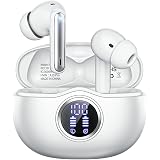
Fhumsh Wireless Earbuds, Bluetooth 5.3 Headphones HiFi Stereo 50H Playback LED Digital Display Ear Buds with ENC Noise Canceling Headset, IPX7 Waterproof Earphones for Gym/Running/Work(White)
$19.99 (as of October 8, 2026 03:28 GMT +00:00 - More infoProduct prices and availability are accurate as of the date/time indicated and are subject to change. Any price and availability information displayed on [relevant Amazon Site(s), as applicable] at the time of purchase will apply to the purchase of this product.)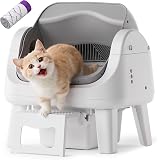
Automatic Litter Box, Self Cleaning Litter Box with Safety Sensors | Three layers of protection—infrared sensing, front-step response, and a half-gear limit—support safer automatic cleaning.
$169.99 (as of October 8, 2026 03:20 GMT +00:00 - More infoProduct prices and availability are accurate as of the date/time indicated and are subject to change. Any price and availability information displayed on [relevant Amazon Site(s), as applicable] at the time of purchase will apply to the purchase of this product.)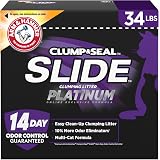
ARM & HAMMER Slide Platinum Easy Clean-Up Clumping Cat Litter, 34 lbs | 24/7 Odor Control, Triple-Action Freshness, Non-Stick, Low Tracking, Multi-Cat Formula, Scented, Online Only
$34.99 (as of October 8, 2026 03:20 GMT +00:00 - More infoProduct prices and availability are accurate as of the date/time indicated and are subject to change. Any price and availability information displayed on [relevant Amazon Site(s), as applicable] at the time of purchase will apply to the purchase of this product.)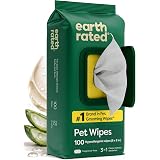
Earth Rated Dog Wipes for Paws & Butt, Deodorizing, Unscented, 100ct | Hypoallergenic, 3-in-1 Cleaning and Hydrating, for Grooming Paws, Body and Butt
$8.49 (as of October 8, 2026 03:10 GMT +00:00 - More infoProduct prices and availability are accurate as of the date/time indicated and are subject to change. Any price and availability information displayed on [relevant Amazon Site(s), as applicable] at the time of purchase will apply to the purchase of this product.)













Post Comment