$294M KelpDAO Hack Exposes Shocking Flaw – Are We Betting Crypto Security on a Single Point of Failure?
Ever wonder how a chain is only as strong as its weakest link? Well, the recent KelpDAO fiasco just put a glaring spotlight on that very notion—except here, the weak link wasn’t in the flashy smart contracts everyone’s buzzing about. Nope, it was hiding quietly beneath the surface, lurking in the infrastructure layer where most wouldn’t think to look. Attackers cleverly sidestepped the usual security barricades by targeting the messaging system that handles cross-chain transfers, exploiting a system that trusted just a single verifier. Imagine putting all your eggs in one basket during a rodeo and then watching it burst wide open—KelpDAO’s single DVN setup served as a one-way ticket to a nearly $294 million loss in rsETH in mere minutes. It’s an eye-opening wake-up call for the entire DeFi ecosystem, suggesting that when we rely too heavily on one source without backups, the fallout can be catastrophic and swift. So, can DeFi really afford to lean on these single-verifier systems any longer, or is it time for redundancy and resilience to take center stage, even if it means paying a little more or slowing down a tad? Let’s dive into what went wrong and what it means for the future of cross-chain security. LEARN MORE
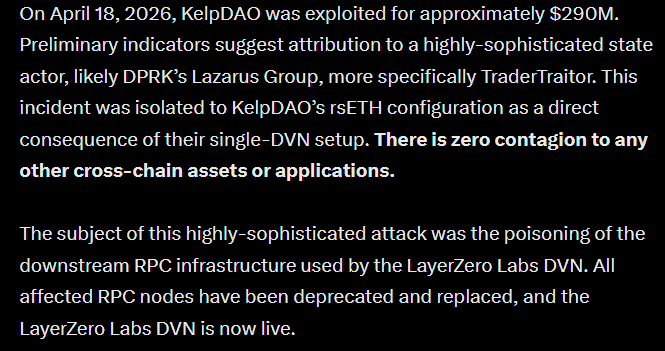
The recent KelpDAO incident began at the infrastructure layer, not within smart contracts, which allowed it to bypass expected security checks. Attackers targeted the messaging system that verifies cross-chain transfers, rather than the contract logic itself.
They overwhelmed valid RPC nodes and introduced malicious ones, forcing the system to rely on manipulated data inputs. According to LayerZero, the attack worked because KelpDAO used a single DVN, which removed any backup verification layer.
Once the system trusted the false message, it released about 116,500 rsETH, worth nearly $294 million, without backing. The process completed within minutes, underscoring how quickly such failures can escalate. This implies cross-chain systems face structural risk, where weak validation design can trigger rapid losses and weaken market confidence.
Infrastructure breach drives failure
The incident on the 18th of April points to a coordinated operation, likely linked to Lazarus Group’s TraderTraitor unit, targeting the system’s data layer. Instead of attacking smart contracts, the group focused on RPC nodes, which supply transaction data to the network.

These nodes feed into the DVN, a verification system that checks if cross-chain transfers are valid. By gaining control of some RPC nodes, the attacker altered the data sent for verification while keeping normal responses for monitoring tools.
As safeguards remained active, they disrupted healthy nodes, which forced the system to rely on compromised data. This allowed false transactions to pass as valid.
This approach shows that even secure systems can fail if their data sources are trusted without enough backup checks.
Can DeFi still rely on single-verifier systems?
The KelpDAO incident has shifted the debate from how the attack happened to whether the system design itself remains viable. The bridge relied on a single verifier, which reduced cost and improved speed, so many protocols adopted similar setups. However, this design assumed one trusted source would always act correctly.
Once that assumption failed, losses escalated quickly to nearly $294 million, showing how fragile that structure was. This outcome highlights that efficiency came at the cost of resilience, especially as more value moves across chains.
Analyst Darkfost reinforces this shift, noting that LayerZero will no longer support unilateral 1/1 DVN setups, signaling a shift away from weak configurations. This implies DeFi may now prioritize redundancy, even if it increases cost and slows execution.
Final Summary
- The KelpDAO breach shows how a single-verifier design enabled a $294 million loss, exposing structural security gaps in cross-chain validation systems.
- The incident pushes DeFi toward multi-verifier security, as reliance on single trust points increases systemic risk and undermines confidence.
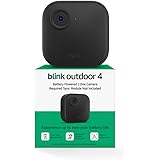
Blink Outdoor 4 – Wireless smart security camera, two-year battery life, two-way talk. Required Sync Module not included – Add-on camera
$69.99 (as of August 24, 2026 03:21 GMT +00:00 - More infoProduct prices and availability are accurate as of the date/time indicated and are subject to change. Any price and availability information displayed on [relevant Amazon Site(s), as applicable] at the time of purchase will apply to the purchase of this product.)
blink plus plan with monthly auto-renewal
$11.99 (as of August 24, 2026 03:02 GMT +00:00 - More infoProduct prices and availability are accurate as of the date/time indicated and are subject to change. Any price and availability information displayed on [relevant Amazon Site(s), as applicable] at the time of purchase will apply to the purchase of this product.)
Miracle Vet Medicated Dog Shampoo for Itchy Skin Relief - Antifungal for Dog Allergy Relief, Yeast Infection, Hot Spot & Dry Skin Anti-Itch Treatment Wash - Hydrocortisone 8 fl oz
$14.99 (as of August 24, 2026 03:02 GMT +00:00 - More infoProduct prices and availability are accurate as of the date/time indicated and are subject to change. Any price and availability information displayed on [relevant Amazon Site(s), as applicable] at the time of purchase will apply to the purchase of this product.)
Samsung 65-Inch Class U8000H Series Crystal UHD, 4K, Smart TV, 2026 Model | Samsung Vision AI Companion, Crystal Processor 4K, Endless Free Content, Motion Xcelerator, Color Booster, 4K Upscaling
$379.99 (as of August 24, 2026 03:09 GMT +00:00 - More infoProduct prices and availability are accurate as of the date/time indicated and are subject to change. Any price and availability information displayed on [relevant Amazon Site(s), as applicable] at the time of purchase will apply to the purchase of this product.)












Post Comment