Why Competitive Fitness Is Taking Over—and How to Crush Your Goals If It’s Totally Not Your Scene

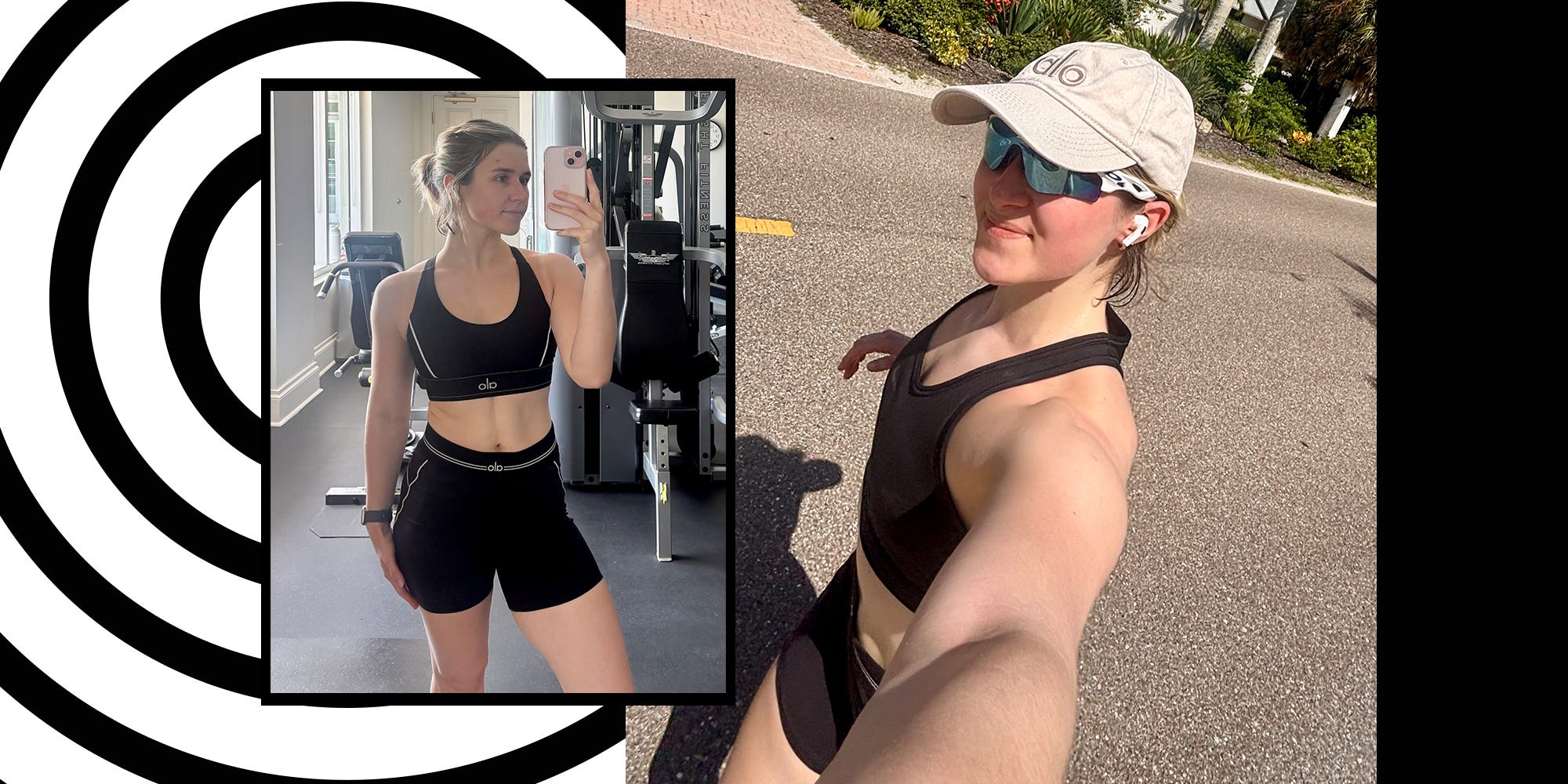
Some people wake up fired up, ready to crush a marathon or dominate a Hyrox race, energized by competition coursing through their veins. Me? Not so much. I watch my friends blast through those feats, and instead of lacing up my running shoes, I’m often left wondering—why doesn’t that adrenaline hit me? Is the drive to be the best something you’re born with, or can those of us less cutthroat find a way to stay motivated? After all, fitness isn’t just about topping a podium—it’s a lifetime grind, and maybe competition isn’t the only fuel in the tank. So, what keeps you moving when racing others just doesn’t do it for you? I dove into the minds of experts to find out how noncompetitive folks can crush their goals without chasing medals or comparing times. Ready to rethink the grind?
LEARN MORE
 7 min read
Some people are naturally competitive. Others, not so much. If you’re anything like me, watching your friends crush a Hyrox or complete a marathon doesn’t exactly inspire you to sign up for the next one.
Don’t get me wrong: Those are incredibly impressive feats, and I’m always proud and supportive of my friends who love doing them. I’m simply not a competitive person.
In the gym, at work, in school—I always wanted to be good at what I do, but I’ve also always been okay with others being better. Of course there are things I want to improve—but I want to get better for my own sake, not for the sake of beating other people. A need to be the best is simply not in my blood, and I’m okay with that.
But as a trainer and fitness enthusiast, I’ve noticed a few things. One: my fittest trainer friends and clients are almost always the most competitive. And two: the fitness landscape has prioritized competition in the last few years. Everyone and their mother is doing a Hyrox, marathon, or Ironman.
And, frankly, it’s felt a little uncomfortable for me at points. Am I at a disadvantage in my own fitness by not having a competitive bone in my body? What can I do to keep up motivation and stay consistent with a movement routine if competition just doesn’t fuel me? I asked the experts.
Being competitive can give you an upper hand in motivation—but only to a point.

There’s an “Achilles heel” to competitiveness, says Kristen Dieffenbach, PhD, director of the Center for Applied Coaching and Sport Sciences at West Virginia University. It can absolutely fuel motivation and give people an intrinsic drive to push and succeed. But the desire for “the top podium spot” can start to overlap in unhealthy ways with perfectionism, she says.
Those problems can show up when competitiveness interferes with your ability to take a rest day, keep up with school or work, or maintain healthy relationships. If you go for a run and don’t hit metrics better than your last run, you might look at that as a failure—when, in reality, that’s just how training works. Any good trainer will tell you that you’re supposed to have days where your body doesn’t perform at its best. It’s part of the recovery process, and is actually a sign you’re making progress.
But if you’re obsessed with beating yourself, you’ll figure out sooner rather than later that progress is never linear. And the same is still true if you’re overly competitive with yourself, Dieffenbach says.
“Even from a [self-competition] perspective, if training is not balanced and effort isn’t expressed at the right times, it can undermine what you’re trying to accomplish,” Dieffenbach says.
There are other sources of motivation that have nothing to do with competitiveness—and they might serve some people better long-term.

There are several types of motivation, or motivation “profiles,” so to speak. Two of the main classifications are intrinsic motivation (engaging in behavior for the inherent satisfaction of completing the task—like running a marathon because you love running), or extrinsic motivation (engaging in behavior for rewards or incentives—like training to get a medal).
While competition typically prompts extrinsic motivation (fueled with medals and congratulations), it’s not the only way to feed your fire. People can be driven through deep, internal motivation—the kind that reminds you, “I feel good about myself when I exercise.” Maybe exercise makes you feel strong or fast. Maybe it calms your mind, helps you disconnect, or makes you feel accomplished. Whatever the reason, the little dopamine hit will make you come back over and over again, Dieffenbach says.
You can also be motivated by the environment or the culture of the space you’re in. “I always think about the beer league hockey players or the senior softball league people. They may be competitive, but they also might just be there because they really enjoy the camaraderie,” Dieffenbach says.
People can also be motivated by the process itself. Take rock climbers, for example. Of course there’s competition, but many climbers simply enjoy the puzzle of the task. They’re more interested in how they’re going to get up the rock than the speed of doing so.
No motivation profile is better than another—but in fitness, you need a motivation source that lasts.
Fitness is a lifelong endeavor. The goal, ultimately, is to stay as functional as possible for as long as possible. So, finding the proper form of motivation means finding motivation that lasts.
“The motivation that will be most impactful in the long run is intrinsic motivation,” Dieffenbach says. “This is the motivation that comes from within, when someone is connected to a sense of joy, satisfaction, feeling competent, pride, or feeling of purpose and/or sense of autonomy.”
And, there are many things to train for that will help breed those feelings. If you’re someone whose motivation has never come from competition, you’re an ex-athlete looking for your next thing, or are just in a motivation rut right now—here are some expert-backed ways to keep your training up.
How to Stay Motivated When Competition Doesn’t Fuel You
Find Fulfilling Experiences
Sometimes, we’re so locked into our traditional gym schedules that we often forget what it’s like to move for the sake of moving. Hitting the gym four or five times a week, crushing the same reps of the same exercises week in and week out, can start to feel limiting. And while those workouts certainly serve a purpose, there are so many ways to work out that aren’t so formulaic (and, sometimes, boring).
“There’s a lot of different types of movement. I find that in the fitness world, we sometimes can get hyper-focused on what’s trendy or what is competition based, that we forget about dance and Zumba and other forms of movement that really aren’t bound by how well you’re doing, but just the experience of doing it,” says Kristen Feemster, LMFT, CPT, therapist and personal trainer, and member of the WH Strength In Diversity Class of 2025.
Your move: Aim to switch up your workout environment at least once a month. Take a different group fitness class, go dancing, take yourself on a long hike, try a new sport—whatever sounds appealing to you. You’ll challenge your body in different ways and, hopefully, enjoy getting to experience all it can do. Finding joy in exercise is what will keep you consistent in the long run, says Aja Campbell, CSCS, strength specialist and nutrition coach based in Queens, NY.
Create Consistency Challenges
Of course, even noncompetitive people enjoy a challenge. It’s invigorating to test your limits—and those limits don’t only have to be measured only by outcome, Feemster says. Focusing on consistency can help you level up without feeling like you need to hit a certain time, pace, or rep threshold.
Find something you want to get better at, and commit to practicing it for a set amount of time. For example, if you want to become a better runner, aim to run a mile every day for a month. If you need to improve your mobility, dedicate 10 minutes a day to stretching. Struggling to hit that first pull-up? Aim to practice them at least three times a week for a month. Energizing challenges can reinvigorate you to stay consistent when things get boring, Feemster says.
Crush your first pull-up with the WH+ Ulimate Pull-up Plan
DIY Your Fitness Feats
You can still sign up for that marathon without stressing about your time or keeping up with those around you. Do it for the experience of it all, if that peaks your interest. There’s nothing wrong with participating in these events just to prove to yourself you can do it. They don’t have to be all or nothing, Feemster says.
You also don’t need to enroll in a fancy race to be able to do something. Want to run a marathon? Pick a date, train, and then do it at your local park. Yes, you can still call yourself a marathon runner without having a medal to put around your neck (and if anyone gives you crap for it, tell them we said so).
There are also fitness feats that aren’t tied to traditional fitness in the way Hyrox and marathons are. Training to climb Mount Kilimanjaro or hiking a portion of the Appalachian Trail are extremely medal-worthy—and can easily be your metaphorical finish line.
Consider Your Current (and Future) Self
Evaluate how you’re feeling and functioning in your day-to-day life. “Think to yourself: ‘Can I move around my life freely and comfortably? Do I have aches and pains and stiffness and limitations that I want to work on? Can I do the things I want to do?’,” Feemster says.
Functionality may not be the flashiest goal, and it won’t get you a medal at the finish line—but you’ll likely be grateful you prioritized it in 40 years. If you want to be playing with your grandkids well into your 80s, the foundation for that starts right now. “While we can’t control all aspects of our health, what we can control is practicing habits that positively contribute to it,” Campbell says.
The best part about working on functionality is you can typically directly translate the thing you want to improve into your workout. Want stairs to leave you less winded? Incorporate weighted step-ups into your leg day. Want to get all the groceries into the house in one go? Practice farmer’s carries. Pick one or two everyday movements you want to get better at, and pick an exercise that mimics the movement pattern. Repeat it weekly, and see how every day starts to feel easier.
As I said, fitness is a lifelong project. Practice movement that feels good and fulfilling to you—and if that doesn’t include competition, that’s okay. Not every workout needs to prove something—training to simply maintain your fitness and health or support your mental well-being is just as valid.
“Building a fitness routine around your likes, lifestyle, and schedule ensures you’re able to better comply,” Campbell says. “Fitness doesn’t have to be miserable or a punishment. It should be enjoyable and a treat to move your body.
Cori Ritchey, C.S.C.S., is the fitness editor at Women’s Health, as well as a certified strength and condition coach and group fitness instructor. She’s reported on topics regarding health, nutrition, mental health, fitness, sex, and relationships for several years. You can find more of her work in Men’s Health, HealthCentral, Livestrong, Self, and others.
Amazon Echo Show 11 (newest model), Vibrant Full-HD 11" display with more viewing area and spatial audio, Designed for Alexa+, Graphite
$249.99 (as of September 13, 2026 03:24 GMT +00:00 - More infoProduct prices and availability are accurate as of the date/time indicated and are subject to change. Any price and availability information displayed on [relevant Amazon Site(s), as applicable] at the time of purchase will apply to the purchase of this product.)
Dog Diapers Male, Small 50Ct, Super Absorbent Doggie Diapers for Male Dogs | Dog Belly Bands for Male Dogs, Breathable And Leak-proof, 11"–16", Doggy Diapers Male Small Dog for Beagles Shih Tzus Male
$14.99 (as of September 13, 2026 03:08 GMT +00:00 - More infoProduct prices and availability are accurate as of the date/time indicated and are subject to change. Any price and availability information displayed on [relevant Amazon Site(s), as applicable] at the time of purchase will apply to the purchase of this product.)
SHOKZ OpenRun Pro 2 Bone Conduction Bluetooth Sport Headphones, Black | Bundle with Reflective Strip;DualPitch premium sound;Open ear awareness; Smart Mic; IP55; 12H battery; Running/Cycling/Hiking
$179.95 (as of September 13, 2026 03:24 GMT +00:00 - More infoProduct prices and availability are accurate as of the date/time indicated and are subject to change. Any price and availability information displayed on [relevant Amazon Site(s), as applicable] at the time of purchase will apply to the purchase of this product.)
Goldfish Cheddar Cheese Crackers, Baked Snack Crackers, 1 oz On-the-Go Snack Packs, 20 Count Box
$8.76 (as of September 13, 2026 03:03 GMT +00:00 - More infoProduct prices and availability are accurate as of the date/time indicated and are subject to change. Any price and availability information displayed on [relevant Amazon Site(s), as applicable] at the time of purchase will apply to the purchase of this product.)










Post Comment