
Why the Tech World’s “Immortality Plan” Is More About Status—And Billion-Dollar Boredom—Than Real Life Extension
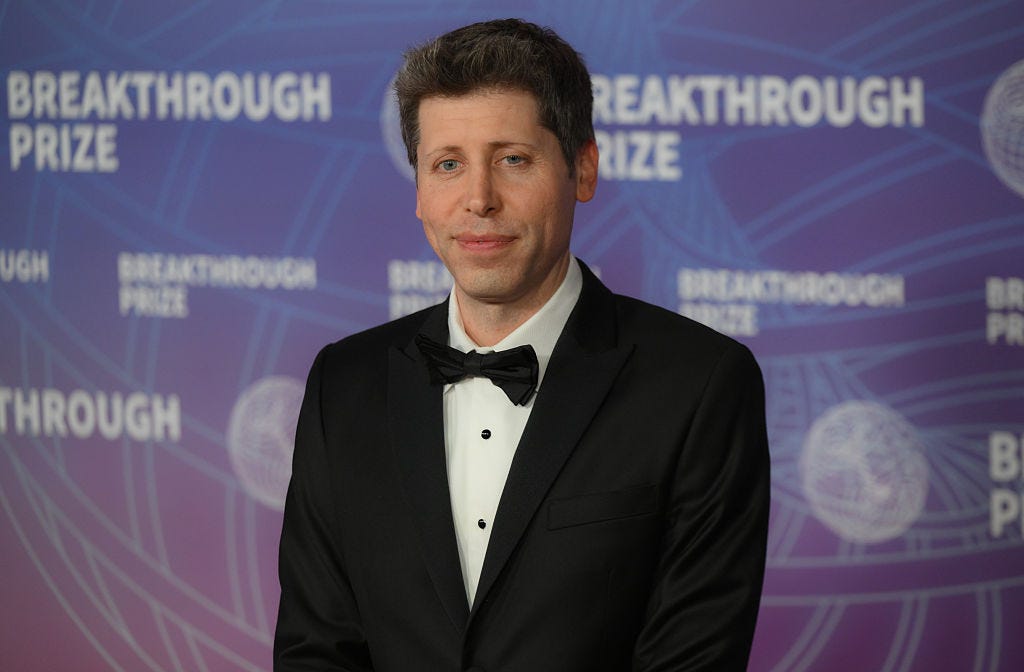
Holy Methuselah indeed! Imagine a world where the ultra-rich and powerful don’t just chase beyond the grave—they’re busy pondering just how to shove death out the back door altogether. You’d think this was the stuff of sci-fi, but nope: from authoritarian leaders to tech billionaires, the race for eternal youth is on, and it’s fueled by deep pockets and some seriously wild science. But here’s the kicker—who gets to buy this VIP pass to immortality? Is it just the Peter Thiels and Sam Altmans of the world, or could this dream someday trickle down to us mere mortals? And, honestly, do we even want forever in the hands of these tech moguls obsessed with longevity metrics so bizarre, they border on the absurd? Let’s dive into this curious mix of ambition, inequality, and the endless pursuit of beating death at its own game—because eternal life might sound dreamy, but the reality might just be a whole lot messier. LEARN MORE
 4 min read
Holy Methuselah, folks. These people crazy. From The New York Times Magazine:
Over the past decade or so, democracy has been retreating against a rising tide of illiberalism and plutocracy. Power, in much of the world, is becoming more and more concentrated in the hands of a few authoritarian leaders and a small number of expansively ambitious tech billionaires. As average life expectancy has increased, inequality—in income and in access to health care—has widened. And amid all of this, the world’s wealthiest and most powerful have developed a persistent hope, and perhaps even generated some small possibility, that death might be eradicated entirely, or pushed back so far that its existential force is diminished.
And who would these new Immortals be? Xi of China and Putin of Russia both seem interested in the possibility, but how about the Americans? Who among us wants to buy a ticket to Olympus? Well, first you have to be able to afford the fare.
The man perhaps most associated with this desire is Peter Thiel, who once outlined his interest in blood plasma transfusions from the young as a means of extending life. But more practically, and less vampirically, he has also invested many millions of venture capital dollars in various biotech concerns, seed-funding a flourishing Silicon Valley longevity ecosystem. “There are all these people,” as he put it to Business Insider in 2012, “who say that death is natural, it’s just part of life, and I think that nothing can be further from the truth.”
The OpenAI chief executive Sam Altman has invested $180 million of his own fortune in Retro Biosciences, a Bay Area biotech concern aimed at stalling and potentially reversing human aging. Jeff Bezos is reportedly among the major funders of Altos Labs, a company that hopes to find stem cell therapies to extend human life spans. The treatments pursued by such initiatives exist somewhere on the spectrum of plausibility; you could even imagine a scenario in which some of them eventually become accessible to ordinary people. Yet it also seems obvious that the tech moguls’ obsession with longevity most specifically applies to their own. Thiel has signed himself up to be cryogenically preserved. Altman has said he takes the diabetes medication metformin as part of an anti-aging regimen, despite somewhat shaky evidence of its efficacy.
And then there is Bryan Johnson, who has devoted his online-payments fortune to the monomaniacal pursuit of eternal life through a bewildering array of approaches: prodigious consumption of supplements, gene therapy, immunosuppressants, transfusions of plasma from his son and the taking of detailed measurements as to the quality and durability of nocturnal erections.
Jaysus, I don’t know who I’d least rather be, Johnson’s kid or his accountant.
Let us play on Fantasy Island for a moment here. Do we want our new Immortals to be only those people who can afford it? Wouldn’t it be better if people of good will and charity lived forever? Or gifted artists, musicians, and writers? Shouldn’t an Immortality therapy be folded into Medicare, or into a program of guaranteed health care? Mark O’Connell, the author of this essay, seems to have given the Who of speculative immortality as much thought as the How, and he doesn’t like what he sees.
What do these men, these autocratic heads of state and staggeringly wealthy technologists, have in common, other than the desire to don’t die? They have, for one thing, arrived—through ruthlessness and ingenuity, through the obsessive pursuit of power and personal enrichment—at an Olympian distance from the mortals from whom their profit and power derive.
Consider the tech billionaire: This is a man who has amassed unimaginable wealth through the disruption of economic and social relations. He has completely reshaped how we buy things, how we pay for them. He has changed how we interact with our fellow humans. He has restructured our brains and reordered the global economy, and is now creating the ultimate technology, the one that promises to do away, once and for all, with the need for human intellectual labor. Is it not right that such a man should buy his way out of death, that he should break this last tie that binds him to the fate of his fellow humans?
Is that what we want? Maybe three dozen more Springsteen albums, or a couple hundred more books from your favorite writers and poets? Cassandra Wilson, Lise Davidsen, or Audra McDonald, singing forever and ever? Against those things, what do the tech bros offer us? Brian Johnson’s forever assessing of the “durability” of his sleepy-time erections until the end of time? Good God, is that the end product of the human experience? Eternal life is a fascinating concept, but it isn’t supposed to be that boring—or that revolting.
Download Exclusive Digital Issues

Winter 2026

Fall 2025

Summer 2025

Apple Watch SE 3 GPS 40mm Smartwatch | Starlight Aluminum Case, Sand Sport Band - S/M. Fitness + Sleep + Cycle Tracking, Heart Rate, Vitals, Safety
$199.00 (as of October 8, 2026 03:20 GMT +00:00 - More infoProduct prices and availability are accurate as of the date/time indicated and are subject to change. Any price and availability information displayed on [relevant Amazon Site(s), as applicable] at the time of purchase will apply to the purchase of this product.)
Apple 2026 Mac mini Desktop Computer M6 chip | 12‑core CPU and 12‑core GPU, 16GB Unified Memory, 256GB SSD Storage
$779.99 (as of October 8, 2026 03:28 GMT +00:00 - More infoProduct prices and availability are accurate as of the date/time indicated and are subject to change. Any price and availability information displayed on [relevant Amazon Site(s), as applicable] at the time of purchase will apply to the purchase of this product.)
reatoy Cat Deterrent Spray for Furniture Protection, Anti Scratch and Urine Marking, Plant-Based Safe Formula for Indoor & Outdoor 150ML 5
$19.99 (as of October 8, 2026 03:20 GMT +00:00 - More infoProduct prices and availability are accurate as of the date/time indicated and are subject to change. Any price and availability information displayed on [relevant Amazon Site(s), as applicable] at the time of purchase will apply to the purchase of this product.)
FEELNEEDY Wireless No Filters Cat Water Fountain, Wastewater Separation | Stainless Steel Bowl, 3000mAh 3.5L Pet Water Fountain for indoor Cats & Dogs Dispenser, Black
$39.89 (as of October 8, 2026 03:20 GMT +00:00 - More infoProduct prices and availability are accurate as of the date/time indicated and are subject to change. Any price and availability information displayed on [relevant Amazon Site(s), as applicable] at the time of purchase will apply to the purchase of this product.)














Post Comment