
XAU/USD Falters: Is the Real Gold Rush Just Getting Started or Fading Fast?
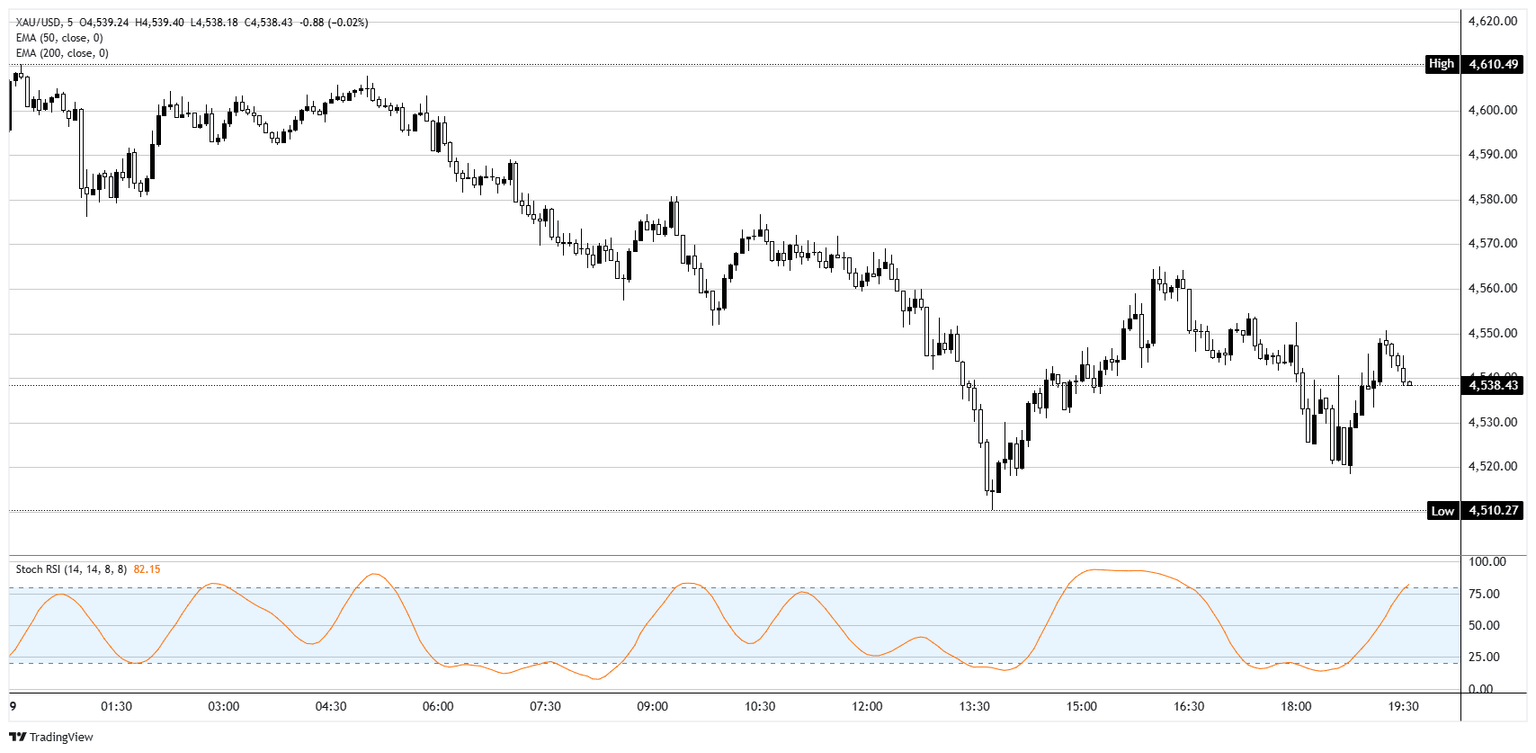
Gold – it’s shiny, it’s coveted, and yet sometimes it feels like it’s playing hard to get, doesn’t it? On Wednesday, XAU/USD took a bit of a tumble, sliding about 1.6% from a dazzling session high near 4,610 down to a low around 4,510—just as the Federal Open Market Committee (FOMC) was making its highly awaited move. Then came the classic rollercoaster: a spirited bounce to roughly 4,565 during Powell’s press conference, only to lose steam and drift back near 4,520. What gives? Is gold signaling something deeper this time, or is it just caught in the seesaw of market jitters around rate decisions and global uncertainties?
Here’s the kicker: the Federal Reserve decided to keep interest rates steady at 3.50% to 3.75%—third meeting in a row—while tweaking its inflation rhetoric from “somewhat elevated” to just plain “elevated.” The vote wasn’t without drama either, sparking the most dissents since 1992. Fed Chair Powell didn’t sugarcoat it, admitting this call felt closer than March’s and hinting that the energy price surge hasn’t run its course just yet. This hawkish undertone bolstered the US Dollar, putting the brakes on gold’s intraday recovery and leaving traders scratching their heads. So, with rate hikes still on the table and geopolitical rumblings in the mix, where does this leave gold as a safe haven? Time to dissect what really makes this precious metal tick in today’s feverish market.
XAU/USD declined around 1.6% on Wednesday, falling from a session high near 4,610 to a session low about 4,510 around the FOMC decision, then recovering to roughly 4,565 during Powell’s press conference before slipping back to retest the 4,520 area and currently trading close to 4,534. The session showed a steady series of lower highs and lower lows into the rate decision, with the late-session price action carving a tentative basing pattern in a 4,520 to 4,560 corridor as the post-Powell bounce gave way to a second leg of selling.
The Federal Reserve (Fed) held the federal funds rate at 3.50% to 3.75% for a third consecutive meeting, sharpening its inflation language to ‘elevated’ from ‘somewhat elevated’ while citing higher global energy prices and a high level of uncertainty around Middle East developments. The 8-4 Federal Open Market Committee (FOMC) vote drew the most dissents since October 1992: Stephen Miran preferred a 25 basis points cut, while Beth Hammack, Neel Kashkari, and Lorie Logan voted to hold but opposed the easing bias added to the statement. Chair Powell described the decision as ‘a closer call than in March,’ said the energy price surge had not yet peaked, and noted that the number of officials seeing a hike as likely as a cut had moved up. Powell added that a shift away from the easing bias could come as early as the next meeting and that he wanted to see energy and tariff pressures end before any rate cuts, hawkish-tilted comments that lifted the US Dollar broadly and capped gold’s intraday recovery into the close.
XAU/USD 5-minute chart

Gold FAQs
Gold has played a key role in human’s history as it has been widely used as a store of value and medium of exchange. Currently, apart from its shine and usage for jewelry, the precious metal is widely seen as a safe-haven asset, meaning that it is considered a good investment during turbulent times. Gold is also widely seen as a hedge against inflation and against depreciating currencies as it doesn’t rely on any specific issuer or government.
Central banks are the biggest Gold holders. In their aim to support their currencies in turbulent times, central banks tend to diversify their reserves and buy Gold to improve the perceived strength of the economy and the currency. High Gold reserves can be a source of trust for a country’s solvency. Central banks added 1,136 tonnes of Gold worth around $70 billion to their reserves in 2022, according to data from the World Gold Council. This is the highest yearly purchase since records began. Central banks from emerging economies such as China, India and Turkey are quickly increasing their Gold reserves.
Gold has an inverse correlation with the US Dollar and US Treasuries, which are both major reserve and safe-haven assets. When the Dollar depreciates, Gold tends to rise, enabling investors and central banks to diversify their assets in turbulent times. Gold is also inversely correlated with risk assets. A rally in the stock market tends to weaken Gold price, while sell-offs in riskier markets tend to favor the precious metal.
The price can move due to a wide range of factors. Geopolitical instability or fears of a deep recession can quickly make Gold price escalate due to its safe-haven status. As a yield-less asset, Gold tends to rise with lower interest rates, while higher cost of money usually weighs down on the yellow metal. Still, most moves depend on how the US Dollar (USD) behaves as the asset is priced in dollars (XAU/USD). A strong Dollar tends to keep the price of Gold controlled, whereas a weaker Dollar is likely to push Gold prices up.

The Farmer's Dog Snap Sticks, Human Grade Dog Treats, Beef & Apple 3oz | Human-Grade Dog Treats for Puppies and Adult Dogs, For All Ages, Sizes and Breeds
$11.99 (as of October 3, 2026 03:14 GMT +00:00 - More infoProduct prices and availability are accurate as of the date/time indicated and are subject to change. Any price and availability information displayed on [relevant Amazon Site(s), as applicable] at the time of purchase will apply to the purchase of this product.)
Fresh Step Advanced Odor Shield Clumping Cat Litter with Gain, 18.5 lb, 2Pk | Odor Shield with Ammonia Block Technology, Low Dust, Multi Cat, Compatible with Most Automatic Litter Boxes
$32.38 (as of October 3, 2026 03:09 GMT +00:00 - More infoProduct prices and availability are accurate as of the date/time indicated and are subject to change. Any price and availability information displayed on [relevant Amazon Site(s), as applicable] at the time of purchase will apply to the purchase of this product.)
INSIGNIA 50" Class F50 Series LED 4K UHD Smart Fire TV, Voice Remote with Alexa, Stream Live TV Without Cable
$159.99 (as of October 3, 2026 03:17 GMT +00:00 - More infoProduct prices and availability are accurate as of the date/time indicated and are subject to change. Any price and availability information displayed on [relevant Amazon Site(s), as applicable] at the time of purchase will apply to the purchase of this product.)
Samsung 65-Inch Class Crystal UHD U8000H Series Samsung Vision AI Smart TV (2026 Model, 65U8000H) Processor 4K, Endless Free Content, Motion Xcelerator, Color Booster, Alexa Built-in
$377.99 (as of October 3, 2026 03:26 GMT +00:00 - More infoProduct prices and availability are accurate as of the date/time indicated and are subject to change. Any price and availability information displayed on [relevant Amazon Site(s), as applicable] at the time of purchase will apply to the purchase of this product.)











Post Comment