
At 54, I Put the Build & Burn Kettlebell Program to the Ultimate Test—The Results Blew My Mind!
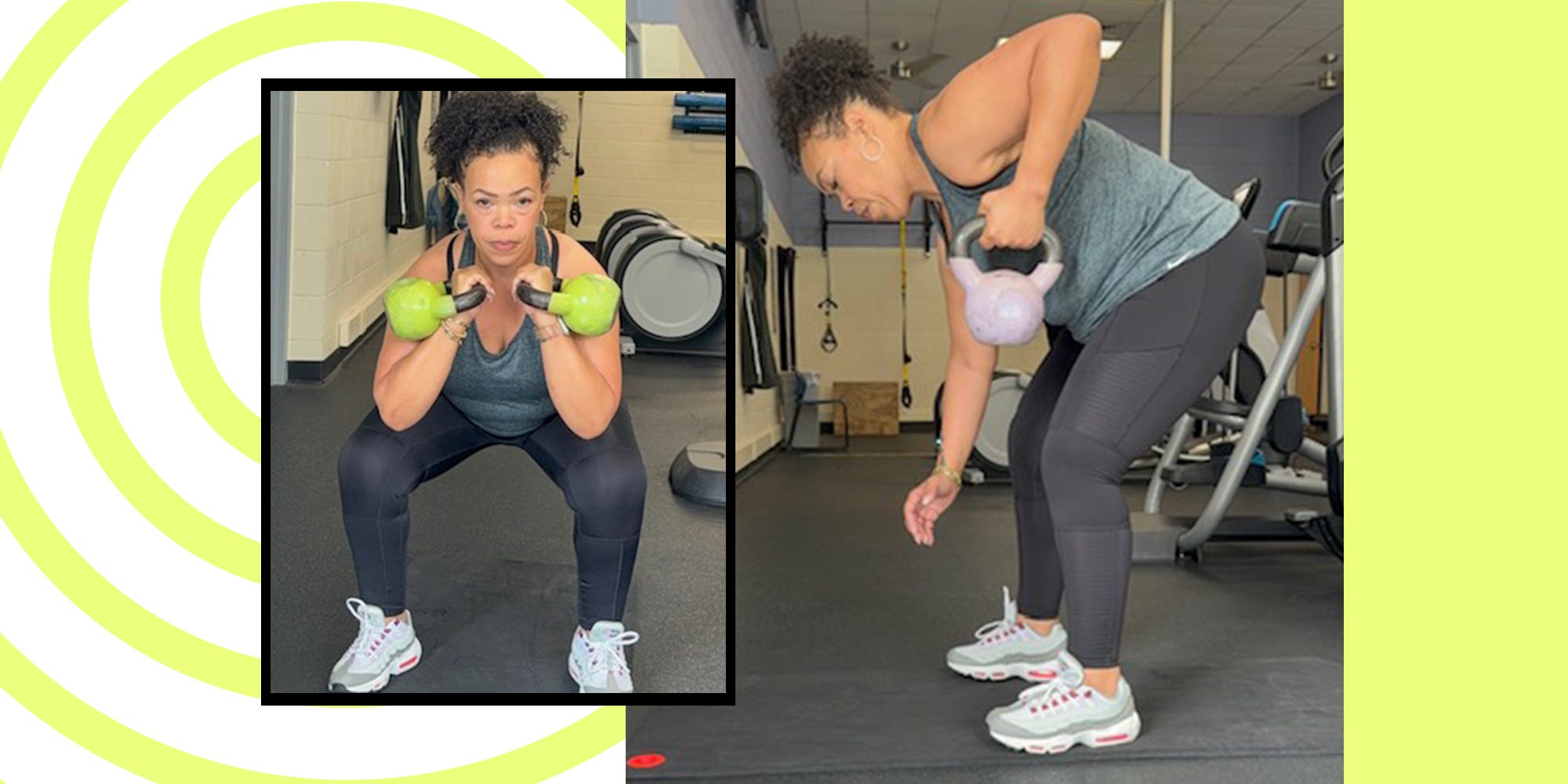
So here I was, cruising through my 50s, suddenly wondering: Why did I spend decades ignoring fitness like it was an unwelcome house guest? Now that my kids are off chasing their own adventures, it hit me—I needed to put my well-being front and center. Staying strong, independent, and active? That’s the new game plan. Enter strength training, and soon after, a kettlebell challenge that promised to shake up my routine in ways I hadn’t imagined—especially since kettlebells felt like an entirely different beast compared to my trusty dumbbells. Was I ready to tackle a new tool, ignite my core like never before, and maybe, just maybe, surprise myself with what I’m capable of? Let me walk you through my four-week journey of mastering the unexpected and discovering that it’s never too late to raise the bar. LEARN MORE
 6 min read
For most of my life, fitness wasn’t a priority, but over the last few years, that’s started to change. Once I hit my 50s and my kids became young adults, I realized it was time to focus on my own well-being and do what I can to stay strong, independent, and active for the long haul.
So, I started strength training about a year ago with midlife training specialist Patricia Greaves, CPT, after coming across her Instagram. Since then, we’ve been working together three days a week, mostly focusing on resistance training for functional strength. I’m always game for mixing things up with a challenge though. So, when I had a chance to review the Women’s Health Build & Burn kettlebell program, I was excited to try something new, especially because I mostly work with dumbbells and had never picked up a kettlebell before.
Try the 4-week Kettlebell Burn Plan
Designed by Sarah Warshowsky, CPT, and kettlebell expert, the four-week strength training plan is built around strength, power, and cardio conditioning. It includes four sessions a week, each about 30 to 45 minutes long, with clear, step-by-step instructions and helpful cues to ensure proper form and sustainable progress.
I was a little nervous to get started, but also ready to work towards a new goal: to master a new piece of equipment while continuing to build strength. Here’s my honest take on the Women’s Health Build & Burn kettlebell track, and what I learned along the way while trying it.
My First Impressions of the Program
The kettlebell track is broken down into two strength and two conditioning days per week. All of the workouts target the full body and start with a quick warmup followed by five to six exercises, with core work sprinkled throughout. Altogether, the program builds total-body strength, power, control, stability, and endurance, while strengthening your comfort and skill with a kettlebell.
Getting started was pretty easy; the program called for a set of light, medium, and heavy kettlebells, which my local gym thankfully had. My coach advised me to stick with what I typically lift with dumbbells—usually somewhere between 10 and 25 lbs. So, I started on the lighter end of that range while I got comfortable with the kettlebell.
The full WH Build & Burn series is free for WH+ members. Sign up today and receive even more exclusive workout and nutrition programs.
However, since I had zero kettlebell experience, I felt a little overwhelmed at first. I quickly realized that kettlebells are a completely different ball game than dumbbells in regards to how you move with it. Even with the instructions provided in the downloadable PDF, it took me time to get comfortable with the movement patterns and figure out how to properly hold the kettlebell.
Because the weight of a kettlebell sits below the handle (instead of being evenly balanced like a dumbbell), I felt a bit awkward holding it during different exercises, like I was off-balance. So, I ended up watching YouTube videos to understand proper form and learn how to generate power through my hips and lower body instead of just relying on my arms. This was especially helpful for more complex moves like the quarter get-up and single-arm swing. However, the program also came with a form video demonstrating some of those moves.
Additionally, even though the workouts are designed to be done in under 45 minutes, the first week took me closer to an hour each time since I really had to slow down and focus on form. The reps for each move were relatively low, though—between 5 to 10 on each side—which I appreciated, because it gave me the chance to stay controlled, prioritize technique, and not feel rushed or overly fatigued through unfamiliar movements.

Based on my work schedule, I did the four days of the challenge back to back from Sunday through Wednesday each week. Some days I’d follow them up with a 30- to 45-minute walk on the treadmill at a slight incline for cardio. But I didn’t do any other strength workouts over the four weeks since my main priority was the kettlebell challenge. But Pat and I still had regular check-ins so I could ask questions.
From the first workout of the challenge, I felt my core and obliques firing up in new ways.
The program’s designated core workouts, like the high plank pull-through and farmer’s carry were challenging, of course—but most of the full-body exercises felt even harder. Thanks to the kettlebell’s off-center weight, my trunk was constantly working to keep me stable and in control. Hand-to-hand swings and single-arm cleans were especially taxing, leaving my abs and obliques sore and fatigued. Plus, those moves demanded additional upper-body strength, lower-body power, cardio endurance, and a ton of core engagement just to keep the weight stable and steady—all while challenging my core.
Learn More About Kettlebell Burn
I felt my strength improve with every workout—and surprisingly, I felt more present in my body, too.
During the first week, I mainly used 10- to 15-lb kettlebells, but over the course of the four-week challenge, I was able to bump the weight up to 20 and even 25 lbs, depending on the exercise. For upper-body moves like gorilla rows and quarter get-ups, I usually stuck with 15 or 20 lbs, but for lower-body exercises like goblet squats and double kettlebell deadlifts, I was able to push close to 25 lbs. My core felt stronger, too, and I moved with more balance and stability in every swing and lift. For example, I felt shaky on the quarter get-ups at the start of the challenge, but by the end of week four, I felt a lot more stable in my core when lifting off the floor with weight above my head.
I also noticed big improvements in my form and confidence. By week two, I felt way more comfortable holding a kettlebell, felt confident in my form, and really looked forward to each training session. I’ve always loved tackling new challenges, so even though it was tough at times, trying this new workout modality felt exciting.
What surprised me the most, though, was how present I was during my workouts. Because I had to really focus on form and movement patterns, I found myself tapping into the mind-muscle connection, actively thinking about the specific muscles I was engaging with each exercise. That wasn’t something I’ve consciously focused on in the past, but it made every workout feel more intentional and purposeful, and I could tell my body was working more efficiently as a result.
My Biggest Takeaways From the Build & Burn Kettlebell Track
As a kettlebell newbie, the beginning of this challenge felt a bit overwhelming because everything was new—from how I held the weight, to the movement patterns, to the way my core had to work extra hard to keep me stable. But I learned that I had to start small in order to see success. I stuck to lighter weights at the start, took my time with the workouts, and focused on form, which also helped me build confidence quickly. By the end of the first week, moves that initially felt awkward were starting to click, like the hip-hinging motion, and I could already feel my strength and stability improving. After week four, my form felt solid, and I was moving through the workouts with more power.

Additionally, I learned that it’s empowering to do hard things. I’ve always liked a good challenge, but these past four weeks showed me just how rewarding it can be to push outside of your comfort zone. Every kettlebell move tested my strength, coordination, and focus, but mastering exercises with a new-to-me piece of equipment was more empowering than I expected. Even when a workout left me tired or sore, I still had fun, felt strong, and walked away with a real sense of accomplishment. My coach’s motto is, “We can do hard things, you just have to put in the effort,” and I can wholeheartedly say that’s completely true.
The actual challenge might be over, but I’m definitely not done with kettlebells. This experience reminded me how exciting and rewarding it can be to try something entirely new. Kettlebells push you to focus on form, engage muscles in different ways, and really connect you with how your body moves. Moving forward, I’m excited to mix kettlebell sessions into my routine, see how far I can progress, and continue to keep exploring fresh ways to stay strong, balanced, and confident in my fitness.
Andi Breitowich is a freelance writer who covers health, fitness, relationships, beauty, and smart living. She is a graduate of Emory University and Northwestern University’s Medill School of Journalism. Her work has appeared in Women’s Health, POPSUGAR, Food & Wine, What To Expect, Cosmopolitan, Men’s Health, and elsewhere. As a former collegiate pole vaulter, she loves all things fitness and has yet to meet a group workout class she doesn’t like.
Alex Tech 10ft - 1/2 inch Cord Protector Wire Loom Tubing Cable Sleeve Split Sleeving For USB Cable Power Cord Audio Video Cable – Protect Cat From Chewing - Black
$8.99 (as of October 15, 2026 03:21 GMT +00:00 - More infoProduct prices and availability are accurate as of the date/time indicated and are subject to change. Any price and availability information displayed on [relevant Amazon Site(s), as applicable] at the time of purchase will apply to the purchase of this product.)
Nutramax Cosequin Joint Supplement for Dogs, Chewable Tablets, 132ct | Glucosamine + Chondroitin for Dogs with MSM, Supports Healthy Joints, All Breeds & Sizes, All Ages
$34.91 (as of October 15, 2026 03:11 GMT +00:00 - More infoProduct prices and availability are accurate as of the date/time indicated and are subject to change. Any price and availability information displayed on [relevant Amazon Site(s), as applicable] at the time of purchase will apply to the purchase of this product.)
Hamster Ball for Cats, Cat Hamster Ball for Outside, Outdoor cat Ball, 17″ | Rolling Catio Outdoor Cat Enclosure, Foldable Breathable Mesh Pet Playpen with Zipper, Portable Lightweight, Lawn & Backyard
(as of October 15, 2026 03:21 GMT +00:00 - More infoProduct prices and availability are accurate as of the date/time indicated and are subject to change. Any price and availability information displayed on [relevant Amazon Site(s), as applicable] at the time of purchase will apply to the purchase of this product.)
Coca-Cola Soda Soft Drink Fridge Pack Cans, 12 fl oz, 12 Pack | Carbonated drink with classic cola flavor
$7.68 (as of October 15, 2026 03:09 GMT +00:00 - More infoProduct prices and availability are accurate as of the date/time indicated and are subject to change. Any price and availability information displayed on [relevant Amazon Site(s), as applicable] at the time of purchase will apply to the purchase of this product.)













Post Comment