
Unlock the Ultimate Star Wars Experience: The Jaw-Dropping Secret to Watching These Movies in the Only True Order!
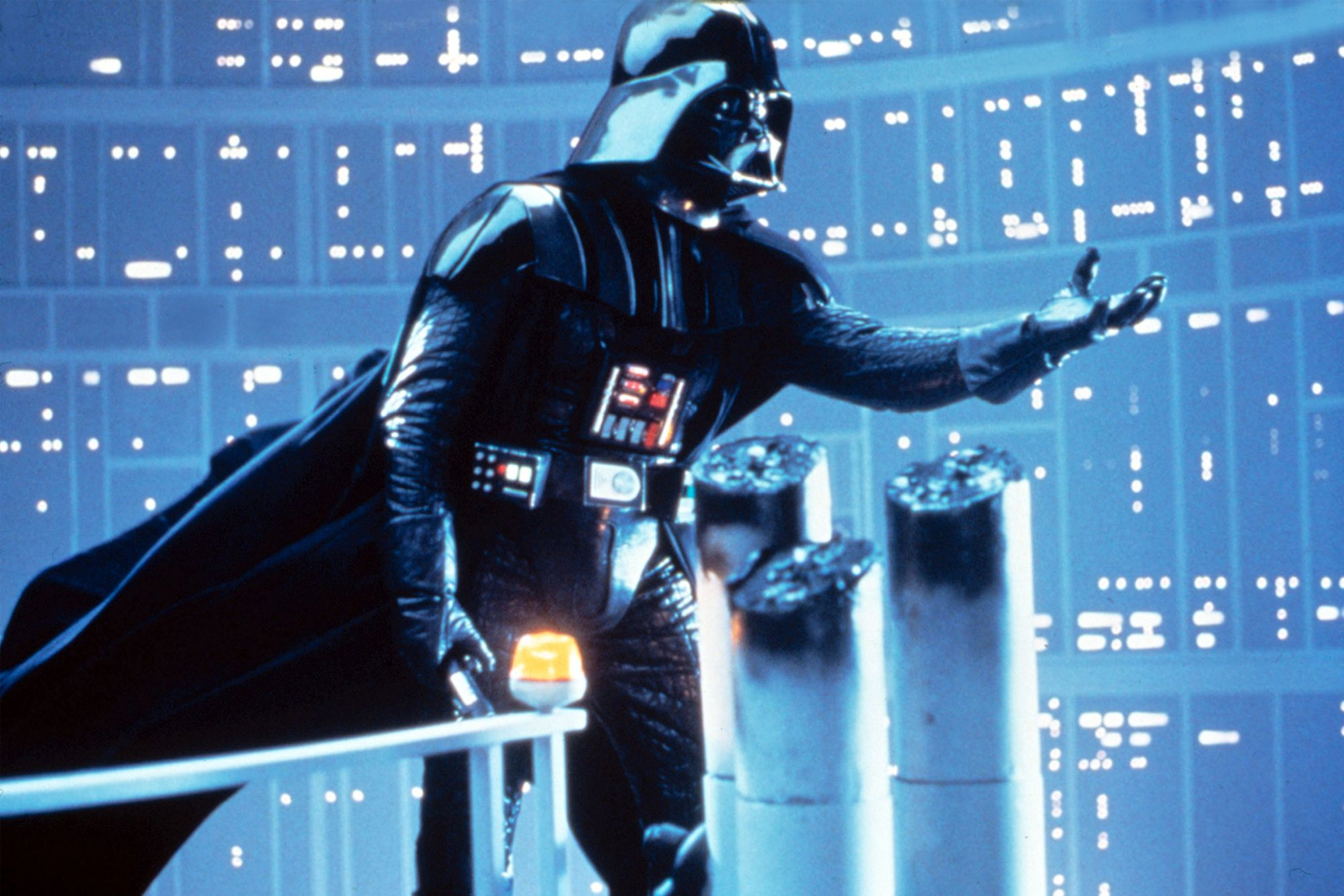
’Tis the season—not the tinsel-and-eggnog kind, but the one that sends Star Wars fans spiraling into marathons of lightsabers, space battles, and galactic drama. Have you ever paused and thought: with eleven movies sprawling across decades, spinoffs popping up like droids on the run, and timelines that twist more than a podracer, what’s really the right order to watch all this epicness? Whether you pledge allegiance to the original trilogy, swear by the prequels, or can’t resist the sequels, there’s a method to this madness. Trust me, watching them in the order they actually hit theaters unlocks the full magic—the surprises, the Easter eggs, the emotional punches—all perfectly layered to hit just right. Grab your popcorn, because we’re about to untangle this cosmic knot for you, ensuring your next Star Wars binge is nothing short of legendary. LEARN MORE
 12 min read
’TIS THE SEASON. No, not Christmas. It’s Star Wars rewatch season, which, to be honest, is really all year long. But especially around May the 5th (there’s a pun that goes with that, right?), people always love to watch, revisit, and nerd out about all their favorite Star Wars movies. Are you an original trilogy person? If not, you should be—that’s where it all started, and that’s where it all comes from. A prequel person? There are more of us than you might expect. What about the sequels? Sure, they may be divisive, but most of us still enjoy watching them even if they aren’t exactly what some people wished for. No matter where you stand on the trilogies and the spinoff films that ultimately erupted from George Lucas’s mind, one thing is clear: there are a lot of these movies. And there’s only one correct order in which to watch all 11 of them.
Yep, that’s right: 11 movies. Eleven. People might tend to get confused, or maybe overthink the right order in which to watch these movies; when the chronological order is all jumbled, that’s pretty natural. After all, the movies that came out in 1999, 2002, and 2005 happen before the movies that came out in 1977, 1980, and 1983? What gives?
We know it can be confusing—Rogue One, which came out in 2016, is set story wise between the 2005 and 1977 releases; 2018’s Solo is in a similar spot. Hell, they aren’t movies, but if you’re still wrapping your head around Andor or are revving up for The Mandalorian and Grogu, you might want to know where they fit into everything too. Believe me, it’s utterly befuddling to write out, but if you know you know.
Read More: Best Star Wars Gifts
Granted some of this natural confusion, people love to try to mix up the order of watching all these Star Wars movies, whether it’s watching the prequels first or scrambling them up in any which way. But we come to you with a message: there’s only one correct way to watch these movies, and it’s the order in which they were chronologically released.
That means the correct order to watch these movies, for the fullest, and proper experience, is 4-5-6-1-2-3-7-Spinoff-8-Spinoff-9.
Think about it: the purpose of a prequel is to fill in blanks left originally. If you were to watch a prequel first, you’re robbing that movie of its initial purpose. It’s the same thing with in-between movies like Rogue One. [SPOILER WARNING IF YOU SOMEHOW HAVEN’T SEEN THIS TEN-YEAR-OLD MOVIE] If you watched Rogue One first, without the context of the original Star Wars trilogy, the Darth Vader scenes would mean nothing; yet these scenes are set before the events of the original trilogy, so if you watched the movies in the order of the story, you’d be robbing yourself of context.
There are countless examples of this context leading to nods and easter eggs to larger universe moments, even in a movie set in a time before events we’ve already seen on screen. It happens multiple times in Rogue One, Solo, the prequels, and even The Mandalorianand Andor; these moments are meant as nods to things that we know happen in the future, and that context is needed for things to fully make sense.
People love to mix the order of these up, and try prequels first, spinoffs first, and even a little mix and match. But personally, I see no purpose—the movies hit theaters in a certain order, and that’s the way the story was meant to be told. It’s not our story to shift and mix around; it’s the Star Wars story. This is how it is, and any other order, frankly, is doing it wrong.
So, when it comes to the Star Wars movies, as the Mandalorians say in The Mandalorian,This is the Way.
Again, all 11 of these movies are now available to stream on Disney+ (which you can sign up for right here). Check out the right order in which to watch these movies below:
A New Hope (1977)

The original Star Wars (originally called just that!) introduces Luke, Darth Vader, Leia, Han, Obi-Wan, Chewie, and the rest of the gang. It’s essential that you start any re-watch (or first-time marathon) with this!
The Empire Strikes Back (1980)
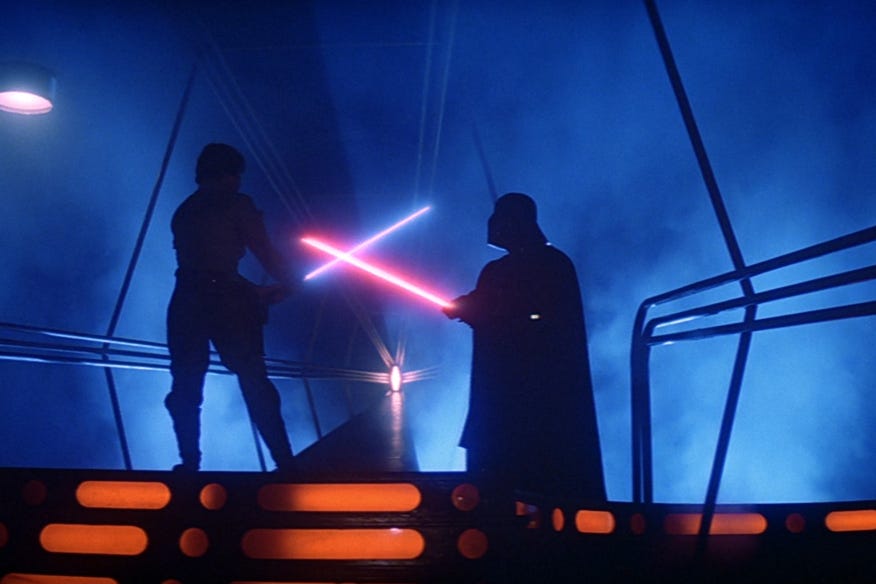
Empire Strikes Back expands the Star Wars scale, and seeing that in the context of this movie still being 41 years old is important; if you go back to movies made even in the last 20 years, the technical achievement of this film won’t seem as great as it really was.
Return of the Jedi (1983)
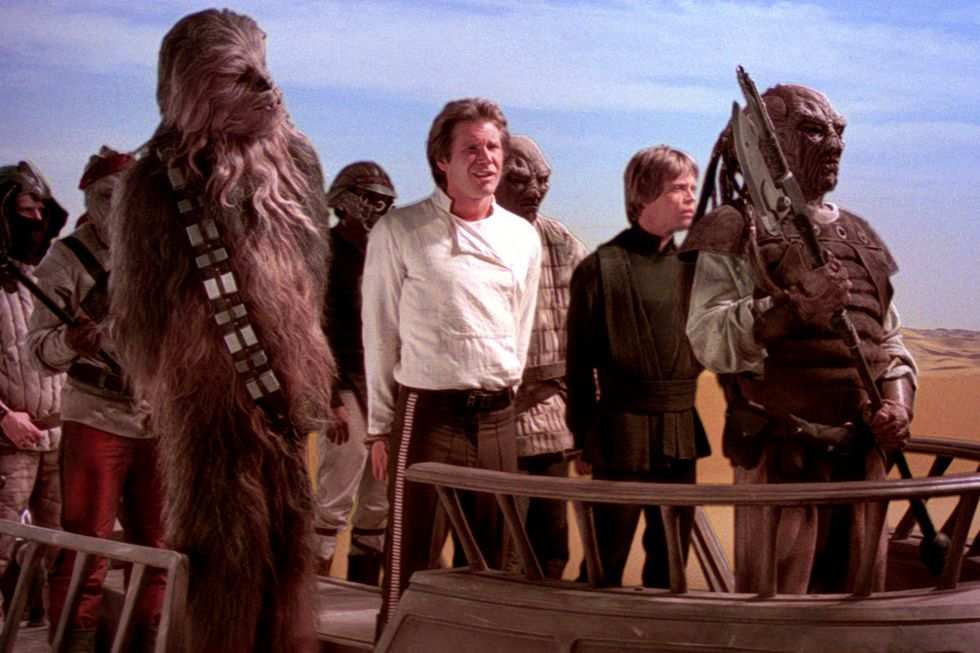
The conclusion of the original trilogy; third of this bunch is the only correct spot.
The Phantom Menace (1999)
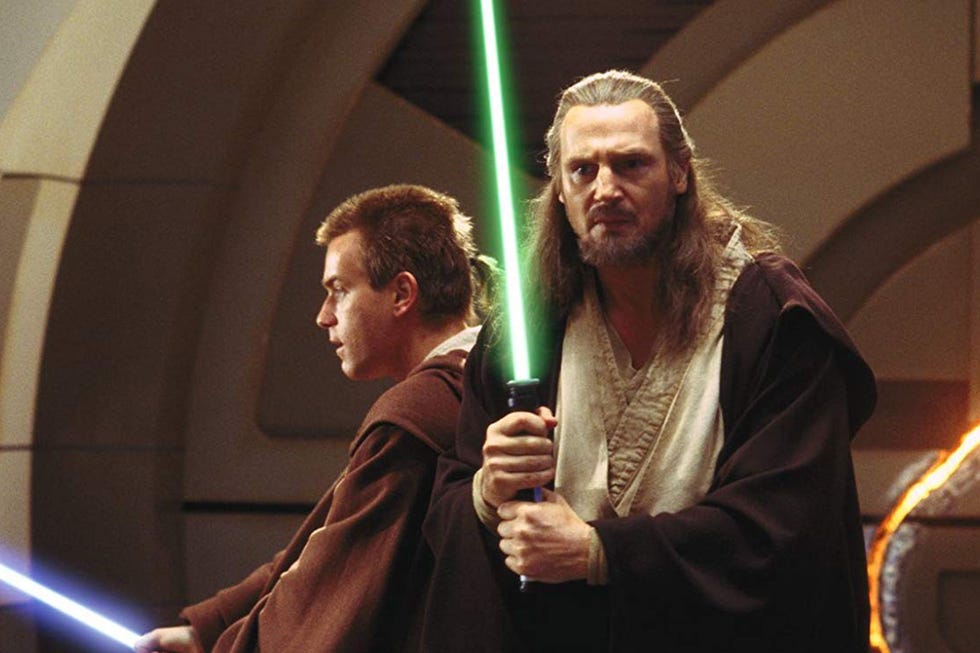
This is the first of George Lucas’s prequel trilogy, and has a prime example of the context necessity issue that we mention above. Not only do we already know who Obi-Wan Kenobi (Ewan McGregor here) is because of his presence in A New Hope, but the reveal that the young child they find is Anakin Skywalker is pivotal because we know, of course, that he becomes Darth Vader. If you watched this first…that’s just a kid with a name (Who could forget the legendary “I’m a person, and my name is Anakin” reveal).
Attack of the Clones (2002)

Guys. If you saw Yoda in The Empire Strikes Back and Return of the Jedi, his sprightly, acrobatic lightsaber moves are so absolutely golden here. We saw the little ancient green guy fade away under a blanket; his wild combat moves here feel so earned. Without that context? There’s no reason to believe Yoda isn’t that crazy warrior, now is there?
Revenge of the Sith (2005)
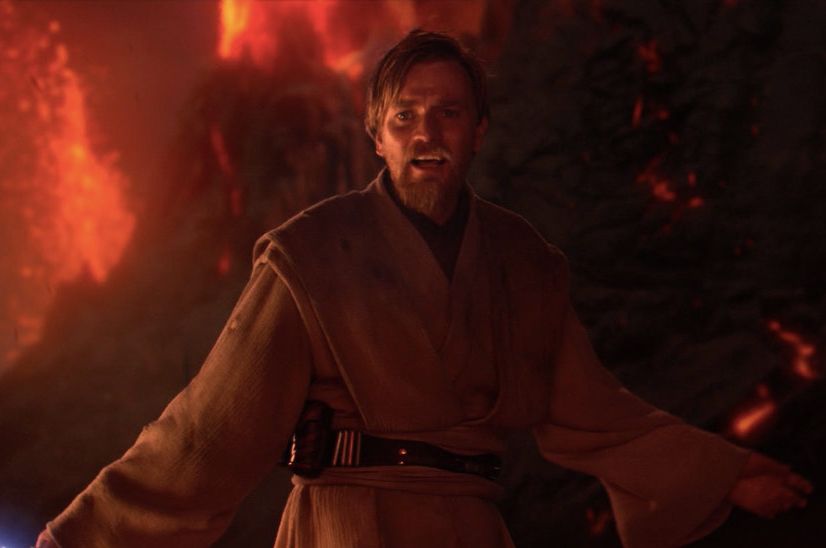
Same as Return of the Jedi—it’s the end of this trilogy. You need to watch it in this order. Plus, some egregious examples of the context issue: learn vital facts about Palpatine, Darth Vader, Luke, Leia, and endless others. This one is considered the best of the prequels, and much of that has to be the fact that it so neatly ties in with the original trilogy, adding a rich backstory to a movie that was originally made on significantly lesser resources.
The Force Awakens (2015)
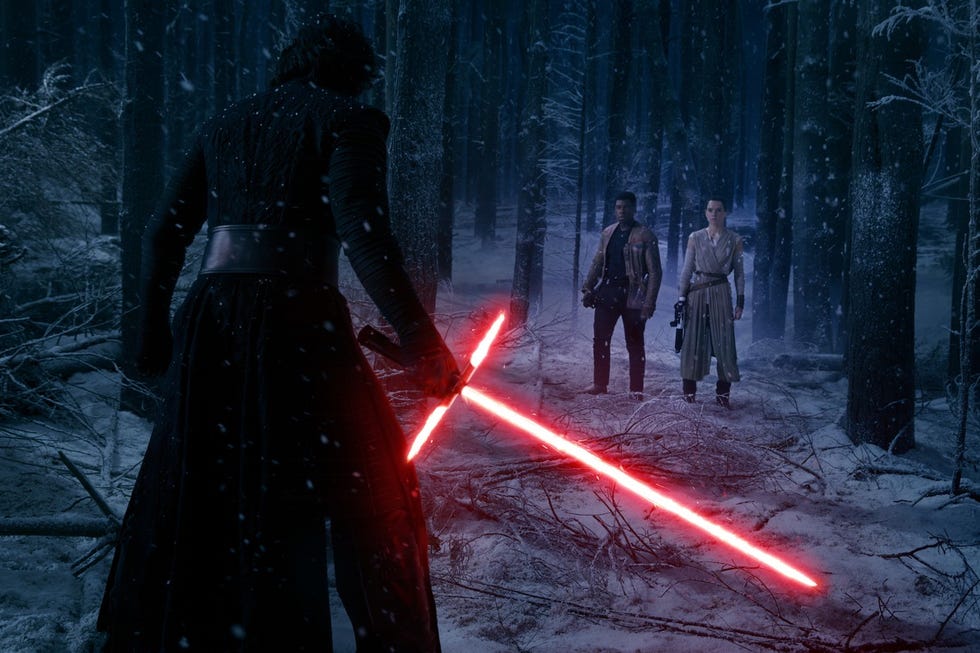
This one benefits deeeeply from all the nostalgia and goodwill that the rest have built up. When Han Solo steps back in the Millennium Falcon? You can feel the 38 years of history that fit right into that moment. More than just about any other series this side of James Bond, the Star Wars movies know how to play into the feels that some fans have been feeling for 40+ years, and that countless others have been feeling for their whole lives.
Rogue One (2016)
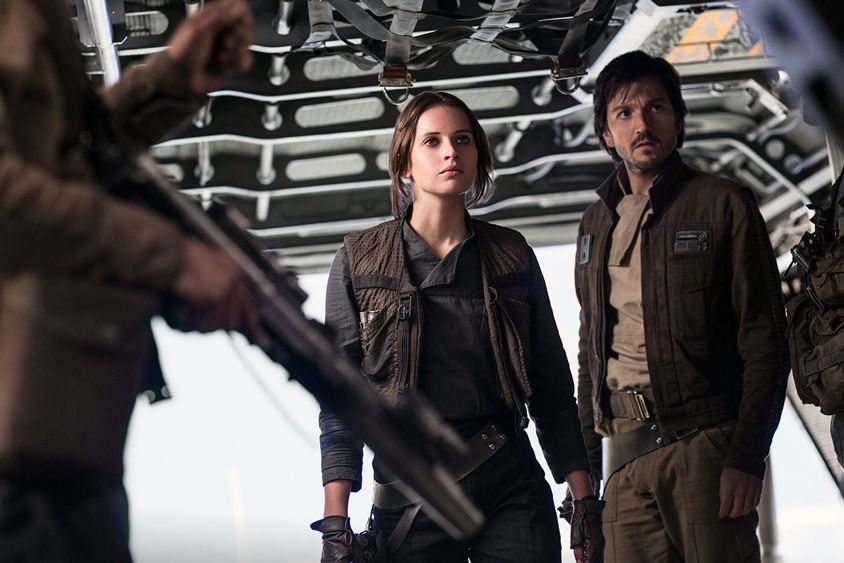
This one fills in some blanks, particularly about A New Hope. Honestly, this (and Solo) are a pair that you probably could play around with the order a little bit on. I would keep them here, because, again, that’s when it was released. But if you wanted to watch this right before or after A New Hope to mix things up and feel bold, then go for it. You could also save Rogue One and Solo for the end of your watch-through, following the events of the larger Skywalker Saga—that’s the glory of a standalone story. If you’re getting into Andor—one of the best shows of the last decade, Star Wars or otherwise—then Rogue One can also be a vital watch either before or after (or both).
The Last Jedi (2017)
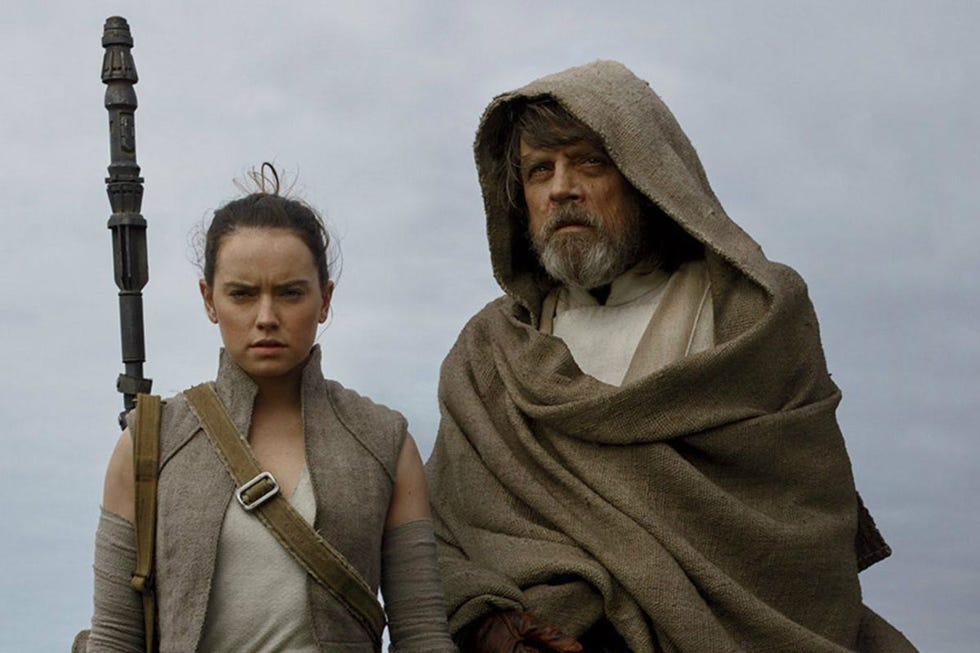
Think what you want about The Last Jedi, but this is undoubtedly the most uniquely-told movie in the Star Wars franchise to date; also, obviously, it’s the most recent. The events of The Last Jedi lead into The Rise of Skywalker. To make sure you know exactly what’s going on with Rey, Kylo Ren, Finn, Poe, and the rest of the gang, you’ll need to make sure you spend your 2 hours and 32 minutes watching The Last Jedi.
Solo (2018)
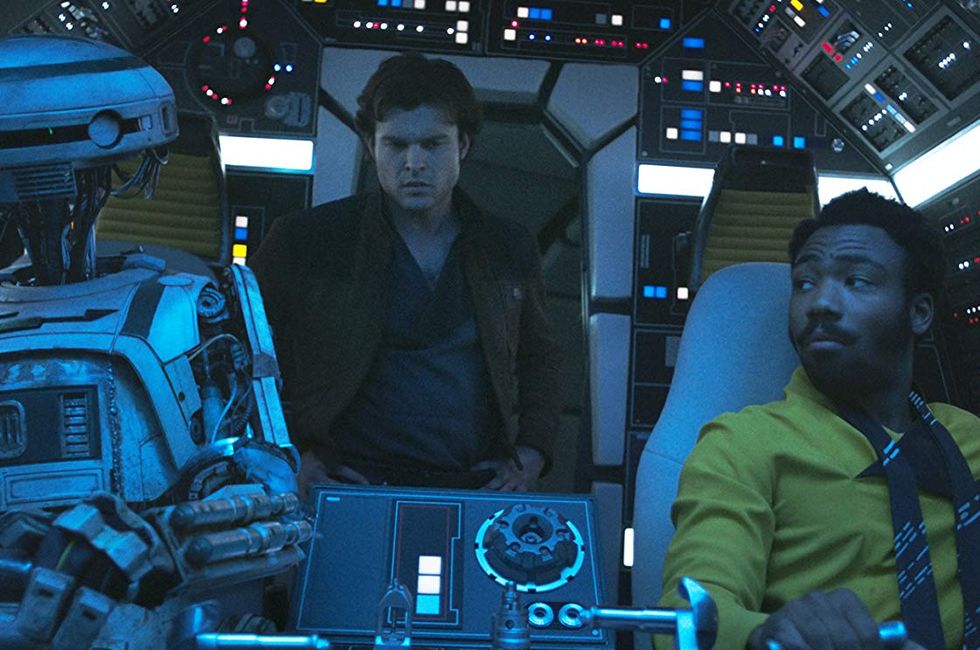
Note what we said above for Rogue One. While it’s great to get another dose of Han after the, uh, events of The Force Awakens, this isn’t necessarily a necessity to the larger story. It did set itself up for a sequel; we’ll see if we ever get one.
Alternatively, if you really wanted to, you could probably put Rogue One and Solo off to the end of your re-watch; get the sturdy volumes out of the way first, and then add this context. The movies are good, but you’re not missing a ton in terms of the overarching story.
The Rise of Skywalker (2019)
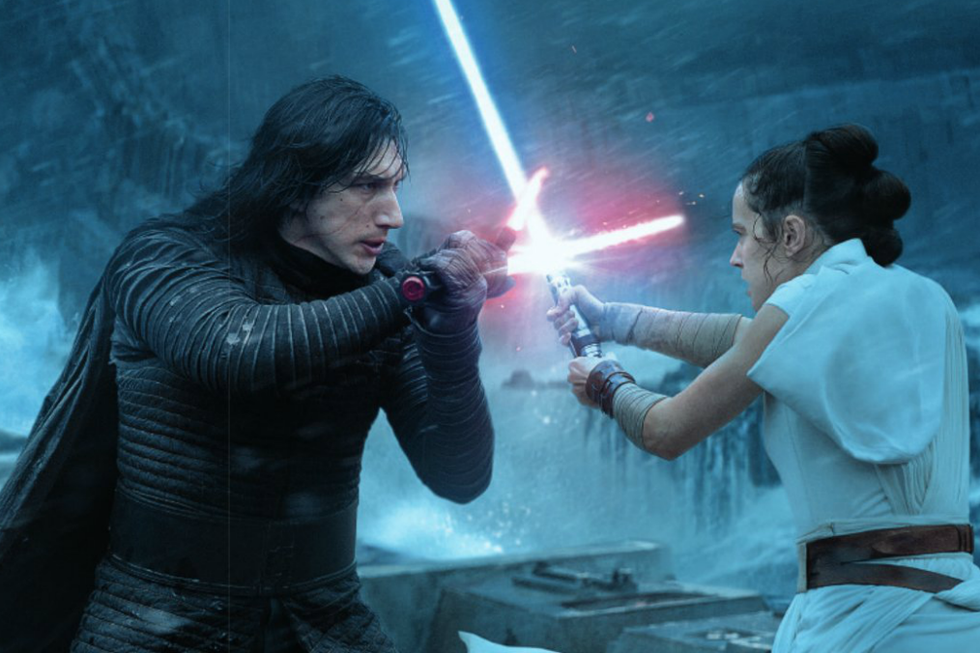
It’s the conclusion of the final trilogy of the Skywalker Saga. When else would you watch? But as up and down as this movie is, there’s a ton of moments and callbacks to countless other moments throughout the franchise. It’s Carrie Fisher’s final film appearance after her death in 2016. Cameos from a number of other old friends are included too. And, of course, the movie is led by the group that fans have grown to love over the last five years: Daisy Ridley, Adam Driver, John Boyega, and Oscar Isaac. You might not love this movie, but it’s Star Wars—so you’re definitely going to watch it.
Bonus: Star Wars TV Shows
Live-Action Shows
The Mandalorian (2019 – ?)
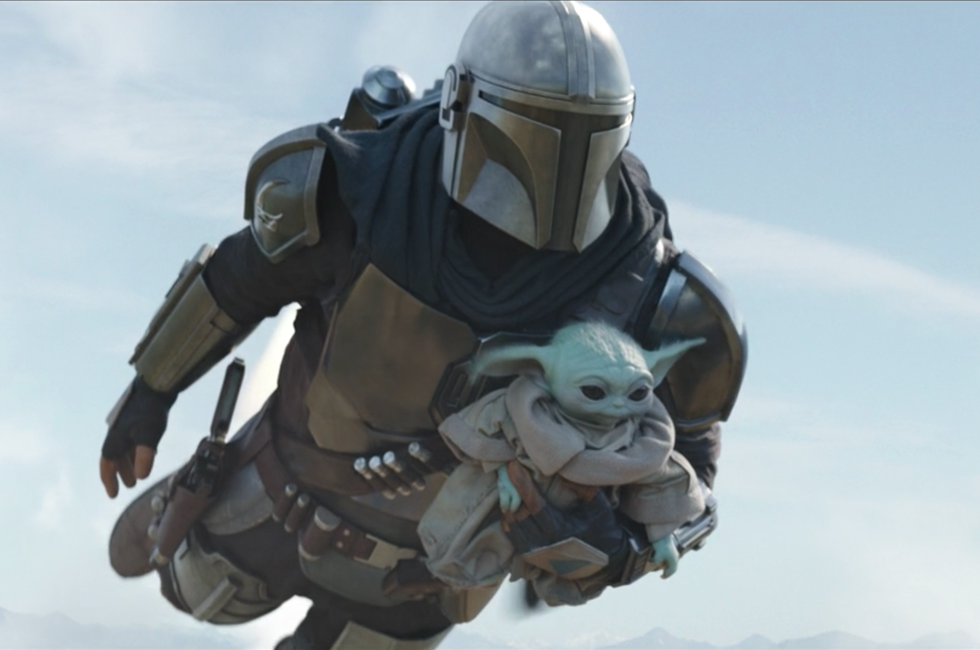
The Mandalorian succeeds in a way that’s unique to the Star Wars world, in that each episode basically operates in its own bubble. The stories are mostly self-contained, and The Mandalorian in turn operates as something of a procedural, or an old-timey western serial. It’s set between the events of The Return of the Jedi and The Force Awakens, and the further in you get, the more that ever-important Star Wars back knowledge will pay off. But the non-stop easter eggs and fun of The Mandalorian will only be truly appreciated once you’ve seen all the rest of the Star Wars cinematic canon. There have been three seasons of The Mandalorian to date, and while we’re not sure if there will ever be another season on TV, The Mandalorian and Grogu will bring these characters to the big screen for an adventure for the first time.
The Book of Boba Fett (2021 – 2022)
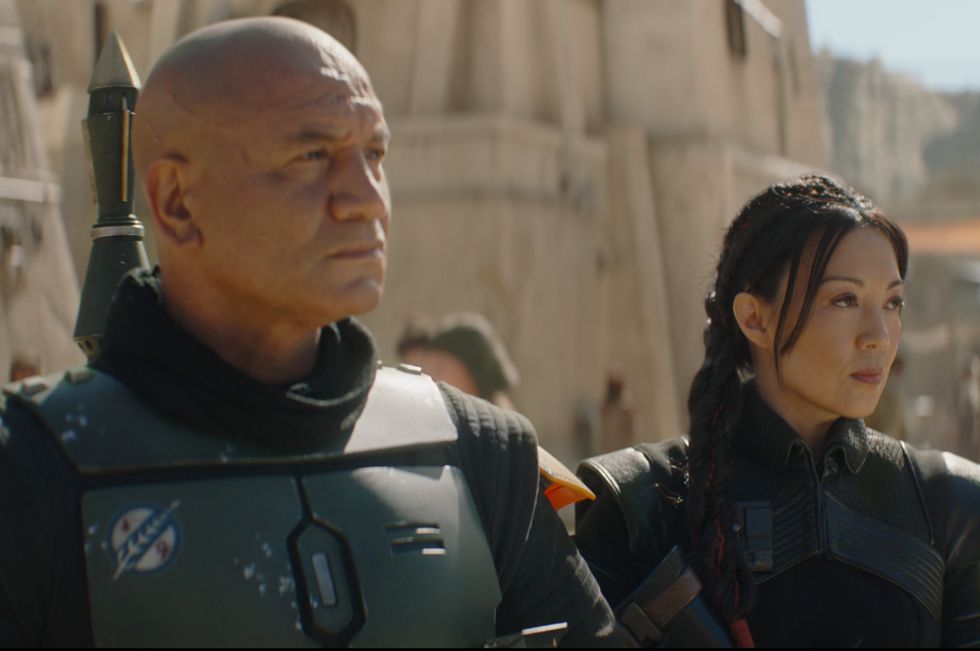
The Book of Boba Fett fleshes out a character that many Star Wars fans have mythologized, theorized, and fan fiction-ized for decades and decades. Temuera Morrison plays the titular legendary bounty hunter in a unique and fun way, and considering he played Jango Fett in Star Wars Episode II: The Clone Wars two decades ago, it makes for some nice neat continuity within the franchise. The Book of Boba Fett is slow, but turns out to be a vital and often rewarding bit of Star Wars mythos. Halfway through, this randomly kind of becomes The Mandalorian season 2.5, so if you’re watching that show, you kind of have to come here for it to all make sense.
Obi-Wan Kenobi (2022)

This limited series fills some of the gap between Revenge of the Sith and A New Hope, and both Ewan McGregor and Hayden Christensen reprise their roles (of Obi-Wan and Anakin, respectively) from the prequel trilogy. It’s not totally essential, if we’re being honest, but if you turn out to be a prequel lover, there’s another story to dive into here.
Andor (2022 – 2025)

Andor isn’t just the best Star Wars show, but one of the best political/spy thrillers ever, and one of the best projects ever produced in the Star Wars franchise. Seriously—Andor is right there with the likes of Empire Strikes Back. Creator Tony Gilroy, who famously took over production on the end of Rogue One, is given full reign of the story here and the results are masterful. Through lead character Cassian Andor (Diego Luna), Gilroy uses the Star Wars universe to tell the story of how fascism holds onto power, and how a revolution comes to be. Gilroy is deep in his Oscar-level Michael Claytonbag as he writes about alllll the little people and little things that need to happen in order to execute it.
Ahsoka (2023 – )

The lead character of The Clone Wars and Rebels makes the jump to live-action with Ahsoka. Fans of those shows will probably like this, and others might feel like they’re missing something. But for Star Wars completists, it’s not too bad.
The Acolyte (2024)

Set in The High Republic era (long before the prequel trilogy, at a time when the Jedis were in power), The Acolyte takes a lot of big swings at a new kind of Star Wars story. It doesn’t connect on all of them, but it can be really fun along the way. The story follows a pair of twins (both played by Amandla Stenberg) on separate sides of the force as they find themselves in the midst of a battle between good and evil filled with double crosses and deception. The rest of the cast includes Lee Jung-jae, Manny Jacinto, and Carrie-Anne Moss among the show’s stacked cast who all show up and give good performances.
Skeleton Crew (2024)

Skeleton Crew takes an ET or Stranger Things style approach to Star Wars, telling a vast adventure story through the lens of younger heroes (and appealing to a younger audience along the way as well). Jude Law pops in to give this thing some real gravitas, and, as always, he’s quite good. The show has an unbelievable murderers’ row of directors, including Daniels (Everything Everywhere All At Once), Jake Schreier (Thunderbolts, Beef), Bryce Dallas Howard, David Lowery (The Green Knight), Jon Watts (Tom Holland’s first Spider-Man trilogy), and Lee Isaac Chung (Minari, Twisters).
Animated Shows
Star Wars: The Bad Batch (2021 – 2024)
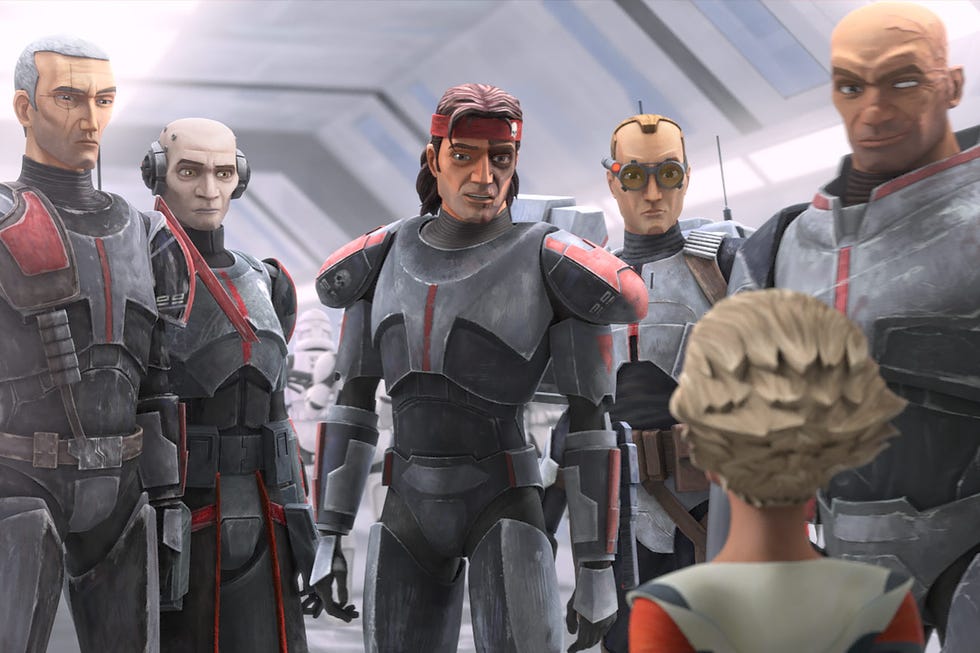
If you’re certain you’re going to be in with the Star Wars animated series for the long haul, we might recommend going to the next three items on the list first, as Star Wars: The Bad Batch is a spinoff centered on characters introduced in the final season of the Star Wars: The Clone Wars animated series. Still, we’re recommending it here for one reason: you can get in on the ground floor. This show is just starting, and will probably be self-contained enough for any fan of the Star Wars mythos to get in on it. It centers on an elite clone trooper group who all have genetically enhanced abilities—but aren’t quite superheroes.
Star Wars: The Clone Wars (2008)
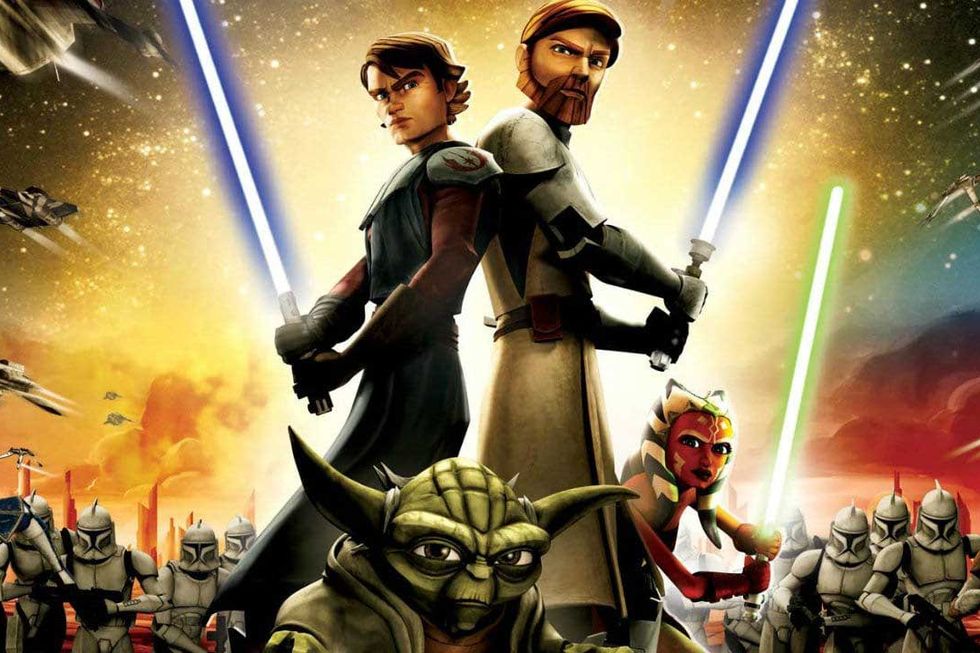
The live-action movies listed above weren’t the only Star Wars feature films to be released in theaters. The Clone Wars, while animated, still made its debut in theaters, filling in some of the gaps between Attack of the Clones and Revenge of the Sith. This movie also gave us some more Obi-Wan and Anakin, while introducing Anakin’s apprentice, Ahsoka Tano; this led directly into the Clone Wars series, which became a fan-favorite.
Star Wars: The Clone Wars (2008 – 2012)
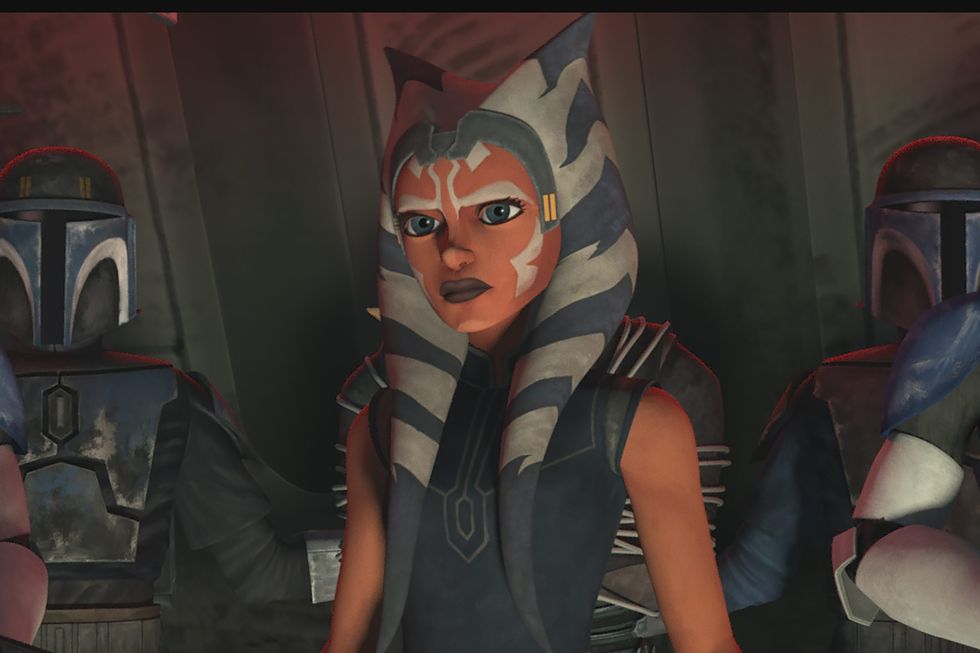
Dave Filoni became one of the most important people in the Star Wars world when he helmed The Clone Wars. The show became a huge fan-favorite, and when it ran on Cartoon Network was one of that channel’s highest-rated shows ever. Filling in stories for original characters like Ahsoka first and foremost, the show also adds canon for the likes of Yoda, Darth Maul, and more. Filoni now works super closely with Jon Favreau on The Mandalorian and is in charge for The Bad Batch and way more, and this 7-season series is the reason why.
Star Wars: Rebels (2014 – 2017)
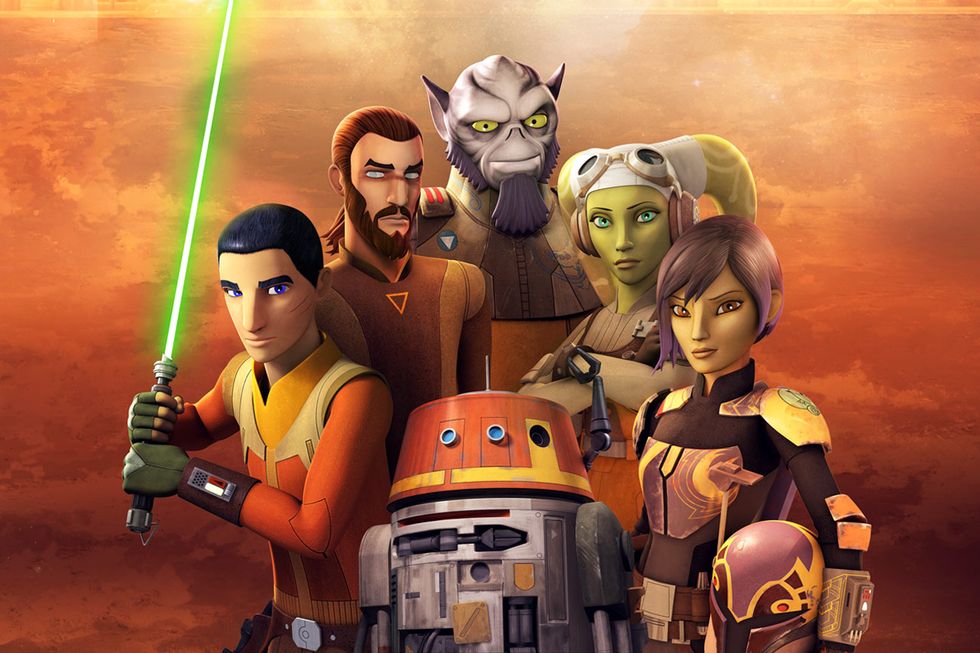
Filoni was also involved with Star Wars: Rebels, the animated series set five years before Star Wars: A New Hope. This show tells the story of members of a starship called GHOST and the adventures they get into as they fight the big bad guys we see in the original film franchise.
Star Wars: The Bad Batch (2021 – 2024)
If you’re certain you’re going to be in with the Star Wars animated series for the long haul, we might recommend going to the next three items on the list first, as Star Wars: The Bad Batch is a spinoff centered on characters introduced in the final season of the Star Wars: The Clone Wars animated series. Still, we’re recommending it here for one reason: you can get in on the ground floor. This show is just starting, and will probably be self-contained enough for any fan of the Star Wars mythos to get in on it. It centers on an elite clone trooper group who all have genetically enhanced abilities—but aren’t quite superheroes.
Maul — Shadow Lord

Set after The Clone Wars, Maul — Shadow Lord follows the titular villain as he looks to rebuild his criminal syndicate on a planet far away from The Empire’s influence. For fans of one of Star Wars’s coolest villains of both the big and small screen, this is a really fun one.

Evan is the culture editor for Men’s Health, with bylines in The New York Times, MTV News, Brooklyn Magazine, and VICE. He loves weird movies, watches too much TV, and listens to music more often than he doesn’t.
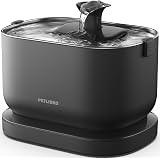
PETLIBRO Cat Water Fountain, Cordless Pet Water Fountain Battery Operated, 2.5L/84oz Dockstream Water Fountains for Cats Indoor, Cat Fountain with Stainless Steel Tray, Easy to Clean BPA-Free
$58.58 (as of October 23, 2026 03:23 GMT +00:00 - More infoProduct prices and availability are accurate as of the date/time indicated and are subject to change. Any price and availability information displayed on [relevant Amazon Site(s), as applicable] at the time of purchase will apply to the purchase of this product.)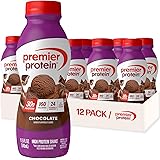
Premier Protein 30g High Protein Shake, Chocolate, 12 Pack | 160 Calories, 24 Vitamins & Minerals, No Added Sugar, Supports Muscle Health, Gluten-Free, 11.5 oz
$19.99 (as of October 23, 2026 03:13 GMT +00:00 - More infoProduct prices and availability are accurate as of the date/time indicated and are subject to change. Any price and availability information displayed on [relevant Amazon Site(s), as applicable] at the time of purchase will apply to the purchase of this product.)
PUR Gum, Spearmint, Xylitol Gum, No Artificial Flavor, 55 Count | No Artificial Sweeteners, Vegan, Sugar Free, Gluten Free, Soy Free, Nut & Peanut Free, Swiss Made, Keto Friendly chewing gum
$3.98 (as of October 23, 2026 03:13 GMT +00:00 - More infoProduct prices and availability are accurate as of the date/time indicated and are subject to change. Any price and availability information displayed on [relevant Amazon Site(s), as applicable] at the time of purchase will apply to the purchase of this product.)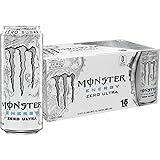
Monster Energy Zero Ultra, Sugar Free Energy Drink, 16 Ounce | Pack of 15
$26.98 (as of October 23, 2026 03:13 GMT +00:00 - More infoProduct prices and availability are accurate as of the date/time indicated and are subject to change. Any price and availability information displayed on [relevant Amazon Site(s), as applicable] at the time of purchase will apply to the purchase of this product.)








Post Comment