This Little-Known Hack Is Silently Ending Women’s Bladder Leaks—And Doctors Are Shocked!

Ever find yourself laughing so hard with your bestie that—oops—a little leak sneaks out? Or caught mid-sneeze in the grocery aisle, frozen in panic? If you’re nodding yes, you’re definitely not alone. Turns out, one in three women experience these unexpected bladder leaks, a sneaky condition called stress incontinence. But here’s the real kicker—what many think is a lifetime sentence of awkward moments and avoidance, can actually be tackled with surprisingly simple, no-cost tricks you can try at home—like, starting today. Yep, relief might be just a pelvic squeeze away. Ready to take back control and stop dreading those everyday moments? Let’s dive into the what, why, and how of stress incontinence—and trust me, the fixes might just blow your mind. LEARN MORE
You laugh at your best friend’s joke—and feel a little leak. You sneeze in the grocery store and freeze. You skip the trampoline at your granddaughter’s birthday party because you know what’ll happen. Sound familiar? One in three women deals with urine leakage during sneezes, coughs and laughs, a type of urinary incontinence called stress incontinence. The very good news? Stress incontinence treatment is often simple, free and something you can start at home today.
What stress incontinence really is
Stress urinary incontinence (SUI) is “leaking urine with activity such as coughing, laughing, sneezing and/or exercise,” explains Christopher Iwanoff, DO, FACOG, urogynecologist and section chief of urogynecology at Monmouth Medical Center. “It is often caused by loss of support of the periurethral tissue from either having children, repetitive heavy lifting, constipation and/or aging.”
In other words, when something puts sudden pressure on your bladder, weakened pelvic floor muscles can’t respond quickly enough to keep the urethra closed. Pregnancy, childbirth, weight gain and aging all play a role, adds Stuart Hart, MD, a Florida-based urogynecologist and founder of Urology Health.
And menopause makes it worse. “Nearly 46 percent of women experience bladder leakage during menopause,” says Samantha Pulliam, MD, FACOG, urogynecologist and chief medical officer at Axena Health. Estrogen helps maintain the strength of tissues in the bladder, urethra and pelvic floor. As it declines, so does that support.
Urinary incontinence affects 62 percent of adult women in the U.S., and up to 75 percent of women over 65. Yet many women never mention it to their doctors. “Incontinence can be a progressive disorder,” Dr. Pulliam warns. “Left untreated, it can worsen and lead to profoundly negative health consequences.”
The trick that stop stress incontinence in seconds
For an immediate fix, Dr. Hart recommends a method called “The Knack,” developed at the University of Michigan in 1998. A study in the Journal of the American Geriatrics Society found that within a week, The Knack reduced urine loss from a medium cough by 98 percent and from a deep cough by 73 percent.
Here’s how to do it, per Dr. Hart’s step-by-step guide:
- Identify your pelvic floor muscles. They’re the ones you’d squeeze to stop passing gas or stop the flow of urine.
- Anticipate the trigger. When you feel a sneeze, cough or laugh coming—or before lifting something heavy—get ready.
- Squeeze quickly. Firmly tighten and lift the pelvic floor just before the pressure hits.
- Hold through the action, then relax fully.
“The most common feedback we hear from women using the technique is that they feel more confident in their daily lives,” Dr. Hart says. Just remember to be patient as you master the technique—it’ll take some time at first to get it right.
Tip: If you’re worried about stress incontinence leaks while out and about, tuck something like WaterWipes Sensitive+ Intimate Care Light incontinence wipes in your purse to freshen up on the go.
Pelvic floor exercises for stress incontinence
While The Knack works in the moment, daily exercises can strengthen your pelvic floor muscles in the long term and help prevent stress incontinence episodes. In fact, research in JAMA Internal Medicine found a 12-week pelvic floor training program reduced incontinence episodes by 70 percent. Pelvic floor experts recommend these gentle moves as natural treatments for urinary incontinence:
- 360 breathing. Sit comfortably with your hands on your ribs. Inhale through your nose, letting your ribs expand and your pelvic floor soften. Exhale slowly. Try for five slow breaths, three times a session, three times a day, says Caroline Packard, DPT.
- 90/90 hip switches. Sit on the floor with one leg bent in front and the other behind, both at 90 degrees. Keeping your chest lifted, slowly rotate your hips to switch sides. Alternate for 10 switches, once or twice daily, recommends Milica McDowell, DPT.
- Ball squeeze with core activation. Lie on your back with knees bent and a small ball or rolled towel between your knees. Exhale, lightly press your knees together and engage your lower core as the pelvic floor lifts. Do 5 to 10 slow reps, twice per session.
- Kegel exercises. To do Kegels the right way, tighten your pelvic floor muscles for five seconds, relax for five and repeat several times a day. “Regular and correct performance of these exercises can improve [bladder] muscle tone and provide better support to the bladder and urethra,” says Jason Kim, MD, of Stony Brook University Medical Center.
When to call your doctor about stress incontinence
If home treatment strategies haven’t helped after eight to 12 weeks, or if bladder leaks are worsening, talk to a urogynecologist about how to manage your stress incontinence. Topical vaginal estrogen, bladder Botox, urethral bulking injections and sling procedures can all bring dramatic relief. “Urinary incontinence is common, but not necessarily normal,” says Erica Montes, MD. The important thing is to remember that “you don’t have to live with this.”
Ready for more inspiration? Subscribe to our YouTube channel for video podcasts, health tips and uplifting stories designed for women 40, 50, 60 and beyond.
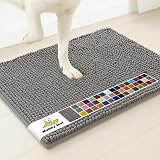
Muddy Mat® | Super Water Absorbent Door Mat Indoor, Microfiber Quick Dry Chenille Entryway Rug, Slip Resistant Front Door Mat, Indoor Mats for Entryway, Machine Washable Pet Rug, Grey 30"x19"
$24.95 (as of September 22, 2026 03:10 GMT +00:00 - More infoProduct prices and availability are accurate as of the date/time indicated and are subject to change. Any price and availability information displayed on [relevant Amazon Site(s), as applicable] at the time of purchase will apply to the purchase of this product.)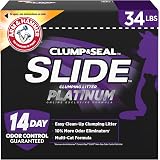
ARM & HAMMER Slide Platinum Easy Clean-Up Clumping Cat Litter, 34 lbs | 24/7 Odor Control, Triple-Action Freshness, Non-Stick, Low Tracking, Multi-Cat Formula, Scented, Online Only
$29.74 (as of September 22, 2026 03:10 GMT +00:00 - More infoProduct prices and availability are accurate as of the date/time indicated and are subject to change. Any price and availability information displayed on [relevant Amazon Site(s), as applicable] at the time of purchase will apply to the purchase of this product.)
Roku TV Remote Control (Official Manufacturer Product) | Simple Setup & Pre-Set App Shortcuts - Replacement Remote Compatible with RokuTV Models ONLY (Not Roku Players)
$9.99 (as of September 22, 2026 03:13 GMT +00:00 - More infoProduct prices and availability are accurate as of the date/time indicated and are subject to change. Any price and availability information displayed on [relevant Amazon Site(s), as applicable] at the time of purchase will apply to the purchase of this product.)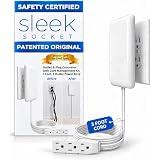
Sleek Socket Original & Patented Flat Ultra-Thin Outlet Concealer with Extension Cord Kit, Multi Outlets Power Strip, Ideal for Home Improvement, Hide Bulky and Messy Cords, 3ft
$21.95 (as of September 22, 2026 03:29 GMT +00:00 - More infoProduct prices and availability are accurate as of the date/time indicated and are subject to change. Any price and availability information displayed on [relevant Amazon Site(s), as applicable] at the time of purchase will apply to the purchase of this product.)












Post Comment