Why Walking Less Than 10K Steps a Day Could Be the Unexpected Key to Keeping Weight Off for Good
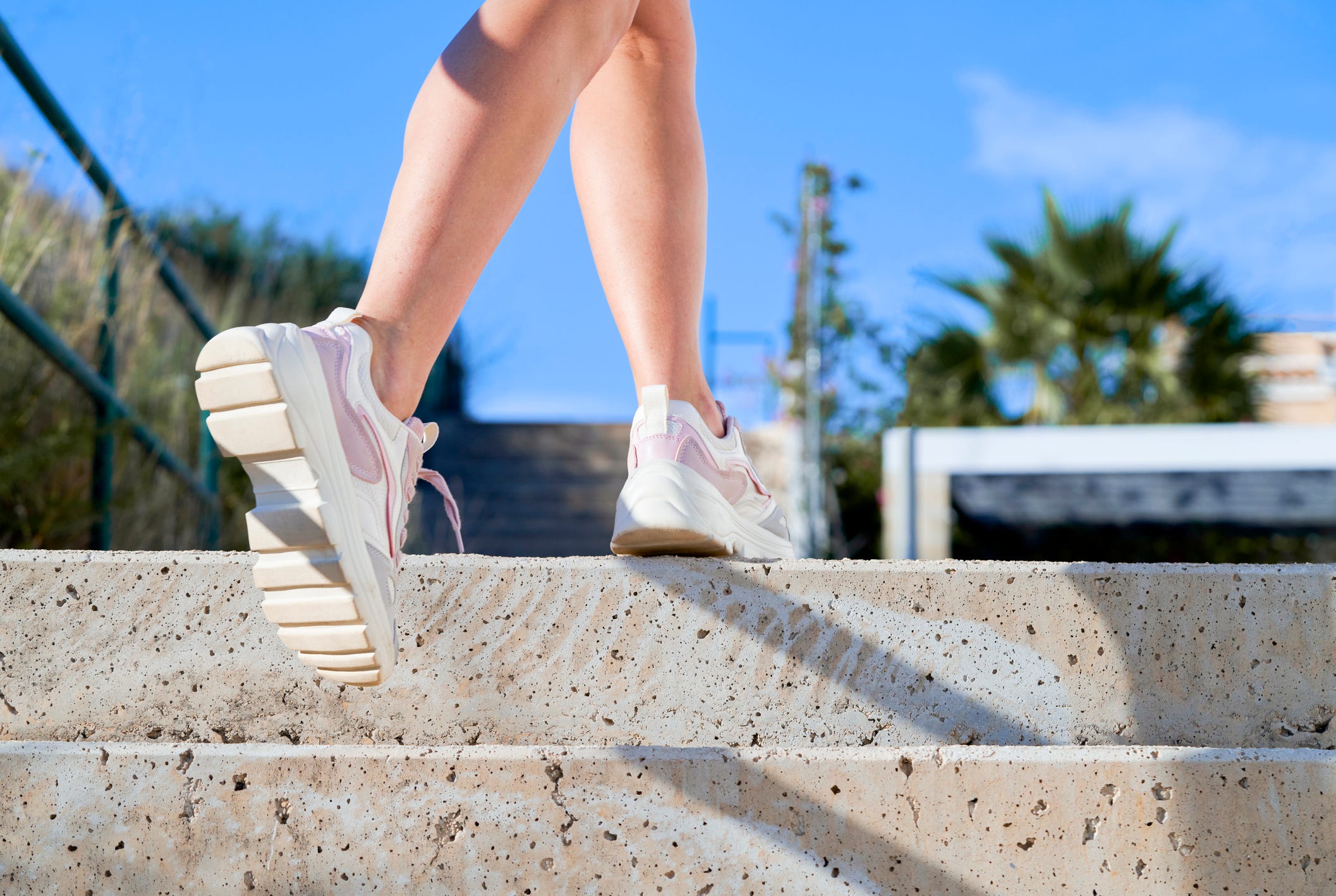
Ever wonder why keeping weight off feels like trying to hold onto sand slipping through your fingers? You’re not alone—it’s one of the most frustrating puzzles in fitness. But what if the secret isn’t about pounding the treadmill for hours or obsessing over kale salads? New research shines a spotlight on something surprisingly simple: walking. Not the mythical 10,000 steps a day that everyone’s been chasing, but a slightly more manageable 8,500 steps that could be a game changer for long-term weight maintenance. Intrigued? Here’s the lowdown on why upping your step count—and sticking to it—might just be the missing piece of your weight-loss puzzle.
 4 min read
A new systematic review and meta-analysis suggests that increasing (and maintaining) step counts to around 8,500 steps a day is helpful for maintaining significant weight loss long term.
Experts say that finding a balance between physical activity and diet is your best bet for sustained weight loss.
If you’re looking to increase your step count, know that you don’t have to get all 8,500 steps in at once—you can stack your movement throughout the day with small, meaningful changes like taking the stairs when you can and going for a short five-minute walk every hour.
A frustrating part of losing weight is that it’s tough to keep off—after all, data suggests that many people who lose a significant amount of weight will eventually gain it back over time. But now, new research suggests that adopting a walking habit can go a long way toward helping you keep the weight off in the long term. And while 10,000 steps a day has long been considered a popular benchmark, the latest research suggests that walking less than that is still associated with better long-term weight maintenance.
The systematic review and meta-analysis, published in the International Journal of Environmental Research and Public Health, found that people who increased their daily step count while losing weight and maintained that level of physical activity were much more successful at keeping the weight off than those who walked less.
Of course, weight loss and weight regain are complicated, so it’s hard to say that any given step count will magically help you to keep weight off. But experts say there’s something to this. Here’s why.
Meet the experts: Marie Hiett, RD, dietitian at Tufts Medicine Weight + Wellness—Stoneham; Mir Ali, MD, medical director of MemorialCare Surgical Weight Loss Center at Orange Coast Medical Center in Fountain Valley, California; and Marwan El Ghoch, PhD, study co-author and professor in the Department of Biomedical, Metabolic and Neural Sciences at the University of Modena and Reggio Emilia.
What did the study find?
For the study, researchers analyzed data from 14 randomized controlled trials that involved nearly 4,000 adults. The participants had an average age of 53 and an average BMI of 31, which falls in the obese range.
The included trials examined participants enrolled in lifestyle modification programs aimed at weight loss. These interventions combined dietary advice along with recommendations to walk more and track their steps. These participants were compared against control groups who dieted without that extra lifestyle support.
Researchers looked at participants’ daily step counts at the start of their weight-loss journeys, after they lost weight, and during the weight-loss maintenance phase. At the start, people in both groups had similar step counts (between 7,180 and 7,280 steps per day).
But people in the lifestyle modification program increased their daily step count to an average of 8,454 steps by the end of the weight loss phase, while those in the control group didn’t significantly increase their step count. At the end of the weight-loss phase, people in the lifestyle modification group lost an average of 4.4 percent of their body weight (about nine pounds).
Afterward, during the maintenance phase, the lifestyle modification participants mostly maintained these same activity levels, averaging about 8,241 steps per day. Researchers found these participants kept most of the weight they lost off, with an average long-term weight loss of 3.28 percent (about seven pounds).
Ultimately, the researchers concluded that aiming to walk 8,500 steps a day “appears to be associated with maintaining significant weight loss in the long term.”
Why might 8,500 steps help keep weight off?
There are likely a few reasons for this, according to Marwan El Ghoch, PhD, study co-author and professor in the Department of Biomedical, Metabolic and Neural Sciences at the University of Modena and Reggio Emilia.
One hypothesis is that increasing your step count after weight loss can counteract a phenomenon known as metabolic adaptation, in which your body slows its metabolism to try to keep you from losing more weight. “The body perceives the calorie deficit and weight loss as a threat to survival—like a famine—and tries to contrast this to prevent further weight loss,” he says.
But a lot of patients tend to go back to previously unhealthy habits and behaviors like overeating and being sedentary after a weight loss journey, El Ghoch says. “The biggest problem is that many patients consider the end of the weight loss phase as a ‘finish line’ rather than a permanent change for their whole life,” he says. Keeping up an increased step count can help counteract some of that, he points out.
That said, physical activity combined with healthy eating is still your best bet for sustained weight loss, says Mir Ali, MD, medical director of MemorialCare Surgical Weight Loss Center at Orange Coast Medical Center in Fountain Valley, CA. “Nutrition plays a powerful role,” he says. “Even with more than 8,500 steps a day, consistently consuming excess calories or highly processed foods can make weight management more challenging. It’s really about finding balance between movement and mindful eating.”
Do you need to walk all 8,500 steps at once?
Not at all. El Ghoch says you can “stack” movement into your existing routine to get up to 8,500 steps at the end of the day.
“This does not necessarily mean that 8,500 steps per day is the ‘magic’ number of steps required to lose weight,” says Marie Hiett, RD, dietitian at Tufts Medicine Weight + Wellness—Stoneham. “Rather, this number demonstrates two important things: Increasing baseline physical activity level can result in weight loss/maintenance, and the ‘standard’ 10,000 steps per day requirement is not necessarily needed to achieve and maintain weight loss.”
To get your step count up, El Ghoch suggests incorporating small lifestyle changes like the following:
- Make it a rule to never sit during phone calls.
- Park far away from your destination or get off public transportation one stop early.
- Take the stairs when you can.
- If you sit for work, try to squeeze in a five-minute walk every hour.
Overall, El Ghoch recommends trying to move regularly. Dr. Ali agrees. “I encourage my patients to think of nutrition as the foundation—prioritizing protein, vegetables, and whole foods, while limiting excess sugars and refined carbs. From there, movement enhances those efforts,” he says.
Korin Miller is a freelance writer specializing in general wellness, sexual health and relationships, and lifestyle trends, with work appearing in Men’s Health, Women’s Health, Self, Glamour, and more. She has a master’s degree from American University, lives by the beach, and hopes to own a teacup pig and taco truck one day.
Carina Hsieh, MPH, is the deputy features editor of Women’s Health. She has more than a decade’s worth of experience working in media and has covered everything from beauty, fashion, travel, lifestyle, pets, to health.
She began her career as an intern in the fashion closet at Cosmopolitan where she worked her way up to Senior Sex & Relationships Editor. While covering women’s health there, she discovered her passion for health service journalism and took a break to get her Masters in Public Health. Post-grad school, she worked as a freelance writer and as The Daily Beast’s first Beauty, Health, and Wellness Reporter.
Carina is an alum of the Fashion Institute of Technology and the Yale School of Public Health. She and her French Bulldog, Bao Bao, split their time between Brooklyn and Connecticut. She enjoys reformer Pilates, (slow) running, and smelling the fancy toiletries in boutique fitness class locker rooms.

Apple Watch Series 11 [GPS 42mm] Smartwatch with Rose Gold Aluminum Case with Light Blush Sport Band - S/M. Sleep Score, Fitness Tracker, Health Monitoring, Always-On Display, Water Resistant
(as of September 13, 2026 03:24 GMT +00:00 - More infoProduct prices and availability are accurate as of the date/time indicated and are subject to change. Any price and availability information displayed on [relevant Amazon Site(s), as applicable] at the time of purchase will apply to the purchase of this product.)
6FT Power Strip Tower Surge Protector, 12 Wide Spaced Outlets, 4 USB | 16-in-1 Desktop Charging Station with 2USB-C, 2USB-A, Flat Plug, 6FT Cord, 1800J Surge Protection for Home Office, Dorm White
$19.99 (as of September 13, 2026 03:24 GMT +00:00 - More infoProduct prices and availability are accurate as of the date/time indicated and are subject to change. Any price and availability information displayed on [relevant Amazon Site(s), as applicable] at the time of purchase will apply to the purchase of this product.)
Dog Allergy Relief Chews 170 Count Anti Itch Skin & Immune Support for Dogs | Itch Relief, Omega 3 Fish Oil, Probiotics, Hot Spots & Allergies, Paw Licking, Dry Skin & Coat Supplement, Beef Liver Flavor
$16.99 (as of September 13, 2026 03:08 GMT +00:00 - More infoProduct prices and availability are accurate as of the date/time indicated and are subject to change. Any price and availability information displayed on [relevant Amazon Site(s), as applicable] at the time of purchase will apply to the purchase of this product.)
Nespresso Capsules Vertuo, Variety Pack, Medium and Dark Roast Coffee, 30 Count Coffee Pods, Brews 7.8 oz.
$42.00 (as of September 13, 2026 03:03 GMT +00:00 - More infoProduct prices and availability are accurate as of the date/time indicated and are subject to change. Any price and availability information displayed on [relevant Amazon Site(s), as applicable] at the time of purchase will apply to the purchase of this product.)











Post Comment