
Unlocking the Secret Sauce Behind Josie and the Pussycats’ Jaw-Dropping Y2K Wardrobe—Prepare to Have Your Fashion Game Changed Forever!
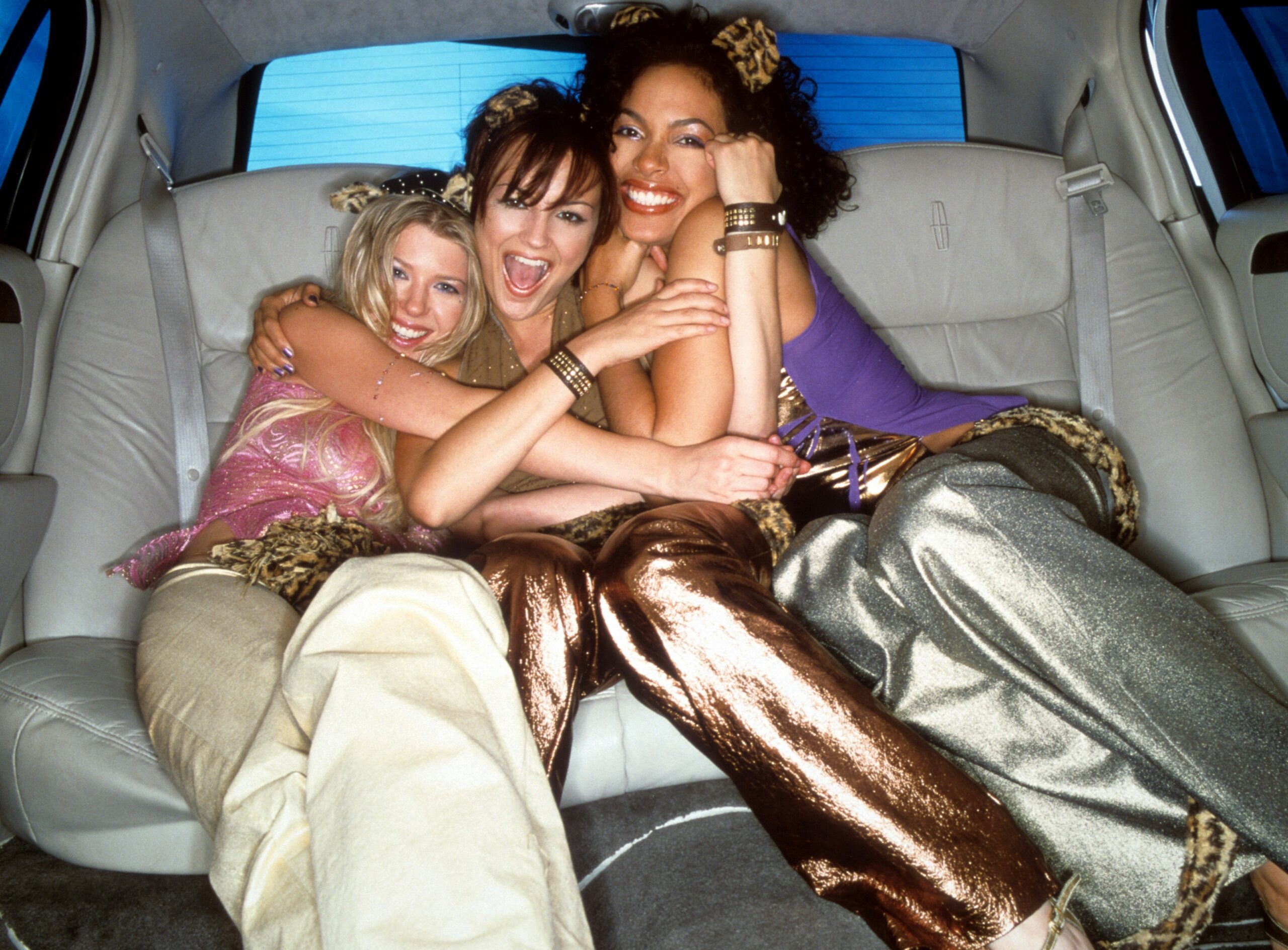
Ever wonder if cat ears could actually fast-track your dream job? Well, Leesa Evans didn’t just wonder—she wore hers loud and proud to snag the costume designer gig for Josie and the Pussycats. Talk about commitment! As a lifelong fan, Evans dove headfirst into a world dripping with oversized sequins, bubblegum pop, and cheeky critiques of consumer culture. This isn’t just about clothes—it’s a vibrant pulse of individuality battling the hypnotic pull of fame and fortune. And honestly? It’s a wild ride that still rings true decades later, especially if you’ve ever wrestled with keeping your creative soul in a world obsessed with “selling out.” Ready to dig into how clothes can tell stories louder than words and why Josie’s leopard print suit still slays? Let’s unleash the magic—cat ears and all.
 5 min read
Costume designer Leesa Evans interviewed for her Josie and the Pussycats job wearing cat ears. A lifelong fan of the original comic books, the then-thirtysomething designer jumped on the opportunity as soon as she heard co-writers Deborah Kaplan and Harry Elfont planned to transform the beloved Archie comics into a feature film.
“I was so in love with Josie and the Pussycats when I was a kid,” Evans tells me on a video call from Savannah. “I went as far as to make these really cool cat ears—pussycat ears—that exact style is what Tara Reid wears in the movie.” What better way to win over the directors than to come dressed for the part?
Evans’ passion clicked with the cartoon excess and flamboyant pop stardom that Josie and the Pussycats called for. From the start, she understood that the film needed clothes that felt as loud as the culture and society Kaplan and Elfont intended to critique.

The Josie and the Pussycats comics first hit shelves in 1963, telling the story of an all-woman, globe-trotting rock band clad in leopard-print jumpsuits. It came to life as a short-run 1970s cartoon, accompanied by a real bubblegum pop album (a theme song any Gen-X or Millennial is extremely familiar with). All this laid the groundwork for the 2001 film adaptation, starring Rachel Leigh Cook, Rosario Dawson, and Tara Reid as Josie, Valerie, and Melody, respectively. This rendition honored the original cartoonish aesthetic, a bizarre, bubble-gum pink, Pop art–inspired, commercial-driven world crafted by the production designer Jasna Stefanovic. But the soul of the film is perhaps most evident in the clothing, 90% of which was custom-made to reflect the characters’ personalities.
Josie’s costume, predictably, needed to say a lot. “It’s her namesake film, so she needed the main focus of who she is first, and how does that affect her friends?” she says. Referencing Blondie’s Debbie Harry, Evans explains how she “wanted [Josie] to have the edge that she just loved music for music’s sake. She was just a true musician and artist, and she wanted to wear things that reflected her love of the guitar and of music.” One iconic shirt is Josie’s “Sid” tank top with chains (a reference to the Sex Pistols). Her clothing looks thrifted, intentionally pulled together by a struggling artist with taste. And, of course, her wardrobe included maximalist pieces: sparkling sequin tops, a blue fur zip-up jacket, and (we can’t forget) a leopard print suit. Oh, and plenty of low-rise jeans.
Low-rise jeans were just starting to catch on the market when Evans started working on the film, but the inseams available were not small enough for the designer. It became a challenge of “How low can we go?,” particularly when designing the wardrobe for Reid’s Melody, whose outfits almost exclusively featured low-rise pants and “tops that looked like they were falling off.” “The whole idea is that she’s a person who trips upwards at all times,” she explains. “We just wanted things to always feel ‘oops’… This girl who just had magic coming out of her eyes and sparkles and felt like there was nothing that couldn’t ever be accomplished.”

The most pragmatic of the trio is Dawson’s Valerie. “Her character was the one who was always trying to keep it together,” Evans explains, and she wanted this to show in the clothes. “I wanted her to feel a little buttoned up, but not so much so that we didn’t understand that she also was just a person who was fully creative at her soul, and so I wanted those elements to come through: the cool t-shirt or a vintage jacket,” she says. “These girls didn’t have a lot of money, so most of their stuff came from repurposing vintage clothes.” One of her best outfits is an all-royal-purple ensemble with low-rise bedazzled jeans.
But in my opinion, the best-dressed character in the film is actually Parker Posey as lisp-y corporate villain Fiona, a sinister record executive who puts subliminal messages into songs so teens buy, buy, buy. “What we wanted is that at every given moment, she was taking everyone by surprise,” Evans says. We first meet her in a patchwork blue plaid dress, complemented by blue eye shadow and a messy hairdo; in another scene she is wearing a haphazardly stitched-together dress made from her company’s logos (the ultimate advertisement for a corporate executive); but her sartorial magnum opus might be a hot pink dress paired with a feathered choker whose plumes also work as a kind of barrier; keeping people at arm’s length (or feather’s length?).
“The feathers were meant to keep people away; she’s having these outfits that walk in front of her, and it’s her own kind of armor,” Evans adds. “We find out at the end, it is this insecurity that she needed the fashion to be who she was instead of part of her. The more outrageous and the more unique, the better.”
At the time of its release, the movie tanked at the box office (hard to believe a film so inextricably tied to an era failed to land with audiences); but a quarter century later, it has achieved cult status. Behind the glitzy world of fame, Josie and the Pussycats boils down to a story about how consumerism hypnotizes us, often robbing us of our creative individuality. Its critique of American hyper-commodification and “selling out” failed to resonate with the audience; packed with a fanaticism that felt too new then, yet, on rewatch, it reads as a clairvoyant look into the future of fashion and capitalism. “This is the ultimate consumerism story, which just couldn’t be closer to the truth,” Evans says. All three girls, particularly Josie, contend with the dilemma of fame and “selling out”—of staying true to yourself and your friends even when money is dangled in front of you. That’s why we remember Evans’s custom-made wardrobe, not only for forecasting the era’s trends but also for being driven by the individuality of its characters—and its designer.
“We just always wanted to continue to [hint at the fact] that there is danger for all of us in this world because money makes the world go round in that way,” she says. “We wanted to use this social commentary of ‘Hey, at some point, you don’t want to give up your creative vision just for the money because that can be very lonely.” Ultimately, Josie and the Pussycats really inspires you to express yourself in your clothing—even if it’s cat ears.
Bluetooth Headphones, Hybrid Active Noise Cancelling Over Ear Headphones | 35H Playtime, HiFi Stereo Foldable wireless Headphones with Foam Ear Cups for Sports, Office, Travel
$20.98 (as of October 6, 2026 03:27 GMT +00:00 - More infoProduct prices and availability are accurate as of the date/time indicated and are subject to change. Any price and availability information displayed on [relevant Amazon Site(s), as applicable] at the time of purchase will apply to the purchase of this product.)
Surge Protector Outlet Extender with Rotating Plug, Multi Plug Wall Outlet | 6 AC Outlet Splitter 4 USB Ports (2 USB C),1800J USB Wall Charger, Plug Adapter Power Strip for Home Office Dorm Room Travel
$9.99 (as of October 6, 2026 03:19 GMT +00:00 - More infoProduct prices and availability are accurate as of the date/time indicated and are subject to change. Any price and availability information displayed on [relevant Amazon Site(s), as applicable] at the time of purchase will apply to the purchase of this product.)
Fresh Step Advanced Odor Shield Clumping Cat Litter with Gain, 18.5 lb, 2Pk | Odor Shield with Ammonia Block Technology, Low Dust, Multi Cat, Compatible with Most Automatic Litter Boxes
$19.99 (as of October 6, 2026 03:10 GMT +00:00 - More infoProduct prices and availability are accurate as of the date/time indicated and are subject to change. Any price and availability information displayed on [relevant Amazon Site(s), as applicable] at the time of purchase will apply to the purchase of this product.)
Blue Buffalo Health Bars Pumpkin & Cinnamon Dog Biscuits, 16 oz | Oven-Baked, Crunchy Texture, No Chicken By-Product, Corn, Wheat, or Soy
$4.98 (as of October 6, 2026 03:10 GMT +00:00 - More infoProduct prices and availability are accurate as of the date/time indicated and are subject to change. Any price and availability information displayed on [relevant Amazon Site(s), as applicable] at the time of purchase will apply to the purchase of this product.)








Post Comment