Is Ethereum on the Brink of a Volatility Avalanche? What the Deepening Sell Pressure Means for Your Portfolio Now
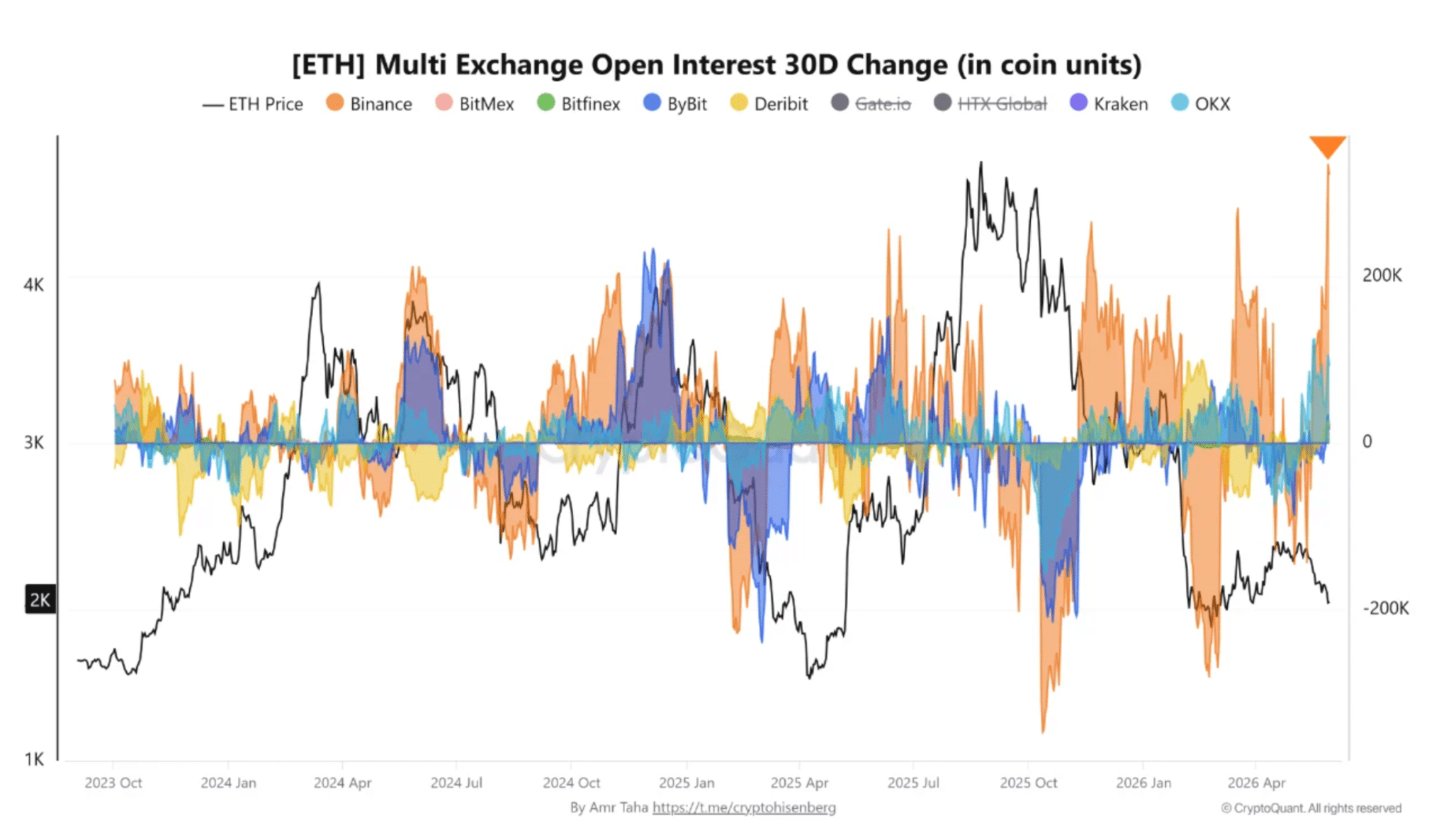
When was the last time you saw Ethereum’s derivatives market throw such a curveball? On May 28th, Binance’s Open Interest exploded by a staggering 336,000 ETH—the biggest spike since 2019—even as prices were sliding down the slope. Sounds like a paradox, right? Instead of screaming “strong buy,” this surge signals something subtler: an acceleration in speculative bets while real spot demand stays chilly. It’s like a high-wire act where leverage is stretching faster than conviction, and anyone who’s played this game knows it’s a recipe for increased fragility. With Open Interest pushing record highs not just on Binance but across Bybit and OKX too, we’re staring down a volatile showdown. Will ETH bounce back with a vengeance, triggering a legendary squeeze, or will the mounting selling pressure and leverage trigger a cascade of liquidations? Buckle up—this isn’t your usual market story. LEARN MORE
Ethereum’s [ETH] derivatives market is showing an unusual divergence as Binance Open Interest surged by roughly 336,000 ETH on the 28th of May. This marked the largest single increase since 2019 despite weakening price conditions.
Rather than reflecting strong accumulation, the move suggests speculative positioning is accelerating while Spot demand remains subdued.
Historically, similar episodes have increased market fragility because leverage expands faster than underlying conviction.

Meanwhile, Open Interest across major exchanges continues trending toward record territory. Binance led the latest expansion, while participation from Bybit and OKX added to the broader buildup.
More importantly, ETH remains below key recovery levels while leverage keeps rising. This combination creates a high-volatility setup. If buyers regain control, elevated positioning could fuel a powerful squeeze.
However, if selling pressure persists, the growing leverage base could amplify liquidations and accelerate downside volatility across the market.
Ethereum’s leverage surge meets heavy selling pressure
Ethereum’s leverage buildup already revealed growing speculative activity. However, order-flow data now shows how traders positioned behind that exposure.
On the 28th of May, Binance Cumulative Net Taker Volume plunged to roughly -$744 million, marking its weakest reading since the 6th of April.

This decline suggests aggressive sellers continued dominating derivatives flows even as Open Interest expanded sharply.
Rather than validating the recent 336,000 ETH increase in Binance OI, new positions entered a market where bearish pressure remained firmly in control.
The imbalance becomes clearer through trading activity. Futures volume approached $46 billion, while spot volume remained near $2.4 billion. As a result, derivatives increasingly dictated market direction while underlying demand lagged.
Meanwhile, Binance absorbed both the largest leverage expansion and the strongest sell-side pressure. Historically, such divergences have preceded elevated volatility.
For now, ETH remains sensitive until spot demand absorbs growing derivative exposure.
Ethereum’s support zones face growing liquidation risk
Ethereum’s growing leverage buildup is now making key support zones increasingly important. Earlier, Open Interest surged while aggressive selling dominated derivatives flows.
Now, liquidation clusters reveal where that pressure could have the greatest impact.
Large concentrations of leveraged longs have accumulated between $1,950 and $2,000. As a result, any decisive break below this region could trigger cascading liquidations and accelerate downside volatility.

Meanwhile, persistent negative taker flows have pushed sentiment toward bearish territory. That shift creates a different risk. If Spot demand returns or shorts begin covering, crowded positions could unwind rapidly.
Therefore, Ethereum’s current structure favors volatility rather than direction. Support failure could trigger a leverage-driven selloff, while renewed demand could force a sharp squeeze through overextended bearish positions.
Final Summary
- ETH faces rising volatility as leverage and selling pressure continue building.
- Ethereum remains vulnerable to liquidations, though renewed demand could trigger a squeeze.

Babole Pet Yellow Daisy Dog Collar Cute Summer Dog Collars for Small Dogs - Lightweight Adjustable Girly Floral Female Dogs Everyday Collar with Safety Buckle S
$9.99 (as of September 21, 2026 03:10 GMT +00:00 - More infoProduct prices and availability are accurate as of the date/time indicated and are subject to change. Any price and availability information displayed on [relevant Amazon Site(s), as applicable] at the time of purchase will apply to the purchase of this product.)
Self Cleaning Litter Box, Self Cleaning Cat Litter Box, Open-Top Design | No app or Wi-Fi needed—plug in this self cleaning cat litter box, press the power button, and spend less time scooping
$99.99 (as of September 21, 2026 03:10 GMT +00:00 - More infoProduct prices and availability are accurate as of the date/time indicated and are subject to change. Any price and availability information displayed on [relevant Amazon Site(s), as applicable] at the time of purchase will apply to the purchase of this product.)
San Marco Coffee Flavored Ground Coffee, Chocolate Orange, 1 Pound
(as of September 21, 2026 03:22 GMT +00:00 - More infoProduct prices and availability are accurate as of the date/time indicated and are subject to change. Any price and availability information displayed on [relevant Amazon Site(s), as applicable] at the time of purchase will apply to the purchase of this product.)
Alex Tech 10ft - 1/2 inch Cord Protector Wire Loom Tubing Cable Sleeve Split Sleeving For USB Cable Power Cord Audio Video Cable – Protect Cat From Chewing - Black
$8.99 (as of September 21, 2026 03:12 GMT +00:00 - More infoProduct prices and availability are accurate as of the date/time indicated and are subject to change. Any price and availability information displayed on [relevant Amazon Site(s), as applicable] at the time of purchase will apply to the purchase of this product.)













Post Comment