Why Quitting Your Phone Cold Turkey Could Be Sabotaging Your Happiness—The Shocking Truth Revealed!
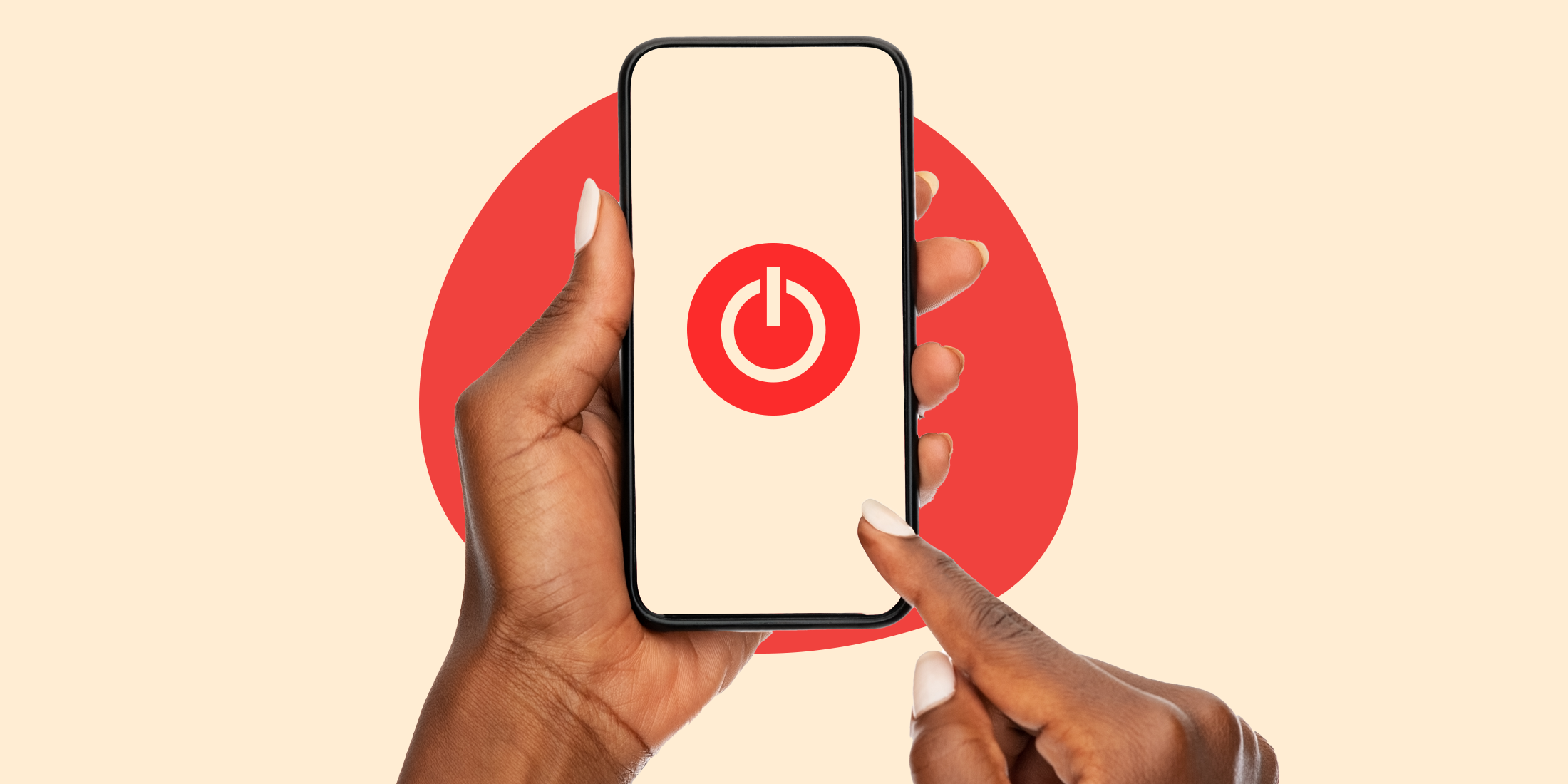
Ever wondered if logging off social media actually lifts your mood—or if it’s just another wellness trend that leaves you scrolling back in no time? I get it. The lure of a digital detox sounds like hitting the reset button on your sanity, but recent research throws a curveball: stepping away from social platforms might not boost your happiness or satisfaction as much as we thought. Intrigued? Me too. I’ve been through cycles of “offline for a week” that felt more frustrating than freeing. Turns out, there’s more nuance here—why some detoxes flop and how taking mindful control instead of a hard break could be the game changer. If you’re contemplating a social media timeout but want to know what really works, you’re in the right place. Let’s dig into the latest findings—and I’ll share why even if science is skeptical, hitting pause might still serve you well. LEARN MORE
 3 min read
- A new meta-analysis found no statistically significant difference in positive affect, negative affect, or life satisfaction in people who tried digital detoxes.
- Even with this data in mind, experts say there may still be a benefit to taking a break from social media if you think it will be helpful.
- You may find it easier to use a timer that automatically limits your time spent scrolling on certain apps or just aim to try using your phone more mindfully.
When it feels like your social media habits aren’t serving you or your mental health, it’s understandable to want to take a break and try a digital detox—aka taking a time-out from social media. Plenty of people have been there, done that, and end up feeling better as a result.
But now, new research suggests that taking a digital detox may not be all it’s cracked up to be. In fact, based on the latest findings, it might not do much at all.
There are a few things researchers want you to keep in mind about this news—and prior research on the topic. Here’s what the study found, plus why experts argue there’s still value in taking a digital detox if you feel like you need one.
Meet the experts: Kostadin Kushlev, PhD, a researcher and associate professor in the Department of Psychology at Georgetown University and Sajita Setia, MD, a researcher and physician who specializes in online safety.
What did the study find?
The systematic review and meta-analysis, published in Scientific Reports, examined data from 10 studies on social media detoxes involving 4,674 participants. These social media breaks lasted anywhere from a day to a month.
Researchers then looked at the impact of these detoxes on the participants. They narrowed their focus to positive affect (including feelings such as alertness, energy, and enthusiasm) and negative affect (including feelings such as fear, guilt, and anger). The researchers also evaluated the participants’ life satisfaction, which measured how well they thought their lives were going.
After analyzing all the data, researchers found no statistically significant differences across the three categories. This means that people didn’t feel more happiness or less sadness by giving up social media. Digital detoxes also didn’t affect their overall life satisfaction.
“The findings thus suggest that temporarily stepping away from social media may not be the most optimal approach to enhance individual well-being, emphasizing the need for further research on alternative disconnection strategies,” the researchers wrote in the study.
Why don’t digital detoxes work for everyone?
It’s complicated because there’s some data that suggests that digital detoxes can help, even in smaller doses.
But there are caveats. “A lot of the [studies] in this area do not meet standards for high-quality research,” says Kostadin Kushlev, PhD, researcher and associate professor in the Department of Psychology at Georgetown University. He points out that most studies use fewer participants and that there is considerable variability in how a digital detox is defined (whether that’s taking a break from all social media or just one app, etc.).
Many studies also track only how well a person adheres to digital detox based on what they report to researchers, which leaves the door open to inaccuracies, he points out. “The evidence is indeed weak that detoxing from social media works, but I do not think it is fair to say that there is evidence that it doesn’t work,” Kushlev says.
But Kushlev says it also matters why someone goes on a digital detox—and people who are told to go on a digital detox as part of a study may not benefit as much as those who choose to do it on their own.
How to make a digital detox helpful for you
If you think you could benefit from a social media break, experts say you should do just that. Just be aware of why you’re doing it and consider what’s harming you vs. helping you by staying connected.
“A break from doomscrolling at midnight is very different from losing access to a parenting support group, professional community, or migrant family network,” points out Sajita Setia, MD, a physician and researcher who specializes in online safety. “Digital wellbeing is not about blanket abstinence; It is about intentional, values-based use.”
If you feel like you could use a social media detox, she recommends thinking about what kind of use supports your wellbeing, relationships, sleep, and attention, and zeroing in on that. Maybe you find that you relax when you check out new recipes on social media, but feel anxious when you spot photos from fun things people in your circle are doing that you’re not a part of. Kushlev also says setting limits might help. You can use a timer to check your feeds or try using an app that shuts down certain apps or feeds after a set amount of usage.
All in all, social media isn’t inherently bad. There’s certainly a benefit to staying connected with your communities, as Dr. Setia pointed out—but if you find yourself overdoing it, mindful breaks may still help you be more present.
Korin Miller is a freelance writer specializing in general wellness, sexual health and relationships, and lifestyle trends, with work appearing in Men’s Health, Women’s Health, Self, Glamour, and more. She has a master’s degree from American University, lives by the beach, and hopes to own a teacup pig and taco truck one day.
Carina Hsieh, MPH, is the deputy features editor of Women’s Health. She has more than a decade’s worth of experience working in media and has covered everything from beauty, fashion, travel, lifestyle, pets, to health.
She began her career as an intern in the fashion closet at Cosmopolitan where she worked her way up to Senior Sex & Relationships Editor. While covering women’s health there, she discovered her passion for health service journalism and took a break to get her Masters in Public Health. Post-grad school, she worked as a freelance writer and as The Daily Beast’s first Beauty, Health, and Wellness Reporter.
Carina is an alum of the Fashion Institute of Technology and the Yale School of Public Health. She and her French Bulldog, Bao Bao, split their time between Brooklyn and Connecticut. She enjoys reformer Pilates, (slow) running, and smelling the fancy toiletries in boutique fitness class locker rooms.
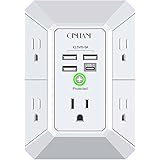
Wall Charger, Surge Protector, QINLIANF 5 Outlet Extender with 4 USB Ports | 1680 Joules, 3-Sided Power Strip, Multi Plug Wall Outlet Adapter Spaced for Home Travel Office, White
$9.98 (as of September 23, 2026 03:13 GMT +00:00 - More infoProduct prices and availability are accurate as of the date/time indicated and are subject to change. Any price and availability information displayed on [relevant Amazon Site(s), as applicable] at the time of purchase will apply to the purchase of this product.)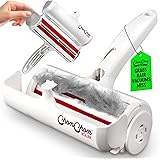
ChomChom Roller Pet Hair Remover – Original Size Reusable Lint Roller for Cat & Dog Hair on Furniture, Couch, Carpet, Car, Rugs & Bedding – Portable, Eco-Friendly (White)
$23.99 (as of September 23, 2026 03:11 GMT +00:00 - More infoProduct prices and availability are accurate as of the date/time indicated and are subject to change. Any price and availability information displayed on [relevant Amazon Site(s), as applicable] at the time of purchase will apply to the purchase of this product.)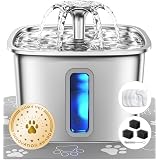
Veken Innovation Award Winner Stainless Steel Cat Water Fountain, 108oz, C1 | Automatic Pet Fountain Dog Water Dispenser with 3 Replacement Filters & Silicone Mat, Gifts for Cats, Dogs (Silver)
$27.99 (as of September 23, 2026 03:11 GMT +00:00 - More infoProduct prices and availability are accurate as of the date/time indicated and are subject to change. Any price and availability information displayed on [relevant Amazon Site(s), as applicable] at the time of purchase will apply to the purchase of this product.)
IQBAR Clean High Protein Bars, Low Sugar Snack, Chocolate Variety 12ct | 12g Plant Protein, 7-9g Fiber, 1g Sugar | GLP-1 & Keto Friendly | Vegan, Gluten Free, Dairy Free, Non-GMO, Kosher
$24.99 (as of September 23, 2026 03:22 GMT +00:00 - More infoProduct prices and availability are accurate as of the date/time indicated and are subject to change. Any price and availability information displayed on [relevant Amazon Site(s), as applicable] at the time of purchase will apply to the purchase of this product.)













Post Comment