
Seattle’s Soccer Revolution: The Untold Power Move That Could Ignite America’s Game Like Never Before!
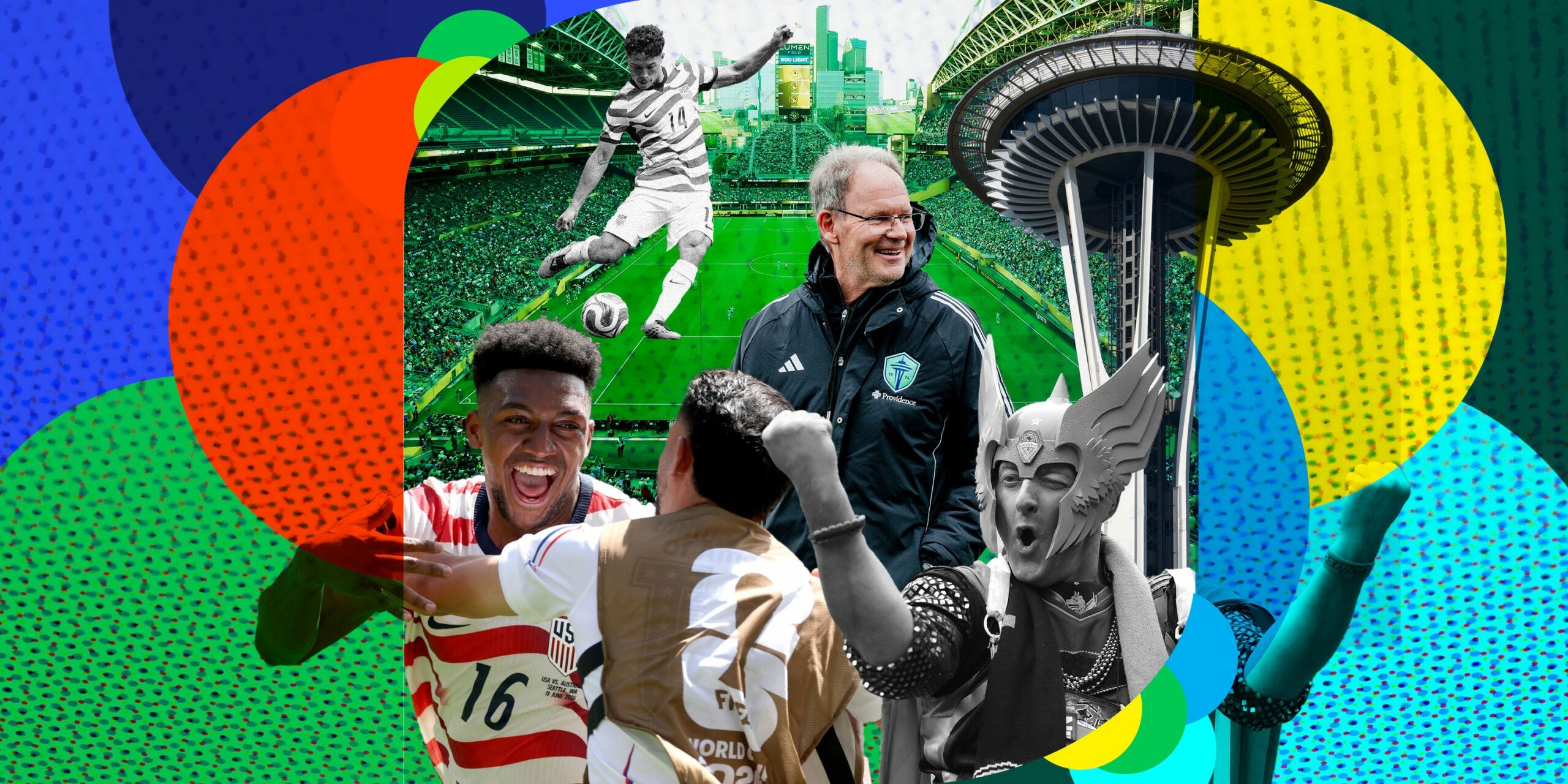
Ever wonder what happens when 66,925 rambunctious fans unite under one sunlit sky, singing “Take Me Home, Country Roads” at the top of their lungs? No, it’s not the start of a rock concert or a quirky flash mob — it’s the electrifying aftermath of Team USA’s 2-0 victory over Australia at Seattle’s iconic Lumen Field on June 19. I wasn’t there, but trust me, even if soccer isn’t your go-to sport, that moment—filled with sweat, cheers, and unspoken camaraderie—was a spectacle that transcended the game itself. Brian Schmetzer, a lifelong Seattle Sounders legend, called it a “high watermark,” a day when tears mingled with jubilation, reminding us why sport, history, and community run deeper than just the final score. This wasn’t just a match; it was the crescendo of more than 135 years of soccer culture seeded by immigrants, nurtured by passionate fans, and supercharged by a modern soccer renaissance in Seattle. Stick around — let’s kick off and explore how this city became a vibrant heartbeat for the beautiful game, bringing together old-school grit and new-age zeal, all wrapped up in a sea of emerald green. LEARN MORE.
 5 min read
EVEN IF YOU don’t watch soccer, you probably saw the viral scenes from Seattle on June 19, when Team USA beat Australia 2-0 on a brilliant blue-sky day at sold out Lumen Field. After the final whistle 66,925 fans and players teamed up for a roaring rendition of Take Me Home Country Roads.
“It was a tremendous afternoon, absolutely a high watermark for me as a lifelong Seattle fan.” says Brian Schmetzer, head coach of the Seattle Sounders who grew up in Seattle and played for the Sounders in the 1980s and was at the USA game. “There was so much positive energy, people with tears in their eyes.”
It was a moment more than 135 years in the making.
European immigrants from Wales, Italy and Germany first brought the game to the area in the 1890s, with teams of lumberjacks and miners facing off, according to the Washington State Soccer Legends, a nonprofit dedicated to preserving local soccer history. Schmetzer, who is 63, says his first memories of soccer were watching his dad Walter, who was from Germany, playing in an ethnic league. “He played for Germania and it was a vibrant grass-roots scene. They played against the Hungarians or Polish or the Italians.”
Brian played himself for the Sounders, who were founded in 1974 and were one of the teams in the North American Soccer League. “It’s been a bumpy road,” he says referring to how the league folded in 1984 and he played in various indoor leagues. “The World Cup in 1994 gave the game a big boost and with Major League Soccer in 1996 came more money and resources.” The Sounders played their first game in the league as an expansion franchise in 2009 and set fan attendance records their first five years.

Brian Schmetzer, head coach of the Seattle Sounders.
Every Sounders home game fans and the team’s marching band, the Sound Wave, walk from Pioneer Square in downtown Seattle to Lumen Field, a raucous tradition that speaks to the town’s strong, fun, and inclusive soccer culture. On a recent visit to Seattle, I interviewed several fans about that culture.
Bella Bonnett who is from California just graduated from Seattle University where she played midfield on the women’s soccer team for four years. “One of the first things I noticed after moving to Seattle was how deeply soccer is woven into the community,” she says. “Every weekend I see people of all ages out playing soccer just for the love of the game. You can feel the excitement around the Seattle Sounders throughout the city; whether it’s fans wearing Sounders gear downtown or conversations about upcoming matches. Seattle also has a strong women’s soccer presence through the Reign, which has been inspiring to see as a female athlete. The passion for soccer here is unlike anything I expected. In Seattle, soccer isn’t just something people watch, it’s also something they actively participate in and connect over. The city has built a culture where soccer is celebrated year round, and that passion is very contagious.”

(From left) Isaiah Harris, Bella Bonnett, Ben Court (the author), and Himi Martin kicking it in Seattle in June, 2026.
Isaiah Harris is an 800-meter specialist for the Brooks Beast Track Club, and recently moved to Seattle from Maine. “I first realized Seattle was such a soccer city when I noticed that every time we met for practice at a different field around the city, there would always be some sort of soccer league going on,” he says.” Even the indoor facility we practice at hosts indoor soccer tournaments. Everywhere I looked, people were playing soccer!”
Himi Martin is a local creative and soccer fan, who was born and raised in Seattle. “It’s a great soccer city because of the easy accessibility. There are plenty of grass fields and parks with actual goals set up to have fun!,” he says. “Along with that, Seattle embraces the global nature of the sport. People from all over the world call this city home, and what they bring with them, their mix of cultures and perspectives, all connected by one game.”

Sold-out Lumen Field in downtown Seattle hosted USA’s World Cup game versus Australia on June 19, 2026.
Jen Barnes is a fourth generation Seattleite and business woman. She’s the founder of Rough & Tumble, a women’s-focused sports bar and co-owner of semipro development team Salmon Bay FC. She emphasizes the long history of soccer in Seattle for both men and women, with the Sounders and Reign and the national teams often playing in Seattle too. Barnes opened Rough & Tumble in 2021 because she wanted a place where fans could always find women’s sports on the TVs. “My idea from the very beginning was to create a space for fans that existed where women’s sports and men’s sports were treated equally and so that’s really what it’s been about, she says. “I didn’t want to single out one gender or the other. I wanted to create a space that’s reflective of what most of the fan base out there is really looking for.” Barnes wasn’t at the USA versus Australia game, but she says watching clips of the game and seeing the emotion and excitement of the fans singing at the end “makes me cry every time.”
It’s a reminder of the power of fandom, of community, and how uniting around something larger than us all can be profoundly impactful.Researchers call this IRL group phenomena, belonging-induced euphoria “collective effervescence. Adam Grant, Ph.D., a University of Pennsylvania researcher describes it as “the sense of energy and harmony people feel when they come together in a group around a shared purpose.”
The World Cup is unique. American football doesn’t have a global competition because other countries don’t really play the sport. Remember approximately 230 million people watch the Super Bowl; about 1.5 billion people are expected to watch the World Cup final. There’s the World Baseball Classic, but that doesn’t feel like the pinnacle of that sport yet. Ice hockey has the Olympics every four years, and that’s great. But it’s not as global a sport as soccer and and you don’t often get 66,925 fans coming together to support the nation ice hockey team.

Fans at Seattle’s Rough & Tumble pub enjoying a big game.
Schmetzer hopes that just as the 1994 World Cup gave soccer a boost in America, this World Cup can “supercharge growth,.” But also something even more powerful. What took place that sunny afternoon in Seattle was a special moment. “You know our country is divided in certain ways and all that stuff. At the game, there’s no sign or talk of politics,” he says. “Everybody was in red, white, and blue. The patriotism that we all felt in that stadium singing Country Roads was amazing. It was so good. Nobody cared whether you’re on the right or on the left, everybody was singing and enjoying the day together.”

Ben Court is the Executive Editor of Men’s Health. He has a decade of experience writing and editing stories about peak performance, as it relates to health, nutrition, fitness, weight loss, and sex and relationships. He enjoys yoga, cycling, running, swimming, lifting, grilling, and napping.

BarkBox LICKSTERS Peanut Butter & Beef Treat Refills - Medium and Large | Peanut Butter & Beef Recipe Dog Treats - Probiotics for Gut Health, No Corn or Soy, Made in the USA - For LICKSTERS Toy
$17.69 (as of October 14, 2026 03:21 GMT +00:00 - More infoProduct prices and availability are accurate as of the date/time indicated and are subject to change. Any price and availability information displayed on [relevant Amazon Site(s), as applicable] at the time of purchase will apply to the purchase of this product.)
Nespresso Capsules Vertuo, Variety Pack, Medium and Dark Roast Coffee, 30 Count Coffee Pods, Brews 7.8 oz.
$42.00 (as of October 14, 2026 03:09 GMT +00:00 - More infoProduct prices and availability are accurate as of the date/time indicated and are subject to change. Any price and availability information displayed on [relevant Amazon Site(s), as applicable] at the time of purchase will apply to the purchase of this product.)
Pure Life Purified Bottled Water - 15 Pack, 16.9 Fl Oz | Still Drinking Water Enhanced with Minerals for a Crisp Taste
$4.95 (as of October 14, 2026 03:09 GMT +00:00 - More infoProduct prices and availability are accurate as of the date/time indicated and are subject to change. Any price and availability information displayed on [relevant Amazon Site(s), as applicable] at the time of purchase will apply to the purchase of this product.)
Petcarex Dog Dental Powder, Dog Teeth Cleaning Breath Freshener | Pet Tartar and Plaque Remover for Teeth, Tooth Cleaning Powder with Probiotics for Dogs of All Breeds, Duck Flavor
$22.99 (as of October 14, 2026 03:21 GMT +00:00 - More infoProduct prices and availability are accurate as of the date/time indicated and are subject to change. Any price and availability information displayed on [relevant Amazon Site(s), as applicable] at the time of purchase will apply to the purchase of this product.)













Post Comment