Fed Governor Waller’s Subtle Move Could Quietly Reshape Crypto’s Future — Here’s What You’re Missing
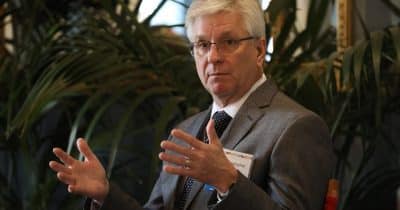
So here we are again—witnessing another moment where economics meets real life, but with a twist that might just make you scratch your head. Federal Reserve Governor Christopher Waller stepped up in Rabat, Morocco on May 14, 2025, not to dazzle us with the usual jargon, but to peel back the curtain on how monetary policy really trickles down through the economy. Sounds straightforward, right? But here’s the kicker—the way we think about this process has completely flipped over time. Remember when the Fed used to assume folks made money moves based mostly on past events? Well, that old-school view is about as outdated as dial-up internet. Now, it’s all about rational expectations—the idea that people actually anticipate what’s coming next and price it all in ahead of time. Intriguing, huh? But what truly caught my eye was what Waller didn’t mention: not a word on crypto, stablecoins, or digital currencies in the whole transmission conversation. In a world buzzing about DeFi and digital assets, the Fed’s focus remains firmly rooted in traditional banking channels. Makes you wonder—are digital assets still flying under the radar in the grand scheme of monetary policy? Or is the real game happening elsewhere? Let’s dive in and unpack this fascinating disconnect. LEARN MORE
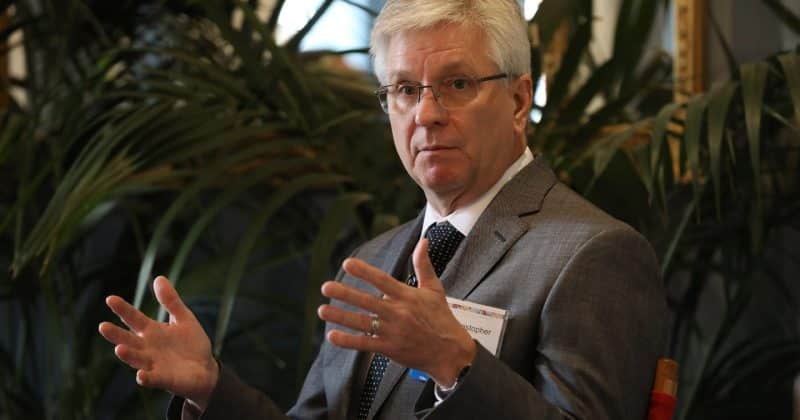
Federal Reserve Governor Christopher Waller took the stage at the Bank Al-Maghrib Prize ceremony in Rabat, Morocco on May 14, 2025, to deliver a speech about how monetary policy actually works its way through the economy. Waller focused on the evolution of economic thinking around monetary policy transmission, specifically contrasting older adaptive models with the rational expectations framework that emerged from research at the Minneapolis Fed, the University of Minnesota, and the University of Chicago. In plain English: the Fed used to assume people made financial decisions based mostly on what happened in the past. The newer thinking says people also factor in what they expect to happen next.
Under old adaptive models, the central bank could essentially surprise markets. Rational expectations flipped that on its head. If market participants are forward-looking, meaning they’re already pricing in what the Fed is likely to do, then the central bank’s communication strategy becomes just as important as the rate decision itself. Waller traced this intellectual shift back through decades of research, referencing historical work that stretches to early statistical collection and economic doctrine from the 1920s onward. The Minneapolis Fed’s collaboration with university economists was pivotal in cementing rational expectations as the dominant framework for understanding how monetary policy ripples through the economy.
Here’s what’s notable about Waller’s Morocco speech: in a wide-ranging discussion about how monetary policy reaches the real economy, there was zero mention of crypto assets, stablecoins, or digital currencies as part of the transmission channels. No discussion of how stablecoins might interact with money market rates. No acknowledgment of decentralized finance protocols as alternative transmission pathways. The traditional banking system, Treasury markets, and credit channels remain the Fed’s primary concern when it comes to getting policy decisions to actually affect economic outcomes.
Because rational expectations dominate modern monetary policy thinking, crypto traders need to understand that the market’s reaction to anticipated Fed moves will continue to front-run actual decisions. Stablecoins, which are pegged to the dollar and often backed by Treasury bills, already function as a shadow money market in some respects. But Waller’s speech suggests that moment of incorporation hasn’t arrived — regulatory frameworks for digital assets will likely continue developing on a parallel track rather than being integrated into the Fed’s core operational thinking.

Wellness Complete Health Pate Variety Pack Kitten Canned Wet Cat Food, Natural, Protein Rich, Grain Free, Whitefish and Chicken Recipes, 3 oz, Pack of 12 Cans
$20.89 (as of September 7, 2026 03:08 GMT +00:00 - More infoProduct prices and availability are accurate as of the date/time indicated and are subject to change. Any price and availability information displayed on [relevant Amazon Site(s), as applicable] at the time of purchase will apply to the purchase of this product.)
Nespresso Capsules Vertuo, Variety Pack, Medium and Dark Roast Coffee, 30 Count Coffee Pods, Brews 7.8 oz.
$42.00 (as of September 7, 2026 03:01 GMT +00:00 - More infoProduct prices and availability are accurate as of the date/time indicated and are subject to change. Any price and availability information displayed on [relevant Amazon Site(s), as applicable] at the time of purchase will apply to the purchase of this product.)
The Farmer's Dog Human-Grade Crunchy Dog Biscuits, Peanut Butter & Pumpkin | All-Natural Dog Treats Made with Real Ingredients For Puppies and Adult Dogs, For All Ages, Sizes and Breeds
$13.48 (as of September 7, 2026 03:08 GMT +00:00 - More infoProduct prices and availability are accurate as of the date/time indicated and are subject to change. Any price and availability information displayed on [relevant Amazon Site(s), as applicable] at the time of purchase will apply to the purchase of this product.)
San Marco Coffee Flavored Ground Coffee, Chocolate Orange, 1 Pound
(as of September 7, 2026 03:12 GMT +00:00 - More infoProduct prices and availability are accurate as of the date/time indicated and are subject to change. Any price and availability information displayed on [relevant Amazon Site(s), as applicable] at the time of purchase will apply to the purchase of this product.)












Post Comment