
Discover the Hidden Power of BOB: The Sparring Partner Who Transformed Champions Behind the Scenes
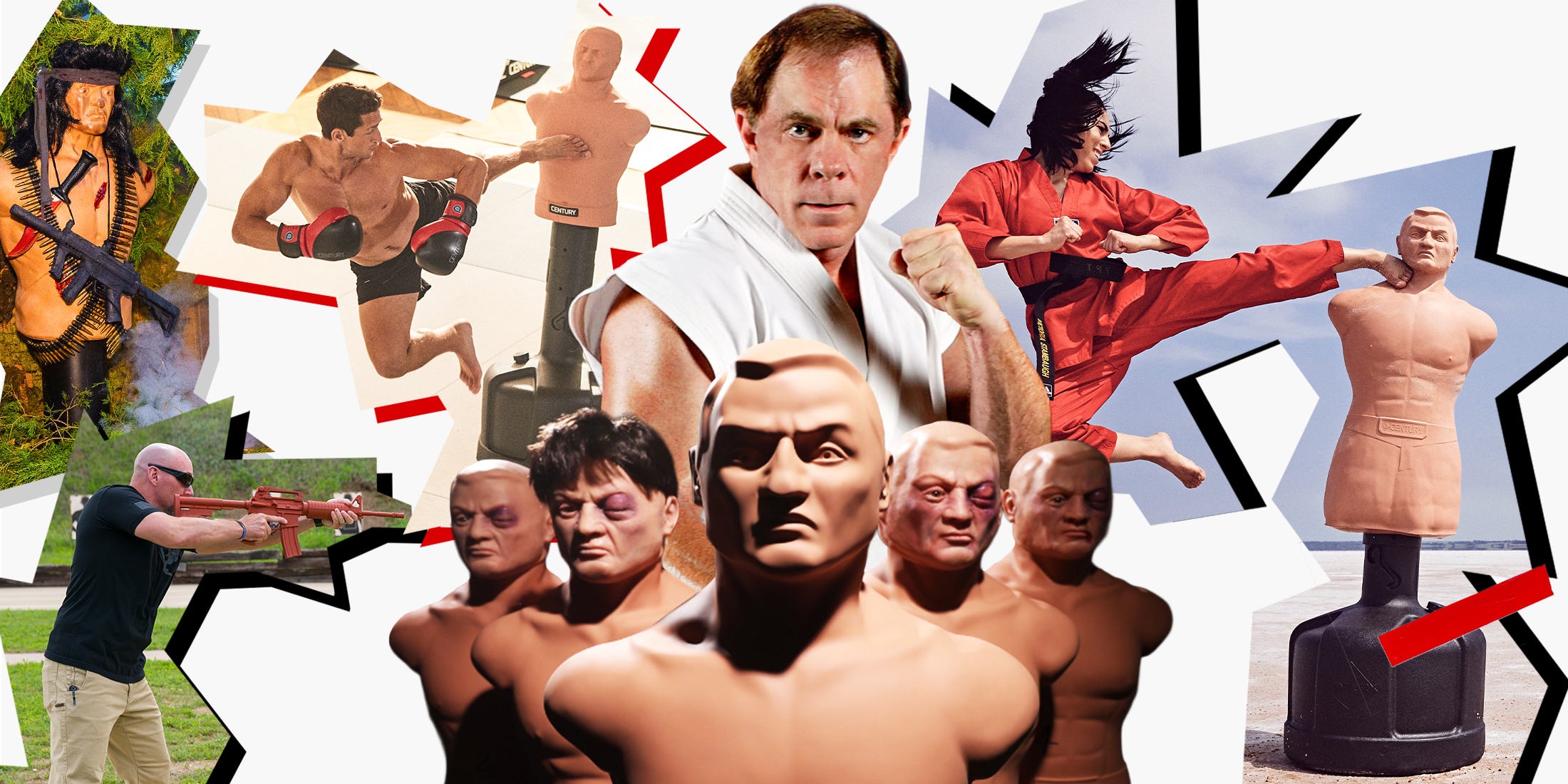
Ever wondered what it’s like to have a sparring partner who’s seen more punches than a heavyweight champ—and never throws one back? Meet BOB, the Body Opponent Bag, a relentless training buddy with a permanent smirk and hair so perfect it’s almost maddening. I’ve faced off with him countless times in my Jeet Kune Do and Filipino martial arts training, but BOB is no ordinary punching bag. He’s been the silent partner to none other than Chuck Norris, starred alongside Adonis Creed, and had his fair share of Hollywood cameos from Deadpool to Cobra Kai. But what makes this lifelike dummy truly legendary isn’t just his ubiquity in gyms and film sets worldwide—it’s the gritty, American-born story behind his creation and the unwavering commitment to excellence he embodies. So, how did a guy in an Oklahoma garage turn a simple idea into a global icon that millions count on to get better every day? Let’s dive into the tenacity, friendship, and innovation that shaped BOB—and why he might just be the most underrated hero in martial arts history. LEARN MORE
 8 min read
There’s a sparring partner at the dojo where I train Jeet Kune Do and Filipino martial arts who is unlike anyone else. There’s something about him that just makes you want to smack him. Maybe it’s the condescending grimace, or the perfectly molded hair, or the way he stands there—silent, stoic, unflinching—daring you to take your best shot.
I see him every day. Multiple times a day. And I’m not the only guy who has hit, kicked, stabbed, or shot at him. He’s been a training partner to Chuck Norris. Once you start looking for him, you’ll see that he’s everywhere. He’s in Creed, getting worked by Adonis in a Philly gym. He’s in Deadpool, because of course he is. He’s in Miss Congeniality, Horrible Bosses, and Mortal Kombat. And on television, he has appeared on Cobra Kai, The Office, Parks and Recreation, CSI: Miami, and Justified.
If there is one thing that sets this guy apart, it’s his utter dedication to self-improvement. It’s the story of his whole life. He accepts “good enough” from no one, anywhere, at any time. He’s always ready for another round. So many rounds. He’s in nearly half a million other gyms, garages, backyards, and living rooms around the world. He’s iconic, ubiquitous, and maybe the most traveled Oklahoman in history.
This would be BOB, the Body Opponent Bag, a heavy bag shaped like a hulking and formidable fighter with neatly coiffed hair. BOB is the greatest piece of martial-arts equipment ever created, and he’s got quite a story to tell.
For as long as I’ve been fighting him, I had imagined that BOB was the brainchild of some kettlebell-tossing roughneck, a product born in some gritty Eastern-bloc workshop, perhaps, or maybe a stark Scandinavian design lab. I was wrong. BOB is as American as it gets: born in Oklahoma City, modeled after a man who looks like Superman.
The story of BOB is the story of Mike Dillard. Long before he’d ever imagined turning his likeness into a punching bag; long before that punching bag was reproduced a million times and shipped to 112 countries by his company Century Martial Arts; long before Century had a 650,000-square-foot complex in Midwest City, Oklahoma; in fact, long before Century even existed, Dillard was just a guy in a garage with a dream. A guy with a dream and the tenacity—which BOB would embody—to make it real.

Mike Dillard, left, sparring.
It was the mid-1970s. Bruce Lee’s magnum opus, Enter the Dragon, had been released in 1973, the same year Lee died. Its success led to a boom in martial-arts movies, which by the middle of the decade was in full swing, saturating American culture. Elvis, the King himself, was known to throw a kick or two. Martial arts in America was just entering the zeitgeist, and Mike Dillard was right in the middle of it. Early to the sport—at least for an American—he was a national martial-arts tournament champion by day, an accountant by trade, and a relentless tinkerer by nature.
A tinkerer/martial artist, at that time, couldn’t help but notice that his fellow athletes in the U.S. had a simple problem: They couldn’t find equipment that fit American bodies. Kung fu, Brazilian jiu-jitsu, and kickboxing were ascendant, but the gear lagged behind, stuck in a world where traditional boxing and wrestling were the dominant combat sports. The requisite martial-arts gear was scarce.
Dillard did what fighters do. He improvised. He started cutting and sewing uniforms, one at a time, from his family’s garage and sold them out of his van at the tournaments where he competed. He called his business Century Martial Arts. Looking to scale it up, he started placing ads in Black Belt magazine.
That was 1976. Just a few years later, no one could miss martial arts’ popular appeal. This was thanks in large part to a young martial-arts champion who leveraged his success as an athlete into a budding film career, starting the 1980s with a run of films like The Octagon, Silent Rage, and Forced Vengeance that showcased his fighting ability. And, in 1981, he began endorsing Century. His name was Chuck Norris.

Mike Dillard and Chuck Norris met early in the rise of martial arts in the United States and maintained a friendship through decades that saw Dillard’s company, Century, become the dominant equipment provider for the sport—and saw Chuck Norris become Chuck Norris.

Chuck Norris knew Dillard. They were friends first, competitors and training partners who shared a genuine love for martial arts and a belief in what the sport could become in America. So it wasn’t a calculated celebrity play, and in fact Norris’s endorsement gave Century credibility that money couldn’t buy. The two men’s friendship, which began on the tournament circuit and would last more than four decades as Norris became a star of movies and TV, a meme, an icon, and a beloved elder statesmen, helped make Century what it is today: the largest martial-arts-equipment supplier on the planet.
In 1995, Dillard introduced the Wavemaster, the world’s first freestanding heavy bag. It changed the industry. If Dillard had never done a single thing after that, he still would have been a martial-arts hero for all time. But even after the Wavemaster’s runaway success, there was still another problem that bothered him, one that no one had solved. There had never been a realistic punching bag. You had heavy bags and speed bags, you had focus mitts and Wing Chun’s wooden mook jongs. But nothing actually looked like a person. Nothing that let you really jab at the chin, deliver a hook to the liver or an elbow to the temple. Dillard wanted to take striking to the next level.
In 1995, Century broke ground on a 94,000-square-foot addition to its corporate headquarters, which already operated 174,000 square feet of space. The company had come a long way from cutting and sewing in Dillard’s garage and selling out of his van. Century was major. And Dillard, now a very successful businessman, had commissioned a bronze sculptor in New York to create bronze likenesses of his kids, including his son Michael.
Pleased with the work, he then had the sculptor make one of him. And standing there, looking at a perfectly anatomical bronze of his own torso, the idea clicked. From the bronze, a mold was made. From the mold, a prototype. And in 1998, the Body Opponent Bag was born, modeled after its creator.
The difference between striking a lifelike dummy rather than a tubular bag was revolutionary. BOB was a huge hit with martial artists, and he was on the silver screen in the smash hit Miss Congeniality just two years later. BOB’s legend had taken root and would only grow.

Benjamin Bratt helps Sandra Bullock train with BOB in 2000’s Miss Congeniality.
Today, Michael is the CEO of Century, and what struck me most in speaking with him was the genuine pride—and genuine amusement—in how he talks about BOB. Here are a few of the things he said to me:
“BOB is famous.”
“Twenty-five years as employee of the month.”
“He looks like Superman. Like Captain America.” (Remember that BOB is the likeness of his father.)
The thing about BOB is that once you start looking for him, you see him everywhere. Most obviously in movies and TV, because the people who choreograph Hollywood’s most punishing fight scenes are training with BOB. But BOB extends well beyond entertainment. Century sells tens of thousands of BOBs every year, and they end up in wonderfully unexpected places. Ballistics teams use BOB for target practice because his three-dimensional body behaves more realistically than a flat target. Made of a proprietary rubber compound, he can absorb an insane number of rounds before he disintegrates, which is a testament to both the engineering and the poetry of his existence. People put BOB in passenger seats to sneak into HOV lanes. People put BOB in their windows as a form of passive security. And every October, Century runs a Bob-o-Ween contest that has owners dressing up their BOBs in costumes ranging from the inspired to the unsettling.

BOB being used for ballistics training.
Not to mention the complex ecosystem of BOB ephemera: squishy miniature BOBs, reflex bags with BOB’s head mounted on a spring, T-shirts with BOB slogans, toys. He’s become a character, a mascot, a cultural shorthand for “someone’s gonna get hit.”
There have been a few iterations. A longer BOB XL to give you a shot at the hips (naturally); a jacket that gives BOB arms for grapplers; and Bobby Bully, a child-sized BOB to help kids experiencing bullying build confidence. Michael told me that they’d even been asked to make a female version, though it “never felt right.” Perhaps for obvious reasons. But through it all, for 28 years, the original BOB has remained iconic.
I have my own theory about BOB’s staying power. I have spent hours upon hours with BOB, repeating strikes until they are perfect. It is said that “repetition doesn’t spoil the prayer,” and training with BOB is all about reps, whether it’s perfecting a jab or straight lead or nailing edge awareness with my Kali sticks. In that time, you can’t help but develop an appreciation for the craftsmanship behind BOB and how it rhymes with the work you yourself are putting in. For any serious martial artist, BOB is an avatar of shokunin, a Japanese concept that can be understood as the spirit of the craftsman: the commitment to getting a little better every day, the belief that your work carries a social obligation to serve the general welfare of the people around you.
Mike Dillard probably never used the word shokunin, but everything about how he built Century embodies it too: Selling his products guerilla style at tournaments. The instinct to commission a sculptor to create a realistic human form so that martial artists could train more effectively. The in-house dojo where Century employees can train and test new products during the workday. The bond with Chuck Norris—not a sponsorship deal that got renegotiated every few years but a real friendship between two martial artists who shared a vision and stuck with it. The martial artist’s code of Humility, Respect, Courage, Initiative, Tenacity, Driven to Excellence map to Century’s motto, Exist to Inspire. And then there’s the full-circle moment: Century acquired Black Belt, the same publication where Mike Dillard placed his first ads, in 2017 (they owned it until 2022)—the martial-arts version of buying the building you used to sweep floors in.
I’m blessed to be able to train with Black Belt cover god Burton Richardson—one of the foremost Filipino martial-arts and Jeet Kune Do practitioners in the world—a man with encyclopedic knowledge of martial arts and the patience of a saint. In Burton’s gym, there are two BOBs: a standard and an XL. Every time I square up to him, as I’m teeing up to attack that smug, molded face that’s staring back at me, neither impressed nor afraid, I can’t help but think about how much I admire the entrepreneur fighter from Oklahoma who decided the world needed something better to punch.
I have hit BOB with gloves, sticks and even Kali Ilustrisimo swords for years, and while he may eventually need replacing, he’s not there yet. There are marks all over him from blow after blow after blow, and every single mark is a record of my efforts to get better, one day and one punch at a time. And that’s what I see in BOB. He may look like Superman, but that wear and tear, that evidence of the work, is what makes him a hero.

Matt Jacobson is a surfer who trains Jeet Kune Do and Filipino Martial Arts in Honolulu, Hawaii.
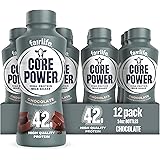
Core Power Fairlife Elite 42g High Protein Milk Shakes For kosher diet, Ready to Drink for Workout Recovery, Chocolate, 14 Fl Oz (Pack of 12), Liquid, Bottle
$47.98 (as of October 15, 2026 03:09 GMT +00:00 - More infoProduct prices and availability are accurate as of the date/time indicated and are subject to change. Any price and availability information displayed on [relevant Amazon Site(s), as applicable] at the time of purchase will apply to the purchase of this product.)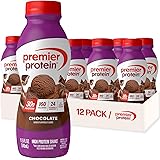
Premier Protein 30g High Protein Shake, Chocolate, 12 Pack | 160 Calories, 24 Vitamins & Minerals, No Added Sugar, Supports Muscle Health, Gluten-Free, 11.5 oz
$29.26 (as of October 15, 2026 03:09 GMT +00:00 - More infoProduct prices and availability are accurate as of the date/time indicated and are subject to change. Any price and availability information displayed on [relevant Amazon Site(s), as applicable] at the time of purchase will apply to the purchase of this product.)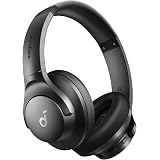
Soundcore by Anker Q20i Hybrid Active Noise Cancelling Headphones, Black | Over-Ear, Bluetooth, 40H ANC Playtime, Hi-Res Audio, Big Bass, Transparency Mode, Customize via App, Travel, Home, Office
$44.99 (as of October 15, 2026 03:21 GMT +00:00 - More infoProduct prices and availability are accurate as of the date/time indicated and are subject to change. Any price and availability information displayed on [relevant Amazon Site(s), as applicable] at the time of purchase will apply to the purchase of this product.)
Banana Bunch (4-5 Count)
(as of October 15, 2026 03:09 GMT +00:00 - More infoProduct prices and availability are accurate as of the date/time indicated and are subject to change. Any price and availability information displayed on [relevant Amazon Site(s), as applicable] at the time of purchase will apply to the purchase of this product.)










Post Comment