
Why Corporate Governance Has Suddenly Become the #1 Threat—and Opportunity—Your Portfolio Can’t Ignore

Elon Musk’s SpaceX just blasted off with a record-setting IPO on June 11—but hold up, not everything went as smooth as one might expect on launch day. The startling reveal? The day before going public, MSCI slapped SpaceX with a CCC sustainability rating—the very same grade it dishes out to Russia. Talk about a cosmic plot twist! One analyst from Edhec’s Climate Institute even called it “very close to a governance horror story for public-market investors.” So, what’s going on behind the curtain here? It turns out that shareholders are left clutching thinner-than-air control, thanks to lack of “one share, one vote” principles, and some pretty tough restrictions on shareholder lawsuits. Sounds like Musk basically has the keys to the rocket and nobody can flip the switch but him… This isn’t just a SpaceX thing—the entire universe of corporate governance is firing up again, with investors zooming in on who really holds the voting power, how boards get held accountable, and the tough questions about shareholder rights. Even as governance proposals flood in like satellites, actual support seems to be orbiting lower than last year’s counts. But hey, some firms are breaking through with wins, demanding more say and fairness in voting mechanics. The bottom line? If your company’s control is heavily concentrated or has those tricky super-voting structures, buckle up—investors are watching and starting to push back. Ready to dive deep into what this means for boards and investors alike? LEARN MORE

Elon Musk’s SpaceX pulled off a record-setting IPO on June 11, but the debut had at least one pre-launch hiccup. The day before SpaceX went public, index provider MSCI assigned the much-discussed rocket maker a CCC rating—the lowest grade on its seven-tier sustainability scale and the same one it gives Russia. One analyst at Edhec’s Climate Institute called it “very close to a governance horror story for public-market investors.”
Many concerns about SpaceX center on shareholder power, or the lack of it. For stockholders, SpaceX does not offer “one share, one vote,” the longstanding principle that ties voting weight to ownership stake. (In fairness, that’s part of a broader trend: the share of IPOs with unequal voting rights climbed to 20% last year, up from 9% two decades ago.) A second set of issues are the severe restrictions that SpaceX’s bylaws place on shareholder litigation. They mandate individual private arbitration and prohibit class actions, among other things. Bloomberg’s Matt Levine put it bluntly, noting that Musk has total control and effectively can’t be sued or second-guessed by shareholders.
While SpaceX has drawn attention to certain governance issues, the perceived governance issues extend well beyond SpaceX. Indeed, governance has become the dominant category of shareholder proposals, especially with DEI fights on the wane. Fenwick & West attorneys have clocked a phenomenon they describe as “DEI fatigue,” marked by a broad decline in support for both pro- and anti-DEI measures. Attention has shifted to AI governance, data privacy, political spending, and, above all, the mechanics of who gets a vote. Governance-related proposals made up 51% of all submissions through mid-May, and governance was the only proposal category to grow this year.
Voting figures tell a more nuanced story. Even as volume rose, average backing for governance proposals dropped to roughly 29% at S&P 500 companies, down from nearly 40% in 2025, and the number clearing a majority fell sharply. Independent chair proposals were the single most common governance ask, yet all of them failed this year. Dual-class structures received increased scrutiny, with eight proposals seeking to break out voting results by share class—a direct response to super voting arrangements of the kind SpaceX has.
And the proposals that do pass are worth noting. At Snowflake, shareholders approved a proposal asking the company to require a majority vote for director elections. Their proposal quoted BlackRock in arguing that majority voting “ensur[es] that directors who are not broadly supported by shareholders are not elected to serve as their representatives.” At Five Below, meanwhile, investors backed a simple-majority voting standard, targeting supermajority provisions that ISS calls “materially adverse to shareholder rights.” Similar measures found success elsewhere: Nvidia holders approved a proposal to eliminate a supermajority requirement, and HubSpot shareholders won the right to call special meetings.
The broader implication is that governance mechanics including voting rights, board accountability and shareholder remedies are becoming a more prominent area of investor engagement. For companies with atypical governance structures such as concentrated control or heightened voting thresholds, this proxy season suggests that investors are placing renewed emphasis on governance fundamentals and should expect continued scrutiny—even if proposals do not receive majority support.
The message for boards is hard to miss: basic concerns about corporate governance are back at the top of the agenda, even if one notable exception has rocketed past them.
—
Don’t just read about the trends — leverage them. Explore Intelligize with a free trial and unlock the tools professionals rely on every day.
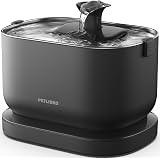
PETLIBRO Cat Water Fountain, Cordless Pet Water Fountain Battery Operated, 2.5L/84oz Dockstream Water Fountains for Cats Indoor, Cat Fountain with Stainless Steel Tray, Easy to Clean BPA-Free
$58.58 (as of October 23, 2026 03:23 GMT +00:00 - More infoProduct prices and availability are accurate as of the date/time indicated and are subject to change. Any price and availability information displayed on [relevant Amazon Site(s), as applicable] at the time of purchase will apply to the purchase of this product.)
Good 'n' Fun Kabobs Long-Lasting Dog Treat Made With Real Protein, 24 oz | Premium Chicken, Pork and Beef Hide Chew, Supports Dental Health and Mental Stimulation, For Adult Dogs
$17.97 (as of October 23, 2026 03:13 GMT +00:00 - More infoProduct prices and availability are accurate as of the date/time indicated and are subject to change. Any price and availability information displayed on [relevant Amazon Site(s), as applicable] at the time of purchase will apply to the purchase of this product.)
TOZO A1 Wireless Earbuds Bluetooth 5.3 Light Weight in Ear Headphones | IPX5 Waterproof,2 Mics for AI Calls,Immersive Premium Sound Bass Headset with Charging Case,32 EQ via App Black
$13.96 (as of October 23, 2026 03:23 GMT +00:00 - More infoProduct prices and availability are accurate as of the date/time indicated and are subject to change. Any price and availability information displayed on [relevant Amazon Site(s), as applicable] at the time of purchase will apply to the purchase of this product.)
Nutramax Cosequin Joint Supplement for Dogs, Chewable Tablets, 132ct | Glucosamine + Chondroitin for Dogs with MSM, Supports Healthy Joints, All Breeds & Sizes, All Ages
$34.91 (as of October 23, 2026 03:13 GMT +00:00 - More infoProduct prices and availability are accurate as of the date/time indicated and are subject to change. Any price and availability information displayed on [relevant Amazon Site(s), as applicable] at the time of purchase will apply to the purchase of this product.)











Post Comment