Warning: Central Bank Governor Sounds Alarm on a €25.7bn Deficit Threat—Are We on the Brink of Financial Chaos?
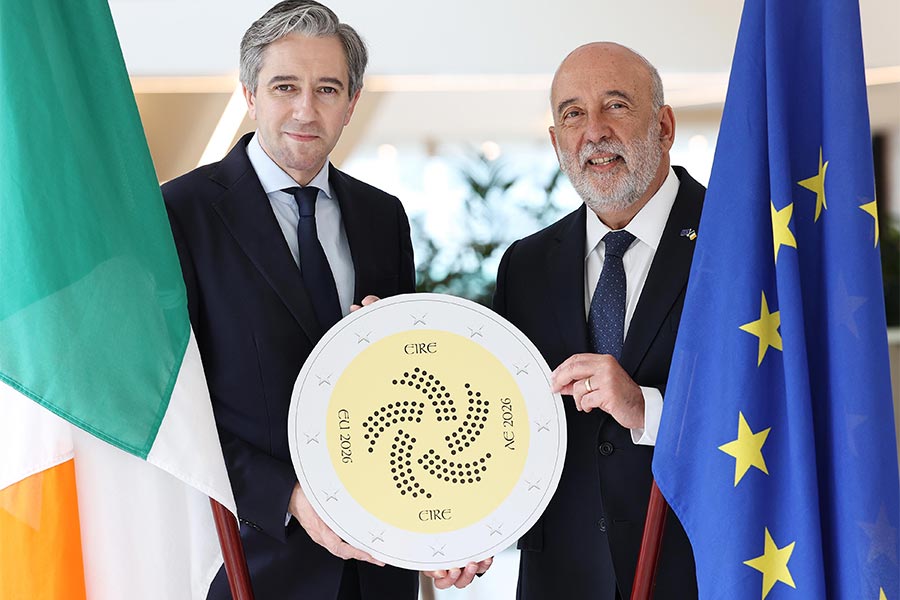
So, here’s a head-spinner for you: what if by 2030, Ireland’s public purse finds itself staring down a €25.7 billion deficit because Budget spending got a little too enthusiastic? That’s precisely the caution flag waved by Gabriel Makhlouf, governor of the Central Bank, who’s ringing the alarm bells loud and clear. In a recent letter to Tánaiste and Minister for Finance Simon Harris, Makhlouf lays out a stark projection—the general government balance, leaving aside the so-called ‘windfall’ from corporation tax, could balloon from a €7.1 billion gap in 2025 to a staggering €20.4 billion just five years later. And here’s the kicker: if spending keeps burgeoning unchecked, that shortfall could stretch to €25.7 billion, knocking on 5.8% of Ireland’s adjusted GNI*. With fiscal buffers shrinking and inflationary pressures mounting, the time for a rethink isn’t tomorrow—it’s now. How do you juggle robust public services, sustainable investment, and a tax base that’s surprisingly reliant on a handful of tech and pharma giants who might just pack up shop? That’s the economic Rubik’s cube Makhlouf challenges us to solve—before the window slams shut. LEARN MORE
Gabriel Makhlouf, the governor of the Central Bank, has warned that there could be a €25.7bn deficit in the public finances by 2030 if Budget spending overruns persist.
In a letter to Tánaiste and Minister for Finance Simon Harris, Makhlouf said that current projections show the general government balance, excluding ‘windfall’ corporation tax receipts, will widen from €7.1bn in 2025 to €20.4bn in 2030.
If expenditure overruns persist, the underlying budget deficit could rise to €25.7bn or 5.8% of adjusted gross national income (GNI*) by the end of the decade.
In this scenario, Makhlouf said that fiscal buffers would be depleted and capacity to respond to future negative shocks limited while adding to domestic inflationary pressures.
Corporation tax receipts now account for 23% of all government revenue and are expected to increase further in 2026.
However, 10 companies accounted for 56% of all corporation tax revenue last year, up from 41% in 2015, leaving Ireland at risk of a shortfall if major IT and pharma companies decide to move their operations and/or intellectual property.
To maintain existing levels of public services to 2030 and to achieve the level of public investment required under the revised National Development Plan, the Central Bank estimates required annual growth of 5%.
Makhlouf said that maintaining spending growth at a lower rate would deliver large headline budget surpluses and save a third of estimated windfall corporation tax receipts from 2028 to 2030.
Broadening the tax base and additional revenue-raising measures could allow for increased expenditure growth and for maintenance of existing levels of public service.
“While corporation tax receipts are likely to increase further in 2026, I am concerned about the long-term sustainability of the current high levels of revenue. A broader tax base is needed to help mitigate the risks from a possible loss of corporation tax receipts and to fund known spending pressures,” Makhlouf said.
He also cautioned the government about the €210bn national debt following a warning from the National Treasury Management Agency last week that the annual interest bill will double from €3bn to €6bn.
“The State’s borrowing costs are rising. Interest expenditure is projected to double by 2030. We know how vulnerable a small open economy can be to rapid changes in market sentiment. Reducing public debt as a share of national income should remain a key focus of national economic policy,” Makhlouf said.
In his letter, the governor highlighted the need to prioritise growing the supply-side capacity of the economy, supporting household resilience by enabling greater retail participation in financial markets, improving access to debt and equity for domestic businesses, and working to strengthen Europe’s economic infrastructure.
“Ireland’s economic performance presents reasons for optimism but also clear reminders of the need for vigilance,” he said. “Sound policy decisions today can help steer the economy through a turbulent international environment, deliver sustainable economic progress and build the resilience that the country needs.”
The governor also commented on delivery of public investment, noting that government has doubled its nominal public investment since 2019, and that this investment is potentially transformative.
“Addressing infrastructure deficits in a timely manner would help to reduce inflationary pressures, and reducing fossil fuel dependency will build resilience and contribute to meeting emission reduction targets,” he said.
“Achieving value for money is difficult in an economy at full employment and in the face of externally-driven cost shocks, but expenditure discipline, combined with prioritising public projects that yield the largest spillovers to the private sector is key to delivering gains from planned investment.”
The Central Bank is also calling for an effective, binding, domestic fiscal framework based on four guiding principles: sustainability, economic cycle smoothing, simplicity, and a balance between flexibility and discipline.

The governor concluded: “Above average growth since 2021 has benefitted the public finances. Combined with surging corporation tax revenue, the headline budgetary position has been in surplus since 2022, despite large expenditure increases and some tax cuts.
“However, this favourable headline position rests on somewhat unstable foundations.
“Our current economic conditions present a window of opportunity to strengthen the fiscal framework. But this window will not remain open indefinitely.”
Photo: Central Bank of Ireland Governor Gabriel Makhlouf leads a media briefing at the bank’s North Wall Quay headquarters this morning, for the first Financial Stability Review of the year. (Pic: Eamonn Farrell/ RollingNews.ie)

CELSIUS Assorted Flavors Official Variety Pack, Functional Essential Energy Drinks, 12 Fl Oz (Pack of 12)
$22.49 (as of September 17, 2026 03:03 GMT +00:00 - More infoProduct prices and availability are accurate as of the date/time indicated and are subject to change. Any price and availability information displayed on [relevant Amazon Site(s), as applicable] at the time of purchase will apply to the purchase of this product.)
Wireless Earbuds, Hi-Fi Deep Bass Ear Buds, 48H Playtime In-Ear Headphones | 2 Mics for Clear Calls, LED Display, IPX7 Waterproof, Touch Control, Lightweight Bluetooth Earphones for iPhone/Android/TV
$13.99 (as of September 17, 2026 03:22 GMT +00:00 - More infoProduct prices and availability are accurate as of the date/time indicated and are subject to change. Any price and availability information displayed on [relevant Amazon Site(s), as applicable] at the time of purchase will apply to the purchase of this product.)
Formit Crafts Ocean Plastic Clippers for Cats and Small Dogs, Professional Stainless Steel Dog Nail Trimmer, Handles Made from Recycled Ocean-Bound Plastic, All Breeds Color Blue (Blue)
$5.01 (as of September 17, 2026 03:10 GMT +00:00 - More infoProduct prices and availability are accurate as of the date/time indicated and are subject to change. Any price and availability information displayed on [relevant Amazon Site(s), as applicable] at the time of purchase will apply to the purchase of this product.)
Wireless Cat Water Fountain No Filters, Wastewater Separation, FEELNEEDY Stainless Steel Bowl, 3.5L Pet Water Fountain for Cats & Dogs Dispenser, Black
$59.99 (as of September 17, 2026 03:10 GMT +00:00 - More infoProduct prices and availability are accurate as of the date/time indicated and are subject to change. Any price and availability information displayed on [relevant Amazon Site(s), as applicable] at the time of purchase will apply to the purchase of this product.)














Post Comment