Is OnlyFans the Secret Side Hustle Top Performers Are Using to Explode Their Income?

So, you’re staring out the window, wondering if setting up an OnlyFans account is your golden ticket to extra cash or just another rabbit hole you might regret diving into. It’s tempting, right? A few posts here and there, subscribers rolling in, and suddenly your money worries seem a little less dire. But here’s the kicker — real life rarely looks like the highlight reels plastered across social media. Having been around the block, both in content and business, I can tell ya it’s way more complicated than just “post and profit.” The work, the emotional toll, the privacy hang-ups… it all creeps in quietly, and before you know it, you’re stuck navigating tricky waters you never saw coming. So maybe before you hit that ‘create’ button, it’s worth asking yourself: are you in it just for the quick bucks, or do you actually want the full-time hustle that comes with being your own—and very public—brand? Let’s peel back the layers and get real about what starting an OnlyFans account really means. LEARN MORE

Thinking of Starting an OnlyFans Account for Extra Money?
His Question:
Dear Jack,
I’m behind on bills and I keep seeing people online talking about how much money they make on OnlyFans. It seems like an easy way to catch up — post some pictures, get subscribers, done. But something about it makes me hesitate, and I can’t tell if that hesitation is smart or if I’m just overthinking it. Is this actually a good way to make money, or am I about to make a huge mistake?
— Considering It
The Answer:
Dear Considering It,
I’m not going to tell you this is a bad idea, and I’m not going to tell you it’s a good one. What I want to do instead is slow the whole thing down, because right now you’re making a financial decision based on a highlight reel, and highlight reels are the worst possible data set to work from.
I’ll be straight with you — I’ve had friends bring me this exact question before, half-joking, half-serious. And I know at least a couple people who’ve actually done it. So this isn’t hypothetical territory for me. I’ve watched this play out in real time, close enough to see the parts that never make it into the screenshots.
Here’s the honest version: some creators do make real money on OnlyFans. A small number make a lot of money. But the version of this business you’re seeing on social media — post a few photos, watch the subscriptions roll in — is the exception dressed up as the rule. For most people, opening the account is the easy part. Building an audience that actually pays you is the job, and it’s a real one, with real hours attached to it.
So before we get into the practical stuff, I want to ask you a harder question, because I think it matters more than the math.
Why Are You Actually Doing This?
Not “why do you need money” — I believe you on that part. I mean: what’s actually pulling you toward this specific solution?
For some people it’s straightforward financial pressure. For others it’s curiosity, or the appeal of being looked at and wanted, or a confidence boost they’re hoping to borrow from strangers, or a partner who planted the idea. Some people are drawn to the performance itself — the photography, the persona, the creative control — independent of the money entirely. None of these motivations are shameful. Adults are allowed to make legal adult content, and if part of you is genuinely energized by that idea, that’s not a character flaw you need to explain away.
But motivations produce very different outcomes, and it’s worth being honest with yourself about which one is actually driving the car.
Wanting the Money vs. Wanting the Work
This is the distinction I’d sit with the longest: do you want to create adult content, or do you want the income you imagine adult content will produce?
Those are not the same desire, even though they can feel identical from the outside. Wanting money is universal — everybody wants more of it. But this specific path only works if you also want the day-to-day labor of it: the photo editing, the caption writing, the direct messages, the custom requests, the promotion on other platforms, the customer service, the content calendar, the algorithm-chasing, the doing-it-again-tomorrow.
If what you actually want is money, and adult content is just the vehicle you’ve landed on because it looks fast, it’s worth asking whether you’d feel the same pull toward a job you found boring or draining, if it paid the same. If the answer is no — if this only appeals to you because it’s this — that’s useful information. It doesn’t mean don’t do it. It means know what you’re signing up for.
Exhibitionism and Being Seen
Some people genuinely enjoy showing their bodies, being watched, being desired by an audience. That’s not a problem to be solved or a sign that something’s wrong with you. Plenty of well-adjusted people find real, uncomplicated pleasure in that kind of visibility.
The thing worth separating out is whether that enjoyment is durable, or whether it’s standing in for something else — a need for reassurance, a low patch in how attractive or wanted you’ve been feeling, a way to answer a question about your own desirability by outsourcing the answer to strangers. Validation earned this way tends to be a leaky bucket. It feels good in the moment and then needs to be refilled constantly, because it was never really about the specific people subscribing — it was about needing someone to.
Ask yourself: if the money were mediocre, would you still want to do this?
One friend of mine actually failed that test, in a good way — she realized the money was secondary to how much she liked the creative side of it, and that told her something real about her own motivations. Another friend realized the opposite, and backed out before posting anything. Neither of them was wrong. They just knew themselves before they started, instead of finding out the hard way.
The Emotional Weight Nobody Mentions
The parts of this business that don’t make it onto anyone’s success story: subscribers who unsubscribe, comparison to other creators who seem to be doing better, message requests that range from fine to degrading, slow weeks that feel like personal rejection even when they’re just math, and the strange experience of your body becoming a product with performance metrics attached to it.
That last one is worth sitting with. Once your body is the content, feedback on the content can start to feel like feedback on you. Some people build a clean separation between the persona and the self. Others find the line gets blurry fast, and a bad week of subscriber numbers starts to feel like a referendum on their own worth. You won’t know for certain which type you are until you’re in it, but it’s worth asking honestly which seems more likely for you.
Boundary Drift
This is one of the more predictable patterns in this line of work: people start with content they’re genuinely comfortable with, and then discover that more explicit content earns more attention and more money. The pressure to go further isn’t usually external and dramatic — it’s quiet and financial. It shows up as “just this once” and “just for this one subscriber” and “just to hit this month’s number.”
Two questions are worth answering before you’re in a moment where money is on the table:
What are you unwilling to do, even if someone offers you a lot of money for it?
What will you do if the content you’re actually comfortable making doesn’t sell as well as you hoped?
Write the answers down now, while you’re thinking clearly, not later while you’re staring at a subscriber count.
Your Career Isn’t Automatically Safe
I wish we lived in a world where adults could create legal content without it following them into every corner of their lives. We don’t live in that world.
I’ve heard versions of this story enough times that it’s worth describing as a composite: someone in a public-facing job gets recognized by a coworker. The account becomes office gossip. Management, without ever saying so directly, starts treating the person differently. Months later, they’re let go for reasons that are technically unrelated — a reorganization, a performance concern, “not a fit.” No one ever says the OnlyFans account was the reason. No one has to. The timing speaks for itself, even when it can’t be proven.
I’m not telling you that to scare you into anything. I’m telling you because “my employer is progressive” or “this is legal, so it doesn’t matter” are both true statements that won’t necessarily protect you. Work is not a democracy. Office culture, client relationships, and the personal comfort of the people above you can affect your job regardless of what’s legally defensible.
Nothing Is Actually Private
Paywalls create the impression of privacy. They don’t create the reality of it. Content gets screenshotted, downloaded, reposted to free sites, discussed in group chats, and occasionally discovered years after the fact by someone you never expected to see it.
The honest question isn’t “will this stay private.” It’s: would you still post this if your coworkers, your parents, a future partner, or a future employer eventually saw it? If the answer is a genuine yes, that tells you something. If the answer is “I hope they never do,” that’s telling you something too.
What This Does to Relationships
If you’re currently with someone, this is a conversation, not a unilateral decision — even though it’s your body and your income. Partners are allowed to have their own boundaries around this, and pretending otherwise usually just delays a harder conversation instead of avoiding it. Direct messages with subscribers can start to feel like a form of intimacy, even when you don’t intend them that way, and that’s worth being upfront about rather than discovering by accident.
If you’re single, it’s worth thinking about how this affects dating going forward — who you’d tell, when, and how you’d want a future partner to react to something they might eventually find on their own.
I’ve watched this become the thing a relationship quietly revolves around, even when both people insisted at the start that it wouldn’t. It’s not that it can’t work. It’s that it takes more honesty, upfront and ongoing, than most people plan for.
Protecting Yourself
If you decide to move forward, some basic groundwork matters:
- A stage name, separate from anything connected to your real identity
- A dedicated email and separate social accounts, not linked to your personal ones
- Awareness of anything identifying in your content — tattoos, work uniforms, recognizable locations, landmarks, backgrounds
- A plan for what happens if someone tries to identify or locate you from your content
- Consent and privacy protection for anyone else who appears alongside you
None of this guarantees anonymity. It reduces the odds of an easy connection between the account and your name.
The Math Is Not What It Looks Like
Revenue and take-home pay are different numbers. Once you subtract platform fees, taxes, equipment, lighting, editing time, promotional effort on other platforms, and the hours spent on content that never gets posted, the real hourly return is often much lower than the gross number that gets screenshotted and shared online.
Before you commit any real time to this, it’s worth actually running the numbers — what a realistic subscriber count and price point would generate, minus platform cut and taxes, divided by the hours you’d realistically spend building and maintaining it. Compare that hourly figure to what you could earn elsewhere. Sometimes it holds up. Often it doesn’t, at least not at the start.
You’re Building on Rented Land
Your account exists at the platform’s discretion. Payment processors, policy changes, and account restrictions are all things creators have run into with little warning and less recourse. If your entire income depends on one platform’s continued cooperation, you don’t fully control your own business — the platform does.
If the Real Problem Is Short-Term Money
Every friend I’ve talked to about this started from the same screenshot — someone else’s best month, presented as a baseline. All that glitters isn’t gold, and nowhere is that more true than in an industry built on people only posting their wins.
If what’s actually driving this is a temporary financial squeeze, it’s worth asking whether a permanent digital footprint is the right tool for a temporary problem. That doesn’t mean the answer is no. It means the trade should be made deliberately: a short-term fix that could have a long tail, weighed honestly against other short-term fixes — a second job, selling things you don’t need, negotiating your bills, a temporary loan from someone you trust, gig work that doesn’t leave a lasting trace. None of these are as fast or as glamorous. Some of them are also fully reversible, which is worth something on its own.
(If you want to go further down this road, the documentary TMZ Presents: The War Over OnlyFans on Hulu is worth a watch — not as the final word, but as another data point.)
Frequently Asked Questions
Is OnlyFans worth it?
For a small number of creators, yes — the income can be real and significant. For most people, the return doesn’t match the effort once you factor in platform fees, taxes, and the hours spent on promotion and content creation that never show up in anyone’s screenshot. Whether it’s “worth it” depends less on the platform and more on whether you actually want the day-to-day work of running it.
Should I do OnlyFans?
That’s a personal decision that depends on your motivation, your risk tolerance around privacy and career exposure, and whether you want the actual work of content creation — not just the income. There’s no universal right answer. The questions in this article are meant to help you find your own.
Can OnlyFans affect my career?
Yes, it can, even if the content is completely legal. Coworkers or clients recognizing an account can change workplace dynamics in ways that are hard to prove but real to experience. Legal protection and workplace comfort are not the same thing.
Is OnlyFans easy money?
Opening an account is easy. Earning meaningful, consistent income from it usually isn’t. Building a paying subscriber base typically requires ongoing promotion, content planning, and direct engagement with subscribers — closer to running a small business than posting a few photos.
What are the risks of starting an OnlyFans?
The main risks are career exposure, loss of digital privacy once content exists online, emotional strain from public feedback and comparison, pressure toward more explicit content over time, and the gap between gross revenue and actual take-home pay after fees and expenses.
Before You Decide, Ask Yourself
- Would I still do this if the income turned out to be modest?
- Would I still do this if people at work found out?
- Do I actually want the work, or only the money?
- What are my hard boundaries, and will I hold them under financial pressure?
- Would I make the same choice knowing this content could exist online forever?
I’m not going to tell you what to do, because I don’t think that’s mine to tell you. Every person I know who’s walked this road has landed somewhere different, and honestly, that’s kind of the point — there’s no universal right answer here, just an honest one for you. What I’ll say is this: make the decision with your eyes open, not because social media sold you a fantasy about instant wealth.
Whatever you decide, I hope it’s for reasons that are actually yours.
— Jack

Bolux Dog Harness, No-Pull Reflective Dog Vest, Breathable Adjustable Pet Harness with Handle for Outdoor Walking - No More Pulling, Tugging or Choking (Black, S)
$16.98 (as of September 20, 2026 03:10 GMT +00:00 - More infoProduct prices and availability are accurate as of the date/time indicated and are subject to change. Any price and availability information displayed on [relevant Amazon Site(s), as applicable] at the time of purchase will apply to the purchase of this product.)
Good 'n' Fun Kabobs Long-Lasting Dog Treat Made With Real Protein, 24 oz | Premium Chicken, Pork and Beef Hide Chew, Supports Dental Health and Mental Stimulation, For Adult Dogs
$17.97 (as of September 20, 2026 03:04 GMT +00:00 - More infoProduct prices and availability are accurate as of the date/time indicated and are subject to change. Any price and availability information displayed on [relevant Amazon Site(s), as applicable] at the time of purchase will apply to the purchase of this product.)
Apple AirPods 5 with Wireless Charging Case | Wireless Earbuds, Wireless Charging Case, Active Noise Cancellation, Personalized Spatial Audio, Live Translation, H2 Chip
$149.00 (as of September 20, 2026 03:12 GMT +00:00 - More infoProduct prices and availability are accurate as of the date/time indicated and are subject to change. Any price and availability information displayed on [relevant Amazon Site(s), as applicable] at the time of purchase will apply to the purchase of this product.)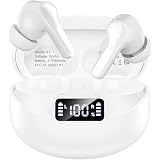
Wireless Earbuds, Bluetooth 5.4 Headphones HIFI Stereo/Crystal clear, White | Noise Cancelling Mic Ear buds with 50H Playback, LED Digital Display, IPX7 Waterproof Earphones for Office/Running/Workout
$19.99 (as of September 20, 2026 03:22 GMT +00:00 - More infoProduct prices and availability are accurate as of the date/time indicated and are subject to change. Any price and availability information displayed on [relevant Amazon Site(s), as applicable] at the time of purchase will apply to the purchase of this product.)










Post Comment