Trapped in the Endless Pursuit of Perfect Looks: The Hidden Cost of Looksmaxxing No One Talks About
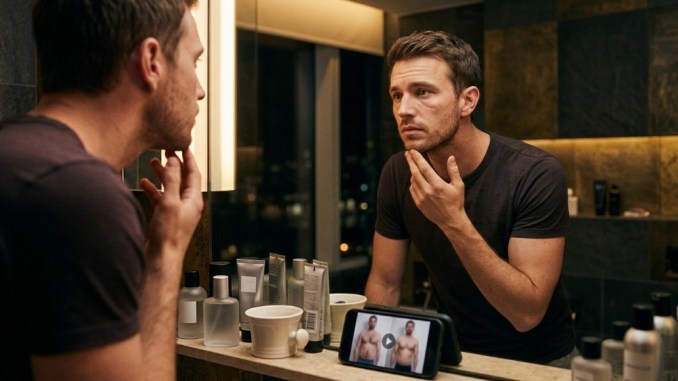
Ever caught yourself staring a little too long in the bathroom mirror, poking and prodding like a detective hunting for clues – except the mystery is “What’s really wrong with my face today?” You’re not alone. More guys than you’d think dive headfirst into “looksmaxxing,” thinking that a new skincare routine, a gym grind, or a sharper haircut will unlock the secret to confidence. But paradoxically, the more they tweak, the more trapped they feel—like the mirror’s whispering flaws that weren’t even on their radar before.
Here’s the kicker: it’s rarely about the jawline, the skin texture, or whatever “feature” you fixate on next. It’s about what’s happening behind the reflection—the endless loop of comparison, the checklist that never ends, and the silent anxiety that tags along for the ride. The very thing you hoped would boost your confidence ends up becoming the lens that distorts it. So… what’s really going on when improving yourself turns into obsessing over every imperfection? And how do you break free from the trap without losing your drive for self-respect and health?
Stick with me. We’re going beyond the surface to reveal the real beast behind those mirror-checking sessions—and the surprising thing that can help you reclaim your sense of worth without a before-and-after pic.

Caught in the Looksmaxxing Trap?
Dear Jack,
About six months ago I started looksmaxxing. Skincare routine, gym consistency, better haircut, watched videos on posture and jawline stuff, even started tracking what I eat more carefully. I thought if I fixed enough of it, I’d finally feel confident. Instead I feel worse than when I started. I notice flaws I never used to think about. I compare myself to guys online constantly. I used to just not think about my face much — now I can’t stop. What happened?
— Worse Than Before
The Answer
Dear Worse Than Before,
Nothing happened to your face. Something happened to how you’re looking at it, and that’s a very different problem — and actually, a much more fixable one.
I want to say up front: wanting to look better isn’t the issue here. Taking care of your skin, going to the gym, dressing well, getting a haircut that suits you — none of that is vanity or weakness. Most of it is just basic self-respect, and there’s nothing wrong with wanting to feel good in your own body. The issue isn’t that you started improving things. It’s what happened underneath that effort, quietly, while you were focused on the mirror.
What You Were Actually Trying to Fix
Here’s my honest read, and tell me if I’m wrong: I don’t think this was ever really about your jawline.
Most guys don’t wake up one day with a purely aesthetic curiosity about facial symmetry. Something usually precedes it — a breakup, a stretch of feeling invisible, a comparison that stung, a dry spell, a comment from someone that lodged itself somewhere it shouldn’t have. Looksmaxxing offers something incredibly appealing in that moment: a problem that feels fixable. Rejection is confusing and out of your control. A jawline routine has steps. Confidence feels abstract and impossible to manufacture. A skincare regimen has a shopping list.
So the appeal isn’t really vanity. It’s control. When something in your life feels unresolved or out of reach, it’s a relief to find a version of the problem you can actually do something about — even if it’s the wrong problem.
I’ve talked to a few guys who went down this exact road, and almost every one of them, once we got past the surface stuff, admitted the same thing: the timing lined up with something else going wrong, not with actually looking bad.
The Trap Nobody Warns You About
Here’s the part that explains why you feel worse, not better.
Before you started, your face was just your face — background noise you didn’t examine much. The moment you started actively optimizing it, you also started actively evaluating it, constantly, against a standard you picked up from forums and videos designed to make you feel like there’s always another flaw underneath the one you just fixed.
Related: I’m Insecure About The Size of My Manhood. What Do I Do?
This is the trap: looksmaxxing content doesn’t have a finish line built into it. Fix your jawline, and suddenly your skin texture matters. Fix your skin, and suddenly it’s your hairline. Fix your hairline, and it’s your frame, your symmetry, your “canthal tilt” — something you’d never even heard of six months ago and now can’t stop noticing in the mirror. The goalposts don’t move because you’re failing. Much of the ecosystem survives by keeping you focused on the next flaw.
You didn’t get worse looking. You got a new lens, and the lens is designed to always find something wrong.
Comparison Is the Actual Engine
A lot of this runs on comparison, and comparison is a genuinely rigged game. You’re comparing your real face — the one you see under bathroom lighting, at an angle you’re used to, at 7 AM — against a curated stream of the most symmetrical, best-lit, filtered, sometimes surgically altered faces the internet can produce. That’s not a fair fight, and no amount of routine consistency wins it, because the target was never real to begin with.
I’d ask you honestly: before you started looking at this content, how often did you actually think about your jawline? Compare that to now. If the number went up dramatically, that’s not new information about your face. That’s the algorithm learning that appearance anxiety keeps your attention, and giving you more of whatever kept you looking.
What “Attractive” Actually Means
Here’s the thing looksmaxxing culture gets fundamentally wrong: the people you actually find magnetic in real life are almost never the ones with the most technically “optimized” features. Think about who people gravitate toward at a party, who does fine in dating without looking like a jawline-tutorial thumbnail. What draws people to them usually isn’t facial symmetry — it’s how they carry themselves, their humor, whether they’re actually present in a conversation, warmth that isn’t fragile.
That’s not a consolation prize for guys who can’t compete on looks. Real attractiveness is holistic — face and body matter, but so do voice, energy, humor, presence, and how someone makes other people feel. Looksmaxxing culture convinces guys to pour everything into the one input that’s easiest to photograph, while ignoring almost everything that actually makes a person compelling to be around.
When Self-Improvement Becomes Something Else
There’s a real difference between improving yourself and monitoring yourself, and it’s worth being honest about which one you’re doing now.
Improvement looks like: you work out because it feels good and you want to be healthy, you take care of your skin because it’s good practice, you dress well because you like how it feels to look put-together — and then you go about your day and mostly stop thinking about it.
Related: How to Be a More Confident Man
What you’re describing sounds like something else: constant self-monitoring, a running inventory of flaws, comparison that doesn’t turn off, a mirror that used to be neutral and now feels like an interrogation. That shift — from “I want to feel good” to “I need to find what’s wrong” — is the actual problem, and no amount of further optimizing fixes it, because the target was never really your face. It was the anxiety underneath it, and the anxiety just keeps finding new places to land.
A Few Questions Worth Sitting With
- Did you feel this anxious about your appearance before you found this content, or did the anxiety show up alongside it?
- When’s the last day you didn’t think about your face at all? Can you even remember one?
- If you hit every goal on your list — perfect skin, ideal jaw, ideal frame — do you actually believe the anxiety stops, or does it just find a new target?
- Are you avoiding photos, mirrors, or social situations because of how you think you look?
- Has this taken time or mental energy away from things — relationships, hobbies, work — that used to matter to you?
That last one matters more than it sounds like it should. If the honest answer is that this has quietly become the main thing your brain does in idle moments, that’s worth taking seriously — not with shame, just with clear eyes.
Where This Can Go Too Far
I want to be straight with you about something, because I’d be doing you a disservice not to. Some corners of looksmaxxing spaces don’t stop at skincare and gym consistency. They push toward extreme measures — things that carry real physical risk, chase permanent and often irreversible changes, or encourage guys to fixate on differences so minor that no one else would ever notice them. If you find yourself being pulled toward anything that sounds drastic, irreversible, or physically risky, that’s a signal to step back, not lean in. A routine that improves your life shouldn’t require gambling with your health to chase a standard that was manufactured by an algorithm in the first place.
And if what you’re describing — the constant checking, the inability to stop noticing flaws, the distress that feels bigger than what’s actually visible to anyone else — sounds like it’s taken over more than you’re comfortable with, that’s worth naming clearly: when appearance concerns begin consuming hours, interfering with social life, or driving repeated checking and avoidance, the issue may be bigger than ordinary insecurity. That’s a conversation worth having with an actual professional, not another forum thread. There’s no weakness in that. Plenty of guys who’ve gone down this road have found that talking to someone helped in a way that no new skincare product ever did.
What Actually Moves the Needle
If you want to feel genuinely better, three things matter more than any routine on a forum:
Step away from the content that’s feeding the comparison, at least long enough to see if the anxiety was really about your face or about the feed. Keep the grooming and fitness habits that genuinely improve your life — just untether them from the checklist mentality. And put real energy back into the things that build confidence through experience, not inspection: friendships, skills, hobbies, situations where you’re present instead of self-monitoring.
None of that comes with a before-and-after photo. But it’s what actually changes how you feel walking into a room.
Frequently Asked Questions
Why do I feel worse after looksmaxxing?
Looksmaxxing routines and content shift you from occasionally noticing your appearance to constantly evaluating it against a curated, often filtered standard. That shift in attention — not any actual change in how you look — is usually what drives the increased anxiety and self-criticism.
Is looksmaxxing bad for your mental health?
It can be, depending on how it’s approached. Basic grooming, fitness, and skincare are healthy habits. But when appearance monitoring becomes constant, comparison-driven, or tied to self-worth, it can fuel anxiety, low self-esteem, and in some cases patterns similar to body dysmorphia.
How do I know if I’m obsessed with looksmaxxing?
Warning signs include constantly checking mirrors or photos, comparing yourself to others throughout the day, avoiding social situations over appearance concerns, and noticing that appearance-related thoughts are taking up time and mental energy that used to go elsewhere.
Can looksmaxxing cause body dysmorphia?
Looksmaxxing itself doesn’t cause body dysmorphic disorder, but the constant comparison and flaw-focused content common in these spaces can intensify existing appearance anxiety. If checking, avoidance, or distress feels disproportionate to what others actually notice, it’s worth speaking with a mental health professional.
How do I stop looksmaxxing anxiety?
Reducing exposure to comparison-heavy content, keeping healthy habits without tying them to a constant checklist, and rebuilding confidence through relationships, skills, and experiences — rather than appearance alone — are the most effective long-term approaches.
The Bottom Line
You didn’t fail at looksmaxxing. Looksmaxxing, as an ecosystem, is built to make sure you never feel finished — because a guy who feels finished stops watching, stops buying, stops scrolling. You went looking for confidence and found a mirror that’s been trained to always find something wrong. That’s not a personal shortcoming. That’s the product working exactly as designed.
The version of you that feels genuinely better isn’t the one with the most optimized jaw. It’s the one who stopped outsourcing his sense of worth to a feed built to never let him feel like enough.
— Jack

TYHUHESJY Pet Pouch Hoodie with Pull Pocket for Dogs Cat & Snack Hoodies | Pet Pouch Hoodie Side Zip Pocket Drop Shoulder Sweatshirt Long Sleeve Big Size Front Dog & Cat Carrier Sweatshirts
$13.99 (as of September 20, 2026 03:10 GMT +00:00 - More infoProduct prices and availability are accurate as of the date/time indicated and are subject to change. Any price and availability information displayed on [relevant Amazon Site(s), as applicable] at the time of purchase will apply to the purchase of this product.)
LIFE SAVERS Wint O Green Breath Mints Hard Candy Bulk Bag, 44.93 oz | Wintergreen hard candy for fresh breath, easy to share at the desk, on commutes or in a candy bowl, party, road trip
$13.97 (as of September 20, 2026 03:22 GMT +00:00 - More infoProduct prices and availability are accurate as of the date/time indicated and are subject to change. Any price and availability information displayed on [relevant Amazon Site(s), as applicable] at the time of purchase will apply to the purchase of this product.)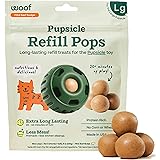
WOOF Pupsicle Peanut Butter & Beef Refill Pops Dog Treats, Large, 7 Count | For large Pupsicles, peanut butter & beef flavor, long-lasting treats, pre-made Pops, wholesome ingredients, shelf stable
$14.99 (as of September 20, 2026 03:04 GMT +00:00 - More infoProduct prices and availability are accurate as of the date/time indicated and are subject to change. Any price and availability information displayed on [relevant Amazon Site(s), as applicable] at the time of purchase will apply to the purchase of this product.)
Self Cleaning Litter Box, Self Cleaning Cat Litter Box, Open-Top Design | No app or Wi-Fi needed—plug in this self cleaning cat litter box, press the power button, and spend less time scooping
$99.99 (as of September 20, 2026 03:10 GMT +00:00 - More infoProduct prices and availability are accurate as of the date/time indicated and are subject to change. Any price and availability information displayed on [relevant Amazon Site(s), as applicable] at the time of purchase will apply to the purchase of this product.)













Post Comment