2026 Proxy Season Unveiled: How the SEC’s Sudden No-Action Pullback Could Flip the Script for Investors and Boardrooms Alike

Ever tried riding a bike with no hands? Feels a bit reckless, right—like you’re leaving the handlebars to fate. That’s exactly the scenario corporate secretaries found themselves navigating in the 2026 proxy season. For decades, the SEC’s Division of Corporation Finance had been the steady hand, the referee guiding which shareholder proposals made the ballot and which didn’t. But suddenly, in November 2025, that trusted guide stepped aside, leaving companies to pedal on their own without those training wheels. It’s a bold leap into independence—one that’s ruffled feathers, sparked courtroom showdowns, and forced boards and corporate counsel alike to sharpen their internal governance game. So here’s the big ponder: can companies truly balance and steer through the complexities of Rule 14a-8 without their usual safety net? Or is this just the start of a bumpy ride through the proxy season’s twists and turns? Let’s dive into the highs, lows, and legal dramas of this new era—and what it means for the future of shareholder proposals.

When the 2026 proxy season opened, corporate secretaries braced for the usual scramble over which shareholder proposals had to appear on the ballot and which could be left off. What most of them no longer had was the referee they had leaned on for decades. In November 2025, the SEC’s Division of Corporation Finance told companies it would stop weighing in on most requests to exclude shareholder proposals under Rule 14a-8, stepping away from a practice that had shaped proxy statements since the 1940s.
Chairman Paul Atkins has treated the shift as a success. Speaking to the Society for Corporate Governance on July 9, he compared the Staff’s exit to “removing the training wheels from the shareholder proposal bicycle,” and concluded that companies and proponents “can pedal just fine on their own.” He offered a memorable statistic to make the point, noting that a single individual served as lead proponent on roughly 41% of the proposals that went to a vote, and that only about 8% of voted proposals won majority support. By his account, the process held up when the Staff went quiet, and he signaled that the agency expects to hold the same posture heading into 2027.
The season’s numbers give that view some cover. Advisory firm Georgeson counted 219 no-action requests, down 36% from a year earlier, and Cooley tracked a 53% drop in exclusion filings even as total proposal volume fell only about 15%. Companies that did move to exclude leaned on objective and procedural grounds far more than the more subjective “ordinary business” theory they once relied on while the Staff was still issuing letters.
The harder question is where the disputes went, and several of them went to court. Skadden and Cooley counted six proponents suing six companies over contested exclusions this season, a sharp jump against the fewer than 30 such suits filed across the previous half-century. The results cut both ways: shareholders won a preliminary injunction forcing BJ’s Wholesale Club to carry a proposal, while a federal judge declined to make insurance giant Chubb include a climate-related resolution. Investor advocates including the Interfaith Center on Corporate Responsibility and As You Sow pushed the fight up a level and sued the SEC itself, arguing the new approach was a rule change adopted without the required notice and comment.
One point is worth emphasizing because it is sometimes overlooked. This season the lawsuits shifted from proponents toward companies, and from investors toward the agency. Companies did not file the declaratory-judgment actions some had predicted after ExxonMobil sued its own proponents back in 2024. That episode still looks like an isolated case rather than the opening move in a corporate litigation playbook.
The substance on the ballot kept shifting as well. Environmental and social proposals fell sharply, and none won majority support, while governance climbed to roughly half of all submissions, led by independent-chair and written-consent requests. Anti-ESG proponents redirected much of their energy toward those same governance topics, though their proposals still averaged single-digit support. The long cooling of ESG-branded investing continued to shape what companies found in their inboxes.
At the board level, the season stayed quiet. ISS-Corporate data shows directors kept strong support overall, with governance-committee chairs again absorbing the most opposition. Roughly two dozen nominees drew majority opposition, but only about ten actually lost their seats. Say-on-pay held up too, with executive compensation consultancy Semler Brossy reporting average support above 92% across the Russell 3000.
For 2027, Hunton and others expect the Staff to stay on the sidelines, since any formal rewrite of Rule 14a-8 is unlikely to be completed before the next proxy season. That leaves companies to make increasingly independent judgments about whether shareholder proposals should be included or excluded. This year’s proxy statements, litigation outcomes and remaining Staff guidance are likely to become the primary benchmarks for those decisions. The no-action correspondence that thinned out this year is searchable history, as is the Staff Legal Bulletin that widened the exclusion standards. So are the proxy filings that show how peers handled the proposals they tried to keep off the ballot, which is exactly the benchmarking a compliance team will want before next spring.
For boards, corporate secretaries and securities counsel, the practical takeaway is that internal governance processes and careful documentation will become even more important as companies assume greater responsibility for Rule 14a-8 determinations without routine SEC feedback.
The training wheels are off. The question now is not whether companies can ride without them, but how consistently they navigate the road ahead.
—
Don’t just read about the trends — leverage them. Explore Intelligize with a free trial and unlock the tools professionals rely on every day.

Beats 360 Cushion Kit for Earcups/Headband - UltraPlush, Black
$9.99 (as of September 25, 2026 03:25 GMT +00:00 - More infoProduct prices and availability are accurate as of the date/time indicated and are subject to change. Any price and availability information displayed on [relevant Amazon Site(s), as applicable] at the time of purchase will apply to the purchase of this product.)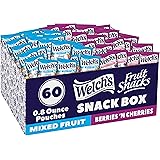
Welch's Fruit Snacks, Mixed Fruit & Berries 'N Cherries, 0.8 oz, 60 Ct | Made with whole fruit, no artificial dyes, gluten free, 25% DV Vitamins A
$18.12 (as of September 25, 2026 03:22 GMT +00:00 - More infoProduct prices and availability are accurate as of the date/time indicated and are subject to change. Any price and availability information displayed on [relevant Amazon Site(s), as applicable] at the time of purchase will apply to the purchase of this product.)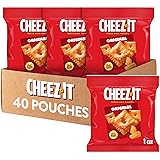
Cheez-It Cheese Crackers, Baked Snack Crackers, Lunch Snacks, Original (40 Packs)
$13.75 (as of September 25, 2026 03:22 GMT +00:00 - More infoProduct prices and availability are accurate as of the date/time indicated and are subject to change. Any price and availability information displayed on [relevant Amazon Site(s), as applicable] at the time of purchase will apply to the purchase of this product.)
San Marco Coffee Flavored Ground Coffee, Chocolate Orange, 1 Pound
(as of September 25, 2026 03:22 GMT +00:00 - More infoProduct prices and availability are accurate as of the date/time indicated and are subject to change. Any price and availability information displayed on [relevant Amazon Site(s), as applicable] at the time of purchase will apply to the purchase of this product.)










Post Comment