How Christopher Nolan’s The Odyssey Secretly Outsmarts Hollywood—And What That Means for Movie Fans Everywhere
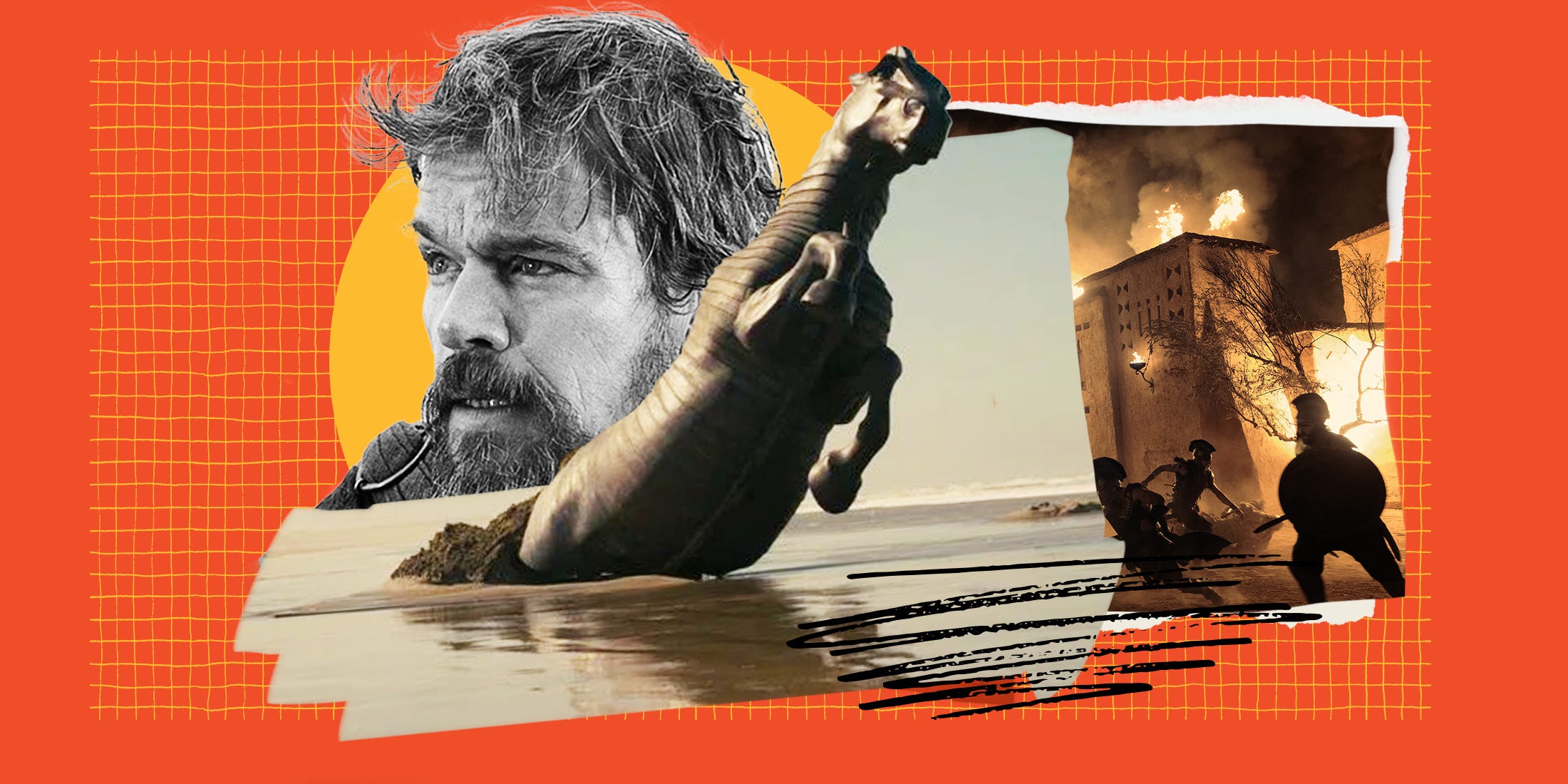
So, Christopher Nolan just did the unthinkable — he took a story we all cheekily skimmed through in middle school and blasted it onto the big screen with the force of a cinematic tsunami. I mean, who’d have thought an ancient poem could be the foundation for a blockbuster that raked in a quarter of a billion in a weekend? It’s the rarest kind of magic when a director who’s already mastered the intricacies of time, memory, and mind-bending puzzles turns his gaze to Homer’s classic “The Odyssey” and transforms it into something equal parts mind-blowing and heart-wrenching. But here’s the kicker — Nolan’s adaptation isn’t just a retelling; it’s a full-blown genre gymnasium, a Trojan Horse of filmmaking that sneaks sword fights, creature features, disaster flicks, and even a psychosexual love triangle all into one sprawling epic. Intrigued? You should be. Buckle up — this ain’t your middle school reading material anymore. LEARN MORE
 7 min read
“An ancient poem! A director! An adaptation! A movie to break the global box office and bring it screaming to the ground!”
IN THE DAYS since The Odyssey was released last week, the cultural discourse has been dominated by a single film and its filmmaker to a degree that I personally have never witnessed before. Coming off of 2023’s Oppenheimer, which accomplished the impossible feat of turning a three-hour biopic about a mid-century nuclear physicist into a critically beloved, billion-dollar-grossing Best Picture and Best Director winner, Christopher Nolan set his sights on the only place he had left to go: on a story we all had to read in middle school. And once again, he put his magic on display, turning it into a thrilling, star-packed, somehow both ancient and contemporary blockbuster. It also grossed a quarter of a billion dollars in a single weekend.
Much of the rapturous discourse around The Odyssey has focused on the writer/director’s nimble feat of taking Homer’s classic tale and turning it into… a Christopher Nolan movie. His Odyssey is focused on a great, hubristic genius, called to duty away from home and family, who must face down great challenges that test his body, mind, and soul, which he achieves, and in the process unwittingly contributes to the slow dissolution of civility and society. This doesn’t so much graft story onto The Odyssey as it makes the viewer realize that basically every Christopher Nolan film—and really most western stories—have always been The Odyssey. Still, Nolan manages to find threads and points of emphasis that make the often retold structure feel particularly Nolanesque.
There has been less discussion around how The Odyssey is, in many ways, a real departure for the puzzle-loving, timeline-shuffling auteur. The sturdy epic is picaresque, by necessity episodic, and while most of Nolan’s films are sustained tone poems that offer his atmosphere-rich takes on superhero films (The Dark Knight trilogy), or Bond films (Tenet), or war films (Dunkirk), or science fiction (Interstellar, Inception), or the biopic (Oppenheimer), The Odyssey works in vignettes that allow for wild swings in mood and style, a gymnasium that offers space for experimentation with entirely new genres. What’s remarkable is it all works without making the film shaggy or dissonant.
The following is a cataloging of some of the different types of films Nolan has managed to smuggle into his making of The Odyssey, turning the film itself into something not far off from the very Trojan Horse he depicts in the film’s opening moments, disguised as a conventional gift to the box office gods.
Sword-and-Sandal Creature Feature

By the time the sea monster Scylla’s giant tentacles descend from a cave, plucking men off Odysseus’s ship as it sails along the alternate route he’s chosen to take in order to avoid an apocalyptic whirlpool, the audience has already sat through what is, unquestionably, Christopher Nolan’s most fantastical film. This is saying a lot for a filmmaker who has given us Tesla cloning machines, a corridor of time and memory designed to torture girl dads, and introduced “temporal pincer movements” into the culture. This is because on Odysseus’s journey we meet a Raimi-worthy army of the dead who rise from mud, a horde of terrifying, invincible Laestrygonians punching through trees and tearing ships apart with their bare hands, along with both Circe the witch and Polyphemus the cyclops, whom we’ll revisit shortly. But in its cavalcade of fantastical creatures, most of whom are achieved with practical effects, Nolan is iterating on matinee classics like Don Chaffey’s Jason and the Argonauts, who made their monsters with stop-motion wizard Ray Harryhausen.
Prison Break Film

After a brutal introduction to Polyphemus, Odysseus and his crew find themselves trapped in the giant monster’s cave. The film slows down to a procedural for a beat as the men have to figure out a way to escape the cave that limits casualties and leaves no soldier behind. It entails some spitballing, a few false starts, some violence, and some cunning to get free. We may never get Christopher Nolan’s Escape from Alcatraz, but for a few minutes, we get a taste of what that might look like.
Disaster Film

Christopher Nolan has taken us into the dream world, space, and Pittsburgh, but he hasn’t taken much advantage of nature and the natural world. That changes with The Odyssey. I’ve seen some critics complain about the film’s deployment of IMAX and Nolan not leaning into his vistas, which is completely bewildering to me, even in the digital IMAX format I subjected myself to twice in South Brooklyn. On a second watch, what really grabs you is what a fun movie this is to simply sit back and look at for its natural photography, because all of its massive budget ends up on screen in stunning wide shots of the on-location open sea and island cliffs.
But the showstopper comes after his starving men make the disastrous decision to barbecue one of Helios’s cattle, when Poseidon lures Odysseus’s crew back onto the water. From there, the unseen god of the sea unleashes a perfect storm that will kill the rest of his surviving army and send Odysseus to a prison composed of memory loss-inducing opiates and a long-term side relationship with Calypso, as played by Charlize Theron. Nolan is no Wolfgang Petersen or Roland Emmerich, but for a moment, he comes close.
Psychosexual Love Triangle

“You don’t want to go home,” Calypso, the succubus side chick, tells an amnesiac Odysseus, and at least in Nolan’s Odyssey, we have reason to believe her. We are told several times throughout the film that Odysseus doesn’t actually want to reunite with his wife and child, perhaps out of guilt for violating Athena and common law between men and the gods, or perhaps … because of the fishnet Charlize Theron utilizes as a top. Ludwig Göransson’s creeping, eerie score is primarily employed in moments of romantic tension with Calypso or Penelope, playing up that the question is one that provokes fear, anxiety, and uncertainty with Odysseus, torn between these two fates. There are elements in Nolan’s The Odyssey that feel reminiscent of the types of stories Alfred Hitchcock (in movies like Vertigo) or Adrian Lyne (in movies like Fatal Attraction) would have brought to the screen, and you can feel it as Odysseus battles for his memory, his soul, and his wife in the face of temptation.
Body Horror

As the pragmatic, perpetually annoyed Eurylochus, Himesh Patel plays the role of every enervated Nolan DP who can’t believe what the visionary wants to actually try to do practically. But his best call in the film is leaving Odysseus behind on one of the enchanted island/exotic zoos their ship comes to shore on. The men go off in search of provisions without their leader, and instead encounter the witch whose cooking will turn them into pigs. The soft mutiny ends up saving them from a life rooting in their own filth.
But the sequence (which brings to mind Spirited Away, for any Miyazaki fans out there) gives us a brief depiction of what a Nolan installment of Saw might look like, and it’s wild. Samantha Morton gives an unbelievable eight-minute performance, representing the faceless masses of raped and pillaged innocents. She’s a stand-in for the countless people whom soldiers like these marauded throughout the ancient world, simply because they were stronger, heartless, and wanted the things these peasants had. The Circe scenes contain the film’s most ingenious sequence–a horror set piece that employs Rick Baker-worthy latex and makeup (“I can tell you there’s no CGI in that sequence,” Patel told Men’s Health. “I think people won’t quite believe it, but there’s none.”) to transform the small army into a herd of swine, before under duress, the witch transforms them back to their human “disguises.”
Revenge Thriller

In his unlikely role as surrogate Michael Caine, the great John Leguizamo urges Odysseus, disguised as a beggar, to “bring vengeance,” to which the hero responds he’s “bringing it all,” looking down with locked-in determination and launching a thousand memes. Throughout the film, the cuts back to Ithaca and the suitors lying in wait outside Penelope’s chamber are effectively blood boiling. They want to fuck Odysseus’s wife, kill his son, and take his throne. We see these men “from below.” They are greedy and coarse, feasting on Odysseus’s meat and guzzling his wine. They are cruel to blind old men, children, sick dogs, and beggars. This is why it’s so satisfying when Odysseus finally strings and plucks his bow, before bringing down righteous anger and furious vengeance on these motherfuckers.
It’s an electrifying, satisfying conclusion to three hours of moral quandary, as the war drums thunder and Odysseus kills his way through a room full of inferior men he’s greatly outnumbered by. It’s a cathartic set piece that literally plays out on two levels. Before he sends a deliciously slimy Robert Pattinson to Hades, Odysseus tells Antinous to inform his deceased shepherd boy he gave him back his shame (!). It’s the great master showing us that in fact, if he had the time and the interest, Christopher Nolan could make the greatest installment of John Wick you’ve ever seen. But like any good showman, he leaves you dreaming of the possibilities, and wanting more.


Flatbush local, former mayor of New York City

Propel, Kiwi Strawberry, Zero Calorie Sports Drinking Water with Electrolytes and Vitamins C&E, 16.9 Fl Oz (12 Count)
$9.97 (as of September 23, 2026 03:05 GMT +00:00 - More infoProduct prices and availability are accurate as of the date/time indicated and are subject to change. Any price and availability information displayed on [relevant Amazon Site(s), as applicable] at the time of purchase will apply to the purchase of this product.)
Temptations Classic Crunchy and Soft Cat Treats, Tasty Chicken, 30 oz | Under 2 calories per treat, crunchy outside & soft inside, resealable tub, 100% complete & balanced, snack, meal or topper
$14.97 (as of September 23, 2026 03:05 GMT +00:00 - More infoProduct prices and availability are accurate as of the date/time indicated and are subject to change. Any price and availability information displayed on [relevant Amazon Site(s), as applicable] at the time of purchase will apply to the purchase of this product.)
Hoki Found -Waterproof Pet Feeding Mats with High Lips - Multiple Size and Colors for Dogs, Cats & Others-G
$12.99 (as of September 23, 2026 03:11 GMT +00:00 - More infoProduct prices and availability are accurate as of the date/time indicated and are subject to change. Any price and availability information displayed on [relevant Amazon Site(s), as applicable] at the time of purchase will apply to the purchase of this product.)
CELSIUS Assorted Flavors Official Variety Pack, Functional Essential Energy Drinks, 12 Fl Oz (Pack of 12)
$22.49 (as of September 23, 2026 03:05 GMT +00:00 - More infoProduct prices and availability are accurate as of the date/time indicated and are subject to change. Any price and availability information displayed on [relevant Amazon Site(s), as applicable] at the time of purchase will apply to the purchase of this product.)













Post Comment