
Unlocking the Secret: How Ballet Could Be the Unexpected Weapon Against Alzheimer’s You’ve Never Heard Of
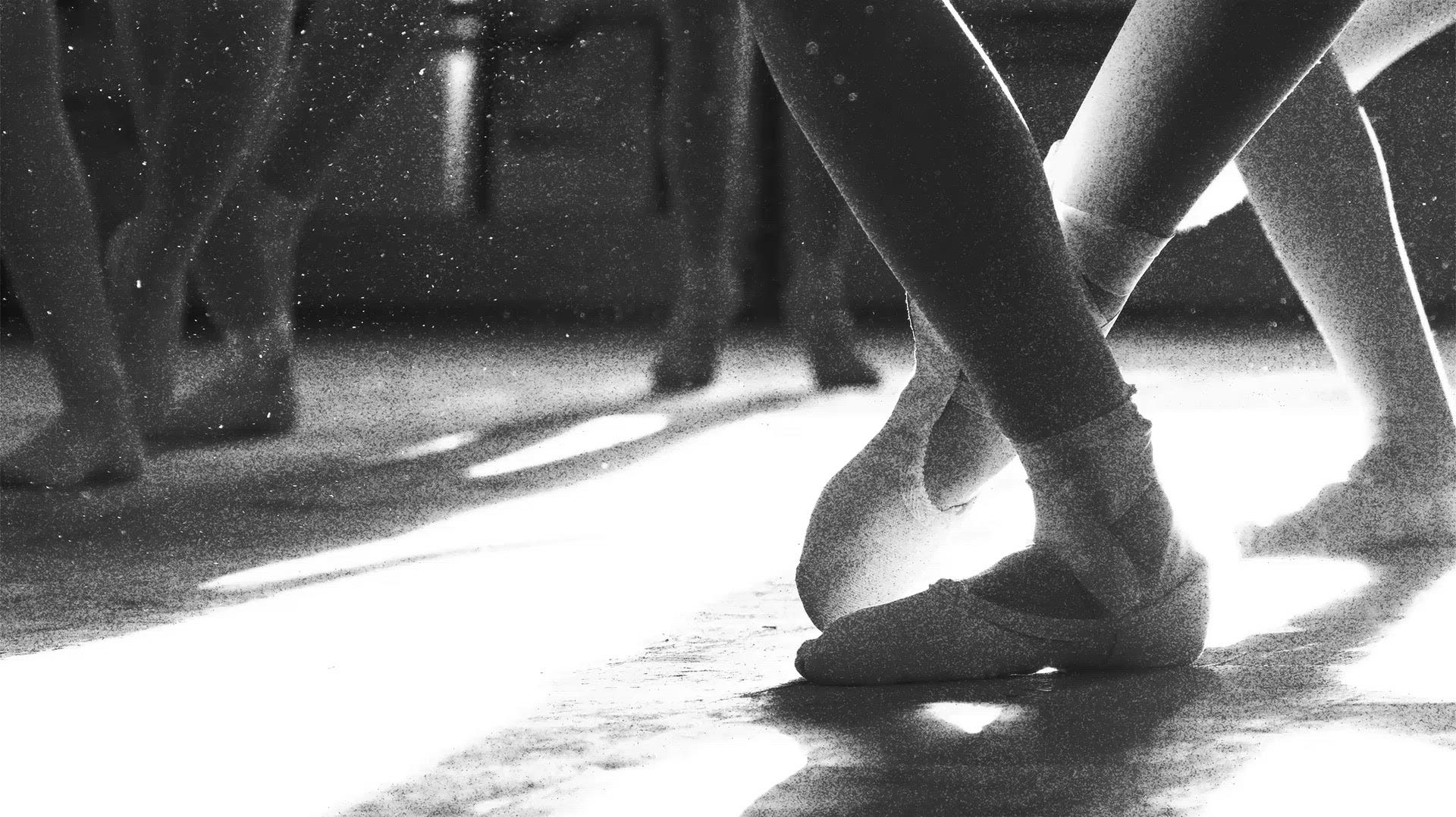
You ever find yourself on the brink of quitting something that once felt like second nature—only to realize it might just be the very thing saving your brain? There I was, standing hesitantly on the edge of a ballet studio after a twenty-year break, feeling more like an “auntie” lost among spry twenty-somethings than a dancer. The footwork was brutal, the choreography a labyrinth. But then, a revelation: this isn’t about perfect pirouettes or nailing every sequence. It’s about rewiring the brain, building fresh neural pathways, and keeping the mind razor-sharp. Fighting dementia isn’t a crossword puzzle anymore—it’s about lacing up those ballet slippers, embracing the challenge, and dancing through the fear. Could returning to ballet after all these years be the ultimate brain hack? Let’s dive into this perfect mind-body puzzle that’s reshaping how we think about aging and cognition. LEARN MORE
 7 min read
I am standing on the side of the dance studio, debating whether to leave. Having recently returned to ballet classes after a two-decade hiatus, I feel defeated by the instructed footwork. It doesn’t help that the “Balletcore” class I am taking is 21+, meaning that I am auntie age in the eyes of many of my fellow dancers.
Our instructor, dancer and choreographer Angela Trimbur, is introducing choreography that feels especially complex. But then she says just the thing to get me back onto the floor: Part of her intention is to fight off dementia. When I ask her about it later, she tells me, “Whether someone remembers every step is honestly less important to me than the fact that they’re building new neuron pathways and challenging familiar patterns to shift gears.” Trimbur continues, “When we’re learning choreography, we’re asking the brain to do so many things at once: remember sequences, process music, coordinate movement, adapt when we make mistakes, and stay present with other people in the room. It’s a perfect puzzle for keeping the mind fresh.”
My intention is not to improve endurance or lower-body strength. I’m returning to the discipline to stave off the dementia that runs in my family. Seeing my paternal grandfather’s decline and considering my dementia predisposition give me anxiety, sadness, and fear of future helplessness. But being in the studio brings feelings of possibility and challenge. Could going back to ballet be the ultimate offset?
Dementia is an umbrella term for a group of chronic neurological conditions, the most common cause being Alzheimer’s disease. For people with dementia, memory, language, problem-solving, and other coordination skills deteriorate. As a partial prevention mechanism, some people pick up crossword puzzles. I have chosen to put on ballet slippers. Dance hits on a few components—replication, recall, and creation—that make it especially relevant for preventing cognitive aging. Never mind that I wear a full shoe size larger than I did as a performing teenager, owing to flattening arches.
I quit classical ballet at 17; the structure didn’t mix well with teenage rebellion. Today, with school-aged children and aging parents, I find that the coaching and collective workshopping that regular barre and floorwork classes offer is exactly the scaffolding I crave. Catalina Jackson-Urueña, the director of the Dancing Through Parkinson’s program at Invertigo Dance Theatre in Los Angeles, explains that ballet technique is among the most codified in the world of dance. “There’s the standard positions. There’s alignment. It’s very specific.” Jackson-Urueña’s family also has a history of neurological conditions, both Parkinson’s and Alzheimer’s, which she considers in her own dancing and choice of profession. “In ballet class, I know what to expect: first, pliés, then tendus—something I’ve been doing my whole life. There’s comfort there, but it’s also challenging.” The structure of specific components of each class (barre work is followed by stretching and sequences in the center of the class, then jumps) warm up the body and mind while offering variety that keeps dancers alert.
Trimbur adds, “The people who seem most vibrant as they age don’t just keep exercising. They keep learning. They keep living in surprise. That’s what I love about choreography. It’s not repetition in the traditional fitness sense. Every week, you’re being asked to create a new map.” Jackson-Urueña says that while ballet is her own personal default, she makes herself take dancehall and house classes, knowing there is cognitive benefit in practicing genres that are less habitual to her.
Lisa Mosconi, director of the Women’s Brain Initiative and Alzheimer’s Prevention Program at Weill Cornell Medicine, explains this from a neuroscience perspective: “Novel movement is not simply exercise. It’s exercise plus learning. And that combination appears especially powerful for maintaining brain health as we age.”
Trimbur sees the importance of novel movement too. “What I’ve noticed is that many of us move through life using a surprisingly small vocabulary of movement,” she says. “Dance interrupts that. It asks you to cross your body differently, change direction unexpectedly, blow around like a tree in the wind, embody different characters, respond to rhythms you wouldn’t normally choose.”

Amos Machanic leading an Active Aging Workshop at Ailey Extension in New York City, February, 2026
David Leventhal, one of the founding teachers of Mark Morris Dance Group’s Dance for PD program and its current director, sees benefit for professional dancers and people with neurodegenerative disease diagnoses alike. “Regardless of whether you’re dancing eight hours a day or one hour a week, it’s first and foremost a mindful activity. And it’s one of the best ways that we can integrate all of our sensory awareness along with a physical awareness and physical execution.” The neural pathways that develop out of new experiences force brain adaptation—also known as neuroplasticity—that can slow down symptom progression.
A meta-analysis of 10 studies with nearly 1,000 participants found that dance therapy significantly improved global cognitive function, including executive function, language, and depression and neuropsychiatric symptoms. Leventhal praises the psychosocial effects of multisensory dance, including lowered depression levels that can be seen in a desire to return to class. Mosconi adds, “Dance challenges memory, attention, executive function, motor coordination, and social cognition simultaneously. It also tends to be enjoyable, which matters more than many people realize. The best brain-health intervention is often the one you’ll continue doing consistently for years.”
Longevity research shows that women live five or more years longer than our male counterparts. When I ask Mosconi when she recommends that my friends and I start dance and related activities, she says the best time to start is now: “Our research suggests that the menopause transition represents a critical window for supporting brain health. This is a time when women may be especially motivated to adopt new habits that benefit both immediate well-being and long-term cognitive resilience.”
Social engagement is a powerful protective factor against cognitive decline. And the social and community aspects of dance are unmatched, says Rachel McCaulsky, the director of Ailey Arts in Education & Community Programs. On the day she takes me to observe an AileyDance for Active Aging class in Midtown Manhattan, in which a group of New Yorkers over 50 are learning the third section of Alvin Ailey’s Revelations choreography, she explains, “When we started the class, people were saying, ‘I feel welcomed here.’ ”
Participation in the eight-week workshop is heavily driven by word of mouth, with groups growing in size and creating a demand for more teaching artists. During a recent Los Angeles residency, local “groupies” emerged, showing up at senior centers to take part in more classes than they had been invited to. In Active Aging sessions, instructors work in pairs, regularly mirroring participants—“dancers,” always, in the words of the Ailey teaching artists—and inviting in those who seem hesitant. This, plus name tags, would be a useful addition to all dance classes, I think.
Brenda Aiken, 71, a former physician, tells me that taking part in the Active Aging workshops at Ailey Extension has given her a renewed sense of pride and purpose. “It keeps both my mind and body active and healthy, even as our bodies change, slow down, or require a little extra care—or even replacement along the way. It reminds me that movement is still possible, joy is still accessible, and expression has no age limit. It has taught me to embrace myself fully—my body, my movement, even my ‘two left feet’—without hesitation or embarrassment.”
Some dancers attend with care partners, and there are movement adaptations for participants with mobility or balance challenges. I feel taller after a seated warmup focused on balance, strength, and endurance. One dancer remarks that thanks to the workshop, she climbs subway stairs without using the railing. Derrière strength is referenced as part of the introduction to dance vocabulary and choreographic structure.
Yet dance is not enough on its own. (Don’t tell my closet of newly purchased leotards. Styles have improved a lot in the past 25 years.) Ryan Glatt, a brain-health coach with the Pacific Neuroscience Institute, says that just as with diet, a variety of things is better for our brain than any one single thing. When it comes to exercise, “Dance would be one good component, but what about also resistance training and strength training? What about other types of neuromotor exercise like yoga or table tennis? What about other types of aerobic exercise?”
I add a small group weightlifting class to my expanding schedule of adult classes, which now include contemporary dance. I’m inspired by the restaging of Pina Bausch choreography with original dancers 50 years later and the 40-to-89-year-old dancers who make up the Timeless Torches, the New York Liberty WNBA team’s dance squad.
I’m far from alone in my experience of subjecting myself to being a beginner for long-term cognitive benefits. But I’m humbled to find that extensive years of past training do not translate to intermediate-level capabilities here in New York City. The realization brings me to Rusty Ballet, a class from the company Dance Again, which draws people in their 20s through 70s to in-person and remote classes. Founder Jess Grippo says she wanted to signal that the class could be for people who were out of practice. Now that I’m practicing grand pliés after two childbirths, my pelvic floor feels different than it used to, and I find myself counting inhalations and exhalations more carefully. But the mood is more joyful and the dancewear more casual than in the classes of my past. Arimee Gambill, our instructor, implores us to “Let the rond de jambes rip.”
To hear McCaulsky tell it, group dance is “as much dance and movement as it is a music experience; it’s working the brain in a way that allows you to recall and repeat but then add your creative lens to it.” I find that whether I can perform all the steps in a routine isn’t the goal. Creating new neuron pathways and fun is. As Trimbur says, “Dance asks us to stay open-minded, to be comfortable being seen while you’re still learning, to tolerate not knowing with grace, and to keep making connections with the brain and body—and with passion! Whether someone remembers every step is honestly less important to me than the fact that they’re building new neuron pathways and challenging familiar patterns to shift gears and getting stuck energy out of the body. It’s the most freeing.”

reatoy Cat Deterrent Spray for Furniture Protection, Anti Scratch and Urine Marking, Plant-Based Safe Formula for Indoor & Outdoor 150ML 5
$19.99 (as of October 2, 2026 03:13 GMT +00:00 - More infoProduct prices and availability are accurate as of the date/time indicated and are subject to change. Any price and availability information displayed on [relevant Amazon Site(s), as applicable] at the time of purchase will apply to the purchase of this product.)
Wall Charger, Surge Protector, QINLIANF 5 Outlet Extender with 4 USB Ports | 1680 Joules, 3-Sided Power Strip, Multi Plug Wall Outlet Adapter Spaced for Home Travel Office, White
$9.99 (as of October 2, 2026 03:17 GMT +00:00 - More infoProduct prices and availability are accurate as of the date/time indicated and are subject to change. Any price and availability information displayed on [relevant Amazon Site(s), as applicable] at the time of purchase will apply to the purchase of this product.)
Core Power Elite High Protein Shake, Chocolate, 42g Bottle, 14oz, 12 Pack
$47.98 (as of October 2, 2026 03:06 GMT +00:00 - More infoProduct prices and availability are accurate as of the date/time indicated and are subject to change. Any price and availability information displayed on [relevant Amazon Site(s), as applicable] at the time of purchase will apply to the purchase of this product.)
PETLIBRO Cat Water Fountain, Cordless Pet Water Fountain Battery Operated, 2.5L/84oz Dockstream Water Fountains for Cats Indoor, Cat Fountain with Stainless Steel Tray, Easy to Clean BPA-Free
$65.99 (as of October 2, 2026 03:13 GMT +00:00 - More infoProduct prices and availability are accurate as of the date/time indicated and are subject to change. Any price and availability information displayed on [relevant Amazon Site(s), as applicable] at the time of purchase will apply to the purchase of this product.)












Post Comment