
Uber’s stealth move with 30 partners is about to shake the entire autonomous vehicle industry—are you ready for the revolution?
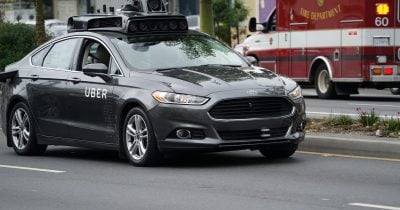
What if I told you that Uber has been quietly stitching together one of the boldest autonomous vehicle networks tech has ever witnessed—without making a single car? Over the last couple of years, they’ve partnered with and invested in nearly 30 AV companies, transforming themselves from a ride-hailing app into the ultimate platform kingpin that orchestrates the entire robotaxi symphony. It’s a $10 billion gamble, sure—but this isn’t some side hustle; it’s Uber’s future carved in steel and code, aiming to launch 20,000 self-driving robotaxis on Lucid’s sleek Gravity platform by 2026, backed by a fast-charging network and a powerhouse crew including Waymo, Rivian, and NVIDIA. Now, here’s the kicker for investors and crypto enthusiasts: while Uber’s AV venture hasn’t ventured into blockchain territory yet, a growing DePIN ecosystem could become the hidden jackpot if this titan ever taps into crypto-native infrastructure. Intrigued to see how this colossal puzzle piece might reshape the roads—and wallets—of tomorrow? Dive deeper and catch the full picture here: LEARN MORE.
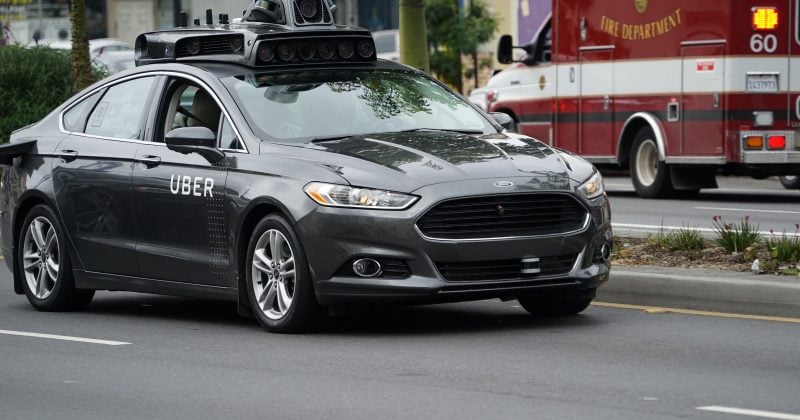
Uber has quietly assembled one of the most ambitious autonomous vehicle coalitions in tech history. Over the past two years, the company has partnered with, and in some cases directly invested in, roughly 30 autonomous vehicle companies, positioning itself not as a car maker or even a self-driving software developer, but as the platform layer that sits on top of all of them.
The $10 billion bet
Uber’s total commitment to autonomous vehicle initiatives now exceeds $10 billion. That figure includes more than $2.5 billion in equity stakes across companies like WeRide, Lucid, Nuro, Rivian, and Wayve.
The centerpiece of the strategy is a plan to deploy at least 20,000 autonomous robotaxis based on the Lucid Gravity platform, powered by Nuro’s autonomy stack, starting in 2026. Uber reportedly invested around $300 million in Lucid to make that happen.
On the infrastructure side, the company has earmarked $100 million specifically for building out fast-charging networks across ten targeted autonomous-vehicle cities by the end of 2026.
In February 2026, Uber formalized all of this under a dedicated business unit called “Uber Autonomous Solutions.” The unit provides infrastructure, data, mapping, and operational support to its growing roster of AV partners.
The partner list reads like a who’s who of autonomous driving. Waymo, Zoox, and Motional are all active collaborators. Rivian is targeting 50,000 R2 vehicles for 2028 deployment. And a collaboration with NVIDIA aims to scale Uber’s AV operations toward a fleet of 100,000 vehicles by 2027.
Uber is now facilitating robotaxi and delivery AV operations across more than 10 US markets, with plans to expand further as regulatory frameworks catch up.
Why crypto investors should pay attention
Uber’s AV push currently has no crypto integration. No tokens, no blockchain-based data sharing, no decentralized ride coordination. The company explored blockchain concepts for AV data sharing back in 2017-2019, but nothing materialized into a shipping product.
Several crypto projects are already building in adjacent spaces. Decentralized physical infrastructure networks, or DePIN protocols, are creating tokenized incentive layers for everything from wireless coverage to GPS mapping. Projects like Hivemapper have built decentralized street-level mapping networks. DIMO is tokenizing vehicle data.
What this means for investors
For traditional investors, the $10 billion commitment signals that Uber views autonomy not as a speculative side project but as its core future business. The equity stakes in Lucid, Rivian, and others also give Uber direct financial upside if any of those bets pay off independently.
The DePIN sector is the most obvious beneficiary among crypto-focused investors. Projects building decentralized mapping, vehicle data networks, and mobility infrastructure stand to gain if Uber or its partners begin integrating crypto-native solutions.
Blink Outdoor XR+ and Battery Doorbell 2K+ — Extended range wireless Outdoor 4 camera and 2K battery doorbell. Sync Module XR+ included — 2 camera system + doorbell
$69.99 (as of October 2, 2026 03:26 GMT +00:00 - More infoProduct prices and availability are accurate as of the date/time indicated and are subject to change. Any price and availability information displayed on [relevant Amazon Site(s), as applicable] at the time of purchase will apply to the purchase of this product.)
SHOKZ OpenRun Air 2 Bone Conduction Open-Ear Bluetooth Headphones,Black | Bundle with Hair Band;26.4g lightweight; Secure fit; PremiumPitch 3.0 sound; IP67; 10H battery; Running/cycling/hiking
$129.95 (as of October 2, 2026 03:26 GMT +00:00 - More infoProduct prices and availability are accurate as of the date/time indicated and are subject to change. Any price and availability information displayed on [relevant Amazon Site(s), as applicable] at the time of purchase will apply to the purchase of this product.)
Pure Life Purified Bottled Water - 15 Pack, 16.9 Fl Oz | Still Drinking Water Enhanced with Minerals for a Crisp Taste
$4.95 (as of October 2, 2026 03:06 GMT +00:00 - More infoProduct prices and availability are accurate as of the date/time indicated and are subject to change. Any price and availability information displayed on [relevant Amazon Site(s), as applicable] at the time of purchase will apply to the purchase of this product.)
Organic Banana Bunch (4-5 Count)
(as of October 2, 2026 03:06 GMT +00:00 - More infoProduct prices and availability are accurate as of the date/time indicated and are subject to change. Any price and availability information displayed on [relevant Amazon Site(s), as applicable] at the time of purchase will apply to the purchase of this product.)













Post Comment