
$7 Billion Draining from Binance Stablecoins—Is Bitcoin Poised to Shatter the Liquidity Trap or Collapse Under Pressure?
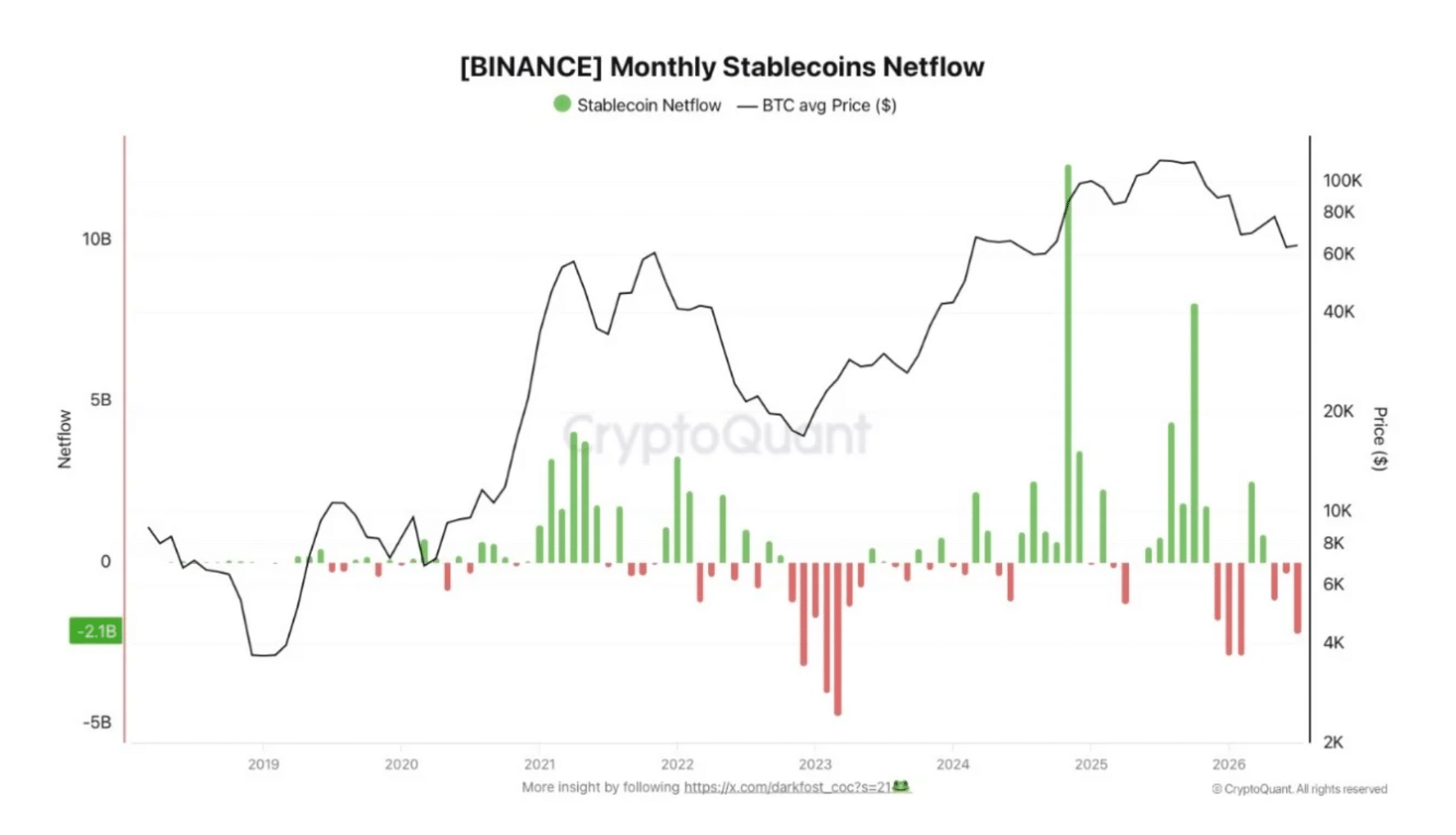
Is crypto losing its mojo, or are we just witnessing a massive game of digital hot potato with stablecoins? This month alone, Binance has seen a staggering $2.2 billion in net stablecoin outflows—pushing 2026’s total exodus to around $7 billion. That’s no small change when you consider Binance holds nearly 70% of exchange stablecoin reserves. It feels like investors are cautiously passing the buck from one exchange to another, rather than diving back into the market with cash in hand. Sure, Bitcoin’s hanging tough above $63,000—proof that some buyers are still snapping up supply—but the real question is: will the market’s pulse quicken again, or is this liquidity drain a sign of prolonged hesitation? Let’s dig into what this stablecoin shuffle means for crypto’s future and whether Bitcoin’s resilience can weather the storm. LEARN MORE
Demand for crypto continues to weaken as stablecoin liquidity leaves exchanges instead of returning to the market. Binance has experienced an additional $2.2 billion in net stablecoin outflow this month, increasing 2026’s total outflows to approximately $7 billion.
These withdrawals also represent a decline in the amount of capital that can be used to purchase digital assets. This is because Binance represents nearly 70% of exchange stablecoin reserves. The flow of investor funds appears to be from one exchange to another, which reinforces a cautious risk environment.
Although BTC has continued to trade at prices over $63,000, indicating current buyers continue to absorb available supply. Continued price stability will depend on increased demand for stablecoins before improvements in liquidity and overall market momentum.
South Korea extends the stablecoin outflow trend
That broader liquidity contraction is also becoming visible at the regional level, reinforcing the market-wide decline in stablecoin demand.
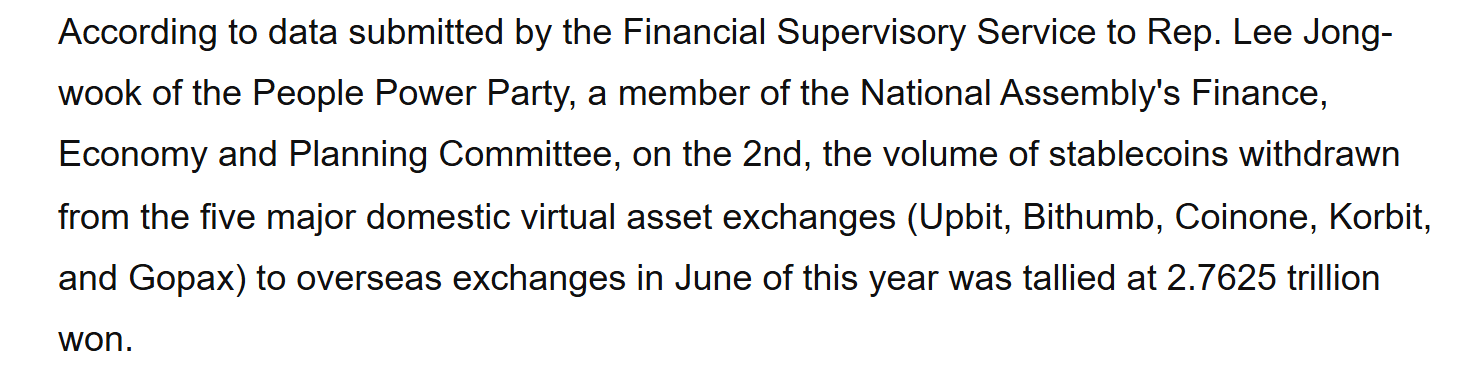
South Korea recorded 18 consecutive months of net stablecoin outflows after investors moved 2.7625 trillion won to overseas exchanges in June 2026, while only 2.2022 trillion won returned. The resulting 560.3 billion won net outflow suggests capital continues leaving domestic exchanges instead of supporting local market liquidity.
This trend may be indicative of a short-term shift. Yet, it also represents a longer-term trend of investors moving abroad for access to derivatives that cannot be found domestically.
As such, this regional trend, like the previous trend of declining Binance stablecoin balances, further demonstrates the flow of liquidity away from the domestic markets toward greater cross-border investing opportunities.
Can Bitcoin withstand weakening liquidity?
Despite continued outflow of liquidity from global and regional exchanges, Bitcoin is still showing resilience. Although the total stablecoin market cap has decreased to approximately $307.6 billion, about 1% over the last month, the Bitcoin price range remains between $62,800 and $63,500.
That resilience indicates other demand sources are absorbing part of the liquidity shortfall. Recent spot Bitcoin ETF flows have alternated between inflows exceeding $200 million and occasional outflows, while long-term holders continue limiting available supply through renewed accumulation.
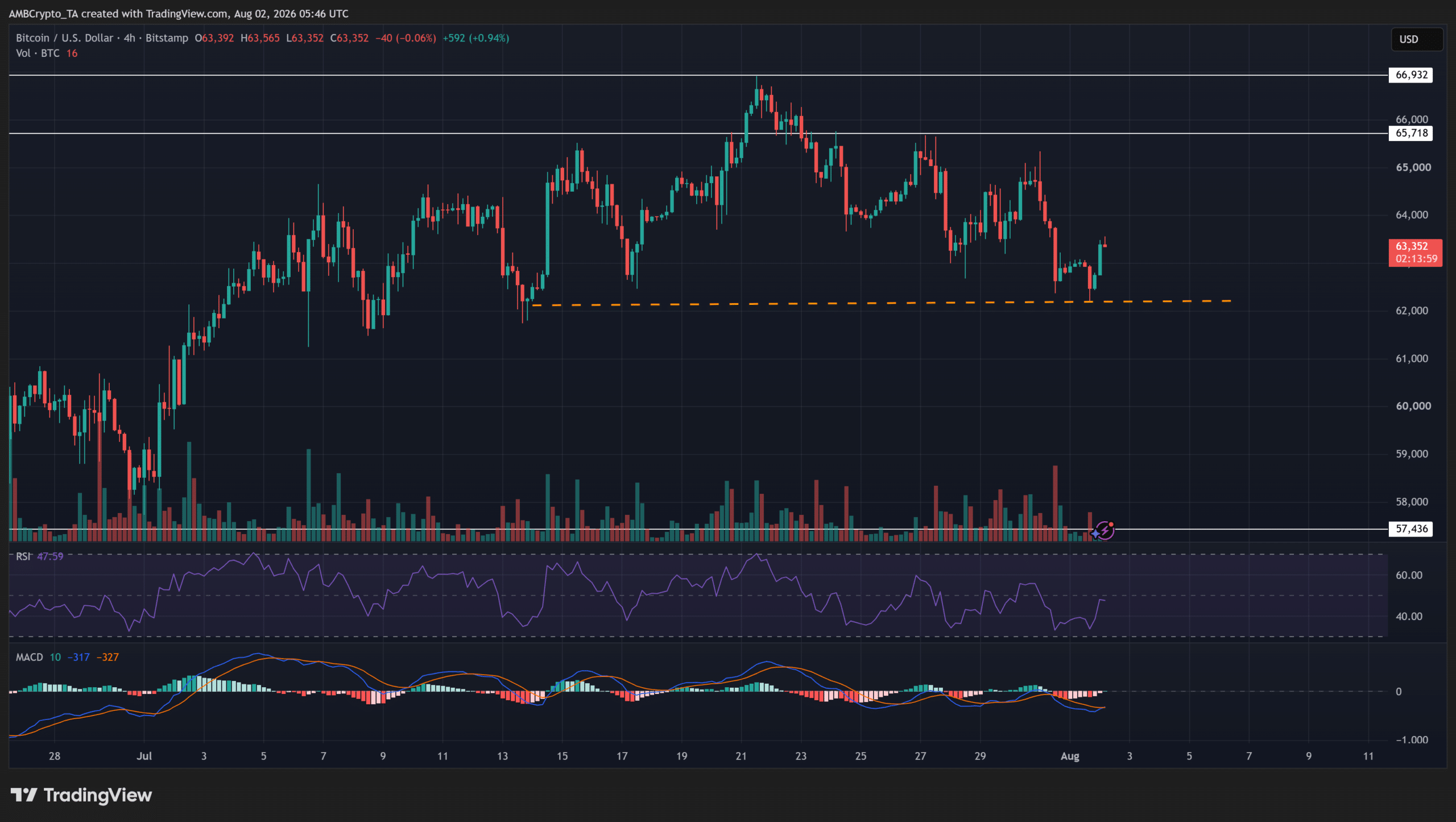
This resilience also appears in recent price action, where Bitcoin has repeatedly defended the $62,000 support zone before rebounding toward $63,300. However, the price still trades below the $65,718 and $66,932 resistance levels, showing buyers remain cautious.
A break above those levels would reinforce the current recovery, whereas losing $62,000 could expose Bitcoin to another leg lower if liquidity conditions continue tightening.
Final Summary
- Stablecoin liquidity continues shrinking as persistent exchange outflows reduce buying power across the broader crypto market.
- Bitcoin remains resilient, but sustaining its recovery will require stablecoin liquidity and broader market demand to improve.

Amazon Fire TV Stick 4K Plus with AI-powered Fire TV Search, Wi-Fi 6, stream hundreds of thousands of movies and shows, free & live TV, find shows faster with Alexa+
$37.99 (as of October 2, 2026 03:17 GMT +00:00 - More infoProduct prices and availability are accurate as of the date/time indicated and are subject to change. Any price and availability information displayed on [relevant Amazon Site(s), as applicable] at the time of purchase will apply to the purchase of this product.)
ARM & HAMMER Slide Platinum Easy Clean-Up Clumping Cat Litter, 18 lbs | 24/7 Odor Control, Triple-Action Freshness, Non-Stick, Low Tracking, 99.9% Dust Free, Multi-Cat Formula, Scented
$17.99 (as of October 2, 2026 03:08 GMT +00:00 - More infoProduct prices and availability are accurate as of the date/time indicated and are subject to change. Any price and availability information displayed on [relevant Amazon Site(s), as applicable] at the time of purchase will apply to the purchase of this product.)
2 Pack [Apple MFi Certified] USB C Headphones Wired for iPhone 18 17 16 15 | Wired Earbuds with Microphone & Remote Control Noise Cancelling Type C Earphones for iPhone Duo 18 17 16 15 Pro Max, Galaxy
$13.99 (as of October 2, 2026 03:26 GMT +00:00 - More infoProduct prices and availability are accurate as of the date/time indicated and are subject to change. Any price and availability information displayed on [relevant Amazon Site(s), as applicable] at the time of purchase will apply to the purchase of this product.)
INABA Churu Cat Treats, Lickable, Squeezable Creamy Purée Cat Treat with Green Tea Extract & Taurine, 0.5 Ounces Each Tube, 50 Tubes, Tuna & Chicken Variety
$32.96 (as of October 2, 2026 03:08 GMT +00:00 - More infoProduct prices and availability are accurate as of the date/time indicated and are subject to change. Any price and availability information displayed on [relevant Amazon Site(s), as applicable] at the time of purchase will apply to the purchase of this product.)













Post Comment