
Why Bathhouse Culture Could Be the Ultimate Game-Changer for American Wellness — Are We Prepared to Embrace It?

So, picture this: It’s 1991, I’m a college student wandering the chilly streets of St. Petersburg, Russia, dodging bread lines and soaking up a culture on the brink of change. But amidst the chaos, there’s one thing that stands out—a bathhouse, or banya, as the locals call it. Promised as a spa-like sanctuary and a way of life, I wandered into a steamy room filled with chatting, towel-clad strangers dunking into icy barrels and getting gently whacked with birch branches. At first, it felt more like a punishment than a treat, but by the end, I’d found myself part of a fascinating, centuries-old wellness ritual that left me glowing—both inside and out.
Fast forward to 2026, and guess what? That Russian banya experience isn’t some distant memory tucked away in my travel diary anymore. It’s booming here in the U.S., with floating saunas, event-packed steam rooms, and innovative bathhouse experiences popping up coast to coast. But why the sudden resurgence? Are Americans finally ready to swap digital detoxes for real, sweaty connection? And what’s behind this bubbling wave of wellness that blends tradition with a distinctly American vibe? Let’s dive into the steamy details of the bathhouse comeback—and figure out if you’re ready to take the plunge, too.
 11 min read
IN SEPTEMBER OF 1991, I spent a semester of college studying abroad in St. Petersburg, Russia. I filled my days with language and literature classes at a local university, explored the seemingly endless rooms of the State Hermitage Museum, wandered up and down Nevsky Prospekt, and cozied up to locals who were always happy to invite me and my fellow exchange students into their homes for tea—and to practice their English.
It was a time of great change for the country. Russia was fresh off the failed August Coup (an attempt that year by hard-line Soviets to seize power from Mikhail Gorbachev and halt his reforms), and a sense of deep uncertainty was pervasive. There were shortages of just about everything—on an average day, my peers and I would stand in a line near our dorms simply to get a hunk of bread to accompany whatever cabbage we had been able to find at the local market. But one thing Russians seemed to have plenty of at the time was bathhouses, or banyas, as they call them. My local friends insisted I check one out, describing it as a spa of sorts and assuring me that going was a way of life in the country.
And, really, who was I to say no to a little cross-cultural investigation?
My first impression was that the experience was more punitive than restorative. The facility itself featured standard Soviet-era design—lots of concrete, with utility prioritized over comfort. I was greeted not by the dulcet tones of Enya, but by the commands of the banya leaders, old women who directed me to strip down and wrap myself in a towel. I did as I was told and followed the masses into a large, steamy room.
Inside were women of all ages sitting on their towels, chatting, dunking their bodies into barrels filled with frigid water, and receiving gentle floggings with birch branches. While it was hardly my idea of a spa day, everyone around me looked as if they were all either in on the joke or genuinely happy to be there. After a few circuits—steam, plunge, thwack—I made my way to the cafeteria for hot tea alongside my neighbors. Many of us were topless; all of us felt far better, physically and mentally, than we did when we walked in.

Looking back, I can only describe the experience as a well-choreographed, wildly exhilarating multigenerational wellness dance. Afterward, I emerged into the gray, chilly St. Petersburg fall with rosy cheeks, a thoroughly decongested chest, and a big smile. For decades after leaving Russia, I thought the closest I’d ever get to an authentic banya experience again was hanging a eucalyptus branch in my shower. But in 2026, it’s now easier than ever for me to relive those days here in the United States.
From floating saunas in the Pacific Northwest to spas with live entertainment in Las Vegas to the traditional steam-and-plunge spots in New York City, America is currently in the midst of a bathhouse boom—and on the precipice of a full-on bathing explosion.

Rise, Fall, then Return
The trend isn’t new, even to our shores. Most societies have, or have had, a tradition of communal bathing, from Roman baths and Native American sweat lodges to Turkish hammams and Japanese onsen, says Robert Hammond, president and chief strategy officer of Therme Group US, whose parent company, Therme Group, operates five international bathhouses, with U.S. locations currently in development. Finnish settlers introduced sauna culture to places like Minnesota back in the late 1800s (Ely Steam Sauna has been operating in the state since 1915), and there was a time when Manhattan’s East Village was lined with Eastern European–style bathhouses—part of an early city initiative to give New Yorkers a place to wash before adequate bathing facilities and hot water were standard in homes.
When indoor plumbing became more commonplace, it rendered most of those facilities obsolete. But today, “bathhouses are hot again,” says Dmitry Shapiro, whose family co-owns New York City’s Russian & Turkish Baths, which, despite having been open since 1892, is currently experiencing record attendance.
This modern surge is tough to fully quantify: Solid data on the number of U.S. bathhouses is murky since the category itself is still taking shape and there’s no hard-and-fast definition of what a bathhouse even is (ask 100 business owners and you might get 100 different answers). The general consensus is that it’s a facility that contains various pools, steam rooms, and saunas and offers treatments like scrubs and experiences such as Aufguss (a sauna ritual in which a trained professional known as an Aufgussmeister pours water, often infused with essential oils, over hot stones and then circulates the steam around with a towel).
The Global Wellness Institute’s projected annual growth for the thermal mineral bathing sector doubled between 2020 and 2023, and in 2024, the U.S. sauna market generated an estimated $250.8 million in revenue. Between 2025 and 2030, it’s predicted that it will grow by $161.3 million.
And what we can gather anecdotally is that new bathhouses seem to be springing up at a steady clip across the country. In some cases, it’s more a renaissance of the bare-bones-style banya that I experienced in Russia. In others, business owners are putting a distinctly American twist on traditional bathhouse culture. What makes the latest crop of bathhouses unique is the vibe. “We’ve not had anything quite like this in the U.S. before,” says Jane Kitchen, a media and trends analyst at the Global Wellness Institute. “Saunas were normally confined to gym locker rooms or basements, and they were small and boxlike and not somewhere you wanted to spend much time. This is a whole different movement involving entertainment, socializing, and wellness.”
Indeed, saunas are evolving from simple sanctuaries of relaxation into vibrant hubs of entertainment. “Younger consumers craving real-life connections beyond bars and clubs are drawn to these social saunas,” Kitchen adds. Call it fusion bathing: American offerings provide elements of classic European bathhouses, but with bells and whistles found only in the good ol’ U.S. of A.
Von Sauna, for instance, is being billed as Washington State’s first floating sauna. The brainchild of American David Jones, it provides patrons with the chance to sit in a sauna floating on a barge and, when they’ve had enough heat, jump into Lake Washington to cool off. At Othership in New York and Toronto, you can enjoy guided saunas, ice baths, and connection in the tearoom. But you can also attend special events like sober nights or full-sensory stand-up, where comedians deliver their tight five inside the sauna. And then there’s the Vegas take on the trend: The Awana Spa at Resorts World Las Vegas offers a 40-person, 30-minute “event sauna” featuring choreographed, aromatherapy-infused Aufguss sessions set to music.
Craving Connection
Our need for more in-person experiences coupled with our increasing interest in wellness as a verb has created the perfect storm for ushering in the new bathhouse era. Whether our isolation was brought on by COVID or screens (both of which, experts say, have had deeply isolative effects on humans), people are seeking what experts are calling a “third space”—one that’s not work or home but affords us an opportunity to be around people engaged in doing things. And if it makes us feel good, all the better.
“Americans may be known for being individualistic, but I think they also want to meet and gather with other like-minded people. The sauna is increasingly becoming the spot where that can happen,” Kitchen says.
People are also just tired of digital wellness. “You can track your sleep and your steps on an app, but you can’t replicate the physical sensation of 190-degree heat or a 45-degree plunge. In this digital age, I think a lot of us are thirsty for something real,” says Travis Talmadge, cofounder of New York’s Bathhouse. “The gym is social, the bar is social, so why shouldn’t recovery be social?”
All great, but are there real, quantifiable health benefits? Yes. The best data comes from Finland, a country where sauna bathing is ubiquitous. People who take regular saunas have been found to have a lower rate of cardiovascular disease and all-cause mortality, according to one study published in JAMA Internal Medicine. Frequent sauna bathing has also been associated with lowered risks of dementia and Alzheimer’s disease, according to other research. Yet another study found that regular sauna use may help lower your risk of high blood pressure, which could be one reason it’s linked to better heart health overall. What’s more, sauna time may have a positive impact on everything from chronic fatigue and cold symptoms to muscle soreness, psoriasis, and stress, per UCLA research.

And then there are the mental health benefits. “People come in for the longevity aspect but stay for the social aspect,” Hammond says. In a culture that has historically treated wellness as a private pursuit, from our workouts to our spa treatments, bathhouses offer something different. They tap into a more collective instinct, one that prioritizes shared experience and connection. “Plenty of people work out together, but it’s not the same,” says Mauri Waneka, who, along with fellow entrepreneur Esther Humphrey, is launching a female-forward bathhouse called Schwet in New York City’s Tribeca neighborhood later this year.
Waneka likens Schwet to “a clubhouse,” cautioning that “if you don’t want someone talking in the sauna, don’t come to Schwet!” Another factor contributing to the bathhouse boom is its analog qualities. If the digital age introduced us to the concept of being always on (and always anxious), bathhouses allow us to switch off. “You’re forced to be present,” Talmadge says. In most bathhouses, “you can’t take your phone into the amenity space. So you’re just with yourself and the people around you.”
Hammond, who also reports on bathhouse culture in his Substack newsletter, Culture of Bathe-ing, notes that the ability to disconnect and be present even extends to the après-bathhouse period. “I’ve heard people say they look at their phones less after visiting,” he says. “They’re getting the endorphins they need, so they’re fulfilled.”
The Cleanliness Question
A quick Google or Reddit search on the hygiene of spas and bathhouses will uncover stories of slimy floors and other things you’ll immediately wish you hadn’t read. Last spring, reports circulated that the Williamsburg, Brooklyn, location of Bathhouse, the chain cofounded by Talmadge, was infested with mold and worms. This followed viral posts by Reddit users claiming that they’d contracted UTIs from the space. A spa rep disputes these claims, saying that Bathhouse had committed no violations, evidenced by clean Health Department inspections. And Talmadge is emphatic that the complaints in no way reflect the current reality at Bathhouse. “We are obsessed with hygiene,” he says. The facility uses UV filtration, ozone filters, and automated chemical controllers that monitor pH and chlorine around the clock, with technicians present during all operating hours. “It’s like we’re running a submarine,” he adds. “Every single night, we do deep cleans and thorough maintenance. It’s no small task.”
At Schwet, cleanliness comes with limiting capacity. “Our number one approach is fewer bodies in our water and saunas,” Waneka says. Schwet’s pools will also have a triple filtration system as well as a cleaning team with extreme attention to detail.
And the truth is that “a well-kept, well-maintained bathhouse can be no riskier than using your own bathroom at home,” says Marianne Sumego, MD, an internal medicine specialist at the Cleveland Clinic. Germ risk depends largely on maintenance, and while you may not be privy to the cleaning schedule of any bathhouse, Dr. Sumego says a little common sense can go a long way. “Our eyes can immediately tell us the hygiene status of our surroundings,” she says. “When you walk in, what do you see? Is it overflowing with trash? Are there unflushed toilets? Sinks with hair? Or does it just feel dirty? If so, maybe steer clear.”
Part of the anxiety around bathhouse hygiene is connected to its complicated history. In the 1980s, many gay bathhouses in New York City and San Francisco were shut down by local and state authorities in an effort to slow the spread of AIDS, since some had become gathering spaces for gay men who were not practicing safe sex. “There have been panics about bathing and sexual health since the time of the Roman baths,” Hammond adds.
The broader concern today is that no universal health standards currently exist for bathhouses. So, to a certain extent, your health and safety are in the hands of the location’s owners—and, most important, your own. So again, be vigilant: High-touch surfaces like faucets and handles can harbor bacteria if not cleaned regularly. Warm, damp environments can encourage the growth of fungi. And crowded conditions increase exposure. “Wearing shower shoes or shower flip-flops can help,” Dr. Sumego says. “Avoiding peak times can also help.”
Jones suggests following these personal rules to add another layer of safety to the experience: “Sit on a towel, don’t bring in shoes, listen to the sauna master,” he says. “Always ask before adding water to the rocks, since steam feels a lot hotter than water. And take your towel with you [wherever you go in a bathhouse]. It should be an extension of you.” The overall message is clear: Respect the rules and do what is comfortable for you.
The Baths of the Future
For Hammond, the future of bathhouses goes beyond boutique experiences. With Therme Group, he is working to scale thermal bathing to make it part of the urban infrastructure, creating large, accessible spaces that integrate water, nature, and community. “What that enables us to do is have higher-quality materials and experiences but keep the price accessible.”
Jones also recognizes the larger societal picture that communal bathing could tap into. With Von Sauna, he hopes to bring people closer to water to the extent possible. “Our access to water and green spaces is not always equal in the States,” he says. He points out that we may not be far off from the day when bathhouses are seen as a public good, noting that in the Pacific Northwest, some cities have even requested proposals for placing saunas in parks—a sign that urban planners have received the memo.
And an increasing number of everyday Americans are clueing into the bathhouse scene. In Von Sauna’s first season of operation, Jones says, many of his American guests wanted to be clothed as they might be at the gym. “Now that I’m in my third season, I’m not getting those questions anymore.” That said, you should always do what makes you feel comfortable—in the U.S. it’s “totally normal to go to the sauna in your bathing suit. Even with your coworkers,” Jones says.

For the young people of today, though, bathhouses still offer novelty. Amelia Kovach, 23, currently lives in Philadelphia but first encountered a bathhouse in Budapest while visiting a friend there a few years ago. On a cold winter afternoon, the two searched for the cheapest thermal bath they could find and ended up at Lukács Thermal Bath and Swimming Pool, where they spent hours moving through a maze of steam rooms, hot pools, and cold plunges. With their belongings locked away and no phones or clear instructions to follow, they simply took their cues from the mostly local, often older crowd around them.
What stood out was not just the variety of pools or the novelty of the setting but the atmosphere itself. People talked to each other and moved at their own pace. It felt social but structured. More important, for the rest of the day, Kovach says, “we were so blissed out. We felt just great.” She says she’d “definitely” become a bathhouse regular if a similar facility opened in Philly.
I know what she means. When I recently visited the Russian & Turkish Baths in New York City, the crowd was a mix of tatted-up fitness buffs, health-maxxing Wall Street bros, girlfriends detoxing before going out drinking, and coworkers unwinding after a long day (I went during co-ed hours). There was even a location scout for the BBC on a site check for a documentary on bathhouse culture. And while there was also a contingent of older, predominantly Russian men and women, the place bore no resemblance—aesthetically, anyway—to the banya I had visited all those years ago in St. Petersburg. That said, after rotating between steaming, cold plunging, and sitting in a hot sauna (in a bathing suit this time) for about an hour and a half, I experienced a level of euphoria I hadn’t felt since 1991.

Didi Gluck has served as the beauty director of Marie Claire, Shape, Real Simple, Redbook and MORE. As a freelancer, she has written beauty, health and lifestyle stories for InStyle, Allure, Elle, Harper’s Bazaar, realsimple.com, Travel & Leisure, Better Homes and Gardens, Southern Living and Vogue.com. She has also produced content for Aveda, Clinique, Origins, Bobbi Brown, L’Oréal, NYX and Shiseido.
Currently, Didi is the VP, Content Lead at Manifest, a content marketing agency. In this role, she oversees the development of strategy and content for the company’s many clients (including IMG Academy, Fiserv, Marriott and Takeda). She also served as editor of Manifest’s digital platform for women over 40 called The Plum (theplumonline.com) and editor of JWM magazine.
She lives in New York City with her husband, an author, and two children.
Brian Underwood is beauty director at Women’s Health, where he oversees content strategy for the brand across all platforms, including digital, print, and social. Underwood previously served as beauty and wellness director at Oprah Daily and O, The Oprah Magazine. During his tenure leading beauty content for the Oprah brand at Hearst, stories Underwood commissioned were awarded the Skin Cancer Foundation Media Award and a Fragrance Award for Editorial Excellence (his second). He was the launch Beauty Director of Dr. Oz THE GOOD LIFE, and has held additional editorial positions at Fitness, Organic Style, Good Housekeeping, Life & Style Weekly, and Woman’s Day and has written for Self, Shape, Seventeen, Redbook, Cosmopolitan, and many more. Underwood previously served on the Skin Cancer Foundation’s gala committee and as partnerships director of the Trans Beauty Clinic, a New York-based charitable organization that provided beauty services and workshops to the city’s trans community.

Smart Watch for Women, Bluetooth Answer/Make Calls, 1.83"HD Screen, 2 Bands | IP67 Waterproof Fitness Tracker, Heart Rate/Sleep Monitor, DIY Dial, Multi-Sport Modes Pedometer, Smartwatch for iOS/Android
$34.98 (as of October 17, 2026 03:33 GMT +00:00 - More infoProduct prices and availability are accurate as of the date/time indicated and are subject to change. Any price and availability information displayed on [relevant Amazon Site(s), as applicable] at the time of purchase will apply to the purchase of this product.)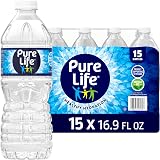
Pure Life Purified Bottled Water - 15 Pack, 16.9 Fl Oz | Still Drinking Water Enhanced with Minerals for a Crisp Taste
$4.95 (as of October 17, 2026 03:10 GMT +00:00 - More infoProduct prices and availability are accurate as of the date/time indicated and are subject to change. Any price and availability information displayed on [relevant Amazon Site(s), as applicable] at the time of purchase will apply to the purchase of this product.)
Apple 2026 Mac mini Desktop Computer M6 chip | 12‑core CPU and 12‑core GPU, 16GB Unified Memory, 256GB SSD Storage
$779.99 (as of October 17, 2026 03:33 GMT +00:00 - More infoProduct prices and availability are accurate as of the date/time indicated and are subject to change. Any price and availability information displayed on [relevant Amazon Site(s), as applicable] at the time of purchase will apply to the purchase of this product.)
Amazon Fire TV Stick HD (newest model), free & live TV, Alexa Voice Remote, powered by the TV, effortless setup, find shows faster with Alexa+
$39.99 (as of October 17, 2026 03:21 GMT +00:00 - More infoProduct prices and availability are accurate as of the date/time indicated and are subject to change. Any price and availability information displayed on [relevant Amazon Site(s), as applicable] at the time of purchase will apply to the purchase of this product.)












Post Comment