
Why Big Lenders Are Suddenly Rethinking Data Center Deals—And What It Means for the Future of Tech Investments
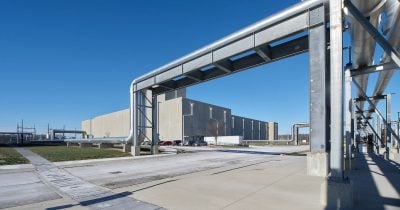
You know, building a data center used to be as straightforward as snapping your fingers: cheap land, reliable power, a big tenant locked in, and boom—watch your returns roll in. But nowadays? Well, here’s the kicker—it’s not just about the numbers anymore. Imagine pouring billions into a state-of-the-art facility only to have the neighbors rally like a full-blown protest squad outside your cooling pipes and server racks. Yep, community pushback has crashed the party, and it’s reshaping how Wall Street even thinks about data center deals. In Q1 2026 alone, over 75 projects worth roughly $130 billion hit the brakes because local sentiment wasn’t on board. It’s a sprawling new risk metric, and one that’s turning the whole game on its head. Ready to dive into why your next data center investment might need a PR team—not just a construction crew? LEARN MORE

Building a data center in America used to be a straightforward capital allocation story: find cheap land, secure power, lock in a hyperscaler tenant, watch the returns roll in. That formula is getting a new variable, and it’s one that doesn’t show up on a balance sheet. Community opposition.
Major Wall Street lenders are now treating local sentiment as a core component of credit and execution risk when evaluating data center financing. In the first quarter of 2026, at least 75 data center projects valued at approximately $130 billion encountered local hurdles, according to industry tracking. That’s a staggering pipeline of capital sitting in limbo because neighbors said no.
The NIMBY problem goes national
A Gallup poll conducted in March 2026 found that 70% of Americans oppose local construction of AI data centers.
The opposition isn’t abstract, either. It’s showing up in zoning meetings, ballot initiatives, and organized protest campaigns that have already torpedoed high-profile projects. QTS’s Prince William Digital Gateway in Virginia, backed by Blackstone, was terminated after sustained local resistance. In El Paso, residents mobilized against a facility linked to Meta that was part of a $12.3 billion BlackRock bond deal.
Several states and municipalities have responded by initiating moratoriums or implementing more stringent review processes.
Wall Street recalibrates
The financing ecosystem is adapting accordingly. Goldman Sachs, Bank of America, JPMorgan, and Morgan Stanley all remain active in the sector, but their due diligence processes look meaningfully different than they did 18 months ago. Community feedback has become a critical input in risk assessments, sitting alongside traditional metrics like power availability, construction costs, and tenant creditworthiness.
A $6 trillion buildout meets democratic friction
The stakes here extend well beyond individual projects. Goldman Sachs has projected that big tech companies will invest over $6 trillion in AI infrastructure buildout through 2030. Data centers are the physical backbone of that investment.
Dr Pepper, Zero Sugar, 12 Ounce, 12 Count
$6.46 (as of September 29, 2026 03:05 GMT +00:00 - More infoProduct prices and availability are accurate as of the date/time indicated and are subject to change. Any price and availability information displayed on [relevant Amazon Site(s), as applicable] at the time of purchase will apply to the purchase of this product.)
Fresh Step Advanced Odor Shield Clumping Cat Litter with Gain, 18.5 lb, 2Pk | Odor Shield with Ammonia Block Technology, Low Dust, Multi Cat, Compatible with Most Automatic Litter Boxes
$25.99 (as of September 29, 2026 03:06 GMT +00:00 - More infoProduct prices and availability are accurate as of the date/time indicated and are subject to change. Any price and availability information displayed on [relevant Amazon Site(s), as applicable] at the time of purchase will apply to the purchase of this product.)
ARM & HAMMER Slide Platinum Easy Clean-Up Clumping Cat Litter, 34 lbs | 24/7 Odor Control, Triple-Action Freshness, Non-Stick, Low Tracking, Multi-Cat Formula, Scented, Online Only
$29.74 (as of September 29, 2026 03:12 GMT +00:00 - More infoProduct prices and availability are accurate as of the date/time indicated and are subject to change. Any price and availability information displayed on [relevant Amazon Site(s), as applicable] at the time of purchase will apply to the purchase of this product.)
Samsung 65-Inch Class Crystal UHD U8000H Series Samsung Vision AI Smart TV (2026 Model, 65U8000H) Processor 4K, Endless Free Content, Motion Xcelerator, Color Booster, Alexa Built-in
$377.99 (as of September 29, 2026 03:26 GMT +00:00 - More infoProduct prices and availability are accurate as of the date/time indicated and are subject to change. Any price and availability information displayed on [relevant Amazon Site(s), as applicable] at the time of purchase will apply to the purchase of this product.)










Post Comment