
Unlock the Steak Secret Chefs Don’t Want You to Know—Master It at Home Tonight!
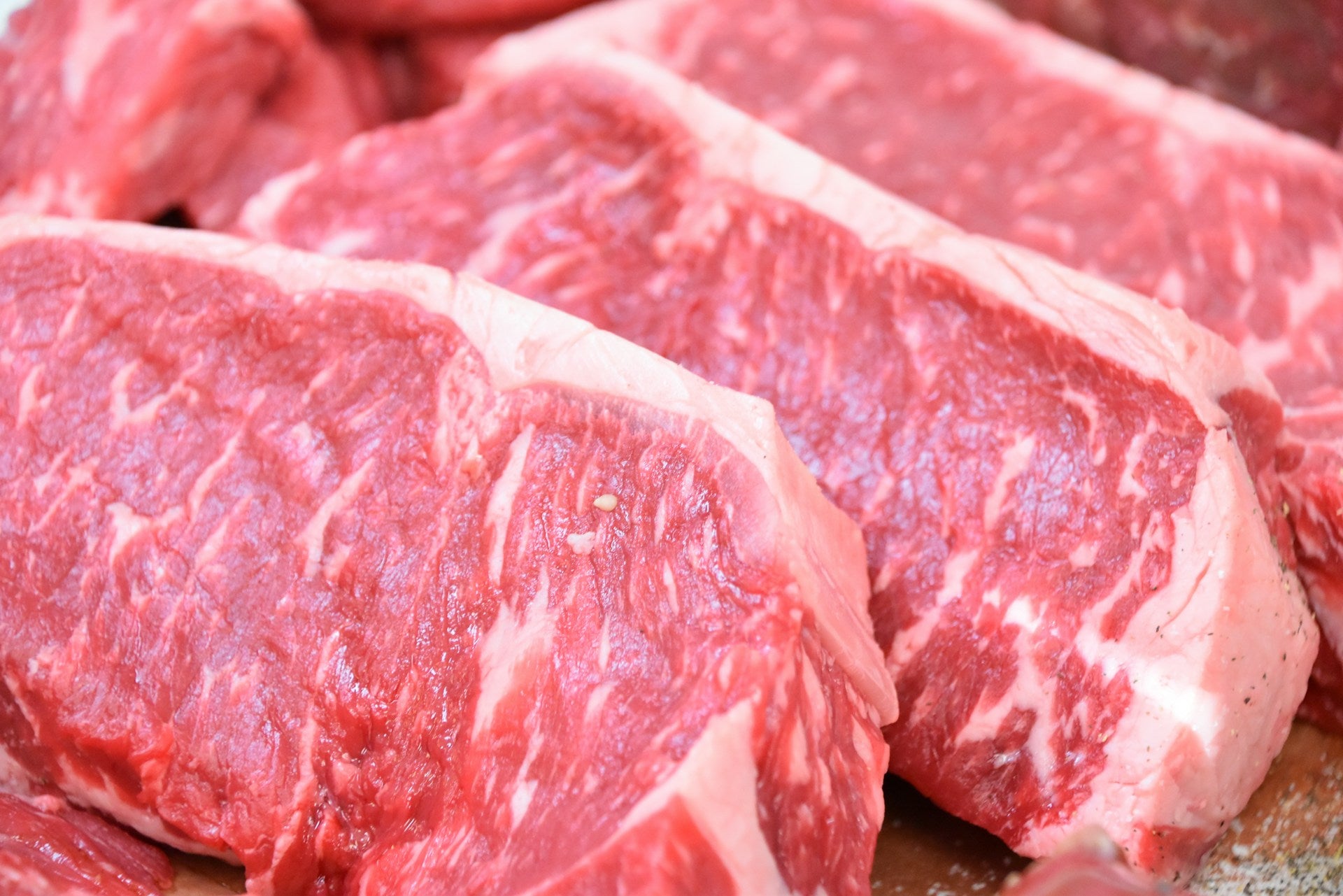
Cooking steak at home might seem as simple as grab-and-go: buy a slab of beef, salt it, and slap it on the pan, right? But any seasoned griller knows that a $30 steak can quickly turn from a sizzling promise to a dull, grey mishap faster than you can say “medium-rare.” Here’s the twist — you don’t need a flashy steakhouse kitchen or a pile of secret ingredients to nail that perfect steak. What you really need is the right cut, a scorching pan, and—brace yourself—a meat thermometer. Sounds basic? It is. But mastering these essentials can elevate your steak from “just dinner” to a feast worthy of a champion. So, ready to stop second-guessing and start searing with confidence? Let’s dive in and make steak night your knockout meal. LEARN MORE
You don’t need a steakhouse kitchen to make a seriously good steak. You need the right cut, a hot pan and, most importantly, a meat thermometer.
There are few dinners that seem easier than steak.
Buy a good piece of beef. Add salt. Apply heat. Done.
And yet somehow, a steak that costs $30 at the butcher can go from promising to grey and overcooked remarkably quickly.
The good news is that cooking the perfect steak at home has very little to do with chef-level technique. The biggest difference between an okay steak and one you’d happily pay restaurant prices for comes down to a handful of things: buying the right cut, getting the surface dry, seasoning it properly, building an actual crust and knowing when to get it off the heat.
Once you have those down, steak night gets considerably easier.
Start With a Good Steak
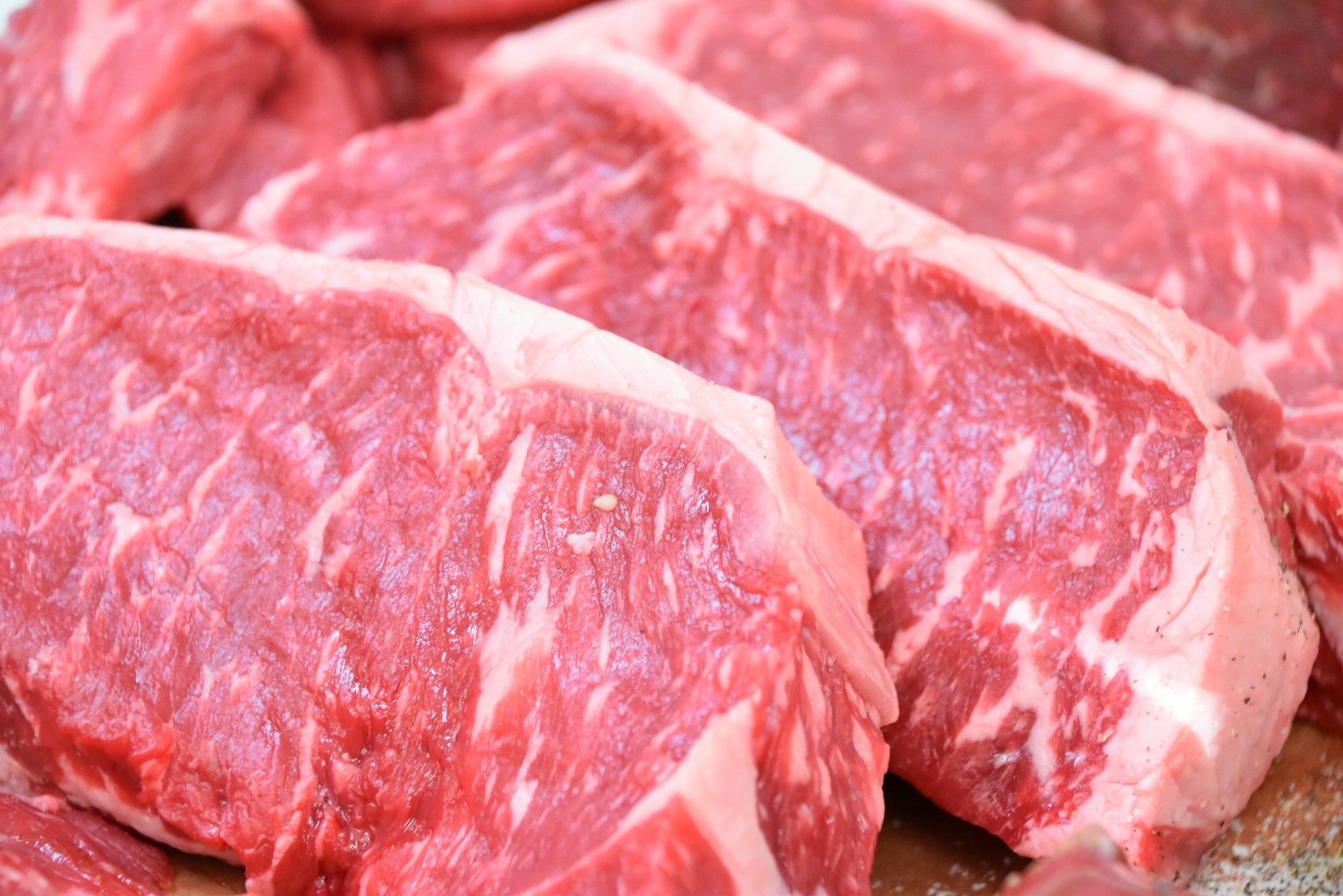
You can cook almost any cut of beef well, but some steaks make your life easier.
Ribeye is the obvious choice if flavour is the priority. It has plenty of marbling, which means plenty of fat to render as it cooks.
New York strip gives you a little less fat but still has enough marbling to stay tender, with that classic steakhouse texture.
Filet mignon is extremely tender and considerably leaner, although you’re trading some of the big beefy flavour you get from a ribeye or strip.
Top sirloin is the value play. It isn’t as rich, but cooked properly, it can still make an excellent steak without the premium price.
Whatever you buy, thickness matters. A steak around 1¼ to 2 inches thick gives you much more room to develop a dark crust before the centre overcooks. Very thin steaks can be great, but they’re far less forgiving.
And look for marbling. Those thin streaks of fat running through the meat are exactly what you want.
Salt It Earlier Than You Think
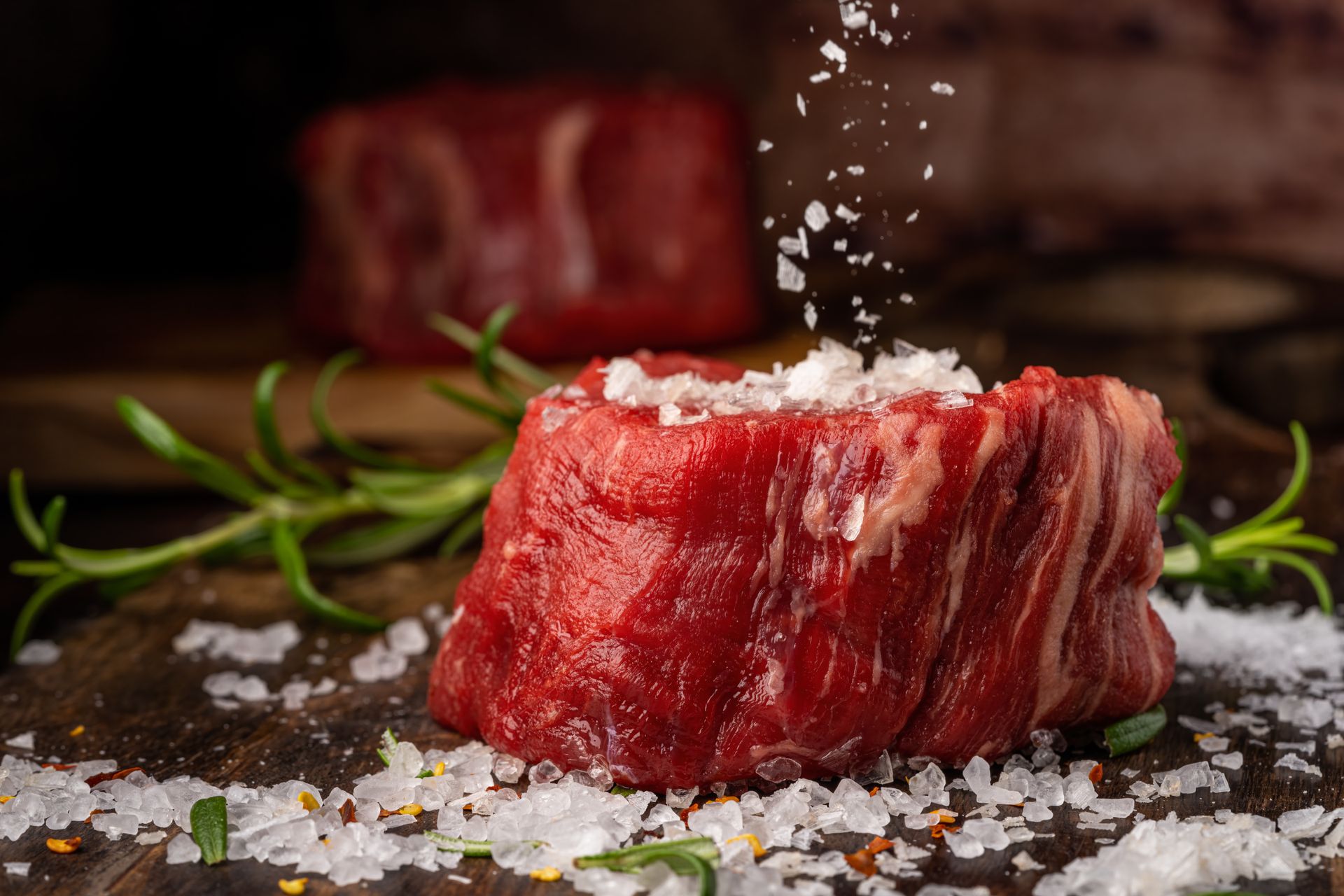
You really don’t need a complicated steak rub.
Salt does most of the heavy lifting.
If you can plan ahead, season the steak generously with kosher salt and leave it uncovered in the refrigerator overnight on a rack or plate. This essentially dry-brines the meat: the salt initially pulls moisture to the surface before that salty liquid is reabsorbed, while the exterior becomes increasingly dry.
A dry surface is exactly what you want when it’s time to sear.
Serious Eats recommends salting steak either at least 45 minutes before cooking or immediately before it hits the heat. The awkward middle ground — salting it and then leaving it for 15 or 20 minutes — can leave moisture sitting on the exterior just when you’re trying to brown it.
No time to plan ahead? Pat the steak thoroughly dry with paper towel, salt it and cook it right away.
Add freshly cracked black pepper if you want it. That’s really all it needs.
Get the Surface Dry
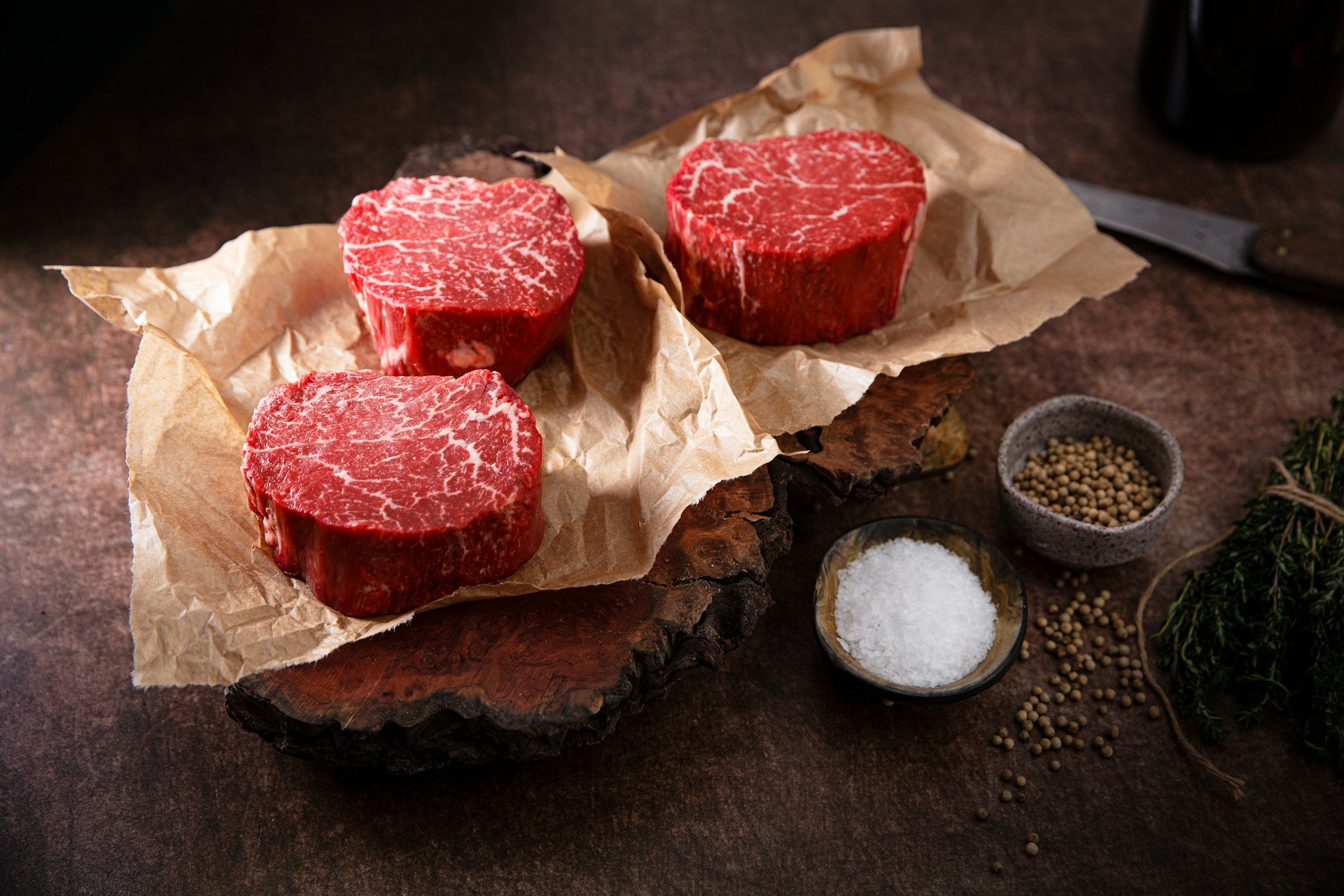
This step sounds boring. It matters.
Water and a great steak crust don’t get along particularly well. If the outside of the meat is wet, the heat from your pan first has to evaporate that moisture before serious browning can happen.
Patting the steak dry before it goes into the pan gives you a much better shot at getting that deep brown exterior instead of a sad grey one.
And despite what you’ve probably heard a thousand times, searing doesn’t “lock in the juices.” What you’re really after is flavour: high heat drives the browning reactions responsible for that savoury steakhouse crust.
Use a Heavy Pan
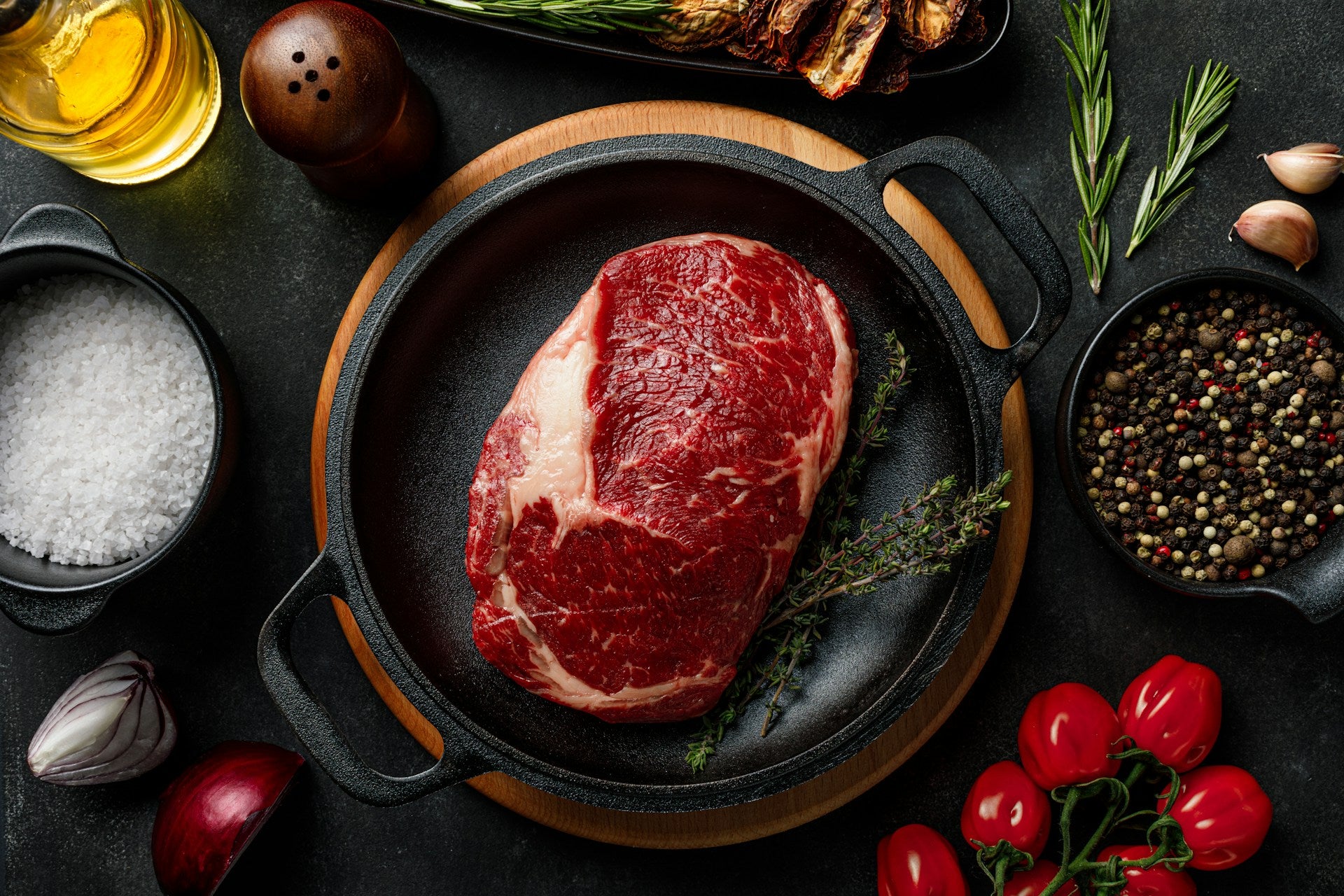
A cast-iron skillet is almost purpose-built for steak.
It holds heat extremely well, which helps the pan stay hot when a cold piece of meat hits it. A good stainless-steel pan works too.
Heat your skillet, add a small amount of high-smoke-point oil and get the steak into the pan.
Then leave it alone long enough to start browning.
You can flip more than once. The old rule that steak should only ever be flipped a single time isn’t something you need to live by. Turning it as it cooks can help you control browning and doneness more evenly.
Don’t forget the fat cap either. If your steak has a thick strip of exterior fat, grab it with tongs and hold that edge against the pan for a moment so it can render and brown.
Bring in the Butter
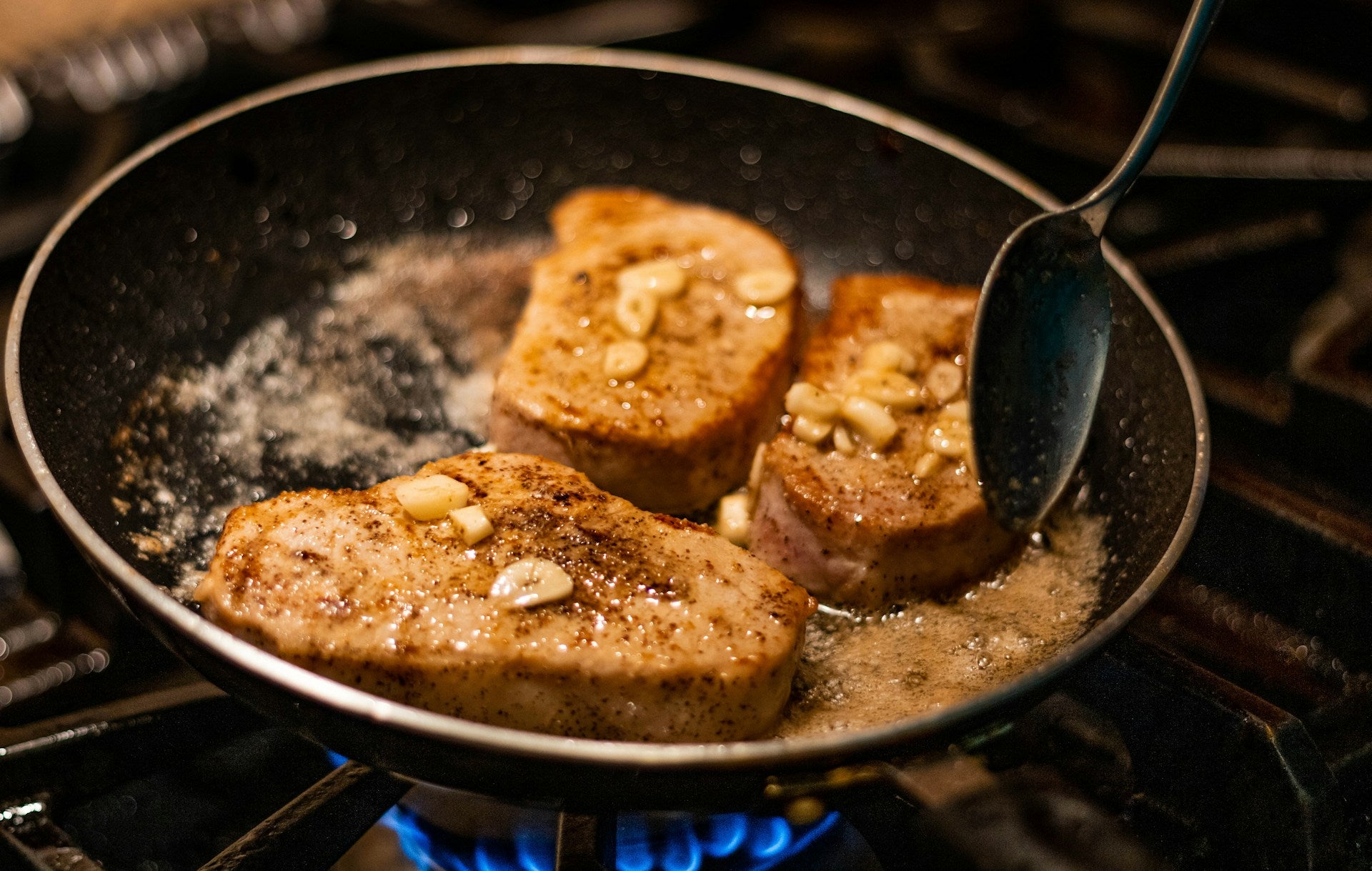
Once the steak has developed a good crust and you’re approaching the end of cooking, turn the heat down slightly and add butter.
This is also the moment for garlic, thyme or rosemary if you’re using them.
As the butter foams, tilt the pan slightly and spoon it repeatedly over the steak.
Yes, it feels unnecessarily dramatic.
It also works.
Butter-basting gives you another layer of browning and lets the butter pick up flavour from whatever aromatics you’ve tossed into the pan. It’s one of the classic methods for producing a deeply browned steak, although it requires more attention than something like a reverse sear.
Stop Guessing When Your Steak Is Done
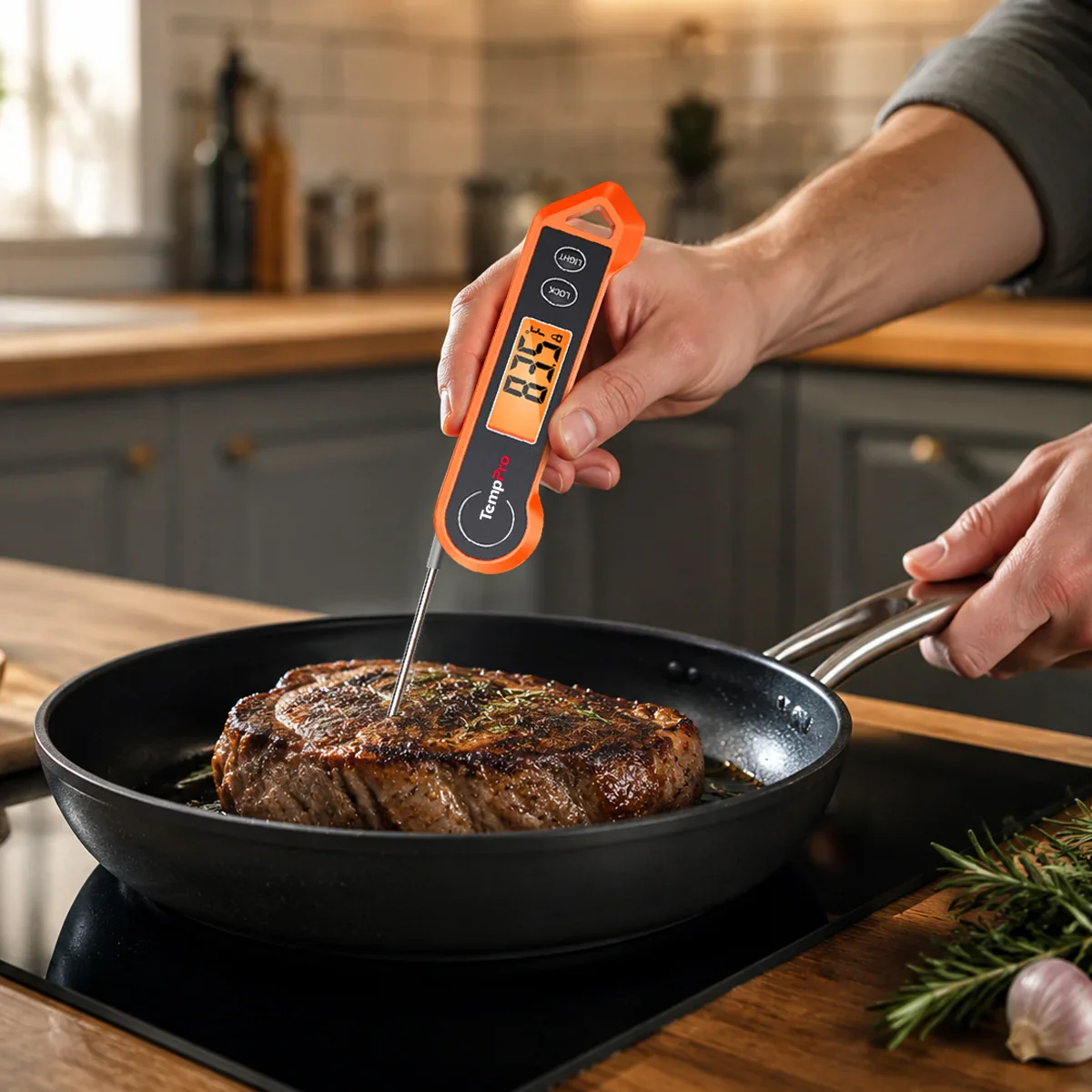
This is probably the single biggest upgrade you can make.
Buy an instant-read thermometer.
Forget poking the steak with your finger, comparing it to different parts of your hand or cutting it open every 90 seconds to see what colour it is.
Temperature tells you what’s actually happening.
It’s also worth remembering that a steak doesn’t immediately stop cooking when it leaves the pan. Heat continues moving toward the centre, meaning the internal temperature can rise several degrees while the steak rests — something known as carryover cooking.
For food safety, Health Canada recommends whole cuts of beef reach at least 63°C/145°F, which it identifies as medium-rare, while the USDA similarly recommends 145°F/62.8°C with at least a three-minute rest for whole beef steaks, chops and roasts.
That’s also why relying on colour isn’t enough. Use the thermometer and insert it into the thickest part of the steak.
For Thick Steaks, Try the Reverse Sear
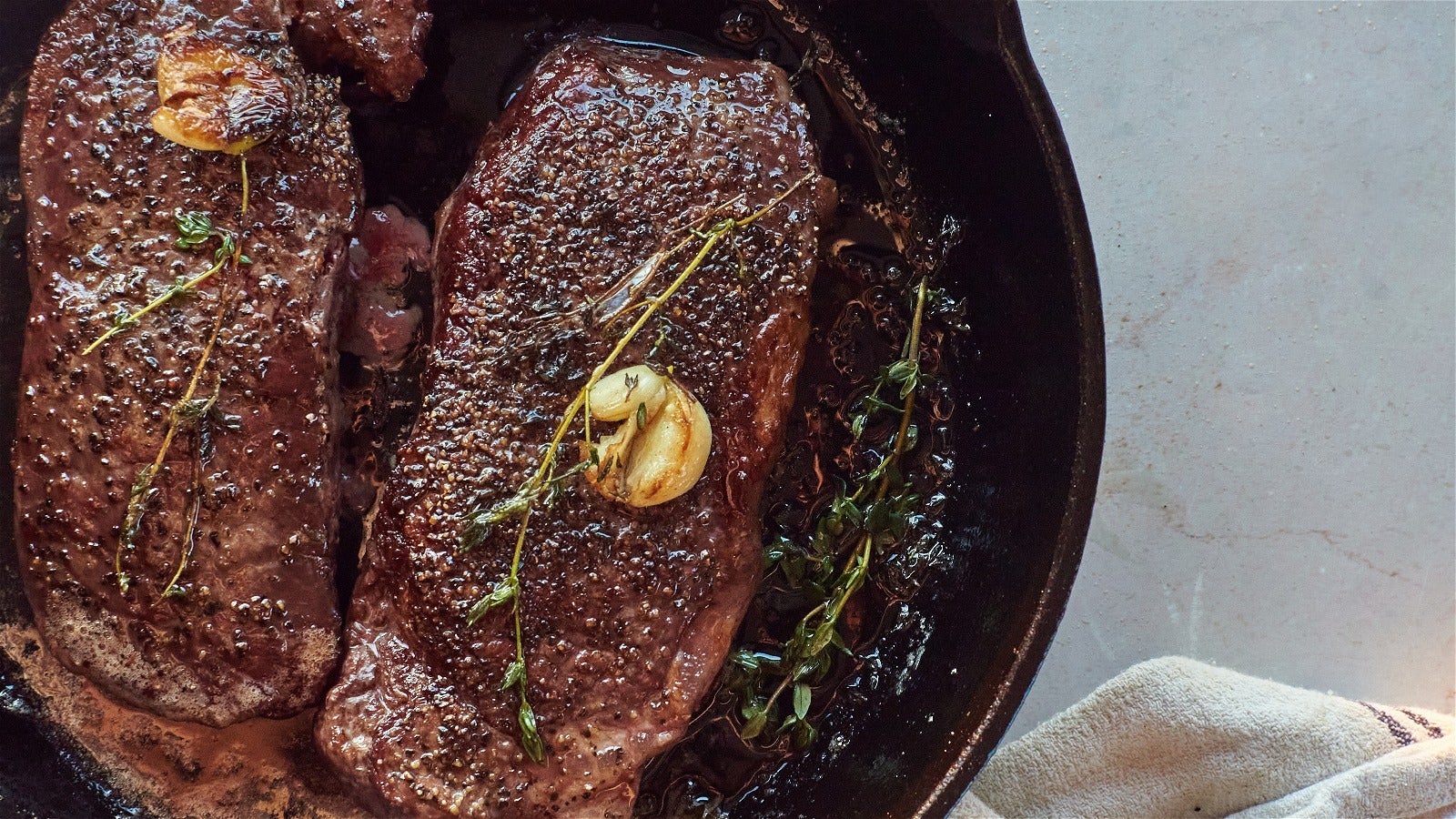
If you’ve bought a seriously thick ribeye or strip, there is another method worth knowing.
The reverse sear sounds fancy. It really isn’t.
Instead of blasting the steak with high heat from beginning to end, you cook it gently in a low oven first, then finish it in a very hot skillet to build the crust.
The advantage is control.
Because the inside cooks gradually, a reverse-seared steak can develop more even doneness from edge to edge while still getting the browned exterior you want at the end. Serious Eats considers reverse searing one of the most reliable approaches for thick steaks, particularly when even internal cooking is the goal.
It takes longer, but if you’re cooking an expensive, two-inch steak and really don’t want to screw it up, it’s a very good insurance policy.
Let It Rest — Then Slice Against the Grain
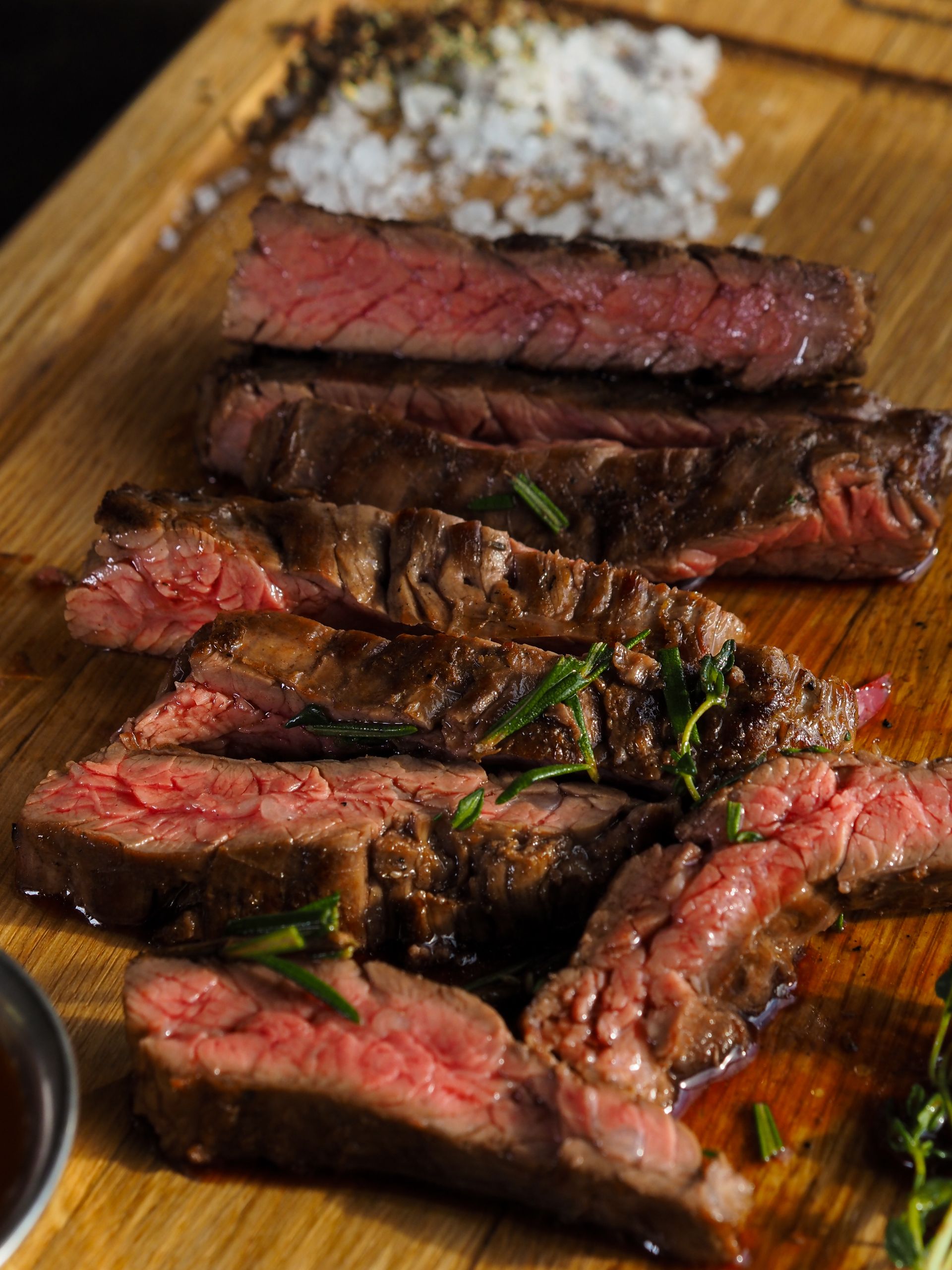
Once the steak hits temperature, get it out of the pan.
Give it a few minutes before cutting into it. Apart from giving carryover cooking time to finish its work, you’re also avoiding slicing into the steak while it’s still screaming hot.
Then look at the direction the muscle fibres are running and cut across them rather than parallel to them.
That’s what “slice against the grain” actually means.
Cutting across those fibres shortens them, which makes each bite easier to chew — particularly important with steaks like sirloin, flank or skirt.
Finish with a little flaky salt if it needs it.
Then stop messing with it.
The Perfect Steak Doesn’t Need Much
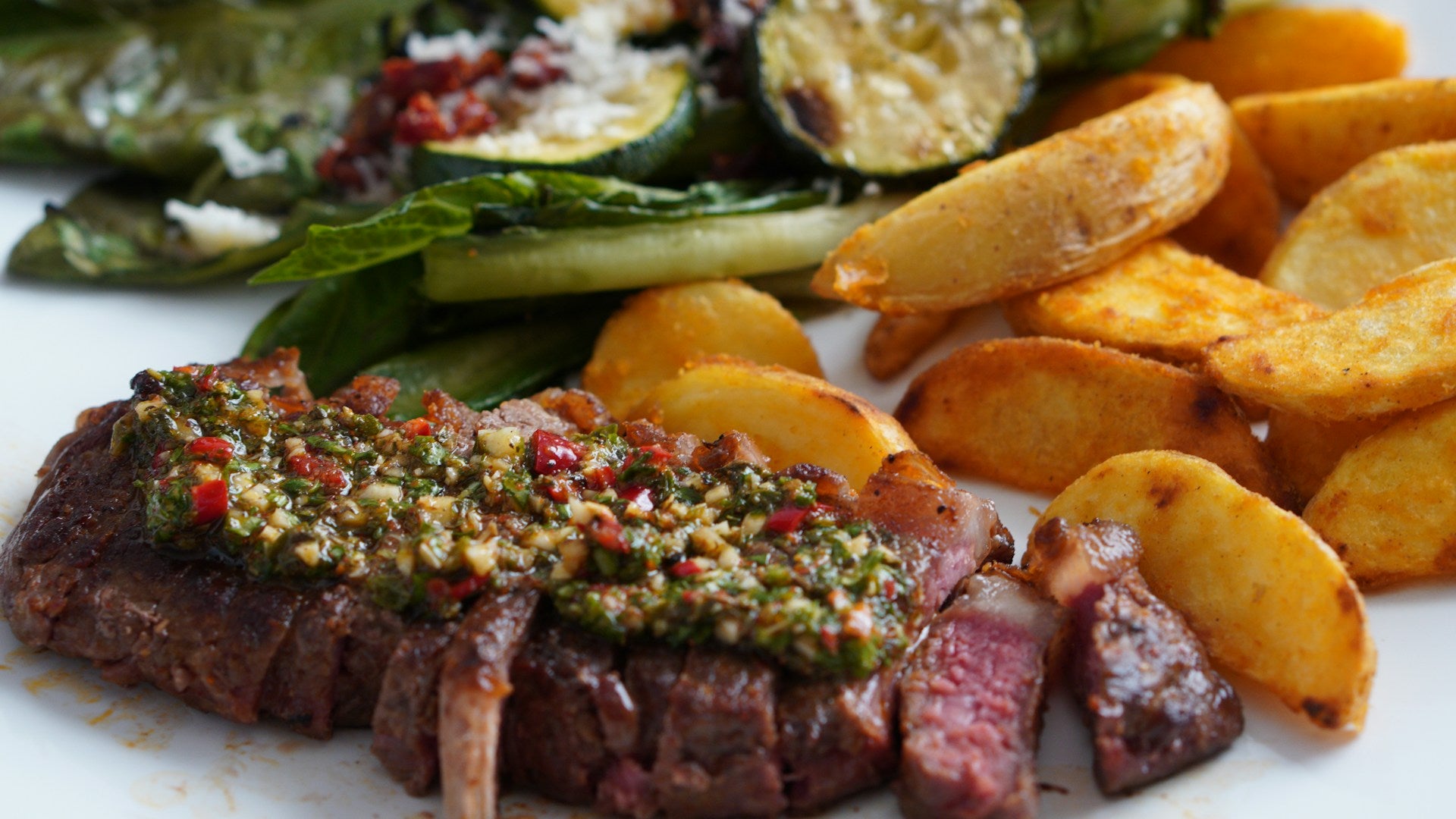
The temptation when cooking steak at home is to keep adding things.
More seasoning. More sauce. More tricks. More butter. More expensive equipment.
You really don’t need to.
Start with a good piece of beef. Salt it properly. Dry the surface. Get some serious browning on it. Use a thermometer instead of your ego to decide when it’s done.
That’s pretty much the formula.
The steakhouse can keep the white tablecloth.

Flea and Tick Collar for Cats 5 Pack, 8 Months Protection, Plant-Based Ingredients, Water-Resistant, Adjustable & Lightweight, Suitable for Adult Cats & Kittens, White
$28.99 (as of October 21, 2026 03:22 GMT +00:00 - More infoProduct prices and availability are accurate as of the date/time indicated and are subject to change. Any price and availability information displayed on [relevant Amazon Site(s), as applicable] at the time of purchase will apply to the purchase of this product.)
Apple Watch SE 3 GPS 40mm Smartwatch | Starlight Aluminum Case, Sand Sport Band - S/M. Fitness + Sleep + Cycle Tracking, Heart Rate, Vitals, Safety
$239.99 (as of October 21, 2026 03:33 GMT +00:00 - More infoProduct prices and availability are accurate as of the date/time indicated and are subject to change. Any price and availability information displayed on [relevant Amazon Site(s), as applicable] at the time of purchase will apply to the purchase of this product.)
FUJIFILM Instax Mini Instant Film Twin Pack (White), 20 Photos | The instax film ensures sharp
$18.17 (as of October 21, 2026 03:22 GMT +00:00 - More infoProduct prices and availability are accurate as of the date/time indicated and are subject to change. Any price and availability information displayed on [relevant Amazon Site(s), as applicable] at the time of purchase will apply to the purchase of this product.)
Apple 2026 Mac mini Desktop Computer M6 chip | 12‑core CPU and 12‑core GPU, 16GB Unified Memory, 256GB SSD Storage
$779.00 (as of October 21, 2026 03:33 GMT +00:00 - More infoProduct prices and availability are accurate as of the date/time indicated and are subject to change. Any price and availability information displayed on [relevant Amazon Site(s), as applicable] at the time of purchase will apply to the purchase of this product.)













Post Comment