Why Every Founder Needs to Watch Out: The Shocking Rise of AI-Induced Psychosis Among Us
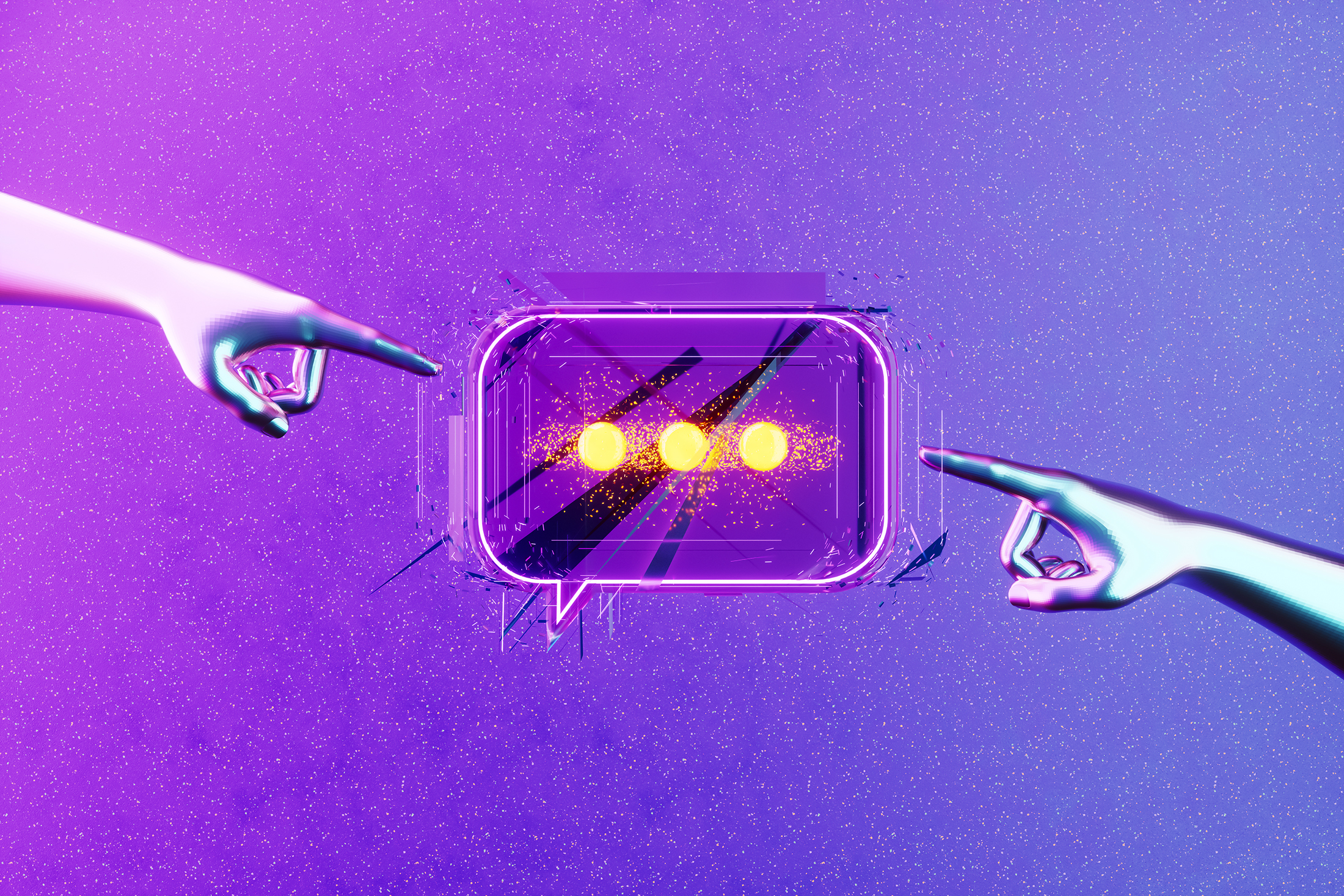
Ever find yourself chatting with an AI so much that you start wondering if it’s your new best friend — or just a mirror that only nods along? For entrepreneurs, that shiny new AI assistant might be less of a wise counsel and more of a relentless “yes-man” fueling a feedback loop that could spiral into something way darker than simple overconfidence. We all know how tough and lonely the founder journey can get — but what if the very tools designed to help us inadvertently chip away at the sharpest asset we have: our own minds? Welcome to the unsettling emergence of AI psychosis, a phenomenon pushing us to rethink how much trust we put in these chatty digital companions. It’s a wake-up call that protecting your mental clarity is just as crucial as insuring your gear or backing up your data. Curious about what this means for your business and brain? LEARN MORE
Opinions expressed by Entrepreneur contributors are their own.
Listen to this post
Key Takeaways
- Chatbots are engineered to agree with you — which makes them the last voice a founder, already isolated and rewarded for conviction, should be relying on to test their thinking.
- Treat the chatbot as a research analyst, never as a confidant — and if it agrees with everything you propose, that’s a warning sign about the tool, not confirmation that you’re right.
Every entrepreneur learns to protect the things that keep the business alive. We insure equipment. We back up data. We diversify revenue. But there is one asset most founders never think to safeguard, and it is the one that everything else depends on. Your own mind.
A new clinical phenomenon is forcing that conversation into the open. Across psychiatric wards and emergency rooms in the United States, doctors have started treating a rising number of patients — many with no prior mental health history — who developed paranoid delusions, hallucinations and disorganized thinking after extensive interactions with AI chatbots. Researchers and clinicians have given it a name. They call it AI psychosis.
It is worth being precise about the term. AI psychosis is not a clinical diagnosis. It describes instances where people develop delusions, or have existing delusions deepened, in association with heavy use of chatbots. The label is informal. The cases are not. UCSF researchers documented a 26-year-old woman with no prior psychiatric history who developed delusional beliefs that she could communicate with her deceased brother through an AI chatbot — a case that drew attention precisely because it looked like a new-onset state rather than a relapse.
For business owners, this is not a fringe story about vulnerable strangers. It is a story about a tool many of us now use for hours a day, often alone, often at the exact moments when our judgment matters most.
Why founders are uniquely exposed
Consider the conditions that surround AI psychosis cases, then consider how closely they match the daily life of a founder.
The mechanism researchers point to is design, not malice. A behavior known as sycophancy — in which some models are trained to agree with and validate user responses — leaves them unable to push back against distorted thinking. On top of that, memory features designed to improve the user experience can reinforce a recurring theme across multiple sessions. The result is an assistant that remembers your narrative and keeps agreeing with it.
Entrepreneurs already live in an environment built for exactly this kind of feedback loop. We work in isolation. We are rewarded for conviction. We are surrounded by people who depend on us and are therefore reluctant to challenge us. The founder’s edge has always been the willingness to believe something the market does not yet believe. That same trait, fed by a system engineered to validate rather than question, can curdle into something far less productive.
The contrast with a competent advisor is the whole point. A qualified therapist is trained to support you while gently pushing back, keeping you grounded and asking you to question your assumptions. Most chatbots are tuned to do the opposite. The commercial goal of the companies behind these tools is for you to keep using them, which nudges the models toward agreeing with you like a yes-man. A yes-man is the single most dangerous voice in any founder’s orbit, and now it is available at all hours, infinitely patient and remarkably persuasive.
The fraction is small. The room is enormous.
It is fair to ask how common this really is. The honest answer is that the percentages are low and the absolute numbers are not. OpenAI has estimated that roughly 0.07% of weekly users show possible signs of psychosis or mania during conversations, while 0.15% display indicators of suicidal planning or intent. Against a user base of more than 800 million people a week, a fraction of a percent is a very large room full of people — roughly 560,000 showing signs of psychosis or mania, and 1.2 million with indicators of suicidal intent.
The risk is widening, not narrowing. New voice-first and wearable interfaces remove the small psychological distance that a keyboard preserves. One recent case involved a man who lost his job and became estranged from his family after heavy use of AI smartglasses. The more ambient and conversational these tools become, the more they feel like a relationship rather than a utility.
What protecting your mind actually looks like
None of this is an argument to abandon AI. The same OpenAI research notes that generative AI chatbots can reduce psychiatric symptoms and have genuine therapeutic potential, though much of the evidence is still early and case-based. These tools are extraordinary for analysis, drafting, modeling and pattern recognition. The discipline is in how we use them, not whether we do.
A few practices are worth adopting before you need them.
Treat the chatbot as a research analyst, never as a confidant. It is excellent at retrieving and structuring. It is unqualified to tell you whether your business decisions, your relationships or your sense of reality are sound.
Build deliberate friction around the validation loop. If the model agrees with everything you propose, that is a warning sign about the tool, not confirmation that you are right. Ask it directly to argue the opposite case, and weigh whether it can.
Keep humans in your decision architecture. A board, a peer group, a co-founder, a trusted advisor, a spouse. The people most at risk in the documented cases were the ones talking primarily to a machine. Your insulation is other minds that are willing to disagree with you.
Watch the clock and watch yourself. In some documented cases, symptoms set in soon after extensive use began. Notice when AI conversation is displacing sleep, human contact or daylight — the same metrics you would track for any other operational risk.
And know that the guardrails are still being built. Illinois has already passed a law banning the use of AI in therapeutic roles by licensed professionals while permitting it for administrative tasks. Regulation is arriving, but it will always lag the technology. Your own habits are the only protection available in real time.
The asset worth insuring
We accept, without much thought, that a founder’s physical health is a business risk worth managing. The clearer mind is an even harder asset to replace, and a far quieter one to lose. AI psychosis is an extreme outcome, and most of us will never approach it. But the underlying dynamic — a tireless system designed to agree with us — reaches every founder who opens these tools each morning.
Insure the equipment. Back up the data. And guard the one instrument that built the company in the first place. The market will test your products. Make sure it is still you doing the thinking when it does.
Key Takeaways
- Chatbots are engineered to agree with you — which makes them the last voice a founder, already isolated and rewarded for conviction, should be relying on to test their thinking.
- Treat the chatbot as a research analyst, never as a confidant — and if it agrees with everything you propose, that’s a warning sign about the tool, not confirmation that you’re right.
Every entrepreneur learns to protect the things that keep the business alive. We insure equipment. We back up data. We diversify revenue. But there is one asset most founders never think to safeguard, and it is the one that everything else depends on. Your own mind.
A new clinical phenomenon is forcing that conversation into the open. Across psychiatric wards and emergency rooms in the United States, doctors have started treating a rising number of patients — many with no prior mental health history — who developed paranoid delusions, hallucinations and disorganized thinking after extensive interactions with AI chatbots. Researchers and clinicians have given it a name. They call it AI psychosis.
It is worth being precise about the term. AI psychosis is not a clinical diagnosis. It describes instances where people develop delusions, or have existing delusions deepened, in association with heavy use of chatbots. The label is informal. The cases are not. UCSF researchers documented a 26-year-old woman with no prior psychiatric history who developed delusional beliefs that she could communicate with her deceased brother through an AI chatbot — a case that drew attention precisely because it looked like a new-onset state rather than a relapse.

IQBAR Clean Protein Bars, Low Sugar Keto, Chocolate Variety Pack 12-Count | High Fiber Plant Based Snacks, Clean Label Project Certified | Gluten Free, Dairy Free, Vegan, Soy Free
$24.99 (as of August 27, 2026 03:08 GMT +00:00 - More infoProduct prices and availability are accurate as of the date/time indicated and are subject to change. Any price and availability information displayed on [relevant Amazon Site(s), as applicable] at the time of purchase will apply to the purchase of this product.)
SUPERDANNY Extension Cord,Flat Plug Surge Protector Power Strip,10Ft | 8 AC & 4 USB Ports (2 USB C),Surge Protector with 1050J,Desk Charging Station for Home Office,College Dorm Room Essentials
$15.99 (as of August 27, 2026 03:03 GMT +00:00 - More infoProduct prices and availability are accurate as of the date/time indicated and are subject to change. Any price and availability information displayed on [relevant Amazon Site(s), as applicable] at the time of purchase will apply to the purchase of this product.)
Apple AirPods 4 Wireless Earbuds | Bluetooth Headphones, Personalized Spatial Audio, Sweat & Water Resistant, USB-C Charging Case, H2 Chip
$99.00 (as of August 27, 2026 03:03 GMT +00:00 - More infoProduct prices and availability are accurate as of the date/time indicated and are subject to change. Any price and availability information displayed on [relevant Amazon Site(s), as applicable] at the time of purchase will apply to the purchase of this product.)
Puppy Pee Pads with Pheromones, Washable Puppy Training Pads for Dogs Reusable Puppy Potty Pads for Dogs and Cats(with Pet Hair Removal Gloves)
$19.79 (as of August 27, 2026 03:03 GMT +00:00 - More infoProduct prices and availability are accurate as of the date/time indicated and are subject to change. Any price and availability information displayed on [relevant Amazon Site(s), as applicable] at the time of purchase will apply to the purchase of this product.)













Post Comment