
Unlocking Hidden Power: How Mesh is Turning Idle Nvidia GPUs Into a Goldmine for Open AI Innovation
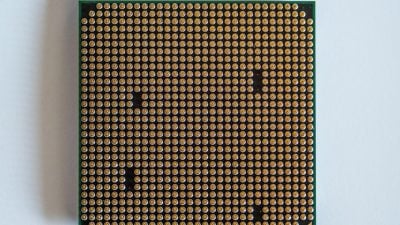
Ever wonder if those idle Nvidia GPUs humming quietly in your home, or maybe your neighbor’s basement, could team up to tackle the beast of running a colossal 235 billion-parameter AI model? Sounds like sci-fi, right? But Mesh LLM is making that vision a reality. This open-source marvel, championed by Michael Neale and backed by none other than Jack Dorsey, stitches together a decentralized web of GPUs into a nimble, peer-to-peer compute network — no pricey cloud rentals, no giant data centers needed. Imagine turning your attic computer, your cousin’s gaming rig, and a handful of generous strangers into a collective AI powerhouse that keeps your data close, private, and under your control. It’s a radical rethink of AI deployment that could change how we think about compute power itself. Curious to see how this transformative mesh works and what it means for our digital future? LEARN MORE

Running a 235 billion-parameter AI model used to require renting a small fortune’s worth of cloud compute. Mesh LLM wants you to do it with the GPUs already sitting in your house, your neighbor’s house, and maybe a few strangers on the internet.
The open-source project, led by developer Michael Neale and endorsed by Jack Dorsey, pools idle Nvidia GPUs across multiple machines into a peer-to-peer network capable of distributed inference on large language models.
How it actually works
Mesh LLM creates a decentralized mesh of GPUs spanning macOS, Linux, and Windows machines, with a heavy emphasis on Nvidia’s CUDA architecture. Instead of routing your AI queries to OpenAI’s or Google’s data centers, the system keeps everything local or distributed across connected nodes with zero central server involvement.
The project exposes an OpenAI-compatible API, which means developers can swap in Mesh as a drop-in replacement for cloud-hosted models without rewriting their applications. Under the hood, a novel pipeline approach called “Skippy” partitions massive models across multiple nodes. A 235 billion-parameter Mixture of Experts model, for instance, gets sliced up and spread across whatever hardware is available on the network.
Data transmission relies on the iroh P2P library, which handles NAT traversal, the networking headache that makes peer-to-peer connections difficult when devices sit behind routers and firewalls.
On a LAN setup, Mesh LLM achieves roughly 16 tokens per second on that 235B model. Over wide area networks, speeds range between 10 and 25 tokens per second.
The project supports dozens of open-weight model families, including Qwen, Llama, GLM, and DeepSeek variants.
The rewards layer
A related project called Meshtrain, launched on August 27, 2026, adds an incentive structure for GPU providers. Contributors who share their compute resources earn “MeshCoin” through a P2P local ledger.
That mainstream application is Block’s Buzz app, where Mesh has been integrated for community compute sharing. Block, the fintech company run by Dorsey, has been steadily expanding its footprint in both Bitcoin and decentralized infrastructure.
Privacy as a feature, not an afterthought
One of Mesh LLM’s core selling points is its zero-central-server architecture. When you run a model through the network, your data never touches an external data center.
Performance does take a hit on wide area networks compared to local setups. The architecture works best when nodes are geographically close and connected by low-latency links.
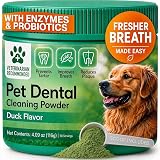
Petcarex Dog Dental Powder, Dog Teeth Cleaning Breath Freshener | Pet Tartar and Plaque Remover for Teeth, Tooth Cleaning Powder with Probiotics for Dogs of All Breeds, Duck Flavor
$21.99 (as of October 13, 2026 03:21 GMT +00:00 - More infoProduct prices and availability are accurate as of the date/time indicated and are subject to change. Any price and availability information displayed on [relevant Amazon Site(s), as applicable] at the time of purchase will apply to the purchase of this product.)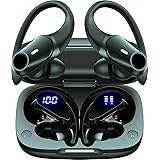
Active Noise Cancelling Ear Buds Wireless Bluetooth Headphones 80H Playtime Display Charging Case 50dB ANC Over Ear Hooks Earbuds with Hi-Res Sound & Clear Calls for Sports Running Gym Workout Black
$89.96 (as of October 13, 2026 03:32 GMT +00:00 - More infoProduct prices and availability are accurate as of the date/time indicated and are subject to change. Any price and availability information displayed on [relevant Amazon Site(s), as applicable] at the time of purchase will apply to the purchase of this product.)
Pur Luv Dog Treats, Chicken Jerky Dog Treat with Real Chicken Breast, 16 oz | High protein and low fat, Limited ingredient recipe, No artificial flavors or preservatives, Satisfies instinct to chew
$14.09 (as of October 13, 2026 03:11 GMT +00:00 - More infoProduct prices and availability are accurate as of the date/time indicated and are subject to change. Any price and availability information displayed on [relevant Amazon Site(s), as applicable] at the time of purchase will apply to the purchase of this product.)
SHOKZ OpenDots 2 Open-Ear Clip-On Earbuds, Black, Dolby Audio, 3 Mics | Rich bass with Dolby Audio; 3-mic clear calls; 40H listening; IP57; Bluetooth 6.1; Travel/City walk/Commuting/Yoga/Pilates
$199.95 (as of October 13, 2026 03:32 GMT +00:00 - More infoProduct prices and availability are accurate as of the date/time indicated and are subject to change. Any price and availability information displayed on [relevant Amazon Site(s), as applicable] at the time of purchase will apply to the purchase of this product.)













Post Comment