How Frieda Gormley’s Radical Regenerative Vision Is Silently Reshaping the Future of Business—And What It Means for You
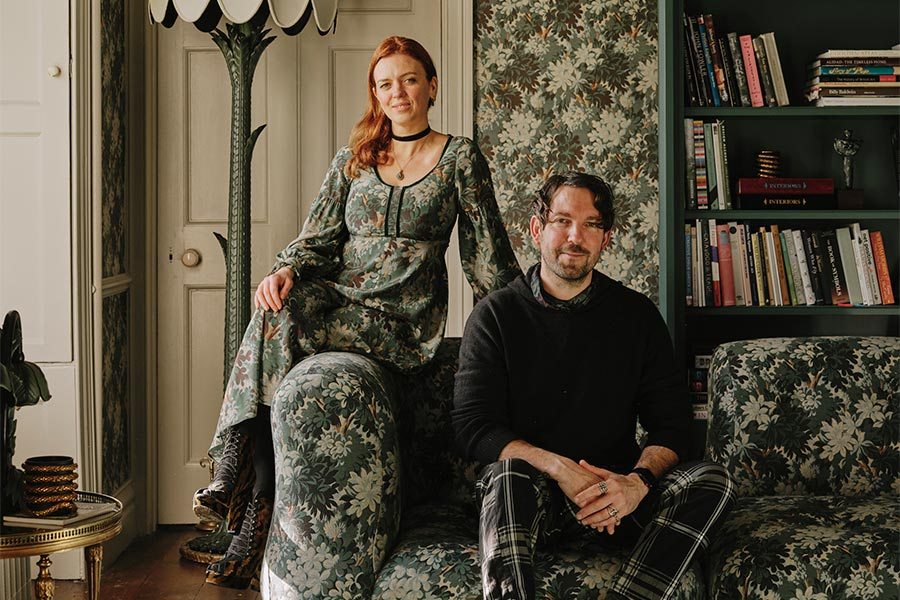
Ever caught yourself wondering if a stroll in nature could actually reshape the way we do business? Frieda Gormley, co-founder of House of Hackney, didn’t just stop at pondering—she built a whole brand and life philosophy around it. From restless Dublin vintage shops to stewarding an 11th-century castle on the Cornish coast, Frieda’s journey is anything but ordinary. It’s a story sprinkled with savvy business senses, soul-searching leaps, and a dash of old-world charm that somehow inspires a modern, regenerative twist to entrepreneurship. And when she and her husband introduced ‘Nature Friday’—a four-day workweek with a five-day paycheck encouraging time outdoors—you begin to get why their company isn’t just a brand, it’s a movement. Curious how vintage finds and Mother Nature collided to spawn a luxury interior label that’s rewriting corporate rulebooks? Hold tight; this tale will challenge your ideas about profit, purpose, and the planet. LEARN MORE
At the vanguard of a wave of companies prioritising nature, Frieda Gormley speaks to Sarah Freeman about the revolutionary path that led her from Dublin’s vintage shops to the forefront of regenerative business
“My favourite thing would be to greet the sun.” A fitting start to the day for the Mother Earth-inspired entrepreneur and co-founder of House of Hackney, Frieda Gormley.
To render the company as aligned to their core values as possible, she and her husband, Javvy M Royle, instigated ‘Nature Friday’ whereby employees work a four-day week but are paid for five and encouraged to do something outdoorsy. Greeting the sun is a particularly pleasant prospect when one considers Gormley’s surroundings for the past seven years, in the Castle of Trematon, a Norman stronghold located on the Cornish coast.
After spending her formative years in the leafy Dublin suburb of Donnybrook, she and Royle are now custodians of an 11th century motte-and-bailey fortress replete with nine acres of grounds which include an outdoor natural pool, sub-tropical gardens and woodland. No surprise that Gormley names Daphne du Maurier’s classic novel Rebecca as one of her favourite books.
Her bohemian vibe belies a sharp intellect and an ability to distill the influences of her environment into actionable policies for her company.
Coming from a family of lawyers, all of whom advised her against the profession, Gormley began a law degree at Trinity College Dublin, convinced that she would love it.
“I really didn’t. It was too black and white for me,” she says.
What did fulfill her was the skill she developed during a part-time job at a vintage shop on Castlemarket Street in Dublin city centre called The Harlequin. Unaware that fashion buying was a profession, Gormley’s ability to identify trends was spotted by the proprietors, who tasked her with ad-hoc purchasing for the shop.
“I’d make decisions and they would sell,” she explains.
On hearing about the Dunnes Stores trainee buyer programme, Gormley submitted an application. She was soon immersed in the commercial, financial and trend forecasting world of retail, a balance she found she loved. Her experience of working on the Savida range involved dealing with smaller European factories and buying trips to the Far East were a learning curve for the trainee.
A relationship break-up and a desire for a change of scene prompted a move to London, where Gormley secured a job at Topshop. “It was like dying and going to heaven,” she says.
She worked under Jane Shepherdson, “who was very much the matriarch of Topshop”. While it was fast fashion, Gormley says her boss was a real pioneer in terms of fair trade and an early advocate of organic cottons.
“Ultimately, she showed me that actually there’s another way.”
In time, she felt what she deemed to be a race for profits and the fast fashion model not for her.
“I had met my husband during that time. We had our first child and you have a personal awakening around what’s your contribution and your footprint.”
In the late 2000s, the couple bought their first house in London and started hankering for the decor of their childhood.
“Trend-wise, we were all living in minimalist white boxes [with] Scandi furniture. We were really looking to bring nature into our home. I suppose it was a sense of nostalgia; we’d grown up in the ’80s with William Morris and Laura Ashley wallpapers. We were looking to furnish our home with products that were well made and that would last.”
Gormley had always loved interiors, but had never studied design or business. Even so, the couple decided to quit their jobs and create House of Hackney, named after their first home.
Gormley comes across as someone who would excel at whatever she turned her hand to, but starting a new business was still a major risk. An Enterprise Investment Scheme in the UK, along with their savings and help from friends and family, allowed them to launch their luxury interior and lifestyle brand.
“I think we were definitely a little bit naive in our thinking. It was a very tough early few years. If anyone had told me it takes five years to just get your head above water, we would never have done it.”
Slowly the customers came. Liberty, the famed Regent Street luxury department store in London with ties to the Arts and Crafts and Art Nouveau movements, offered House of Hackney a dedicated in-store space and its products started to sell really well.
The success enabled Gormley and her husband to open a shop in Shoreditch.
“It [was named] the third-best store in London after Selfridges and Liberty [by Time Out magazine]. It was a very special time [and] mood, and people were quite moved by the emotion that they experienced from just being in the world of the brand.”
Gormley attributes the popularity of her brand to the careful sourcing of its products.
“Yes, the aesthetic is important. But the beauty is in the roots, really. Before the brand launch, we spent six months driving around the country with a little black book of suppliers. [We built up] a portfolio of very much generational factories [with] trades being passed down from father to son over the generations. It’s really beautiful that those are still the same factories we have today, 16 years later.”
Today, the company has a team of around 50 people and Gormley says it’s a very feminine story. She has recently published a book, In the Company of Nature, which details their very unique trajectory and radical mission to create a business that serves the living world.
“We employ a lot of working mothers. I really believe part of [our] success in terms of the paradigm shift that we’re facilitating is the fact that we have these incredible women who are coming at the strategy with a deep sense of intuition and wisdom, with no ego, and a maternal instinct of wanting to really care for people and care for the planet.”
House of Hackney also convinced their shareholders of the benefit in seeing more than just the bottom line. In 2023 the company officially appointed Mother Nature and Future Generations to its board of directors.
“Nature was our design muse from the start [and then] our teacher. Her living systems [are] 3.7 billion years of R&D. There’s so much to learn from, and ultimately companies are made of biological beings and we are nature.”
After advertising the position and receiving more applications than for any other role, Charmian Love, one of the founders of the B Corp movement, was chosen to legally represent Mother Nature at the boardroom table. The company stated that by granting legal personhood to the planet and future generations, they had embedded environmental stewardship and long-term ecological thinking into their governance structure, ensuring every decision considers both planetary impact and the wellbeing of future generations.
“It’s a legal directorship. Yes, it’s symbolic, but it goes far beyond what happens in the boardroom. When we created the directorship, it was really about shifting the mindsets, going beyond the wishes of myself and Javvy as founders to really legitimising and inviting the whole team to consider nature in their everyday decision-making, so that we’re very aware of the impacts on the future.”
Gormley describes it as “pulling up the carpet of the company” and evaluating everything from the materials they use to setting a roadmap at industry levels. The company interacts with three key industries: paper, cotton and paint. It became clear early on that they needed to be working at industry level to make any lasting change.

their home, the Castle of Trematon
“We’ve just pioneered the first regeneratively farmed cotton velvet, which will go to market next year, and which we will open-source with the hope that other interiors brands will also take it on.”
Gormley says they’re doing the legwork so that other companies can hopefully adopt a similar philosophy. With Harvard Business School and Said Business School at the University of Oxford now teaching House of Hackney’s business model, it seems likely that their practices will inspire many burgeoning entrepreneurs in the years to come.
“We really feel that [a] business, especially an SME like us, has real agency. SMEs make up 99 per cent of the UK private sector, and I’m sure it’s the same stat in Ireland and the US. Although we can feel beholden to big corporations, we’re trying to facilitate new materials and new ways of defining value beyond just financial value, to include human value, natural value, and social value. [We are] redefining what business success looks like, with the idea that multi-stakeholders can benefit.”

Roku 55-Inch Select Series Smart TV 2026-4K QLED TV - Roku TV | Flat Screen QLED Television with Voice Remote, Wi-Fi & Bluetooth Headphone Mode - Streaming Live Local News, Sports, & Movies
$269.99 (as of September 13, 2026 03:20 GMT +00:00 - More infoProduct prices and availability are accurate as of the date/time indicated and are subject to change. Any price and availability information displayed on [relevant Amazon Site(s), as applicable] at the time of purchase will apply to the purchase of this product.)
Ultimate Assorted Candy Party Mix - 2 LB Bag - Mega Variety Bulk Assortment - Individually Wrapped Candy - Queen Jax - Variety Pack
$18.99 (as of September 13, 2026 03:20 GMT +00:00 - More infoProduct prices and availability are accurate as of the date/time indicated and are subject to change. Any price and availability information displayed on [relevant Amazon Site(s), as applicable] at the time of purchase will apply to the purchase of this product.)
XTEINK X3 3.7" Pocket E-Ink eBook Reader, Space Black | Ultra-thin 0.2" design with magnetic pogo-pin charging, gyroscope page-turn, 16GB storage, and distraction-free reading
$69.00 (as of September 13, 2026 03:20 GMT +00:00 - More infoProduct prices and availability are accurate as of the date/time indicated and are subject to change. Any price and availability information displayed on [relevant Amazon Site(s), as applicable] at the time of purchase will apply to the purchase of this product.)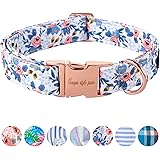
Unique Style Paws Dog Collar With Metal Buckle - Red Rose Flower Gift for Small, Medium, Large Boys Girls Dogs - Durable and Cute
$8.99 (as of September 13, 2026 03:08 GMT +00:00 - More infoProduct prices and availability are accurate as of the date/time indicated and are subject to change. Any price and availability information displayed on [relevant Amazon Site(s), as applicable] at the time of purchase will apply to the purchase of this product.)













Post Comment