Unlocking Europe’s Hidden Gems: What the Church on the Corner Reveals That No One Sees Coming
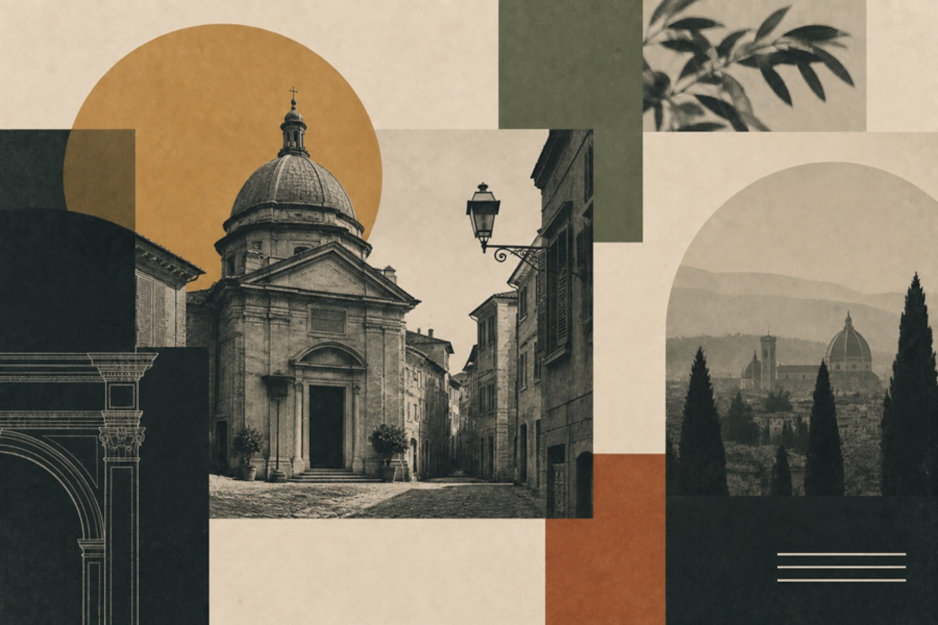
Ever stumbled upon something so unassuming—a plain church tucked away on a quiet corner—that it stops you dead in your tracks? Francesca Casciari, a Duke University undergrad, did just that while studying abroad in Italy. Now, what’s wild isn’t just that a simple church could captivate her like that, but how this moment cracks open a much bigger conversation about time, culture, and what it really means to build something lasting. In an age where speed and hustle often get shoved on a pedestal, Francesca’s journey through Italy’s meticulously preserved streets begs this question: Could slowing down and honoring the old-school grind be the ultimate power move for entrepreneurs and creatives alike? Strap in—because this isn’t just about a corner church; it’s about a mindset shift rooted in centuries of patience, pride, and preservation that could reshape how we think about growth, legacy, and hustle in the fast lane. LEARN MORE

Key Takeaways
- Francesca Casciari’s experience in Italy shows how cultural heritage can shape the way people think about time, beauty, and everyday life.
- Italy’s commitment to protecting historical and artistic heritage is embedded in Article 9 of its Constitution and extends beyond famous tourist attractions.
- Dantedì, Italy’s national day dedicated to Dante Alighieri, illustrates how historical figures can remain part of a country’s living cultural identity.
- Casciari returned from Italy with a greater appreciation for a slower pace, even though she personally prefers staying busy and productive.
- Her experience raises a broader question for modern professionals: what might we gain by valuing patience and preservation alongside speed and productivity?
As a college student studying abroad in Italy, Francesca Casciari can tell you which building impressed her most: it was a church on a corner, in an ordinary neighborhood, and she had not gone looking for it.
“It wasn’t even a historic landmark or a monument that people would fly thousands of miles to visit,” she says. “Just a church on a corner, and still, one of the most beautiful things I’ve ever seen.”
On the Way to Somewhere Else
Francesca Casciari is a Duke undergraduate who studied Latin from middle school through her final year of high school, which may explain why old things hold her attention. What surprised her abroad was the supply. Buildings of that caliber are not rationed in Europe.
Asked what she learned from her experience living in Italy for a semester, she does not name a class or even a city. “My biggest takeaway from studying abroad – my greatest memory – is being surrounded by the richness and vastness of European history almost everywhere you turn, and by the way that history is commemorated and so carefully preserved,” she says.
“You’re in these European cities, you walk among some of the most exquisite architecture and art … and, again, that may just be in the form of an old, local church,” she adds. She continues, “You could be on your way to class, or grabbing a caffè latte – it’s just this incredible gift to have all this beauty so accessible. That, I love.”
She is drawing a distinction between what you travel to see and what simply surrounds you. A cathedral you queue for is a decision you make. A church you pass on the way to the grocery store is a condition of the place.
Preservation Written Into the Founding Document
Casciari is describing ordinary buildings, not exceptional ones.
They went up centuries before the machinery that would have made the work easy, put there by builders and artists who were meticulous without it, and they have been kept in repair ever since. A parish church nobody photographs still outshines most of what a younger country has had time to build.
In Italy, the protection of cultural heritage is written into Article 9 of the Constitution, which reads: “The Republic shall promote the development of culture and scientific and technical research. It shall protect the landscape and the historical and artistic heritage of the Nation.” That obligation sits in the country’s foundational law. Italy amended the article in 2022 and folded the environment in beside the landscape and the art.
Italy has 62 properties inscribed on the UNESCO World Heritage List, 56 of them cultural. Those are only the entries that cleared an international threshold. The constitutional clause reaches further down, to buildings that will never be inscribed and never appear on anyone’s itinerary.
That is the layer Casciari walked through on ordinary errands, in a country where the ordinary happens to be old. Preservation there carries the force of law. She describes the cumulative effect as “awe-inspiring.”
A Country That Gave a Poet His Own Day
What moved her as much as the buildings she explored in Italy was how people talked about the people who made them.
“I love how deeply Europeans appreciate their history,” she says. “You talk to Italians about Michelangelo or da Vinci or Dante, and there’s immense pride that your country birthed these people who had such incredible effects on the world as we know it today. I think that’s really beautiful.”
Those three lived between the thirteenth and the sixteenth centuries, and the pride survives them by hundreds of years. It also has an official calendar entry. In 2020 the Italian Council of Ministers established Dantedì, a national day for Dante Alighieri, on the proposal of Culture Minister Dario Franceschini. It falls on March 25, chosen because that is the date on which the poet begins his journey in the “Divine Comedy.”
A state picked a date out of a 14th-century poem and wrote it into the national calendar. Casciari heard that pride in conversation. Italy has also put it on the calendar.
What She Brought Home
The semester abroad also taught Casciari something about herself.
“It taught me that I’m a very fast person,” she says. “I don’t see that changing anytime soon.” What she found in Europe was a different relationship to time, and she came to admire it precisely because it was not her own. “In Europe everything is so much slower – there’s less focus on moving and maximizing your time, getting through the day and filling it with everything,” she says.
That slower rhythm is partly a matter of law. France cut its statutory working week from 39 hours to 35 in 2000, under the second of the Aubry laws, and has kept it there since.
She is clear about her own setting. “I do feel very much like I like to be busy, I like to be doing things, I like to be productive.” Of the slower version: “It’s nice for a vacation.”
Those two things sit together more easily than they might appear to. The things that moved her most were produced by patience, sustained by patience, and protected by people willing to spend centuries on maintenance. She loved the sites she saw and what she felt witnessing history all around her, and she came home with a deep respect for the pace that made them possible.
A classics student is well equipped to hold both positions at once. The Latin she studied reached her only because generations of people she will never know kept copying it forward, one slow page at a time.
Francesca Casciari is a Duke University undergraduate from New York City. She writes about history, the classics, and the city she grew up in.
FAQs
Who is Francesca Casciari?
Francesca Casciari is a Duke University undergraduate from New York City whose interests include history, the classics and writing. Her academic and extracurricular work has included engagement with classical subjects and issues related to culture and society.
What did Francesca Casciari learn from studying abroad in Italy?
One of her biggest takeaways was the experience of being surrounded by European history and seeing how carefully cultural heritage is preserved. She also became more aware of the slower pace of life she encountered in Europe, even though she personally prefers staying busy and productive.
Why is cultural preservation important in Italy?
Cultural preservation has a particularly strong place in Italy’s legal and cultural framework. Article 9 of the Italian Constitution explicitly commits the Republic to safeguarding the nation’s historical and artistic heritage, while UNESCO currently recognizes 62 Italian World Heritage properties.
What is Dantedì?
Dantedì is Italy’s national day dedicated to Dante Alighieri, observed on March 25. The Italian government established the day in 2020, with the date associated by scholars with the beginning of Dante’s journey in the Divine Comedy.
What can businesses learn from Casciari’s experience in Italy?
Her experience offers a useful reminder that speed and productivity are not the only measures of value. Businesses can benefit from thinking about what they are building for the long term, including reputation, knowledge, relationships, culture and other assets that take time to develop.

HAOYUYAN Wireless Earbuds, Sports Bluetooth Headphones, 80Hrs Playtime Ear Buds with LED Power Display, Noise Canceling Headset, IPX7 Waterproof Earphones for Workout/Running(Rose Gold)
$23.98 (as of September 17, 2026 03:22 GMT +00:00 - More infoProduct prices and availability are accurate as of the date/time indicated and are subject to change. Any price and availability information displayed on [relevant Amazon Site(s), as applicable] at the time of purchase will apply to the purchase of this product.)
Earth Rated Dog Wipes for Paws & Butt, Deodorizing, Unscented, 100ct | Hypoallergenic, 3-in-1 Cleaning and Hydrating, for Grooming Paws, Body and Butt
$9.99 (as of September 17, 2026 03:03 GMT +00:00 - More infoProduct prices and availability are accurate as of the date/time indicated and are subject to change. Any price and availability information displayed on [relevant Amazon Site(s), as applicable] at the time of purchase will apply to the purchase of this product.)
Sour Punch Twists, Sour Candy 3" Individually Wrapped Chewy Candy, 4 Assorted Fruity Flavors
$12.99 (as of September 17, 2026 03:21 GMT +00:00 - More infoProduct prices and availability are accurate as of the date/time indicated and are subject to change. Any price and availability information displayed on [relevant Amazon Site(s), as applicable] at the time of purchase will apply to the purchase of this product.)
6FT Power Strip Tower Surge Protector, 12 Wide Spaced Outlets, 4 USB | 16-in-1 Desktop Charging Station with 2USB-C, 2USB-A, Flat Plug, 6FT Cord, 1800J Surge Protection for Home Office, Dorm White
$19.99 (as of September 17, 2026 03:26 GMT +00:00 - More infoProduct prices and availability are accurate as of the date/time indicated and are subject to change. Any price and availability information displayed on [relevant Amazon Site(s), as applicable] at the time of purchase will apply to the purchase of this product.)














Post Comment