
OpenAI and Anthropic’s Shocking Price Slash: The Bold Move That Could Crush Open Source AI Overnight
You ever wonder what happens when two AI titans decide to slash prices like a Black Friday sale gone wild — but for the whole year? That’s exactly the scrum OpenAI and Anthropic have thrown down in 2026, turning the mid-tier model market upside down. Imagine developers — those digital architects — suddenly rethinking their loyalty to open source options, just because the cost to play with proprietary models dropped like a rock. It’s a bold move, a high-stakes pricing war, that’s not just shaking up the industry but flipping the balance between hassle and value. So, is self-hosting open source still worth the grind, or should you just dive headfirst into these new dirt-cheap offerings? Buckle up, because this price war is rewriting the playbook on where AI innovation and investment collide. LEARN MORE
The AI pricing war just entered a new phase. OpenAI and Anthropic have been systematically slashing prices on their mid-tier models throughout 2026, with reductions steep enough to make developers reconsider whether open source alternatives are still worth the hassle of self-hosting.
The numbers behind the price war
On July 30, OpenAI cut prices on GPT-5.6 Luna by 80%, bringing costs down to $0.20 per million input tokens and $1.20 per million output tokens. The company’s higher-end GPT-5.6 Terra also got a haircut, dropping 20% to $2 input and $12 output per million tokens.
Anthropic followed on August 10, making the introductory pricing for Claude Sonnet 5 permanent at $2/$10 per million tokens.
Then September 22 brought a second wave. OpenAI launched GPT-6 Sol and Luna at $2/$10 and $0.10/$0.50 respectively, roughly 50% lower than previous generation pricing. Anthropic countered with Claude Opus 5.5 at $4/$20 list pricing, though built-in efficiency improvements deliver around 40% effective savings for users.
Why open source is feeling the squeeze
Enterprises are increasingly splitting their workloads into tiers. Cheap proprietary models handle routine tasks like summarization, classification, and basic customer interactions. Premium models get reserved for specialized workloads where performance differences actually matter.
Open source still commands significant volume share, particularly on platforms like OpenRouter where developers mix and match models.
The China factor complicating everything
Chinese AI companies have been setting aggressively low price benchmarks that make even the reduced US pricing look expensive. DeepSeek V4 Flash offers pricing as low as roughly $0.14/$0.28 per million tokens, undercutting American counterparts by a wide margin.
The performance gap is narrowing too. Some Chinese models now approach US mid-tier capabilities at five to nine times lower costs.
IPO math and margin pressure
Both OpenAI and Anthropic are widely expected to pursue IPOs. Cutting prices aggressively boosts adoption and usage metrics, but it also compresses margins. The bet is that lower prices drive higher volume, and higher volume eventually compensates for thinner margins on each individual API call.
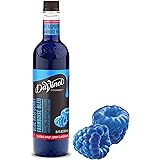
DaVinci Gourmet Classic Blue Raspberry, 25.4 Fluid Ounces (Pack of 1)
$7.99 (as of September 26, 2026 03:05 GMT +00:00 - More infoProduct prices and availability are accurate as of the date/time indicated and are subject to change. Any price and availability information displayed on [relevant Amazon Site(s), as applicable] at the time of purchase will apply to the purchase of this product.)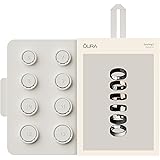
OURA Ring 5 Sizing Kit - Size Before You Buy | Unique Sizing, Not Standard Ring Sizing - Receive Amazon Credit for Oura Ring 5 Purchase
$10.00 (as of September 26, 2026 03:16 GMT +00:00 - More infoProduct prices and availability are accurate as of the date/time indicated and are subject to change. Any price and availability information displayed on [relevant Amazon Site(s), as applicable] at the time of purchase will apply to the purchase of this product.)
WOOF Pupsicle Peanut Butter & Beef Refill Pops Dog Treats, Large, 7 Count | For large Pupsicles, peanut butter & beef flavor, long-lasting treats, pre-made Pops, wholesome ingredients, shelf stable
$14.99 (as of September 26, 2026 03:05 GMT +00:00 - More infoProduct prices and availability are accurate as of the date/time indicated and are subject to change. Any price and availability information displayed on [relevant Amazon Site(s), as applicable] at the time of purchase will apply to the purchase of this product.)
Blue Buffalo Health Bars Pumpkin & Cinnamon Dog Biscuits, 16 oz | Oven-Baked, Crunchy Texture, No Chicken By-Product, Corn, Wheat, or Soy
$4.98 (as of September 26, 2026 03:05 GMT +00:00 - More infoProduct prices and availability are accurate as of the date/time indicated and are subject to change. Any price and availability information displayed on [relevant Amazon Site(s), as applicable] at the time of purchase will apply to the purchase of this product.)












Post Comment