
Uniswap’s Aggregator Hooks Ignite UNI Surge – Could $8 Be Just the Start?
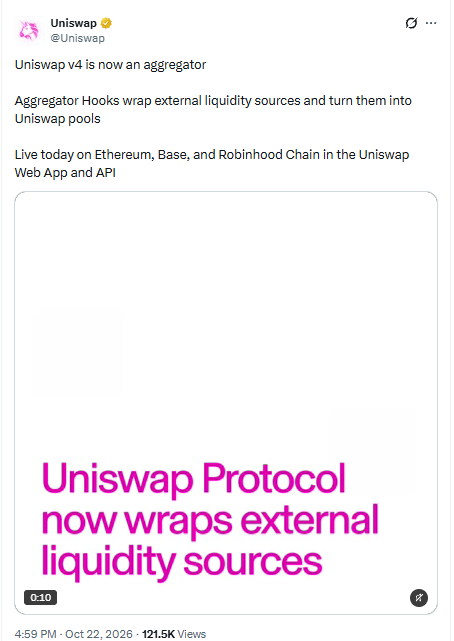
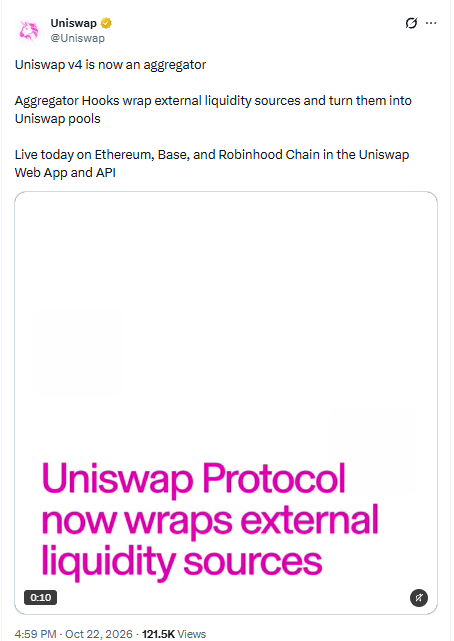
Ever wonder what happens when you supercharge a decentralized trading platform with a dash of external liquidity? Uniswap [UNI] just flipped the script with their latest upgrade, rolling out Aggregator Hooks that pour outside liquidity straight into their v4 pools across Ethereum, Base, and Robinhood Chain. This isn’t just a tweak—it’s a transformation, turning Uniswap v4 into a liquidity aggregator that expands trading possibilities far beyond the usual bounds. It’s like giving an already powerful engine a nitro boost, while also handing developers fresh keys to unlock more flexible integrations within decentralized apps. Sure, while this upgrade is a bold leap forward for the protocol, the UNI token itself is dancing to another beat, facing scrutiny over hefty whale moves that keep traders guessing. Curious how these fresh liquidity channels and whale antics might shake up Uniswap’s market dynamics? Let’s dive in. LEARN MORE
Uniswap [UNI] has extended its decentralized trading infrastructure with the launch of Aggregator Hooks, bringing external liquidity into v4 pools across its three networks.
The protocol recently announced that its new upgrade transformed Uniswap v4 into an aggregator, which in turn expanded its liquidity capabilities beyond the conventional pools. The external liquidity sources will be operating within Uniswap’s existing pool infrastructure through Aggregator Hooks, expanding available trading routes.
The feature was launched across Ethereum [ETH], Base, and Robinhood Chain, with access through the Uniswap Web App and API. Notably, the expansion provided developers with additional flexibility while integrating liquidity sources into decentralized trading applications.
This development marked another step in Uniswap’s infrastructure improvement, although the UNI token faced separate concerns around large-holder activity.
Uniswap whale deposit contrasts with spot buying
An OTC-linked wallet reportedly deposited 180,000 UNI, valued around $1.25 million, to Binance, which raised concerns about potential selling pressure. This significant exchange deposit escalated the speculation that the holder could liquidate tokens through the centralized exchange.
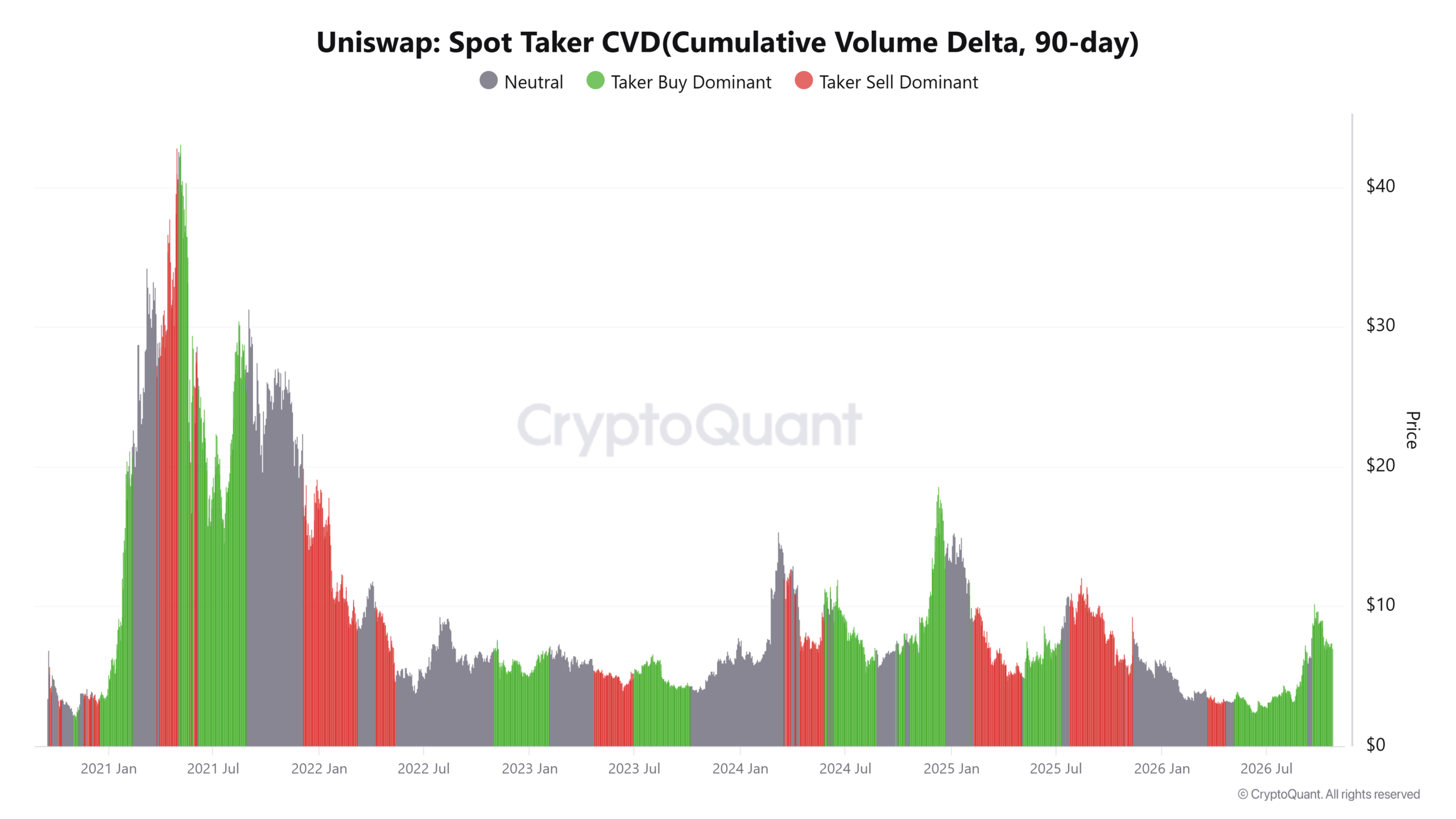
Yet, this transaction alone did not, however, establish whether the wallet had executed any sales. In fact, UNI’s Spot Taker CVD remained taker-buy dominant, suggesting stronger aggressive buying activity across the measured period.
Here, this positioning highlighted that the spot buyers maintained an advantage despite the potential supply entering Binance. These diverging developments therefore highlighted a market where buying interest persisted in spite of the uncertainty surrounding whale transactions.
Whether buyers could absorb additional selling remained crucial as Uniswap approached an important technical area.
UNI nears trendline as indicators strengthen
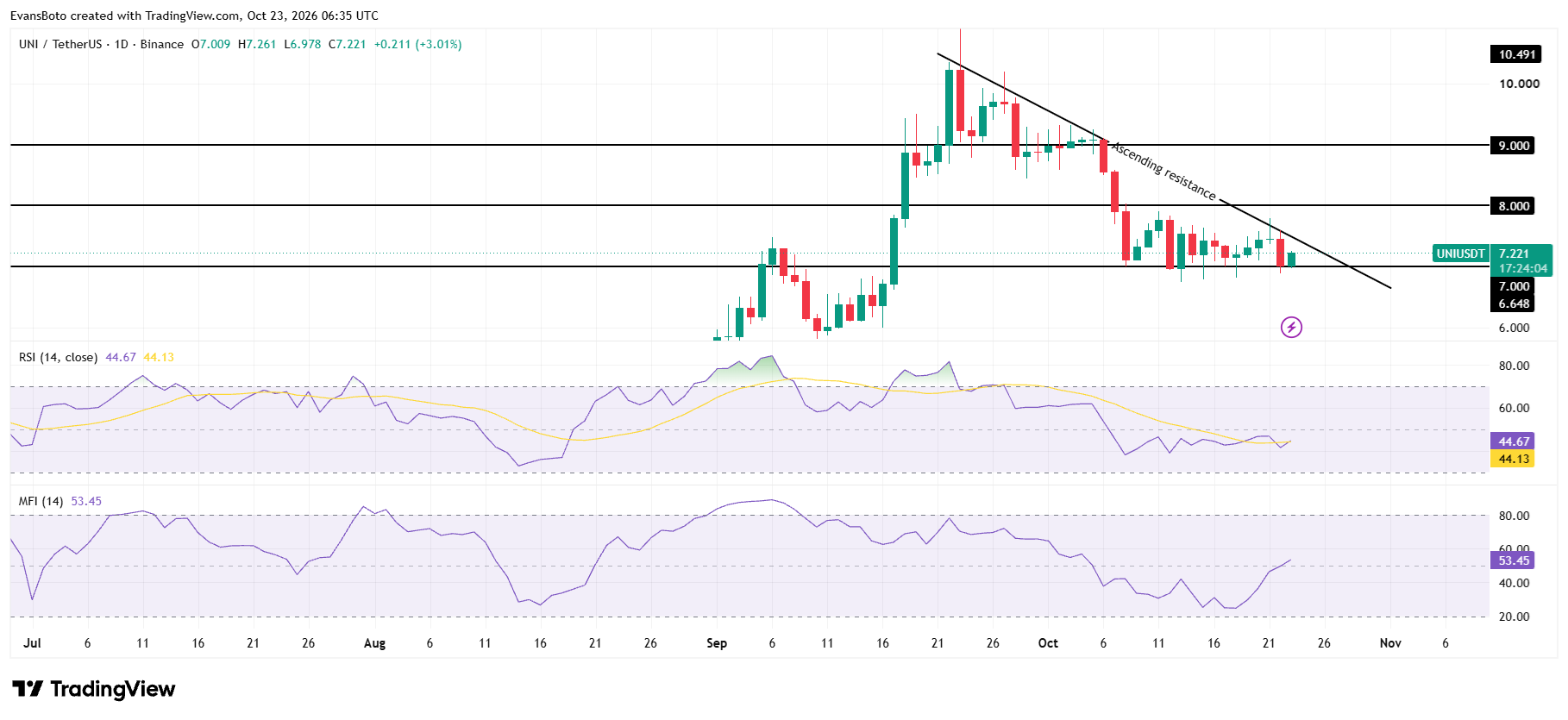
Uniswap’s daily chart highlighted a roughly 3.00% recovery to $7.22, following an extended decline from September highs above $10. The rebound visibly pushed UNI closer to its emerging descending trendline resistance, even though the price was yet to test the boundary.
Supporting the price recovery, the Money Flow Index climbed to 53.45, crossing above its neutral midpoint. Additionally, the RSI indicator improved to 44.67, slightly exceeding its signal average, which sat at 44.13. Even if the indicator remained below the 50-threshold, its improvement suggested easing bearish pressure.
However, for now, the $7.00 level remained crucial support, while a sustained breakout above the descending trendline would validate the bullish bias.
Where could UNI’s liquidity pull price next?
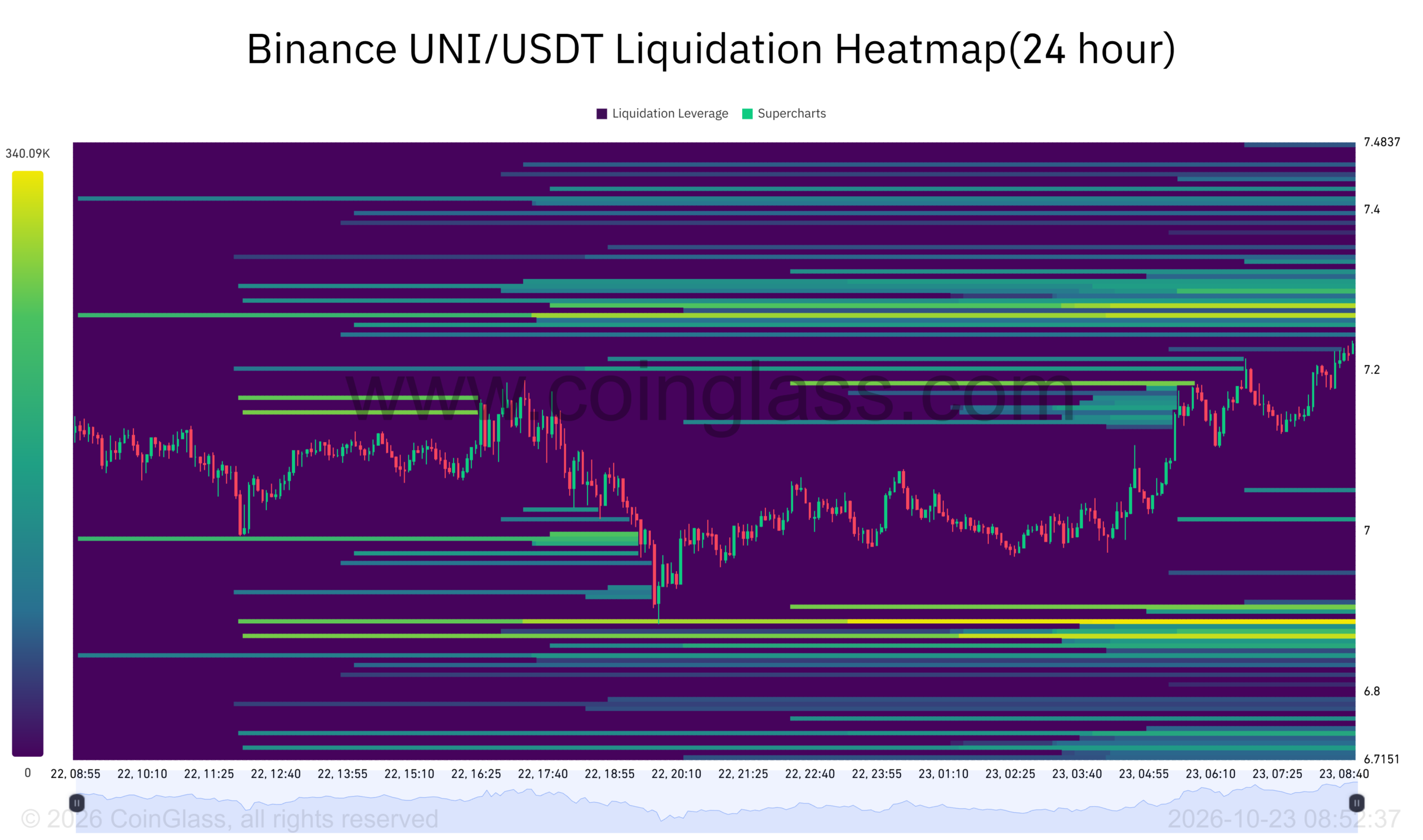
Beyond the daily technical chart, Binance’s 24-hour Liquidation Heatmap revealed considerable liquidity bands on both sides of the prevailing UNI’s price.
Notably, the strongest overhead clusters appeared around $7.25–$7.30, which placed potential short liquidations near UNI’s immediate recovery path. Additional clusters extended towards the $7.40 area, providing another zone of interest in case buyers push through the nearby resistance.
On the other hand, significant downside liquidity visibly accumulated around the $6.85–$6.90 region, which could trigger long liquidations in case of a price correction. These opposing clusters therefore showed potential volatility as the token approached its next directional move.
Overall, the improving technical indicators and dominant spot buying cautiously supported a recovery attempt, although UNI still needed a confirmed trendline breakout.
Final Summary
- Uniswap introduced Aggregator Hooks across three networks, expanding liquidity access despite potential whale selling.
- UNI approached descending resistance as improving technical indicators supported a possible breakout toward $8.

Wonderful Halos Mandarins, Sweet, Seedless, Easy Peel Mandarin Oranges - Healthy Food, Fresh Fruit, 3lb Bag
(as of October 23, 2026 03:13 GMT +00:00 - More infoProduct prices and availability are accurate as of the date/time indicated and are subject to change. Any price and availability information displayed on [relevant Amazon Site(s), as applicable] at the time of purchase will apply to the purchase of this product.)
Tomkas Small Dog Cat Sling Carrier Puppy Purse Travel Wrap Soft Crossbody Pet Bag (Black1, M - Classic Pocket & Classic Strap)
$13.99 (as of October 23, 2026 03:23 GMT +00:00 - More infoProduct prices and availability are accurate as of the date/time indicated and are subject to change. Any price and availability information displayed on [relevant Amazon Site(s), as applicable] at the time of purchase will apply to the purchase of this product.)
Purina Pro Plan Sensitive Skin & Stomach Dry Dog Food, Salmon, 30 lb Bag | Real Salmon & Rice Formula, with prebiotic fiber, easily digestible with omega-6 fatty acids for a healthy skin and coat
$77.48 (as of October 23, 2026 03:13 GMT +00:00 - More infoProduct prices and availability are accurate as of the date/time indicated and are subject to change. Any price and availability information displayed on [relevant Amazon Site(s), as applicable] at the time of purchase will apply to the purchase of this product.)
PETHIS Dental Water Additive for Dogs & Cats - Fresh Breath, Teeth & Gum Care, No Brushing Required, Professionally Formulated - 250 mL / 8.45 fl oz
$26.99 (as of October 23, 2026 03:23 GMT +00:00 - More infoProduct prices and availability are accurate as of the date/time indicated and are subject to change. Any price and availability information displayed on [relevant Amazon Site(s), as applicable] at the time of purchase will apply to the purchase of this product.)













Post Comment