
Franklin Templeton’s Bitcoin ETFs Are Flipping the Script—Dividends Just Became Crypto’s Secret Weapon
When a $1.8 trillion heavyweight like Franklin Templeton steps into the ring with Bitcoin, you’d better sit up and take notice. So, here’s the kicker — instead of offering a plain vanilla Bitcoin ETF, they’ve blended it with a hefty dose of U.S. equities, aiming to stir the pot with two new Nasdaq-listed ETFs. We’re talking about a clever cocktail: 95% stocks, 5% Bitcoin, with dividends nudging that crypto slice upward over time. It’s like getting a steady drip of Bitcoin exposure, fueled by classic dividend growth — a savvy nod to those who want their cake (equities) and some sweet Bitcoin frosting, too. Now, the real question lingering in my mind — can this hybrid approach satisfy investors hungry for crypto’s high-octane thrills without losing the comfort of solid stock gains? Or is it just a clever wink at diversification during a time when U.S. stocks have been showing Bitcoin how it’s done? Strap in, because Franklin’s playing a fascinating game of financial fusion, and the stakes couldn’t be higher. LEARN MORE
Franklin Templeton, the $1.8 trillion asset manager, registered two Bitcoin-related exchange-traded funds (ETFs) for trading on Nasdaq.
The filing dated the 22nd of October named the Franklin US Equity Bitcoin DRIP Index ETF and Franklin US Innovation Bitcoin DRIP Index ETF.
Both would combine U.S. stocks with Bitcoin [BTC] exposure, giving investors access to the cryptocurrency through an equity-focused portfolio.
Their underlying indexes began with 95% stocks and 5% Bitcoin. Stock dividends would then feed the Bitcoin allocation, gradually increasing exposure between rebalances.
The Equity fund would track large U.S. companies, while the Innovation fund would focus on innovation-related U.S. stocks.
How would dividends build Bitcoin exposure?
The dividend mechanism gives these funds a different approach from standalone Bitcoin ETFs. Instead of reinvesting payouts into stocks, the strategy directs them toward Bitcoin exposure.
However, that allocation would not grow unchecked. At quarterly rebalances, Bitcoin exposure above 5% would reset to 4.5%.
A separate 20% threshold would trigger a reset to 4.5% between quarterly reviews. This keeps Bitcoin secondary to equities, although it still adds volatility to the portfolio.
For investors, the trade-off is straightforward: dividends would build cryptocurrency exposure rather than compound the stock allocation.
Why pair Bitcoin with outperforming stocks?
The registration came as U.S. equities outperformed Bitcoin over the past year and on a year-to-date basis. Bitcoin had fallen 23% over the past year, while the S&P 500 gained 18% and the Nasdaq 100 rose 19%.
Year-to-date, Bitcoin had declined 2.88%, against gains of 17% and 20% for the respective indexes, according to JustETF.
The new funds would let investors retain an equity-heavy allocation while participating in potential Bitcoin gains. However, a small Bitcoin allocation would also limit its contribution during a cryptocurrency rally.
Franklin Templeton already offers dedicated exposure through its Franklin Bitcoin ETF (EZBC). Its market capitalization stood at $466.78 million, ranking ninth among U.S. spot Bitcoin ETFs, per SoSoValue.
Since the market peak on the 6th of October 2025, total cryptocurrency Market Capitalization had fallen by over $1.6 trillion.
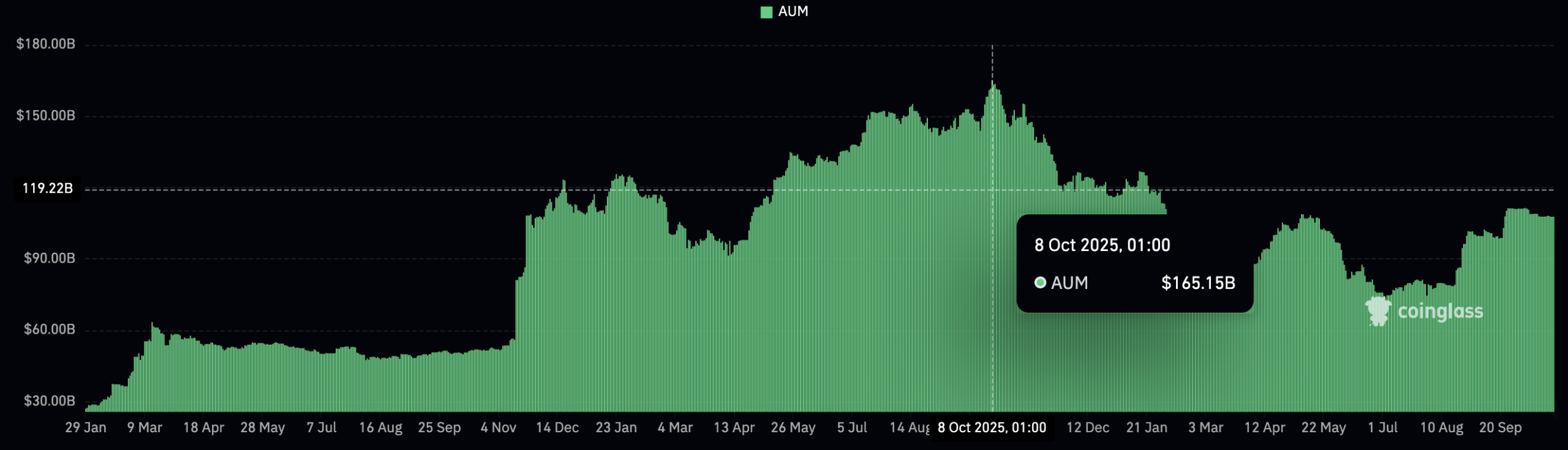
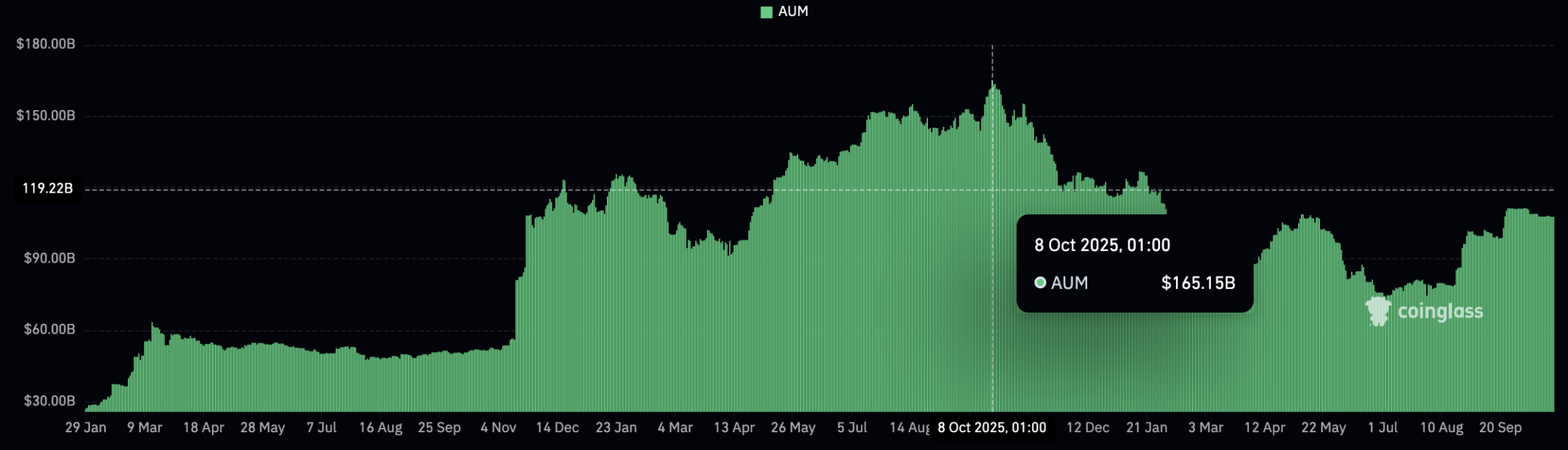
Meanwhile, U.S. Bitcoin ETF Assets Under Management declined from $165.15 billion to $107.74 billion.
That decline reflected a smaller asset base, although Assets Under Management alone cannot distinguish investor withdrawals from price losses.
EZBC also retreated from its peak of $73.16 on the 6th of October 2025. It traded at $46.87 premarket at reporting time.
Against that backdrop, Franklin’s approach offers investors a smaller Bitcoin allocation alongside stocks. Whether it attracts fresh demand remains an open question.
Final Summary
- Franklin Templeton registered two ETFs combining U.S. stocks with Bitcoin exposure funded partly through reinvested dividends.
- Stocks outperformed Bitcoin across both comparison periods, providing the backdrop for the equity-heavy strategy.

Medium Hass Avocado
(as of October 26, 2026 03:13 GMT +00:00 - More infoProduct prices and availability are accurate as of the date/time indicated and are subject to change. Any price and availability information displayed on [relevant Amazon Site(s), as applicable] at the time of purchase will apply to the purchase of this product.)
Purina Pro Plan Complete Essentials Chicken & Rice Dry Dog Food, 35 lb Bag | Shredded Blend crunchy kibble with tender pieces, real chicken as the first ingredient, live probiotics for digestive health
$74.48 (as of October 26, 2026 03:13 GMT +00:00 - More infoProduct prices and availability are accurate as of the date/time indicated and are subject to change. Any price and availability information displayed on [relevant Amazon Site(s), as applicable] at the time of purchase will apply to the purchase of this product.)
Bloom Nutrition Zero Sugar Energy Drink, Apple Crisp, 12oz 12pk | 180mg natural caffeine with prebiotics, green tea extract & lychee for energy, focus and feel-good refreshment.
$24.99 (as of October 26, 2026 03:13 GMT +00:00 - More infoProduct prices and availability are accurate as of the date/time indicated and are subject to change. Any price and availability information displayed on [relevant Amazon Site(s), as applicable] at the time of purchase will apply to the purchase of this product.)
Fresh Produce Strawberries, 16.0 OZ
(as of October 26, 2026 03:13 GMT +00:00 - More infoProduct prices and availability are accurate as of the date/time indicated and are subject to change. Any price and availability information displayed on [relevant Amazon Site(s), as applicable] at the time of purchase will apply to the purchase of this product.)














Post Comment