
Unlocking 2026: The Midterm Ballot Measures That Could Change Every American’s Future—Are You Ready to Decide?
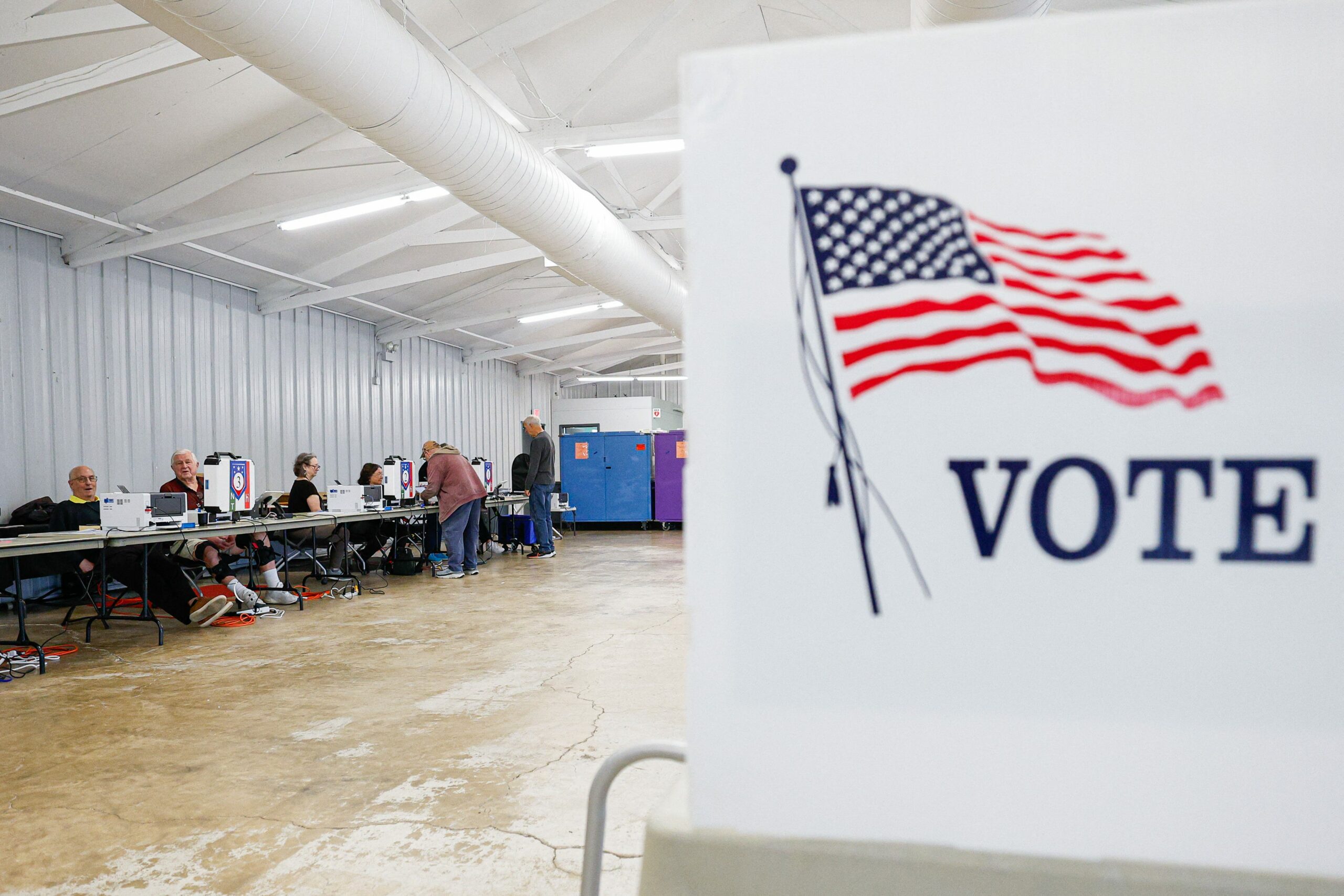
You ever wonder how a single ballot can feel heavier than a loaded barbell? Well, this November 3, Americans won’t just be flexing their voting muscles—they’ll be grappling with some of the most consequential decisions that’ll shape everything from abortion rights to income taxes. With nearly 150 statewide measures on the docket, it’s like a high-stakes MMA fight where policies on transgender rights, voter ID registration, and affirmative-action laws step into the ring, ready to rumble. Trust me, the outcome of these battles isn’t just political posturing—it hits hard and directly affects millions of lives. So, if you think midterms are just another date on the calendar, think again. Let’s unpack what’s really at stake before you hit that voting booth like it’s the final round. LEARN MORE
 5 min read
This November 3, voters will head to the ballots for the midterm elections. In addition to choosing the people who will represent them in office, they will also be making important decisions about policies that will shape everything from abortion rights to income taxes.
Nearly 150 statewide measures will be determined on the ballot during this year’s midterm elections. Key issues that have been dominating the news cycle—including voter ID registration, transgender rights, and affirmative-action laws—will be reflected in these initiatives, with the outcome affecting the lives of millions of people.
With just a week before Election Day, we’ve put together a guide to some of the ballot measures up for discussion in this year’s election. Keep scrolling to learn more.
Taxing the Wealthy
As income inequality in the U.S. continues to worsen, some voters will get to decide whether or not to impose an income tax on their state’s richest residents.
In California, Proposition 40—colloquially known as the “billionaire tax”—would enact a one-time 5 percent emergency tax on any resident whose net worth exceeds $1 billion. Revenue from the tax would be used to fund state health care, education, and food-assistance programs. It is estimated that it would raise about $100 billion in five years, according to the health-care workers union that helped put the measure on the ballot.
Naturally, the measure is facing pushback from the state’s powerful and wealthy. California governor Gavin Newsom has publicly opposed Proposition 40, joining detractors who argue that the state relies on these billionaires and that such a tax would push them out. Opponents have even placed two rival measures on the same ballot: Proposition 41, which requires audits of new tax programs, meaning that Proposition 40 would automatically violate the provision since it wasn’t designed to follow the state’s annual spending limit; and Proposition 42, which blocks taxes based on the ownership of personal property, including financial accounts, investments, and art collections, which are the types of properties that Proposition 40 specifically targets. If either or both of those initiatives pass, then the passage of Proposition 40 will be invalidated. Among Propositions 41 and 42’s proponents is Google cofounder Sergey Brin, who has an estimated net worth of $242 billion and is one of the richest people in the world. He has reportedly spent $138 million on the campaigns for Propositions 41 and 42—or about 0.057 percent of his total net worth.
“It’s very disappointing that they’d go to these lengths and spend all of this money when really they could do the moral and ethical thing of being part of our social contract,” Suzanne Jimenez, chief of staff for SEIU-UHW, told LA Public Press. “They could pay a very minimal tax that, quite frankly, folks like Sergey Brin are going to make up in mere months after they would have to pay this tax.”
Abortion Rights
Four years after the Supreme Court overturned Roe v. Wade, voters are continuing to determine the fate of abortion rights on the ballot.
In Idaho, a vote “yes” on Proposition 1—also known as the Reproductive Freedom and Privacy Act Initiative—will establish the right to abortion across the state. Currently, Idaho prohibits abortions except in the case of medical emergencies that will save the life of the pregnant person or in cases of rape or incest.
Voters in Virginia and Nevada will decide on constitutional amendments for access to abortion and reproductive freedom. In Missouri, voters will decide on Amendment 3, which would repeal an amendment that Missourians previously passed in 2024 that enshrined the right to an abortion in the state constitution.
Transgender Rights
Six ballot measures in five states will shape the rights of transgender people.
Both Propositions 134 and 135 in Colorado affect the lives of the state’s transgender residents. Proposition 134 would require students in all public schools, from kindergarten to college, to play on athletic teams that align with their assigned sex at birth. Voters in Arizona, Washington, and Nebraska will also decide on initiatives that could potentially prohibit trans students from participating in school sports teams.
It’s unsurprising that some states are attempting to litigate the freedom of trans student athletes considering that, in June, the Supreme Court upheld a ban on transgender girls participating in school sports. Opponents of these initiatives argue that these laws would isolate the transgender community, as well as undermine the decision-making ability of parents and schools and lead to invasive personal exams for trans and cisgender students.
Additionally, Proposition 135 would ban gender-affirming care surgery for minors in Colorado. Voters in Missouri will vote on a similar amendment, which would ban gender-affirming surgeries in addition to hormone treatment and puberty-blocking drugs.
Changes to Voter ID Registration
With the Trump administration continuing its efforts to undermine public confidence in election security by making false claims of voter fraud, multiple states will leave changes to voter ID registration rules up to their voters.
While it is already illegal for noncitizens to vote in federal elections, six states—Alaska, Arizona, Arkansas, Kansas, South Dakota, and West Virginia—will vote to amend their state constitutions to include language that explicitly states that only U.S. citizens can participate in elections. Additionally, voters in Arizona, California, Colorado, Nevada, North Carolina, and Ohio will decide on election security measures that will require identification when people vote in person or by mail. Opponents of these measures argue that it will make voting harder.
For example, Proposition 144 in Arizona—a state where 75 percent of voters voted by mail in the 2024 election—would amend the state constitution to require voters to show valid identification before each election, regardless of whether they choose to vote in person or by a mail-in ballot. The measure does not explain how voters would be able to comply with such a rule.
Proposition 39 in California would similarly change voting rules by requiring citizens to present government-issued IDs before submitting their ballot, but the measure does not clarify which types of ID would be considered acceptable.
The Future of DEI
In Arizona, Proposition 142 could shape diversity, equity, and inclusion efforts at public institutions. If passed, the Republican-backed measure would amend Arizona’s constitution to prohibit the state from requiring anyone to endorse preferential treatment or discrimination against people on the basis of their race or ethnicity.
This debate fits within the larger national conversation about DEI initiatives, with President Trump working to dismantle DEI at the federal level through a series of executive orders.
“Arizona already bans racial discrimination or preferential treatment. That’s already in our constitution,” state senator Analise Ortiz said in a message shared to social media. “[Proposition 142] is not needed and it’s normalizing discrimination. Diversity makes Arizona great. Equity gives people a fair shot. Inclusion makes our community strong.”

8-in-1 Power Strip, Round USB & Type-C Fast Charging Station for Phones | 8-in-1 design with built-in charging ports eliminates extra charging heads, reducing cable clutter for home and office use.
$3.90 (as of October 28, 2026 03:34 GMT +00:00 - More infoProduct prices and availability are accurate as of the date/time indicated and are subject to change. Any price and availability information displayed on [relevant Amazon Site(s), as applicable] at the time of purchase will apply to the purchase of this product.)
Bloom Nutrition Zero Sugar Energy Drink, Apple Crisp, 12oz 12pk | 180mg natural caffeine with prebiotics, green tea extract & lychee for energy, focus and feel-good refreshment.
$24.99 (as of October 28, 2026 03:14 GMT +00:00 - More infoProduct prices and availability are accurate as of the date/time indicated and are subject to change. Any price and availability information displayed on [relevant Amazon Site(s), as applicable] at the time of purchase will apply to the purchase of this product.)
Minties Mint Dental Chews for Dogs, Small Dogs 5-25 lbs, 40 Count | Vet-recommended mint dental bone; scrubs teeth as dogs chew; fights plaque, tartar & bad breath; no soy/wheat/corn
$14.98 (as of October 28, 2026 03:14 GMT +00:00 - More infoProduct prices and availability are accurate as of the date/time indicated and are subject to change. Any price and availability information displayed on [relevant Amazon Site(s), as applicable] at the time of purchase will apply to the purchase of this product.)
Earth Rated Dog Wipes for Paws & Butt, Deodorizing, Unscented, 100ct | Hypoallergenic, 3-in-1 Cleaning and Hydrating, for Grooming Paws, Body and Butt
$9.99 (as of October 28, 2026 03:14 GMT +00:00 - More infoProduct prices and availability are accurate as of the date/time indicated and are subject to change. Any price and availability information displayed on [relevant Amazon Site(s), as applicable] at the time of purchase will apply to the purchase of this product.)












Post Comment