
SK Hynix Issues Stark Warning: Brace Yourself for a Memory Chip Shortage That Could Crush Tech Innovation Until 2030
Ever wonder how long a memory chip shortage can really last? SK Hynix, the South Korean powerhouse, just dropped a bombshell: the crunch won’t ease up anytime soon — in fact, they’re predicting demand will outpace supply all the way through 2030. That’s a decade of high stakes for anyone paying attention to AI data centers and the tech fueling our digital future. And get this — they just posted their first-ever quarter topping 100 trillion won, fueled by booming sales of high-bandwidth memory (HBM), server DRAM, and enterprise SSDs. With manufacturing challenges and lengthy fab build times, the chip shortage isn’t just a hiccup; it’s a marathon. Plus, their bold moves locking in customers with long-term contracts and ramping up next-gen AI memory like HBM4 signal they’re not just surviving — they’re owning the game. So, what does this mean for buyers, rivals, and investors racing to keep up? Buckle up, this story’s just getting revved up. LEARN MORE
The South Korean chipmaker posted its first quarter above 100 trillion won and says AI demand will outrun supply for years
SK Hynix thinks the memory chip crunch is nowhere near over. The South Korean chipmaker says it expects demand for memory to keep outpacing supply all the way through 2030.
The call came on October 28, 2026, alongside record third-quarter results.
Record revenue and a long runway
SK Hynix reported third-quarter 2026 revenue of 104.6155 trillion won. It was the first time the company had ever cleared the 100 trillion won mark in a single quarter.
The drivers were the products that power AI data centers. High-bandwidth memory (HBM), server DRAM, and enterprise SSDs led the way.
The company pointed to two structural reasons for its long shortage forecast. First, leading-edge manufacturing has become extremely difficult. Second, new fabrication plants take a long time to build.
SK Hynix is also locking in customers early. Long-term agreements with 14 customers, including major cloud providers, already cover more than 50% of the company’s expected production capacity for 2027 and 2028.
2027 could be the tightest year yet
CEO Kwak Noh-jung flagged 2027 as a potential peak for the gap between demand and supply.
Kwak said 2027 could be the worst year in the history of memory supply because of ongoing shortages.
The company is trying to expand to meet demand. Its plans include new fabrication facilities in South Korea and the US.
SK Hynix is also shifting its product mix toward the next generation of AI memory. It projects that HBM4 will overtake its predecessor, HBM3E, in both revenue and volume by the end of the fourth quarter of 2026.
On the capacity front, the company’s M15X fab is expected to reach full capacity by the end of 2026.
What this means for buyers, rivals, and investors
The more than 50% of 2027 and 2028 capacity already committed under long-term deals tells you who has an edge. Large cloud customers with the scale to sign multi-year agreements are getting in line first.
For SK Hynix, the forecast reinforces a strong position. A record quarter, a shift toward higher-value HBM4, and contracted demand give it visibility that memory makers rarely enjoy.
SK Hynix competes in this market alongside Samsung and Micron.
Several markers are worth watching in the months ahead. One is whether HBM4 actually overtakes HBM3E by the end of the fourth quarter of 2026. Another is whether the M15X fab hits full capacity on schedule by year-end. A third is how quickly the new facilities in South Korea and the US come online.
Disclosure: This article was edited by Diego Almada Lopez. For more information on how we create and review content, see our Editorial Policy.
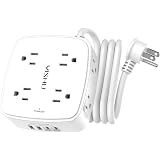
YISHU 6Ft Surge Protector Power Strip with 8 Widely Outlets & 4 USB Ports | 3 Side Outlet Extender with 6 Feet Extension Cord, Flat Plug, for Home, Office, College Dorm Room Essentials
$9.98 (as of November 1, 2026 03:25 GMT +00:00 - More infoProduct prices and availability are accurate as of the date/time indicated and are subject to change. Any price and availability information displayed on [relevant Amazon Site(s), as applicable] at the time of purchase will apply to the purchase of this product.)
Portable AM/FM Transistor Radio with Loud Speaker, Battery or USB Powered | Compact Emergency Radio for Indoor, Outdoor, Travel & Storms (Model BJL-671)
$23.99 (as of November 1, 2026 03:25 GMT +00:00 - More infoProduct prices and availability are accurate as of the date/time indicated and are subject to change. Any price and availability information displayed on [relevant Amazon Site(s), as applicable] at the time of purchase will apply to the purchase of this product.)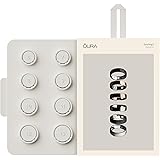
OURA Ring 5 Sizing Kit - Size Before You Buy | Unique Sizing, Not Standard Ring Sizing - Receive Amazon Credit for Oura Ring 5 Purchase
$10.00 (as of November 1, 2026 03:25 GMT +00:00 - More infoProduct prices and availability are accurate as of the date/time indicated and are subject to change. Any price and availability information displayed on [relevant Amazon Site(s), as applicable] at the time of purchase will apply to the purchase of this product.)
Coca-Cola Zero Sugar Soda Soft Drink Fridge Pack Cans, 12 fl oz, 12 Pack | Carbonated cola soda pop with zero calories
$7.68 (as of November 1, 2026 03:14 GMT +00:00 - More infoProduct prices and availability are accurate as of the date/time indicated and are subject to change. Any price and availability information displayed on [relevant Amazon Site(s), as applicable] at the time of purchase will apply to the purchase of this product.)











Post Comment