
Andrea Petrone’s Success Story: What Happens When You’ve Made It—But Your True Identity Is Still a Mystery?
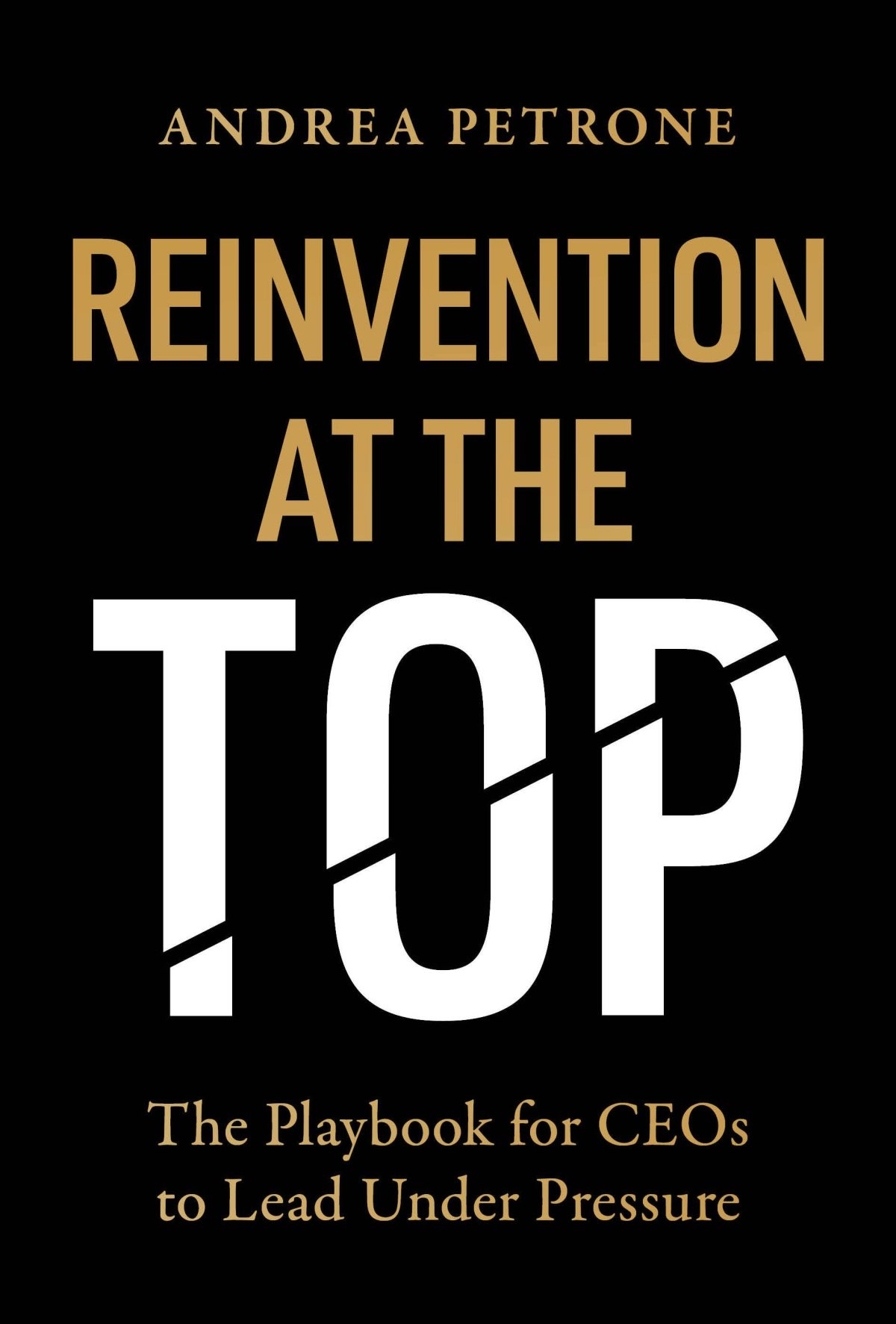
Ever climbed the ladder only to find the view at the top is unexpectedly… lonely? You’re not alone. In his insightful new book, Reinvention at the Top, Andrea Petrone digs deep into a rarely discussed CEO dilemma: the identity crisis that creeps in once you ‘make it’. We often imagine the corner office as the pinnacle of success—board seats, press mentions, a fat paycheck—but behind that glamorous curtain lies a silent struggle. Many CEOs confess in private that despite their achievements, they feel a strange disconnection from themselves. Their inner compass? Quiet. Their presence? Fading. Their message? Scripted. It’s a hidden gap, an internal misalignment that no one talks about but is becoming alarmingly common in today’s fast-paced, unforgiving corporate landscape.
Drawing from his own journey—battling setbacks and confronting the humbling truth that even the strong can falter—Petrone offers a powerful playbook. It’s not just about surviving the pressure; it’s about leading with genuine presence and conviction. If you’re curious how to turn this quiet crisis into a lasting influence, this is your wake-up call.
In his new book Reinvention at the Top, Andrea Petrone reveals why many CEOs hit an identity crisis once they ‘make it’. In this extract, he offers advice on how to lead with presence, conviction, and create a lasting influence
They won’t admit it publicly, but many CEOs I work with say the same thing in private: ‘I should feel proud of what I’ve achieved. But I don’t feel clear on who I am anymore, who I want to be or what I want to leave behind’.
They’ve reached the top.
The corner office. The board seat. The press mentions. The financial win.
Yet instead of certainty, they feel something closer to disconnection — not from the company, but from themselves.
It’s subtle, not dramatic. They’re still performing at a high level, steering big teams and making major decisions. But the inner compass they once trusted feels quiet, or it points in too many directions. Their presence seems diluted. Their message, scripted. Their identity, flattened into the role they were hired to play.
This is the hidden identity gap that many leaders hit after they ‘arrive’.
And no one talks about it.
And it’s happening more often now because the top job has changed.
The environment is less predictable, the decision cycle is faster and expectations are louder and less forgiving.
Under such relentless pressure, the risk is not incompetence in dealing with a new context.
The risk is misalignment: the role starts demanding a version of you that doesn’t fully match who you are.
From the outside, the CEO role looks like power, freedom and control. It’s a privileged position that is perceived as a dream by many. From the inside, it often feels like isolation.
Recent research shows that around 72 per cent of CEOs experience loneliness, and for most, the feeling is worse now than before the pandemic. Other studies confirm similar numbers: More than half of CEOs report loneliness and isolation, and 61 per cent of those leaders say it affects their performance.1
One CEO told me, “I spent 25 years climbing to the top. But no one told me the view up here could feel this cold.”
He’s not alone. For years, CEOs like Apple’s Tim Cook, Airbnb’s Brian Chesky and Indra Nooyi at PepsiCo have all openly said it’s lonely at the top.2 And the higher you climb, the thinner the air becomes — and the fewer people there are who can breathe it with you.
I didn’t arrive at this work through theory. I arrived at it through the hard edge of experience — first as an operator, then as a leader and eventually as someone who had to reinvent how I was leading.
My first assignment after university was in Equatorial Guinea. Not a glamorous ‘international rotation’. The capital is on a small island in Central Africa that felt dangerous and unfamiliar, with real operational consequences and very little margin for naïve confidence.
That early exposure did something important for me: it taught me that leadership is not what you believe about yourself when conditions are easy. It’s what you can hold when conditions are not.
The first part of my career went fast. By 35, I’d moved up quickly. I was leading organisations. I had lived and worked across multiple countries. And I fell into a trap that many high-performing leaders fall into without noticing: the confirmation-success trap. When everything works long enough, you start to believe it will keep working because of who you are.
I became, in my mind, invincible.
Then something happened that I didn’t expect, and more importantly, I wasn’t prepared for. I had a couple of career setbacks. Moments where the complexity outpaced my default way of operating. Where I couldn’t rely on momentum. Where the environment didn’t reward the same instincts.
It was the first time I confronted a truth that is very hard for ambitious leaders to admit: I could fail. I could be wrong. I could be exposed.
And that’s where the real pivot happened.
Because my issue wasn’t competence. I could still perform. I could still ‘do the job’. But under pressure I could feel something else: misalignment.
Misalignment between who I believed I was, how I was trying to show up and what the system around me was experiencing.
The higher you go, the more this becomes decisive. Not because senior leaders are fragile. But because complexity punishes internal drift. At that level, you don’t just get measured by outcomes. You get measured by the consistency of your judgment, your tone and your standards — and the organisation becomes extremely sensitive to the signals you send.
At the time, admitting that I needed help felt like admitting failure. But it became the smartest decision I made. I worked with a coach. And what I expected to be a tactical upgrade turned into something deeper: self-discovery. A shift in humility. A shift in mindset. A shift in how I related to the context around me, including pressure.

That’s when I learned a core lesson: at the top, leadership rarely breaks because you don’t know what to do. It breaks because pressure pulls you away from yourself.
If you don’t address that, you compensate with performance: more control, more intensity, more explanation, more certainty. And the organisation learns that as the way to survive.
If you do address it, something else becomes possible: you lead with clarity without pretending certainty, you hold standards without drama, and you build leaders who can carry weight without needing you to carry everything.
That shift didn’t just improve my leadership. It changed the trajectory of my career. The second part became stronger than the first — because it was built on alignment, not momentum.
This is an edited extract from Reinvention at the Top: The Playbook for CEOs to Lead Under Pressure by Andrea Petrone (published by Wiley, October 2026)
Notes: 1. Saporito, Thomas J. “It’s Time to Acknowledge CEO Loneliness.” In Harvard Business Review. Brighton, MA: Harvard Business School Publishing, n.d. https://hbr.org/2012/02/its-time-to-acknowledgeceo-lo (accessed 1 April 2026). 2. Burleigh, Emma. “The CEOs of Apple, Airbnb, and PepsiCo Agree on One Thing: Life as a Business Leader Is Incredibly Lonely.” Fortune, October 29, 2025. https://fortune.com/2025/10/29/ceos-appleairbnb-pepsico-ups-insomnia-cookies-lonely-isolating-job/ (accessed 1 April 2026).
About the author
Andrea Petrone is a trusted advisor to top-performing CEOs and executive teams worldwide. Known as ‘The CEO Whisperer’, he is a CEO coach and advisor, international speaker, and host of The World Class Leaders Show, a top 5 per cent podcast globally. With over 20 years of experience across Fortune 500 companies, midsize companies, and investment-backed firms, Petrone helps leaders navigate new roles, major transitions, public reinvention, and legacy-defining decisions. His work integrates identity, message, presence, and strategic influence.

Blue Buffalo Health Bars Pumpkin & Cinnamon Dog Biscuits, 16 oz | Oven-Baked, Crunchy Texture, No Chicken By-Product, Corn, Wheat, or Soy
$4.99 (as of November 2, 2026 03:14 GMT +00:00 - More infoProduct prices and availability are accurate as of the date/time indicated and are subject to change. Any price and availability information displayed on [relevant Amazon Site(s), as applicable] at the time of purchase will apply to the purchase of this product.)
Core Power Fairlife Elite 42g High Protein Milk Shakes For kosher diet, Ready to Drink for Workout Recovery, Chocolate, 14 Fl Oz (Pack of 12), Liquid, Bottle
$47.98 (as of November 2, 2026 03:14 GMT +00:00 - More infoProduct prices and availability are accurate as of the date/time indicated and are subject to change. Any price and availability information displayed on [relevant Amazon Site(s), as applicable] at the time of purchase will apply to the purchase of this product.)
Hand Crank Radio with AM/FM/NOAA Weather Band,for Emergencies | 3 LED Flashlights,SOS Function,Solar Powered,Hand Cranked, 2000mAh Charger,for Power Outage - Red
(as of November 2, 2026 03:36 GMT +00:00 - More infoProduct prices and availability are accurate as of the date/time indicated and are subject to change. Any price and availability information displayed on [relevant Amazon Site(s), as applicable] at the time of purchase will apply to the purchase of this product.)
Puppy Pee Pads with Pheromones, Washable Puppy Training Pads for Dogs Reusable Puppy Potty Pads for Dogs and Cats(with Pet Hair Removal Gloves)
$23.79 (as of November 2, 2026 03:25 GMT +00:00 - More infoProduct prices and availability are accurate as of the date/time indicated and are subject to change. Any price and availability information displayed on [relevant Amazon Site(s), as applicable] at the time of purchase will apply to the purchase of this product.)









Post Comment