
The Shocking Truth Behind Why Penneys’ Owner Is Bleeding Cash—And What It Means for the Future of Retail
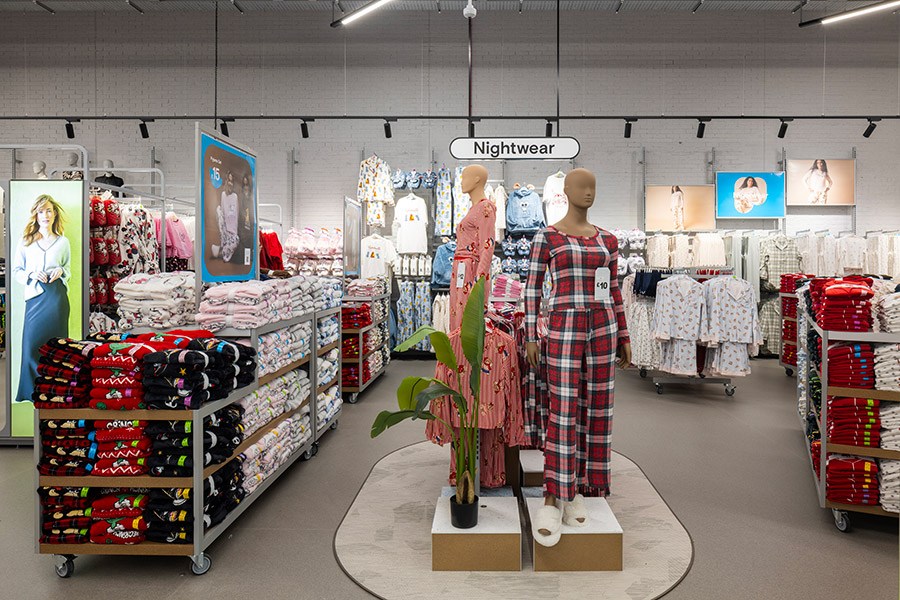
So, here’s the deal: Associated British Foods just posted a 14% drop in operating profit, and it’s all thanks to a stalling Primark—known as Penneys over in Ireland. Now, isn’t it ironic how a brand that’s all about budget-friendly fashion finds itself wrestling with shrinking profits? While new store openings pushed sales up a bit, like-for-like sales took a nosedive, especially across Europe where the trading winds have been less than friendly. And guess what? ABF plans to spin Penneys off from its food empire next year—a bold move, but one with its own set of costly headaches. With earnings per share down and challenges mounting in grocery and sugar sectors, the group’s navigating some rough waters ahead. Still, CEO George Weston is doubling down on digital and home delivery efforts—because if there’s one thing I’ve learned, adapting fast is the name of the game. Ready to dive deeper and see how ABF plans to weather this storm? LEARN MORE.
Operating profit at Associated British Foods (ABF) declined 14% for the recent financial year due to reduced profitability at fashion retail subsidiary Primark, which trades as Penneys in Ireland.
The group, which plans to decouple Penneys from its food businesses next year, saw adjusted operating profit decline year-on-year from £1,734m to £1,508m.
For the 52 weeks ended 12 September, basic earnings per share fell 7% to 131.9 pence, and revenues decreased 1% on a constant currency basis to £19,582m.
Within Penneys, sales grew 2% to £9.8bn, with new store openings contributing growth of 5%, but like-for-like sales fell 2.6%.
In the UK, like-for-like sales rose 0.5%, but like-for-like sales in Europe declined 4.7% due to what ABF termed “a difficult trading environment” and less developed growth initiatives.
Penneys’ adjusted operating profit decreased 12% to £1bn at a margin of 10.2% following investment in marketing and digital initiatives as well as price cuts.
In the year ahead, ABF has forecast sales growth of 4% for Penneys as it continues to extend and open stores. The 2027 financial year will also be a week longer.
The demerger of ABF and Penneys is expected to be completed next December, and the separation will necessitate “dis-synergy costs” that ABF has not accounted for in its 2027 projections.
George Weston, CEO of ABF, said that Primark will launch a home delivery service in Britain before the demerger, adding to its click & collect offering.
“Our results this year reflect a challenging operating environment and macroeconomic headwinds. We have focused on what we can control, taking targeted actions to drive performance while making good operational and strategic progress and continuing to invest in long-term growth,” said Weston of the results.
“In Primark, we took significant steps to re-energise our customer proposition this year, both enhancing our product offer and strengthening our value credentials, underpinned by increased investment in marketing and digital engagement.
“Our key priority areas, the UK and womenswear, delivered growth and outperformed our other markets and categories. We are now building on what has worked well and applying the same focus and investment in our European markets and other product categories.
“We also progressed new avenues for growth, including expansion into new markets through an asset-light, margin-accretive franchise model, and our decision to introduce home delivery in Great Britain in the future.”
Other areas of the ABF also saw difficulty during the financial year. Adjusted operating profit in the grocery segment declined 11%, and its sugar business posted an adjusted operating loss of 47%.
The group has forecast flat grocery adjusted operating profit 2027 and a £70m to £170m adjusted operating loss in sugar next year.

Chris Beauchamp, chief market analyst at IG, said: “This isn’t a very forgiving market for poor results, and with ABF seeing poor performance in both divisions it is no surprise that the shares are down this morning.
“It has been a grim two years for shareholders, and holding the dividend steady is small comfort for the prospect of more bad news to come. And if it keeps getting worse, will the dividend remain sacrosanct?”
(Pic: file)

OURA Ring 5 Sizing Kit - Size Before You Buy | Unique Sizing, Not Standard Ring Sizing - Receive Amazon Credit for Oura Ring 5 Purchase
$10.00 (as of November 3, 2026 03:25 GMT +00:00 - More infoProduct prices and availability are accurate as of the date/time indicated and are subject to change. Any price and availability information displayed on [relevant Amazon Site(s), as applicable] at the time of purchase will apply to the purchase of this product.)
Organic Banana Bunch (4-5 Count)
(as of November 3, 2026 03:20 GMT +00:00 - More infoProduct prices and availability are accurate as of the date/time indicated and are subject to change. Any price and availability information displayed on [relevant Amazon Site(s), as applicable] at the time of purchase will apply to the purchase of this product.)
Banana Bunch (4-5 Count)
(as of November 3, 2026 03:20 GMT +00:00 - More infoProduct prices and availability are accurate as of the date/time indicated and are subject to change. Any price and availability information displayed on [relevant Amazon Site(s), as applicable] at the time of purchase will apply to the purchase of this product.)
Apple TV 4K (4th generation) | 4K Dolby Vision, HDR10+, Dolby Atmos, Siri AI, Far-field mics, Home theater surround sound, Siri Remote with Find My
$299.00 (as of November 3, 2026 03:36 GMT +00:00 - More infoProduct prices and availability are accurate as of the date/time indicated and are subject to change. Any price and availability information displayed on [relevant Amazon Site(s), as applicable] at the time of purchase will apply to the purchase of this product.)













Post Comment