
Unlock Explosive Growth: The Weather API That’s Quietly Powering Small Businesses to Massive Success
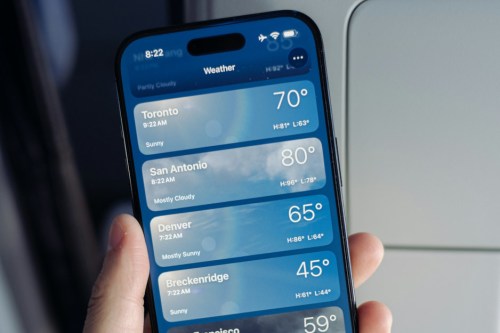
Ever had your business plans go sideways because the weather decided to throw a curveball? Believe me, you’re not alone. Many entrepreneurs overlook how pivotal accurate weather data can be—until that unexpected frost wipes out a week’s worth of sales or a sudden downpour derails your delivery schedules. Imagine running a clothing store and stocking for winter based purely on the calendar, only to be caught off guard by an early cold snap leaving you with cardigans gathering dust when customers are desperate for coats. That’s where a reliable weather API swoops in—not some one-size-fits-all gadget, but a tailored powerhouse that fits the unique rhythm of your business. Whether you’re next door running a coffee shop or moving goods across town, the right weather data can mean the difference between a thriving operation and a costly misstep. Let’s unravel how picking the perfect weather API isn’t just about forecasts—it’s about safeguarding your business against the unpredictable skies ahead. LEARN MORE

Key Takeaways
- Weather data can help businesses anticipate demand, manage operations, and prepare for changing conditions.
- The right weather API depends on a business’s industry, data requirements, usage volume, and budget.
- Visual Crossing combines historical weather data, current conditions, and forecasts in one API, with a Query Builder for users who want to explore data without coding.
- OpenWeather offers a broad range of weather products, but businesses should check which features and usage limits are included in each plan.
- Tomorrow.io is worth considering for businesses that rely on weather monitoring, outdoor operations, and weather-related alerts.
A lot of businesses need information on weather, but they’re not even aware of it until they REALLY need it.
Let’s imagine for a second you own a clothing store (perhaps you actually do).
Yes, you know exactly when the first official day of winter is, but it’s not like people wait until December 21st to buy coats. A cold snap could come out of nowhere in the middle of October, and your store might end up being full of buyers who have nothing to buy because you’re still displaying cardigans.
To cut (what could be) a long story short, you need a weather API, but you probably don’t need the same one as the coffee shop next to you or the logistics company down the block.
Weather APIs That Deserve a Closer Look
The weather’s no longer easy to predict, and something needs to be done about it. Especially so if your entire business relies on weather data.
The reason why picking out a weather API can take a while is the fact that, although they technically do the same thing, most do it in their own way.
The ones we’ll cover on this list will be three examples of how an API can be both accurate and reliable, but still offer something unique.
Visual Crossing

The list starts off with Visual Crossing, and there’s good reason for that – it can save developers A LOT of unnecessary work.
This APi actually puts historical weather, current conditions, and forecasts behind one single API. So, if you’re a developer, that means that there’s no need to jump between A, B, and C just to see what happened last week or what’s supposed to happen next week.
As for the locations it covers, there are many of them all over the world, and for those locations, you can get info on temperature, rainfall, humidity, cloud cover, etc. Searching is easy because you can do it by city, address, postal code, or coordinates.
There’s a free plan available, so take advantage of that and play around before you pay for one of the higher-tier plans. What you get is 1,000 weather records per day for free, and anything above that costs $0.0001 (USD) per record. There’s also a professional subscription for $35 a month (you get 10 million records with that one).
One thing that absolutely has to be mentioned is the Query Builder that lets you put together a weather query and download the results without writing code first.
OpenWeather

If you’ve researched weather APIs before, then OpenWeather is already a somewhat familiar name because it’s a very popular API. OpenWeather offers A LOT of weather products, but you can start with nothing more than basic conditions and forecasts if that’s all you need. Later on, you can add whatever you need.
Once again, take advantage of that free plan to see what the API is about. You get current weather and a forecast for the next 5 days.
The calls are limited to 60 per minute, and it’s 1 million per month max. That’s more than a decent amount to experiment with, especially if you’re still in the process of building your app. If you think you’d need a paid plan, the cheapest one costs $40 a month, and that one gives you 10 million calls. There are 4 paid plans in total, and the most expensive one costs $1,200 a month.
You’re most likely interested in One Call API 4.0, but that one comes with a plan of its own. It gives you 1,000 calls every day, and if you need more than that, you’ll pay $0.0015 for each extra one.
OpenWeather has a good deal of products, and not all of them are covered by the same subscription, so before you pick a plan, check exactly what it includes.
Tomorrow.io

This one’s a little different than the previous two. Tomorrow.io has all your basic weather information, but it’s specifically designed for businesses that need to keep an eye on the weather every day because it’s part of their work.
That means pretty much any work that happens outside, like delivery businesses. If you think this one might be for you, check out the free plan because it’s enough for smaller projects and testing. You get core weather endpoints, monitored locations (although these are limited), standard limits for requests, and basic API alerts. If you’re interested in prices for paid plans, you’ll have to contact Tomorrow.io‘s communications channel and get a quote.
The API gives you current conditions and forecasts.
The standard forecast goes up to 4.5 days, but if you choose a premium plan, that goes up to 14 days.
Conclusion
If you’ve got a small business, then most of your focus goes into lots of different areas, which all need to be managed by you. Your energy and time are scattered all over the place.
Which is normal in a small business. In big firms, you’ve got entire teams each doing one specific thing. In a small one, it’s usually a handful of employees doing most of the things.
This article was created to help you choose the best API available for your small business.
If your business runs on weather data, then you definitely don’t want to spend energy researching dozens of different APIs and comparing them for days on end. You need a shortlist of the best ones, and above is exactly that.
The key here is to realize that even though weather APIs (usually) do the same thing – they provide weather data – they still do it in their own way, and each one has different features. There are also questions about long-term reliability and accuracy. And there’s the price. A small business cannot afford to spend too much of its capital (not yet, anyway).
These three options will all be solid. It’s up to you to decide which one aligns with your specific business the best.

FAQs
Why does a small business need a weather API?
A weather API gives businesses access to current conditions, forecasts, and sometimes historical weather data that can inform operational decisions. Retailers, delivery companies, and outdoor service providers can use this information to anticipate demand, plan resources, and reduce weather-related disruptions.
What is Visual Crossing Weather API best known for?
Visual Crossing combines historical weather records, current conditions, and forecasts through a single API. It also provides a Query Builder that allows users to create weather queries and download results without writing code.
What does OpenWeather offer businesses?
OpenWeather provides several weather data products, ranging from basic current conditions and forecasts to more specialized services. Businesses should review the pricing and usage limits of each product because not every service is necessarily included in the same subscription.
Is Tomorrow.io suitable for businesses that depend on outdoor operations?
Tomorrow.io is designed to support organizations that need regular access to weather information, including businesses with outdoor and weather-sensitive operations. Its API provides current conditions, forecasts, and alert capabilities, with available features depending on the plan.
How should a small business choose the right weather API?
A business should compare forecast coverage, historical data, update frequency, API limits, alert features, and pricing against its actual operational needs. Testing a free plan or trial before committing to a paid subscription can help determine whether the service is suitable.
Pur Luv Dog Treats, Chicken Jerky Dog Treat with Real Chicken Breast, 16 oz | High protein and low fat, Limited ingredient recipe, No artificial flavors or preservatives, Satisfies instinct to chew
$14.99 (as of November 6, 2026 03:21 GMT +00:00 - More infoProduct prices and availability are accurate as of the date/time indicated and are subject to change. Any price and availability information displayed on [relevant Amazon Site(s), as applicable] at the time of purchase will apply to the purchase of this product.)
JBL Tune 530BT (2026) – Wireless On-Ear Bluetooth Headphones (Black) | JBL Pure Bass Sound, Up to 76H Battery Life (19H More Than Previous Gen), Lightweight, 2 Beamforming Mics for Clear Calls
$39.95 (as of November 6, 2026 03:36 GMT +00:00 - More infoProduct prices and availability are accurate as of the date/time indicated and are subject to change. Any price and availability information displayed on [relevant Amazon Site(s), as applicable] at the time of purchase will apply to the purchase of this product.)
YISHU 6Ft Surge Protector Power Strip with 8 Widely Outlets & 4 USB Ports | 3 Side Outlet Extender with 6 Feet Extension Cord, Flat Plug, for Home, Office, College Dorm Room Essentials
$9.99 (as of November 6, 2026 03:26 GMT +00:00 - More infoProduct prices and availability are accurate as of the date/time indicated and are subject to change. Any price and availability information displayed on [relevant Amazon Site(s), as applicable] at the time of purchase will apply to the purchase of this product.)
Roku TV Replacement Remote Control (Official Manufacturer Product) | Simple Setup & Pre-Set App Shortcuts - Compatible with RokuTV & Brand Partner TV Models Only (Not Roku Players)
$9.99 (as of November 6, 2026 03:26 GMT +00:00 - More infoProduct prices and availability are accurate as of the date/time indicated and are subject to change. Any price and availability information displayed on [relevant Amazon Site(s), as applicable] at the time of purchase will apply to the purchase of this product.)














Post Comment