
Why the Job Market Is Secretly Rooting for Older Workers—And How You Can Cash In Before Everyone Else Catches On

Ever poured two decades of sweat, sleepless nights, and sheer grit into building your career—only to find, two years later, that the job you thought would be waiting around the corner… isn’t? It’s a harsh slap of reality many seasoned professionals face today. Think about it: you’ve navigated layoffs, mastered new tech, adapted through shifting management styles. Finding a new role was once a matter of months, if not weeks. But now? The rules have shifted under your feet, and experience alone isn’t opening the doors like it used to. Take the story of a 61-year-old software engineer in Dallas who, after 20+ years in tech, stepped away from his job only to spend nearly two years hustling gigs without landing full-time work. No, it’s not about a lack of talent; it’s about an unforgiving market—age bias, resume gaps, AI advancements, and hiring freezes—all conspiring to complicate the veteran job seeker’s journey. So, what’s the move when playing by the old playbook just won’t cut it anymore? Let’s unpack what’s really going on and how you can pivot smartly to reclaim your value and future.
Two Decades of Experience. Two Years Without a Job. What older job seekers should know.
Think about spending over 20 years building your career. You’ve handled layoffs, new managers, and changing technology. Whenever you needed a new job, you found one in just a few months.
But then, suddenly, what used to work doesn’t anymore.
This happened to a 61-year-old software engineer in Dallas, who told his story to Business Insider. After over 20 years in tech, he left his job in 2024 rather than move. He thought his experience would help him land another role. Almost two years later, he still hasn’t found full-time work. He’s delivering gigs, has used up his savings, and is relying on credit cards to pay the bills.
He got interviews, and some seemed promising. But he never got an offer. He thinks his age, the gap on his resume, and the rise of AI in software are all making it harder for him.
If any of this sounds familiar, you’re not alone—and you’re not to blame. The job market has changed, especially for people with experience. Here’s what’s going on and what you can do about it.
The Job Search Is Getting Longer, Especially After 55
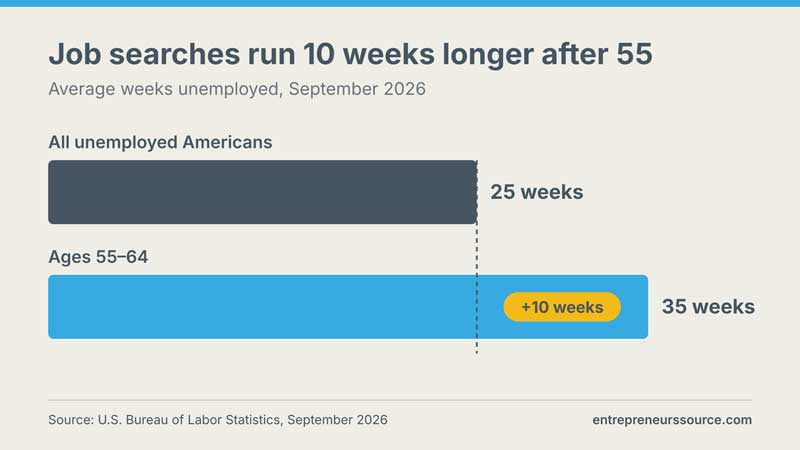
Job searches are taking longer for everyone these days. In September 2026, the average unemployed American had been looking for work for about 25 weeks, according to the U.S. Bureau of Labor Statistics. For people aged 55 to 64, it was almost 35 weeks—about 10 weeks longer, or over two months more.
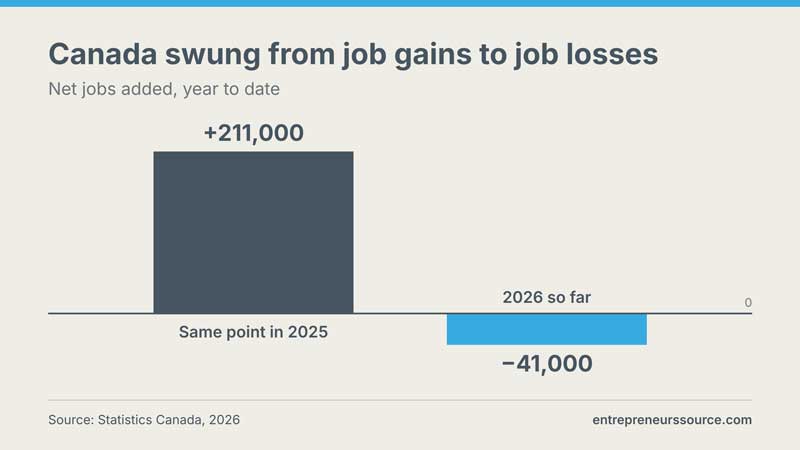
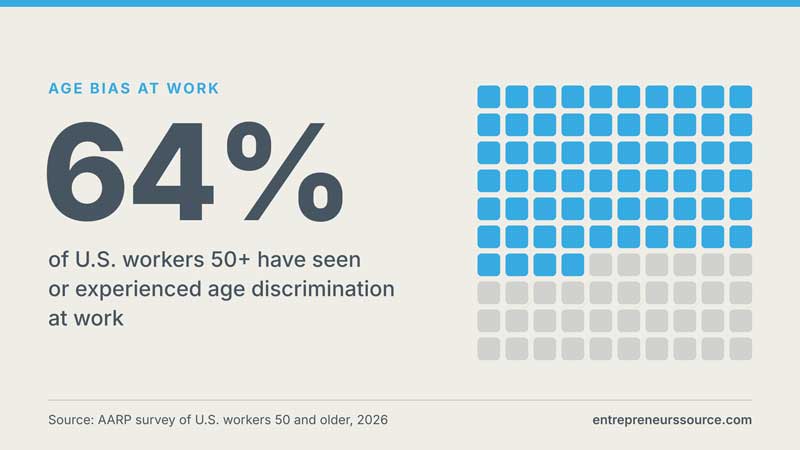
Canada has lost a net 41,000 jobs so far in 2026, compared with a gain of more than 211,000 at the same point last year, and unemployment among workers 55 and older rose to 5.3% in September, according to Statistics Canada. Age bias is one reason. In a 2026 AARP survey of U.S. workers 50 and older, 64% said they had seen or experienced age discrimination at work.
Why Experience Isn’t Opening Doors Like It Used To
Many experienced professionals think their track record should speak for itself. But today, several factors are making it harder to stand out.
- Age bias is real, even if it’s not openly discussed. Employers rarely say, “you’re too old.” Instead, you might hear “overqualified,” “not the right culture fit,” or have interviews that seem positive but then go nowhere.
- Resume gaps are often judged harshly. The longer your search goes on, the more the gap itself becomes a problem. It’s a tough cycle: you can’t get hired because you haven’t been hired yet.
- AI is changing the work itself. In disciplines like software, AI now manages tasks people used to do by hand. Many new job postings ask for AI skills that experienced workers didn’t need five years ago.
- Hiring has slowed down. Many companies aren’t hiring or firing much. Networking is still important, but it’s tough when your contacts say their companies aren’t hiring and they’re also hesitant to leave their jobs.
- Applying online is a numbers game. When you use job boards, you’re competing with hundreds of other candidates and have to get past automated systems before anyone even sees your application.
None of these challenges are about your talent. That’s important to keep in mind. A long job search can make even skilled people doubt themselves. The problem is the market, not your value.
The good news is that the experience employers overlook is what makes you valuable elsewhere. You just need a plan to put it to use.
The Real Cost of Waiting
 A long job search doesn’t just affect your confidence. It also impacts your finances.
Savings that were meant for retirement get spent on rent. Credit card balances grow. Some people turn to gig work, which can help pay the bills but rarely replaces a professional salary. Others start counting the months until they can claim Social Security, even though claiming early can mean a smaller monthly payment for life.
That’s why it’s risky to keep doing the same thing and hope for a different outcome. Every month you wait for the perfect job posting, your Income, Lifestyle, Wealth, and Equity™ goals move further out of reach.
Smart Moves for Experienced Job Seekers
 If your job search is taking a long time, or you’re worried it might, here are some steps that can help:
- Start building basic AI skills now. You don’t have to become an AI engineer. Just learning to use common AI tools in your field shows employers you’re keeping up.
- Change the way you network. Rather than asking, “Are you hiring?” try asking
 for advice, introductions, or insight into which skills are most in demand.
- Refresh your story. Start your resume with your recent results and current skills, not just how many years you’ve worked. Shorten older roles so your age isn’t the main focus.
- Protect your cash. Make a practical budget and get clear on how long your savings can last.
- Get a second opinion on your plan. A fresh set of people can spot options you’re too close to see.
That last step may be the most important. When you’ve been searching for months, it’s hard to look past the next application.
Your Experience Has Value. The Question Is Who Benefits
Many experienced professionals are making a shift. Instead of asking, “Who will hire me?” they’re now asking, “How can I use my experience for myself?”
 Decades of experience give you real strengths—solving problems, leading teams, managing projects, and working with customers. Those skills don’t vanish at 60. In Career Ownership, they become the base for something you control.
A lot of people are already thinking this way. In the TES Generational Career Confidence Survey, 61% said owning something is the best way to protect against AI making their career obsolete. And 49% said ageism at work keeps them in jobs that don’t satisfy them.
Career Ownership isn’t right for everyone, and it’s not a decision to make quickly. But if you’re an experienced professional in a tough market, it’s worth considering.
How a Career Ownership Coach® Can Help
After months of job hunting, it’s easy to make choices out of fear. A Career Ownership Coach® helps you pause and make decisions based on facts and your goals instead.
Career Ownership Coaching™ starts with you, not with a product. A coach will help you:
- Define your goals for Income and Lifestyle. What do you need to earn? How do you want to live? What do you want to build and own?
- Take an honest look at your skills, finances, and risk comfort.
- Explore paths you may not have considered and rule out the ones that don’t fit.
- Research options carefully before committing.
The goal isn’t to push you into ownership. It’s to help you see all your options clearly so you can choose with confidence. For some, that means owning a business. For others, it’s a better plan for their next job. Either way, you stop waiting for the market to decide your future.
Make the First Move Today
If AI and the changing job market have you unsure about your future, try the AI Career Impact Assessment from The Entrepreneur’s Source®. It shows how much your current job could be affected by automation, which skills transfer, how ready you are to adapt, and if ownership might be right for you. In just a few minutes, you’ll find out if you’re a Future-Proof Leader, Adaptation Ready, or in the Vulnerability Zone.
Then, talk to a Career Ownership Coach®. Bring your results and your questions. Your experience still matters. Now’s the time to make sure you benefit from it.
Take the AI Career Impact Assessment
About Your Career Revolution
Our mission is to help individuals explore self-sufficiency as an alternative career.
We help them define their Income, Lifestyle, Wealth, and Equity goals and provide education on the best ways to achieve them. We don’t sell franchises – we help people achieve their dreams of self-sufficiency through business ownership. The approach is different, the experience is different. And it works.
Order on AMAZON
Learn More About Career Ownership Coaching™

Purina Pro Plan Sensitive Skin & Stomach Dry Dog Food, Salmon, 30 lb Bag | Real Salmon & Rice Formula, with prebiotic fiber, easily digestible with omega-6 fatty acids for a healthy skin and coat
$77.48 (as of November 9, 2026 03:23 GMT +00:00 - More infoProduct prices and availability are accurate as of the date/time indicated and are subject to change. Any price and availability information displayed on [relevant Amazon Site(s), as applicable] at the time of purchase will apply to the purchase of this product.)
Amazon Fire HD 10 tablet, built for relaxation, 10.1" vibrant Full HD screen, octa-core processor, 4 GB RAM, 32 GB, Black
$72.99 (as of November 9, 2026 03:26 GMT +00:00 - More infoProduct prices and availability are accurate as of the date/time indicated and are subject to change. Any price and availability information displayed on [relevant Amazon Site(s), as applicable] at the time of purchase will apply to the purchase of this product.)
HANYCONY Surge Protector Power Strip, 1080J, 5 Ft Braided Extension Cord | 8 Outlets 4 USB Ports(2 USB C), Outlet Extender, Flat Plug, Wall Mount, Desk Charging Station, Home Office, Dorm Room ETL
$11.99 (as of November 9, 2026 03:26 GMT +00:00 - More infoProduct prices and availability are accurate as of the date/time indicated and are subject to change. Any price and availability information displayed on [relevant Amazon Site(s), as applicable] at the time of purchase will apply to the purchase of this product.)
Apple AirPods Pro 3 Wireless Earbuds with Active Noise Cancellation | Live Translation, Heart Rate Sensing, Hearing Aid Feature, Bluetooth Headphones, Spatial Audio, USB-C Charging
$199.00 (as of November 9, 2026 03:26 GMT +00:00 - More infoProduct prices and availability are accurate as of the date/time indicated and are subject to change. Any price and availability information displayed on [relevant Amazon Site(s), as applicable] at the time of purchase will apply to the purchase of this product.)














Post Comment