
How Ruth Madeley’s Raw, Unfiltered Portrayal of Judy Heumann Flips the Script on Disability Activism Forever
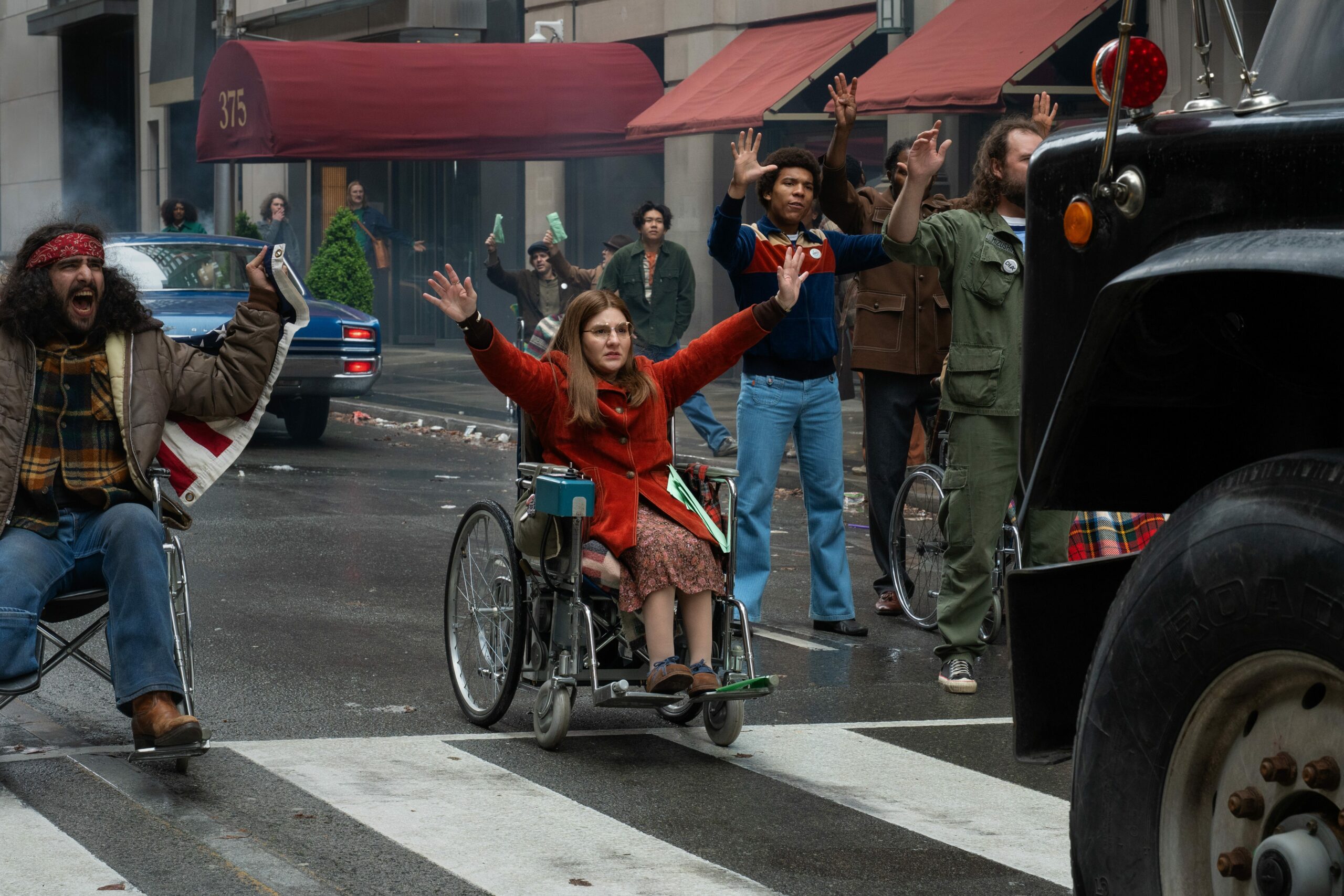
Ever wonder what it takes to flip the script on disability activism — and do it with unapologetic grit, a bit of sass, and an indomitable spirit? Well, buckle up, because Being Heumann isn’t your usual biopic lounging on the sidelines. Right from the get-go, it tosses us into the chaotic, bustling heart of New York City, where Judy Heumann — a whirlwind in a motorized wheelchair — zips through crowded streets, flipping off honking buses like it’s her signature move. Directed by Sián Heder, the Oscar-winning mind behind Coda, this film dives headfirst into the 504 Sit-In, a historic sit-down that reshaped disability rights in America and laid groundwork for the landmark Americans with Disabilities Act of 1990. But here’s the kicker: it isn’t just a history lesson; it’s an emotional rollercoaster filled with laughs, raw moments, and a community storming a building while making their own kind of magic. If you ever thought disability stories were one-note or polite, Being Heumann shatters those myths with the audacity and complexity of a woman who refused to be told “no” — and trust me, you’ll be thinking about those curb cuts differently after this. Ready to meet a real rebel who changed the world? Let’s dive in. LEARN MORE
 4 min read
Being Heumann, the new film about disability activist Judy Heumann, played by Ruth Madeley, opens with one of those classic New York City street montages: the morning rush hour commute, a close-up of feet pounding the sidewalk, yellow cabs buzzing by. Then, a wheelchair speeding down a bumpy road, splashing in puddles. Judy, a woman riding a motorized wheelchair in the middle of the road, weaves between traffic and over steaming manholes. She crosses the street, but there are no ramps on the sidewalk, so she gets back on the road, zig-zagging between drivers yelling at her to get out of the way. When a giant city bus gets behind her and threateningly honks its horn, Judy simply raises her right hand, gives the driver the middle finger, and continues on her way unfazed. We are barely three minutes into the film.
Written and directed by Sián Heder, whose previous film Coda, won Best Picture and Best Adapted Screenplay at the 2022 Academy Awards, Being Heumann chronicles the 504 Sit-In, which is the longest non-violent occupation of a federal building in US history which led to the passing of Section 504 of the Rehabilitation Act which, among other things, made it illegal to discriminate on the basis of disability, and also called for making public buildings and transportation accessible, and would set the basis for the American with Disabilities act, 1990’s landmark civil rights legislation.

Ruth Madeley
“So often, disabled characters in particular—and especially women—are very softly introduced,” says Madeley a few days before the movie debuts on AppleTV+. “[But] This is who Judy is. She was doing this every day. You’re completely captivated by, ‘Oh my god, where is this woman going?’ I remember her brother said there were so many times she nearly got hit by a car.” Judy’s unapologetic attitude is the driving force behind her activist group—even if it sometimes puts her at odds with others.
There is a popular saying on social media, “Well-behaved women rarely make history,” and yet so often women—even activists, or especially activists—need to fit into neat preconceived notions of how to respectfully ask instead of demand for change. “[Judy] wasn’t always likable. She was an asshole sometimes, she was stubborn and she could railroad people sometimes… but I think that’s what makes her so compelling,” says Madeley. “The audience understands where she’s coming from because she had years of being told ‘No, you can’t go to school,’ ‘No, you can’t be a teacher,’ ‘You can’t come in here, you’re a fire hazard’… just years of injustice. And she was done with it. She was tired of it.” Madeley adds, “I was so excited that Sián and Rebekah [Tausig, who co-wrote the script], didn’t round off Judy’s edges because she was a complex person. She was messy, and I love playing a messy, complicated woman.”
Being Heumann tells the story of one of the most important leaders of disability rights in American history, and has already broken ground for its diverse cast of actors who are disabled for its main roles. Still, Madeley rejects its purpose as a mere “history lesson.” “This is what people want to go to the movies to see. They want to laugh, they want to cry, they want to go on a ride with a bunch of people storming a building when they have absolutely no idea what they’re doing,” she explains. The movie does in fact have the ebullience of the classic “us against the world” trope (my mind goes to Empire Records, a personal favorite, except with higher stakes)—as the activists hunker down inside the Federal Building in San Francisco, they turn the space into a temporary utopia: the Black Panthers bring them food and weed and they host classes and panels on topics like sexuality. (In one of the best scenes in the movie, as Judy is getting intimate with Jim Pechin, her fellow activist who’s been flirting with her since the beginning of the movie, she says, “I’m going to tell you what I want and you’re going to do as I say.” What other movie has ever displayed this level of control and empowerment in a sex scene? “The complexity and the different nuances of that scene really interested me, and I’d never seen anything like that on screen before,” Madeley explains.)

The cast of Being Heumann
Another scene that broke ground on how we’ve seen disability on film came early on, when Judy is in bed waiting for her home attendant, who is running late, and Judy really has to go to the bathroom. “Movement fascinates me on screen, it always has,” Madeley reveals. “What really interested me was how Judy was so quick and forever moving and busy when she was in her chair, like she is free in her chair and then the stark contrast to how vulnerable and dependent on other people when she’s out of her chair. That scene is really poignant because Sián didn’t make it choppy, she wanted it to be in real time, and she wanted the audience to feel the rigamarole. Judy has no core strength, so she has to be balanced, she has to move the plates on her wheelchair, then she’s transferred, then she has to move the plates back, take the locks off… There are all these different stages just to be able to use the bathroom.” She adds, “Honoring Judy’s physicality was just as important to me as honoring all the different layers of her personality.”
Madeley, who also portrayed British disability rights advocate Barbara Lisicki (in the BBC film Then Barbara Met Alan), wants people to have fun while watching Being Heumann. That said, she also hopes they come away with “a better understanding of the physical world around them.” She continues, “Every time I go down a curb cut, I’m like, ‘Thanks, Judy.’ That curb cut wasn’t just there, it didn’t just appear. It was fought for.”

Pet Pouch Hoodie,Cat Hoodie with Pouch,Kangaroo Sweatshirt with Dog Pouch Side Zip Pocket Drop Shoulder Sweatshirt Big Size Front Dog & Cat Carrier Sweatshirts
$29.99 (as of November 16, 2026 03:27 GMT +00:00 - More infoProduct prices and availability are accurate as of the date/time indicated and are subject to change. Any price and availability information displayed on [relevant Amazon Site(s), as applicable] at the time of purchase will apply to the purchase of this product.)
Automatic Litter Box, Self Cleaning Litter Box with Safety Sensors | Three layers of protection—infrared sensing, front-step response, and a half-gear limit—support safer automatic cleaning.
$99.98 (as of November 16, 2026 03:27 GMT +00:00 - More infoProduct prices and availability are accurate as of the date/time indicated and are subject to change. Any price and availability information displayed on [relevant Amazon Site(s), as applicable] at the time of purchase will apply to the purchase of this product.)
Hefty Poop Bags for Dogs, Heavy Duty, Unscented, 9x13in, 180 bags | Extra Thick, Compatible with Standard Dispensers, Leak Resistant, Raised Texture Material for Easier Opening, Hides Messes
$9.98 (as of November 16, 2026 03:27 GMT +00:00 - More infoProduct prices and availability are accurate as of the date/time indicated and are subject to change. Any price and availability information displayed on [relevant Amazon Site(s), as applicable] at the time of purchase will apply to the purchase of this product.)
Sony WH-CH530 Wireless On-Ear Bluetooth Headphones with Microphone, Black | Comfortable Lightweight Design, Up to 55 Hrs Battery with Quick Charging, Multipoint Connection, Clear Calls, Swivel design
$48.00 (as of November 16, 2026 03:37 GMT +00:00 - More infoProduct prices and availability are accurate as of the date/time indicated and are subject to change. Any price and availability information displayed on [relevant Amazon Site(s), as applicable] at the time of purchase will apply to the purchase of this product.)













Post Comment