
Bitcoin Doesn’t Flinch as Hackers Swipe $6.3 Billion from Binance—Here’s Why the Market’s Still Playing Strong!
So here’s a head-scratcher for you: imagine losing a staggering $6.3 billion in just twenty minutes, all while the entire market barely bats an eye. Nope, this isn’t a plot from a cyber-thriller—it’s exactly what went down when Binance’s hot wallets got cleaned out by a North Korea-linked hacking crew late October 2026. Now, you’d expect Bitcoin’s price to nosedive faster than a rocket with a busted engine… but nope, it shrugged off the hit and carried on like a champ. To me, that’s not just fascinating—it’s a seismic signal about the resilience and evolving trust in crypto markets. How can a theft bigger than any before—across over ten blockchains—seem like just a blip on the radar? Well, Binance’s play of footing the entire bill and making every user whole without missing a beat plays a huge part. It’s a wild mix of tech, nerves, and deep pockets that’s rewriting the rules on how we think about digital asset security. Ready to dive in and unpack why this one-day crypto heist didn’t turn into a disaster? LEARN MORE
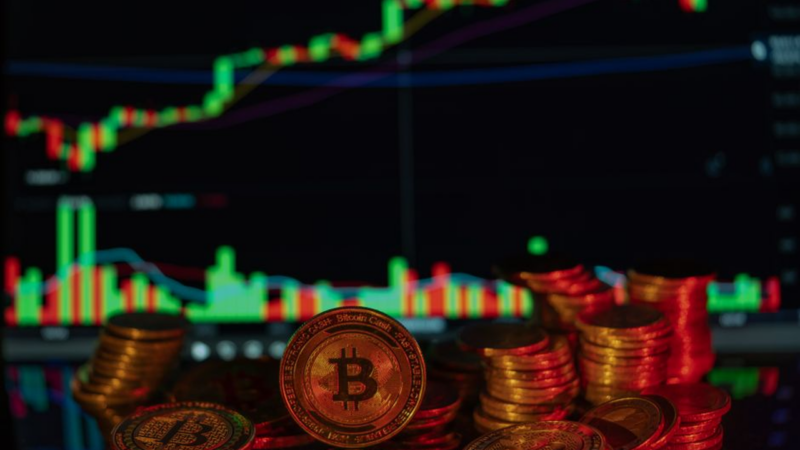
A North Korea-linked theft drained Binance hot wallets in about 20 minutes, yet Bitcoin’s price barely flinched
Someone stole approximately $6.3 billion from Binance on October 29, 2026. Bitcoin shrugged, took a modest hit, and went back to business.
That reaction is the real story. The breach is now the largest single digital-asset theft on record.
Twenty minutes, ten-plus chains, one very bad day
The attack hit Binance’s hot wallets. Think of a hot wallet as the cash register at the front of the store, connected to the internet so customers can withdraw quickly, unlike the vault in the back.
The theft spanned more than ten blockchains and unfolded in roughly 20 minutes. Total losses landed somewhere between $6.3 billion and $6.36 billion, depending on the tally.
The FBI and blockchain analytics firms tied the operation to TraderTraitor, a North Korean hacking group. The incident eclipsed the Bybit breach from 2025, which had previously held the unwanted title.
Binance pays the bill
Binance covered the losses entirely, using its own corporate funds and reserves.
Users were made whole. Withdrawals resumed within days of the breach.
The exchange also pushed out updates to its proof-of-reserves. Proof-of-reserves is a public accounting exercise meant to show an exchange actually holds the assets it owes customers.
The market noticed. Bitcoin fell approximately 5% after the breach, sliding to around $76,400.
Then it stabilized. The recovery started quickly rather than spiraling into a broader sell-off.
Following the money
The hackers have not had an easy time spending their haul. As of late November 2026, coordinated action by authorities had frozen or seized roughly $2.85 billion of the stolen assets.
Those freezes came through a mix of legal measures and tracing tools built to flag and block illicit transfers.
An estimated $2.35 billion to $2.67 billion still sat in wallets linked to the attackers as of late November.
Some of the funds have been run through Bitcoin mixers and cross-chain protocols. Mixers pool coins from many users to blur who sent what to whom, while cross-chain protocols let assets hop between networks.
Why the muted reaction matters
Binance’s decision to cover losses is likely a big part of the muted market reaction. When users do not lose money, contagion fears have less fuel.
More than $2.8 billion locked down within about a month undercuts the old idea that stolen crypto simply vanishes.
What this means for investors and exchanges
A user-friendly outcome here depended on one exchange having the reserves to eat a loss of this size. Not every platform has that cushion. A similar breach at a smaller exchange could end very differently for its customers.
The attack also exposes how vulnerable hot wallets remain, even at the largest venues. Draining funds across more than ten blockchains in about 20 minutes is a stress test that security teams across the industry will be studying closely.
The North Korean attribution adds a geopolitical layer. State-linked groups have strong incentives to keep targeting crypto platforms.
The key items to watch are whether the remaining $2.35 billion to $2.67 billion in hacker-linked wallets gets frozen or laundered, and whether Binance’s reserves hold up under continued scrutiny. Movement of those funds through mixers could also renew regulatory attention on privacy tools.
Disclosure: This article was edited by John Chen. For more information on how we create and review content, see our Editorial Policy.

QHOHQ for iPhone Duo Inner Screen Protector + Outer Screen Tempered Glass | Easy Installation, EPU Film, HD Clear, Crease Resistant, Bubble Free, Case Friendly, with Camera Lens Protector, 2+2+2 Pack
$16.99 (as of November 23, 2026 03:38 GMT +00:00 - More infoProduct prices and availability are accurate as of the date/time indicated and are subject to change. Any price and availability information displayed on [relevant Amazon Site(s), as applicable] at the time of purchase will apply to the purchase of this product.)
Pet Honesty Glucosamine Hip & Joint Supplement for Dogs, 90ct Chews | Vet backed hip and joint supplement for dogs with glucosamine chondroitin & peanut butter, supports mobility, eases stiffness
$19.59 (as of November 23, 2026 03:27 GMT +00:00 - More infoProduct prices and availability are accurate as of the date/time indicated and are subject to change. Any price and availability information displayed on [relevant Amazon Site(s), as applicable] at the time of purchase will apply to the purchase of this product.)
Amazon Alexa Tablet 11 (all-new), 8GB RAM, 128GB, 11″ stunning 2.5K display, All-day battery, With Google Play, Designed for Alexa+, Graphite
$219.99 (as of November 23, 2026 03:38 GMT +00:00 - More infoProduct prices and availability are accurate as of the date/time indicated and are subject to change. Any price and availability information displayed on [relevant Amazon Site(s), as applicable] at the time of purchase will apply to the purchase of this product.)
Fi Series 3+ Smart GPS Dog Collar & Pet Health Tracker, Gray, Large | Real-time location tracking device, Escape Alerts, virtual fence, health/activity monitoring, up to 3 months battery
$64.50 (as of November 23, 2026 03:27 GMT +00:00 - More infoProduct prices and availability are accurate as of the date/time indicated and are subject to change. Any price and availability information displayed on [relevant Amazon Site(s), as applicable] at the time of purchase will apply to the purchase of this product.)











Post Comment