
Ray Nicholson’s Secret Struggle: Why That Smile Hides More Than You Think—Uncover the Untold Story Today!
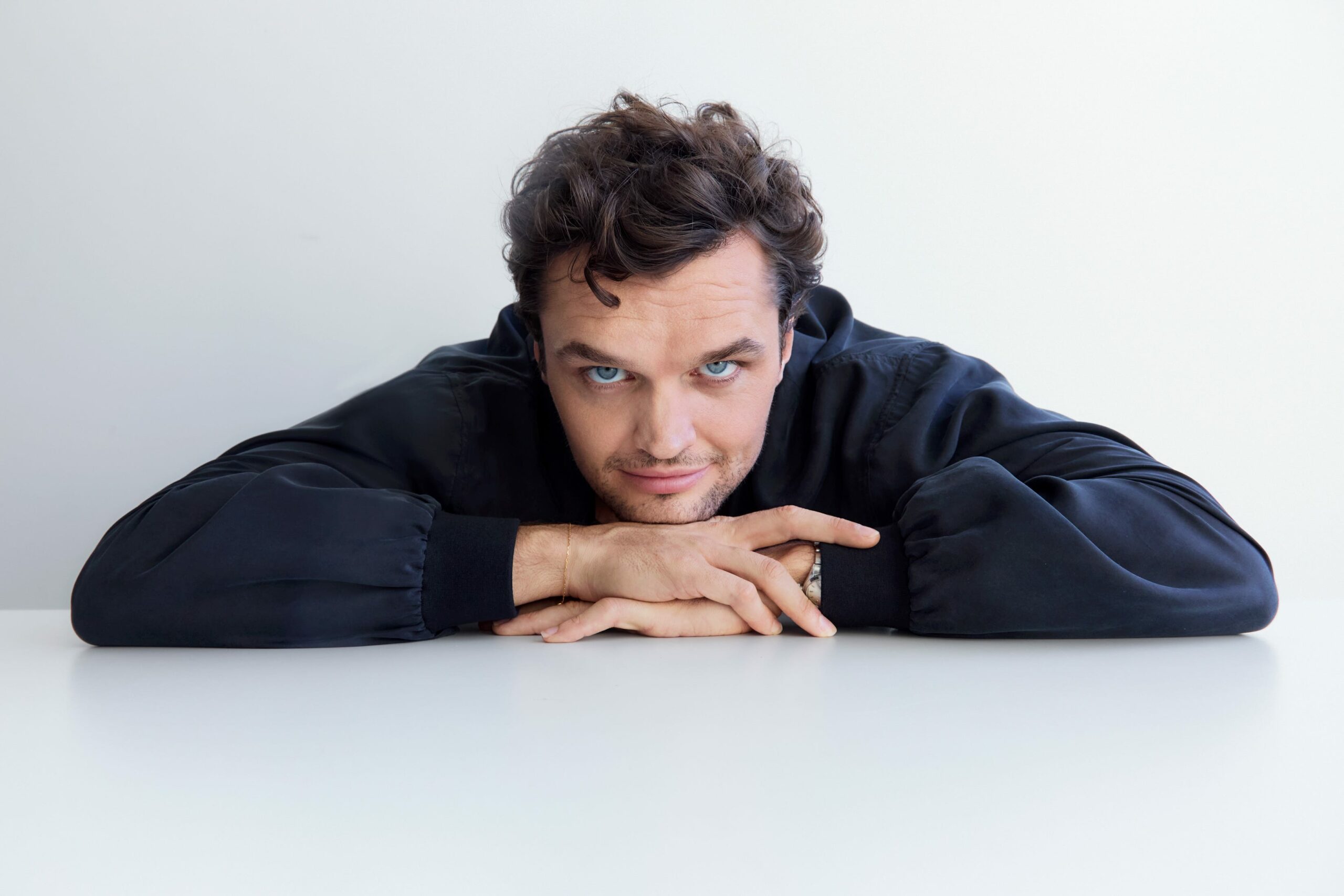
Ever wonder what it’s like to carry not just a famous last name, but the weight—and wit—of a legendary grin on your face? Ray Nicholson, son of the iconic Jack Nicholson, isn’t just flashing a familiar smile; he’s wielding it like a secret weapon. Between sips of iced coffee and the relentless grind of press days, Ray’s that rare blend of intensity and charm, navigating roles that range from war dramas to nerve-jangling thrillers. But beneath the surface, there’s a story of grit and heart—a trajectory that detours from football fields to film sets, marred by hardship but fueled by raw passion and unshakable faith in the journey ahead. Dive into Nicholson’s world, where charisma isn’t just in the genes—it’s in every determined step forward. LEARN MORE
 11 min read
This article was featured in MH Flex, our monthly newsletter recommending the one in-depth interview you need to flex your pop culture knowledge. Sign up here to get it first.
“I’M RUNNING PURELY off of fumes and caffeine,” Ray Nicholson says, with a glimmer in his eye and the end of his mouth curled into a slight grin. He points to a half-finished iced coffee sitting in front of him and nods his head. “It’s good.”
That grin, it turns out, is a weapon. It’s a smile that, somehow, employs both his dimples and furrowed brow just as much as his mouth and teeth. It’s the kind of smile that stops you in your tracks when he flashes it in the middle of a sentence. It’s also got a kill count on-screen, evoking something different in each context. Whether he’s cutting the tension in a war drama, like in his latest movie, Netflix’s The Mosquito Bowl; or making single frames into nightmares, as in Smile 2; or playing an unhinged stalker in Borderline or an unstable boyfriend in I Love You Forever—it’s clear Nicholson knows what he’s doing with that thing.
It’s also a familiar grin, because it’s virtually identical to a rather iconic one: that of his father, Jack Nicholson, whose smile has been on display in timeless performances in movies like The Shining and One Flew over the Cuckoo’s Nest. You know the smile I’m talking about.
And today? Nicholson the younger is putting that grin to a new use: namely, masking whatever else is going on inside as he glugs away at that coffee and tries to make it through a couple of grueling days of press, press, press. “It’s somewhere between hypnosis, interrogation, and a Miss America pageant,” he says with a laugh, as the smile flashes again.
The Mosquito Bowl, which comes from director Peter Berg (Friday Night Lights, Lone Survivor), follows a group of soldiers whose college football rivalries evolve into a close-knit brotherhood on the World War II battlefield. It’s based on the true story of a football game (the titular Mosquito Bowl) that was actually played. The film is based on a book of the same name by Friday Night Lights author Buzz Bissinger.
If Nicholson is tired, one would never know. It’s not just the smile, though of course that doesn’t hurt. To me, he seems excited, unafraid of diving into stories about filming The Mosquito Bowl in Australia and bonding with costars Bill Skarsgård, Nicholas Galitzine, and Tom Francis over hours of daily football and military drill training.
This all feels like a natural fit for Nicholson, who played football in high school and planned to play at Boston College until a run-in with MRSA cut that dream short. His performance and his relationship with his costars make the movie. But there’s more than that. In his career thus far—and in our conversation—Nicholson has proved himself as someone who’s got a certain type of charisma that pops off the screen, an inherently watchable face, a screen presence that simply can’t be taught. It’s almost as if it’s in his genes.

MEN’S HEALTH: You have a penchant for playing very intense roles. Why do you think that is?
RAY NICHOLSON: It’s interesting. As a young actor… It’s sort of what you get. You know what I mean? I guess I have an intense face. I guess I’m intense. But ultimately, the challenge of becoming an artist is learning how to put 100 percent of your heart and soul into something and not leave anything behind. That’s the only way I feel comfortable on camera, and that’s the joy of doing it. I find fulfillment in that hole in the soul when I have that intensity. The mundane is more difficult for me; I’m trying to learn how to enjoy that.
MH: Your character, Tony, in The Mosquito Bowl, is a normal guy, more or less, but he’s in this extraordinary situation. Did it feel like a bit of fresh air to get to take on that kind of role compared to something like Smile 2, for example?
RN: Yeah. On Smile 2, I was very much a day player. But it never really shifts. Ultimately, I’m there to be of service. Especially in Smile 2, Naomi [Scott] is acting her ass off all day, and they might have three seconds for one shot I’m doing all day, and I might have been there for 14 hours, but it doesn’t matter. I’m there for a day, and just to be there and be good vibes.
But this, we were there every single day. I’m glad I learned so much from Pete and Bill. As an artist, as a human being, I learned how to have grace with the cards I was dealt. I was dealt very beautiful cards, but you can play a good hand very poorly. I think I’ve finally found grace with my circumstance.

Nicholson in The Mosquito Bowl.

Nicholson in The Mosquito Bowl.
MH: Did shooting on location in Australia help you feel immersed?
RN: For sure. We were all away from family—all we had was each other. Which was really beautiful and a challenge, but exactly what it needed. And when you get a script like that, all that brotherhood is baked in and then all you need is buy-in. And we fell in love with each other. Me, Tom, and Bill, we’ve traveled the world. We went to the African World Cup final. They’re my best friends. I think about them every day. It’s amazing to think I didn’t know them before this, and now they’re people I think of every single day. We shot all outdoors, all sequentially, in order.
MH: That’s pretty rare, right?
RN: Insanely rare. It’s insanely rare, because it makes it so much easier. I know how I felt, because I did it yesterday.
MH: Can you tell me about your relationship with football? Obviously, it makes sense with this movie.
RN: The first sport I played was basketball. I grew up a really chubby kid. I was not cool. And my sister was the most popular, beautiful girl in elementary school, and I was the fat nerdy brother that liked Yu-Gi-Oh! and whatever.

MH: Yu-Gi-Oh! was awesome.
RN: Yu-Gi-Oh! was sick, objectively. And I played Pokémon. When I was about 9 years old, I was really overweight, so I found AAU basketball. I remember my first practice, I was jogging around and I literally tripped over half court and these guys picked me up. That was the first time I felt something like that. Then, when I got a little bit older, I played Pop Warner. And, once again, I was a bit chubbier, but I was fast and I had a good arm. I wanted to play quarterback, they wanted me to play offensive line. And then I became this chubby Michael Vick, trucking other kids [Laughs]. Kind of a beast. And that was the first time I felt confident.
MH: It can be powerful.
RN: I’m confident between these lines. And I could be angry. My anger was always so self-directed. I had so much shame. That was the first place I was like, “Ah, I can express this.” That’s a really important thing for kids.
I was very happy, a reporter in one of my Zoom interviews was like, “You averaged 8.94 yards a carry. You want to tell them what that means?” I was like, “That means I was fucking good!” [Laughs]

Nicholson with his father, Jack Nicholson, at a Lakers game in 2016.
MH: Totally.
RN: It was the first thing that gave me confidence, and you have that feeling of family. And you have that tough love. You have this love through discipline and through pain, but that’s the love between men. That was so important to me, and that saved my life. It came into my life exactly when I needed it, and I really struggled when I lost it. I got a staph infection that turned into MRSA. My arm was so inflamed, they drew a line on my arm and were like, “If the infection gets past here [points to biceps], we’re cutting your arm off.” I lost 50 pounds in a week.
MH: When was this?
RN: My senior year of high school. I thought I was going to go to Boston College and play football. Not on scholarship, but I went to the camp and they were like, “You could be a deferred walk-on,” or whatever. I thought I was going to be like Jerry Maguire—that’s what I wanted to do. I came out of this semi-comatose thing and I was like, “I want to be an actor. I’m just so scared. I’m just so fucking scared.” And then I just slowly dipped my toe in. I’m glad everything’s happening now, because I have the head on my shoulders to handle it.
MH: You went through something really tough.
RN: Yeah. If I was a kid, I don’t even know if I would be alive, to be honest with you. I’m so grateful that it happened on a bigger plan than on mine. A lot of the things I was originally attracted to would coil like a flame hat now. It’s all a big blessing.

MH: What was it like working with Peter Berg?
RN: Bill and I are used to growing up with eccentric men, you know what I mean? We kind of understand it. It’s one of those things where, with eccentric men, it requires you to butt heads and be like, “I didn’t like that, but I like you.” You know what I mean? Bill’s always like, “You’re Pete’s favorite son. You guys fight, but he loves you the most.” We really had this familial thing. Bill was the older brother, Nick and I were the middle brothers, and Tom was the little brother.
We all worked so hard, and we wanted to fight for what was best. I really respect Pete. I love him as a filmmaker. I love him as a man. I really respect him as a leader, because you’re going to meet him exactly where he’s at. And I respect that. I think conflict is where art is made. We’re too conflict averse, and I really admire Pete for his style and his honesty.
MH: When you’ve gone through this kind of experience, how do you come down afterward when it’s time to go home?
RN: There’s this mourning process. The last week of filming, we were all crying. The cast was crying, the crew was crying, makeup was crying. It was really intense. And we fell in love with the experience and we fell in love with each other. Before Bill met us, he went to Okinawa. And he actually took a charcoal etching of the gravestones of Tony Butkovich, Bob Bauman, and Dave Schreiner, and he gave them to us on the last day. And we all were tearing up and we wrote a letter to each other and to the men that we played. I think part of it was you have to let go.
It took me a while to go home—I didn’t go straight home. Me and Tom went to Sydney and just hung out at the beach with some friends we had made there. We went to go see Oasis.

Nicholson in Smile 2.
MH: That’ll help.
RN: For sure. But also, it’s like you have this fear of do we really love each other or were we just working on this project? It’s been really cool in the months since we started shooting to see how our relationships have developed. We’ll always have The Mosquito Bowl.
MH: What did you do after?
RN: It just took a while for me to get home. I really relish being alone. I really needed time to reset. I went through a breakup right when I got home. I almost took six months off, not even looking for a job. I finished writing the script I wanted to do, but I really just took some time. I always have to take time to be like, “What am I if I’m not acting?” And that’s a hard thing.
MH: What was your wake-up point of, like, “Okay, time to get back to it”?
RN: I finished that script and I was like, “Well, I’m not a writer!” I’m really proud of what I did, but I think it was just like, “Oh.” We were getting closer to press, and I was like, “Oh, geez.” Like, “Oh god, should I have done a job already?”

MH: And what’s it like at this stage in the process?
RN: Going into press, Bill and I were like, “We’re not going to see the final cut. We’re promoting purely on good vibes. We’ve fucking got this.” And we watched it during the premiere, and I cried. I was so happy. I was so proud of how it turned out.
We were talking about feeling like frauds. I think if someone handed me a script and was like, “Here, you play Ray Nicholson,” I’d be like, “You could probably find somebody better.” There’s always that fraudulent thing, and we all feel it, and that’s the beauty of it. It comes and goes. Now I feel a little bit better about what’s coming next, because I feel really proud of this movie.
MH: How do you think about the future?
RN: I look forward to more opportunities with more filmmakers I love and respect. I also operate from a place of faith that the right thing will come.
My dad’s my hero. I think he’s magic. I love him more than anything. When I was first doing a Meisner exercise and you’re knocking, coming through the door, I was comparing myself to, Is that worthy of three Oscars and a 50-year career? So much of my practice has just been learning to be present. And so now I have less moments when I’m in my car driving, crying, thinking about I’m getting an Oscar, and my dad… And that’s a good thing. I’ve just gotten way more present about it.
I’m also open to the idea that this might not be right for me. The world might take me in another direction. I was really closed off to that before. Because I thought that if I didn’t do something, I was unworthy of my life. I think a lot of that is just therapy. And I’m finding the real joy in it.
I lost football and I was really lost in my life, and I didn’t know what to do. Acting has slowly become the thing that saves my life. It’s not only what gives me a purpose, but it’s the tool I meet myself with. I don’t know who the hell I am. I don’t really remember anything from my life. And then somehow, when I read a script, I’m like, “Oh, that is you.” When I first started, I didn’t really have those kind of goals. I don’t want to say because it’s bullshit, but that’s the industry. That’s beautiful, and I love the industry, but I’m more focused on how I approach every day.
MH: Totally.
RN: That was the key thing, and that’s all personal life stuff. But the key is being of service, and I believe that ultimately, I’m in the service industry. When I think about my dad, he makes me smile every time I see him on-screen. I want some kid somewhere to smile every time he sees me.
MH: Last question. Do you have a favorite or most rewatched movie of your dad’s?
RN: It’s tough. I’m a sucker. It’s like every PTA or Kubrick movie you watch, you’re like, “That’s my favorite.” I didn’t watch my dad’s movies until I was 18. I love Cuckoo’s Nest. I love The Shining. I always come back to The Last Detail. For some reason, I really fucking love that movie. I think it’s because he loves it so much and he’s like, “It’s underappreciated.” So I’m like, “But I love it, Dad!” I love watching his movies. It’s a cool thing, and I want my kid to watch my movies someday.
MH: Right.
RN: I just want to make people happy and smile. And break their hearts a little bit.
This interview has been edited for length and clarity.
Photographs: Florence Sullivan
Grooming: Kat Thompson
Visual Director: Sally Berman
Creative Director: Jamie Prokell

Evan is the culture editor for Men’s Health, with bylines in The New York Times, MTV News, Brooklyn Magazine, and VICE. He loves weird movies, watches too much TV, and listens to music more often than he doesn’t.

Dog Poop Bags - 4 Rolls, Total 60 Bags, Extra Thick & Strong, 100% Leak Proof Dog Waste Bags, Portable Cordless High Power for Car, Home, Office, Pet
$1.50 (as of November 23, 2026 03:27 GMT +00:00 - More infoProduct prices and availability are accurate as of the date/time indicated and are subject to change. Any price and availability information displayed on [relevant Amazon Site(s), as applicable] at the time of purchase will apply to the purchase of this product.)
Coca-Cola Zero Sugar Soda Soft Drink Fridge Pack Cans, 12 fl oz, 12 Pack | Carbonated cola soda pop with zero calories
$8.42 (as of November 23, 2026 03:24 GMT +00:00 - More infoProduct prices and availability are accurate as of the date/time indicated and are subject to change. Any price and availability information displayed on [relevant Amazon Site(s), as applicable] at the time of purchase will apply to the purchase of this product.)
Beats 360 Wireless Over-Ear Headphones – Black with Black Knit Cushions | High-Fidelity Noise-Cancelling Headphones with Interchangeable Knit Cushions, Sweat & Water Resistance, Incredible Comfort
$249.00 (as of November 23, 2026 03:38 GMT +00:00 - More infoProduct prices and availability are accurate as of the date/time indicated and are subject to change. Any price and availability information displayed on [relevant Amazon Site(s), as applicable] at the time of purchase will apply to the purchase of this product.)
Organic Banana Bunch (4-5 Count)
(as of November 23, 2026 03:24 GMT +00:00 - More infoProduct prices and availability are accurate as of the date/time indicated and are subject to change. Any price and availability information displayed on [relevant Amazon Site(s), as applicable] at the time of purchase will apply to the purchase of this product.)







Post Comment