
Why Are Nearly Half of US Giants Betting Big on Irish Jobs in 2027? The Answer Will Surprise You.

Ireland’s charm isn’t just about the lush landscapes or the Guinness pouring perfectly in a cozy pub — it’s quickly becoming the shining beacon for US multinationals scouting for investment gold. Can you imagine 9 out of 10 US companies keeping their thumbs firmly up on Ireland as a prime location for growth? Well, that’s exactly what the latest American Chamber of Commerce Ireland (AmCham) survey reveals. And get this — 94% of these companies are either maintaining or boosting their workforce in the Emerald Isle, with almost half planning fresh hires in 2027. It’s like Ireland is hitting the sweet spot in the global business dance, straddling the line between opportunity and challenge. But the question that tickles my mind is, with rising labor costs and pesky infrastructure hiccups looming, can Ireland keep its momentum without tripping over its own success? For anyone intrigued by how savvy businesses navigate these crossroads and what it all means for jobs and innovation, the story unfolding here is pure gold. LEARN MORE
Nine in 10 US multinationals remain positive towards Ireland as a location for investment, according to the latest American Chamber of Commerce Ireland (AmCham) member survey.
Some 94% of companies surveyed will either maintain or increase employment in Ireland next year, including 44% that are planning to add jobs in 2027.
Over 245,000 people work for US companies in Ireland while more than 200,000 work for Irish firms in the US.
The findings were released to coincide with AmChan’s annual Thanksgiving Lunch, which this year will be attended by European Commissioner Michael McGrath as guest of honour along with 600 members and guests.
Nearly all (97%) US multinationals surveyed expect the strategic importance of their Irish operations to be maintained or increased, with 59% expecting it to increase
Rising labour costs and wage pressures were cited as the biggest risk to continued investment in Ireland over the next five years, while cost competitiveness was cited as the most important challenge to expansion.
A third (32%) said cost competitiveness was the greatest challenge to investment and expansion, followed by housing supply (24%).
When asked about the greatest risks to continued FDI in Ireland over the next five years, respondents cited rising labour costs and wage pressures (29%) as the leading risk, followed by housing (15%) and public infrastructure constraints (12%).
Four in five (82%) said their organisation’s future growth and competitiveness would be supported if the state prioritised investment in housing, electricity grid capacity and energy infrastructure.
Public transport and regional connectivity (50%) and airport and international connectivity (44%) were the next most-cited priority areas for state investment.
Infrastructure constraints have had an impact on investment, with 35% saying capacity and availability increased the cost of planned investment or expansion, and 26% said it led them to consider alternative locations.
On skills, 44% of respondents are experiencing difficulty filling vacancies.
Of those, 58% cited a shortage of specialist skills as the most significant barrier, up from 44% in Q4 2025, while housing as a barrier fell to 13% from 36%.
Three quarters (74%) expect to upskill or reskill existing employees to use artificial intelligence effectively over the next three years.
A further 71% expect greater demand for employees with core business expertise combined with the ability to apply AI, while 65% expect increased demand for AI risk management, governance and compliance skills.
Nine in 10 said the strength of Ireland’s universities and research ecosystem has influenced their decision to locate or expand high-value activities here.
“What is clear from our members is that a real sense of optimism has emerged this year. 60% expect their Irish operations to become more important to their global business over the next three years, and 9% plan to increase or maintain headcount in the coming year,” said Paul Sweetman, CEO of AmCham.
“Members are growing their footprint and impact here by accelerating innovative projects and strategic investments. With over 245,000 people now working for US companies in Ireland and over 200,000 working for Irish companies in the US, this is exceptional growth in the two-way US-Ireland business relationship.

“Ireland is now the seventh-most competitive country in the world, and the policy, diplomatic and business efforts of recent years have yielded real dividends. But we must not allow success to breed complacency.
“Members are telling us that housing, grid capacity and cost competitiveness will shape where the next investment goes. National competitiveness is paramount so we must work to stay relevant and open for business, or risk dropping off the list of destinations to invest in.”
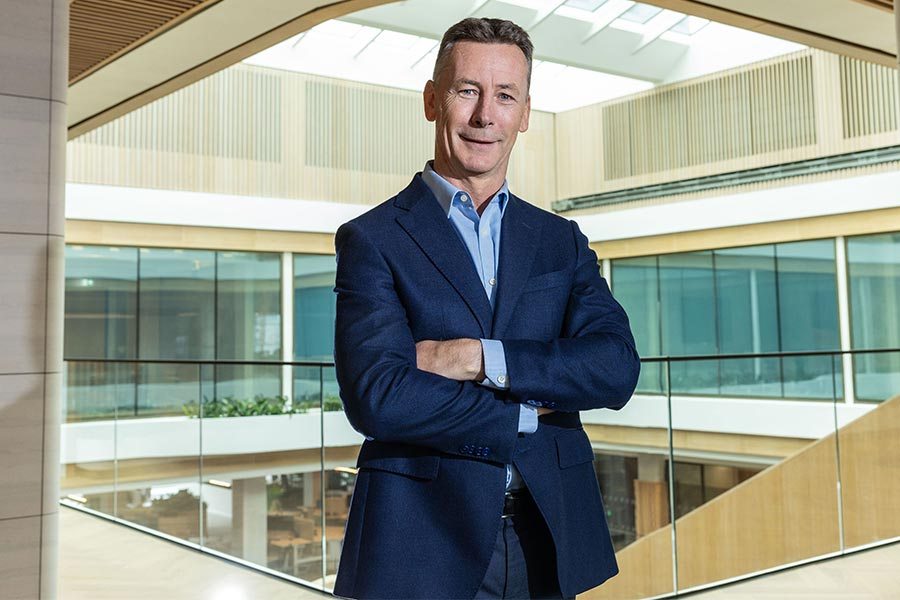
Photo: Paul Sweetman, CEO of AmCham speaking at the AmCham Ireland Thanksgiving Lunch in 2024. (Pic: Conor McCabe photography)
Heated Cat House for Outside, Insulated Large Elevated Waterproof Feral Cat Shelter with Heated Pad, Safe Escape Door All-Round Insulated Cotton and Aluminum Foil Cat Shelter for Winter
$56.99 (as of November 26, 2026 03:29 GMT +00:00 - More infoProduct prices and availability are accurate as of the date/time indicated and are subject to change. Any price and availability information displayed on [relevant Amazon Site(s), as applicable] at the time of purchase will apply to the purchase of this product.)
Amazon Fire TV Stick 4K Plus with AI-powered Fire TV Search, Wi-Fi 6, stream hundreds of thousands of movies and shows, free & live TV, find shows faster with Alexa+
$29.99 (as of November 26, 2026 03:29 GMT +00:00 - More infoProduct prices and availability are accurate as of the date/time indicated and are subject to change. Any price and availability information displayed on [relevant Amazon Site(s), as applicable] at the time of purchase will apply to the purchase of this product.)
Pawtners 32'' XXL Heated Outdoor Cat House for Outside feral Cats Winter | All Metal Frame Insulated Weatherproof Cat Shelter with Heated Pad, Elevated Feet & Escape Door, Warm Kitty Stray Cat House
$89.99 (as of November 26, 2026 03:29 GMT +00:00 - More infoProduct prices and availability are accurate as of the date/time indicated and are subject to change. Any price and availability information displayed on [relevant Amazon Site(s), as applicable] at the time of purchase will apply to the purchase of this product.)
CELSIUS Sparkling Orange, Sugar Free Energy Drink, 12 Fl Oz (Pack of 12)
$21.57 (as of November 26, 2026 03:25 GMT +00:00 - More infoProduct prices and availability are accurate as of the date/time indicated and are subject to change. Any price and availability information displayed on [relevant Amazon Site(s), as applicable] at the time of purchase will apply to the purchase of this product.)











Post Comment