
Why This Overlooked Stone Might Be the True Symbol of American History This Thanksgiving—Forget Plymouth Rock!
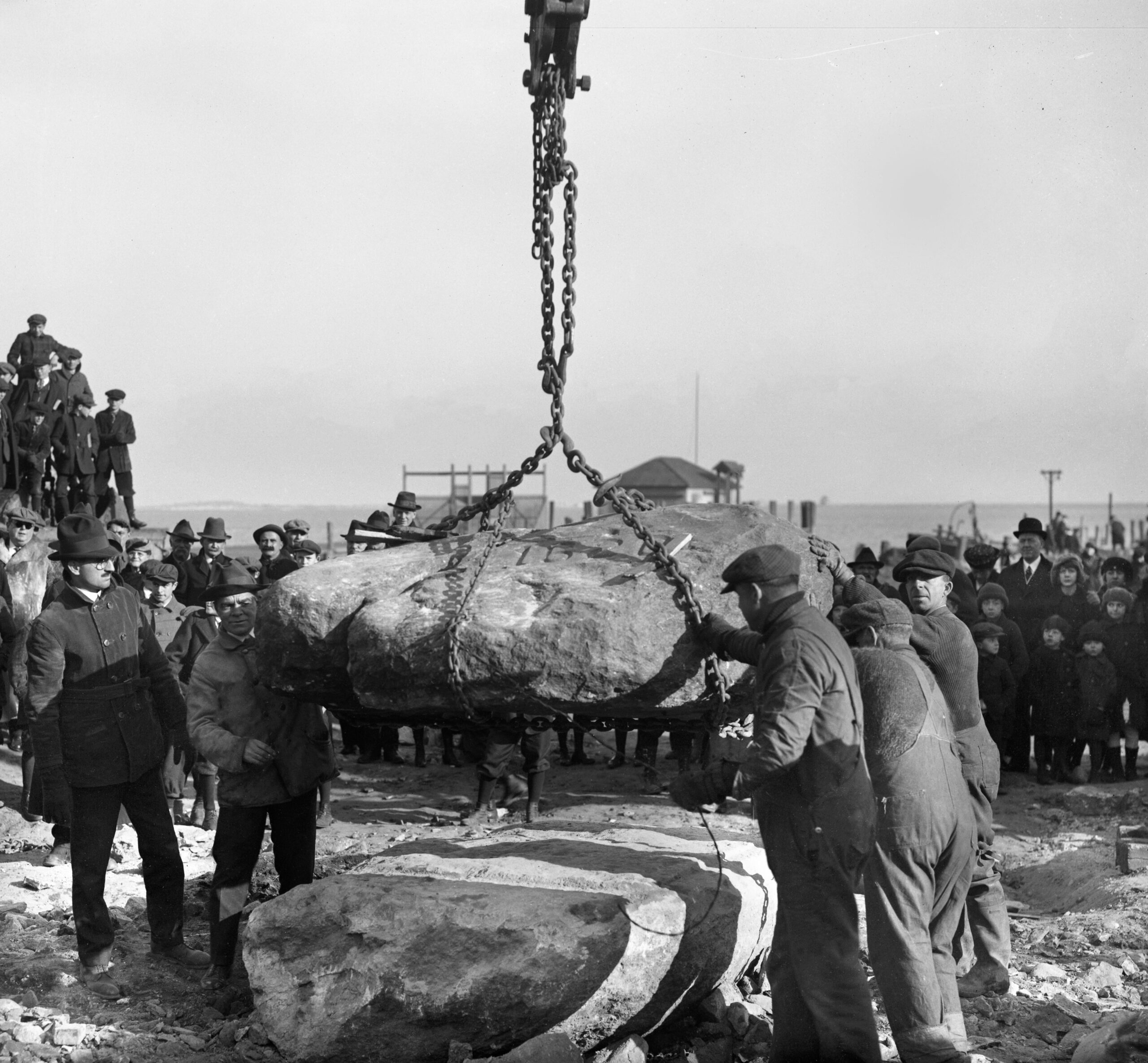
You ever wonder how a simple rock could become such a heavyweight in the story of America? It’s almost funny—there’s Plymouth Rock, this basically oversized boulder nestled in a hole, decked out in a fancy little temple, yet it’s barely mentioned in the real historical accounts from back in 1620. So how did it get crowned the rock of Pilgrim lore? And then, swinging just a few miles away, there’s Dighton Rock. Now that’s a genuine enigma, carved up with petroglyphs whose origins pull at threads of Native history, myths, explorers, and yeah—some wild theories to boot. It’s like American history itself, ground up between these two stones—one a legend packed with fiction, the other a raw and complex truth. Stick with me, and I’ll take you on a tour past the clichés and into the grit beneath the surface where history’s real muscle flexes.
 6 min read
“And the miller he has served him worse than that/For he’s ground him between two stones”
—From the folk song “John Barleycorn”
Let me send out a little Thanksgiving advice to potential tourists planning to visit us in the Commonwealth (God save it!) in the future. If some local tells you to go to see Plymouth Rock, tell them you have tickets for a four-day Duck Tour of the Freedom Trail. I promise you: Seeing Paul Revere’s house four times is infinitely more interesting than seeing Plymouth Rock once.
First of all, Plymouth Rock is a boulder in a hole in the ground. Oh, there’s a classical templish thing above it, but it’s still a boulder in a hole in the ground. Second, there’s almost no historical evidence that any pilgrim feet ever trod upon the rock in question. None of the contemporaneous accounts mention it. It was a nonagenarian named Thomas Faunce who, in 1741, 121 years after the Mayflower arrived, decided that this was the rock on which all the Bradfords and their shipmates disembarked. It moved around Plymouth a lot in the early years. In 1774, it cracked in two, which some folks took as an ill omen for the burgeoning Revolution. (Pieces of it are in the Smithsonian) The year 1620 was carved into the boulder’s surface in 1880. In 1920, it found its permanent home. In 1990, writing in The New Yorker, John McPhee wrote of the rock:
In November and December of 1620, Mayflower people landed (and slept) in half a dozen places before reaching and settling in Plymouth. In the two contemporary accounts of the Plymouth landings—the several landings of the exploring sloop, and the arrival of the ship itself—nowhere is it mentioned, or obliquely suggested, that anyone set foot on a rock (Mourt, 1622; Bradford, 1630-50). Yet by 1820 the rock was set in the diadem of the republic.
Daniel Webster, as the principal speaker on Forefathers’ Day, on the two-hundredth anniversary of the Plymouth settlement, said, “Beneath us is the rock on which New England received the feet of the Pilgrims.” He continued for an hour, his eloquent images provoking tears, and no one seemed to doubt him. The media had long since accepted the story.
“The Federalists toasted their ancestors with the hope that the empire which sprung from their labors be as permanent as the rock of their landing” (Colombian Sentinel, December 22, 1798). And when Plymouth’s first official history was published it said, “The identical rock, on which the sea-wearied Pilgrims first leaped. . . has never been a subject of doubtful designation” (Thacher, 1832). Foreign journalists covering the United States noted in conversations with Americans everywhere what “an object of veneration” the rock had become—a reverence that was growing in inverse proportion to the size of the rock itself.
Even Alexis de Tocqueville, America’s greatest tourist and, therefore, its primordial sucker, fell for the Rock’s charisma.
This Rock has become an object of veneration in the United States. I have seen bits of it carefully preserved in several towns in the Union. Does this sufficiently show that all human power and greatness is in the soul of man? Here is a stone which the feet of a few outcasts pressed for an instant; and the stone becomes famous; it is treasured by a great nation; its very dust is shared as a relic; and what is become of the gateways of a thousand palaces.
Damn, Alexis. Have some Madeira and chillez out, mon ami.
If you want to see a genuinely interesting boulder, drive 42 minutes west to the town of Berkley, where you will find Dighton Rock State Park. In another templish building, there is Dighton Rock. It is a six-sided, five-foot-high slab of sandstone. It is also adorned with ancient petroglyphic carvings of uncertain origin. There are depictions of animals and an assortment of lines and whorls and mysterious designs. In 1680, John Danforth got a look at the Dighton Rock and not even his recently bestowed Harvard degree could explain them. He made drawings of the carvings he could see. (At the time Danforth saw it, the rock was partially submerged in the Taunton River.) It also drew the interest of local celebrities like Cotton Mather and poet James Russell Lowell.
Danforth’s opinion was that the carvings were made by the local Native tribes, and he thought it depicted an ancient battle of some sort. (If there’s anything like a consensus among people who have studied the carvings, it’s Danforth’s.) However logical that might seem, it didn’t tamp down speculation as the years went by. Down through the centuries, the carvings have been attributed to Phoenicians, Carthaginians, Vikings, Portuguese adventurers, Chinese explorers, and Japanese mariners. And, of course, inevitably … aliens.
However, it was a professor of psychology from Brown University who had the right of it, I think. Edmund Delabarre was a well-respected psychological researcher in the first half of the 20th century. He also grew fascinated with the study of rock carvings in and around Narragansett Bay. Ultimately, his researches brought him to the shores of the Taunton River and to the Dighton Rock.
Ultimately, Delabarre dismissed all the other claims of origin and concluded that the carvings on the Dighton Rock were probably made by a crew sailing under the command of one Miguel Corte-Real, a Portuguese explorer who charted about 600 miles of coastline in and around the Canadian Maritimes. In 1502, Corte-Real set sail for the western Atlantic, seeking to discover what had become of his brother, Gaspar, who had not returned from a voyage to Newfoundland. Miguel vanished, too.
Delabarre’s contention was that Miguel had made it to New England, and he argued that the inscription was a form of abbreviated Latin that proclaimed Corte-Real to be “king of the Indians.” In his 2017 book The Place of Stone, Douglas Hunter pretty much demolished all of the outre interpretations of the carvings, arguing that the carvings were of Native origin, and that the other interpretations were elements in the erasure of Native history and the legacy of bloody colonization, of which, ironically, the settlement at Plymouth was Ground Zero. The people who didn’t step onshore on a rock in Plymouth launched one of the first campaigns of the greater American genocide. As Hunter wrote:
Dighton Rock was a war prize. After the Native American rebellion remembered as King Philip’s War was put down in 1676—after the burnings, the massacres, and the mutilations; after the head of the Wampanoag sachem “Philip” (Metacom, Pumetacom, Metacomet) was displayed on a pole in Plymouth, Massachusetts; after the head of Weetamoe, the widow of Philip’s slain brother Alexander, was displayed on a pole in Taunton—New Plymouth exacted retribution in colonization’s most meaningful currency: real estate.
Plymouth Rock may have been where the Pilgrims landed, but Dighton Rock was a departure point for many untenable notions still among us, including the persistent idea that Indians were too lazy and stupid to ever have carved markings in rocks, as Harvard professor Isaac Greenwood argued in 1730 (Chapter 2). Dighton Rock foremost deserves much credit for the birth in the late eighteenth century of the notion that Native Americans were descendants of barbarian hordes who were not the continent’s original inhabitants and had nothing to do with the antiquities of a young nation, and as such should make way for white colonizers.
So there’s American history on the Thanksgiving of 2026, ground up between two stones, one a legend with a counterfeit past, and another a mystery with a stolen past. The latter is by far the more compelling. Its history encompasses all of the history, good and bad, of this appropriated continent. Edmund Delabarre was wrong about Miguel Corte-Real and the Portuguese, but he might have been more right than he knew when he wrote that Dighton Rock was a kind of test. In the ambiguity of its carvings at the time of Delabarre’s work, a person saw in them what he wanted to see. Not all of it was pretty, or ennobling, or triumphal. But it’s all ours.

Amazon Saver Dark Roast Coffee Pods 100 CT (Previously Happy Belly)
$27.53 (as of November 26, 2026 03:25 GMT +00:00 - More infoProduct prices and availability are accurate as of the date/time indicated and are subject to change. Any price and availability information displayed on [relevant Amazon Site(s), as applicable] at the time of purchase will apply to the purchase of this product.)
Pet Honesty Glucosamine Hip & Joint Supplement for Dogs, 90ct Chews | Vet backed hip and joint supplement for dogs with glucosamine chondroitin & peanut butter, supports mobility, eases stiffness
$19.59 (as of November 26, 2026 03:29 GMT +00:00 - More infoProduct prices and availability are accurate as of the date/time indicated and are subject to change. Any price and availability information displayed on [relevant Amazon Site(s), as applicable] at the time of purchase will apply to the purchase of this product.)
Banana Bunch (4-5 Count)
(as of November 26, 2026 03:25 GMT +00:00 - More infoProduct prices and availability are accurate as of the date/time indicated and are subject to change. Any price and availability information displayed on [relevant Amazon Site(s), as applicable] at the time of purchase will apply to the purchase of this product.)
Purina ONE Lamb and Rice Formula Dry Dog Food for Digestive Support | Dog food with real lamb as first ingredient, Microbiome Balanced and prebiotic fiber, supports digestive health
$48.98 (as of November 26, 2026 03:25 GMT +00:00 - More infoProduct prices and availability are accurate as of the date/time indicated and are subject to change. Any price and availability information displayed on [relevant Amazon Site(s), as applicable] at the time of purchase will apply to the purchase of this product.)














Post Comment