
How Rugby’s Quiet Revolution Is Poised to Explode — And What It Means for Investors Ready to Win Big
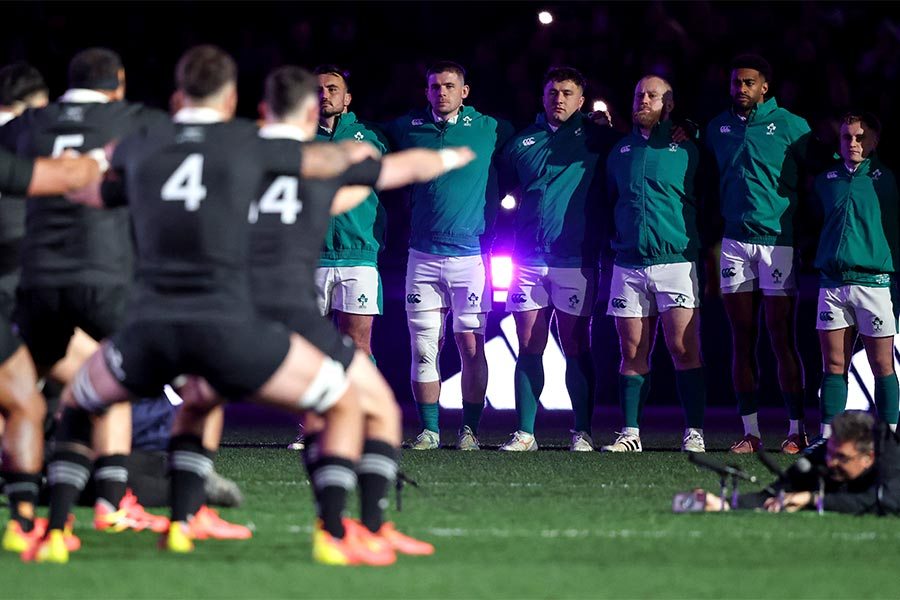
Ah, the age-old showdown: Ireland versus New Zealand in rugby — a clash so steeped in tradition, drama, and sheer passion that explaining the stakes feels almost like overkill. The Aviva Stadium buzzes, the TV ratings spike, and fans around the globe lean in, knowing this isn’t just any game. Yet here’s the twist: in today’s high-stakes sports business, raw emotion alone doesn’t cut it anymore. We’re talking about turning legendary matchups into a year-round, commercially savvy spectacle — enter the Nations Championship. Launched in 2026, this league isn’t just reshuffling fixtures; it’s crafting a narrative that hooks fans beyond the final whistle and pulls in broadcasters and sponsors with stories worth tuning in for. Clever? Absolutely — and most of these blockbuster games were already on the calendar; now, their significance is dialed up a notch, layering consequence and drama onto every tackle and try. But here’s the kicker — as rugby’s calendar evolves, can this new format boost the sport’s global footprint without losing the magic that made those classic clashes so special? For Ireland, the scorecard won’t just be measured in points but in the bottom line, audience engagement, and the growth of the game at every level. Intrigued yet? This is where tradition meets transformation — and the game’s future hangs in the balance. LEARN MORE
There is something wonderfully uncomplicated about Ireland playing New Zealand at rugby. The history, the rivalry and the anticipation are enough to fill Aviva Stadium and attract a television audience without needing to explain what is at stake, writes Rob Hartnett.
Yet sport has become an increasingly sophisticated business, and the emotional pull of individual occasions is no longer considered sufficient when there is an opportunity to build something bigger around them.
That is the thinking behind the Nations Championship, introduced in 2026 to transform rugby’s summer tours and November internationals into a competition with a league table, a destination, and, importantly, a commercial proposition extending across the international calendar.
Advocates argue it represents an opportunity to generate greater value from an asset that was already performing well.
The format brings together the six European nations of Ireland, England, France, Scotland, Wales and Italy with New Zealand, South Africa, Australia, Argentina, Japan and Fiji. Each team plays six matches across July and November before a Finals Weekend in London, where the northern and southern hemispheres meet in ranking-based fixtures to decide the winner.
The smart thing, commercially at least, is that most of these matches would have happened anyway.
Ireland travelling to face New Zealand or welcoming South Africa to Dublin has never been a difficult proposition to sell to rugby fans. What changes is that each encounter now contributes to a broader storyline, with results carrying consequences beyond the final whistle and providing broadcasters and sponsors with greater continuity and narrative.
The premium is no longer attached exclusively to the event itself, but also to the conversation that surrounds it, the anticipation beforehand and the analysis afterwards.
For rugby, whose calendar has historically been split between competitions and standalone fixtures, the Nations Championship favours the former, much as the UEFA Nations League has eradicated meaningless friendlies in international football.
The broadcast arrangements reflect that ambition, with Virgin Media Television securing Irish free-to-air rights across the 2026 and 2028 tournaments and ITV doing likewise in Britain.
Maintaining free-to-air coverage in Ireland is particularly important. The commercial value of rugby is built not simply on the number of people prepared to pay to watch, but also on its place in the national consciousness.
That broad visibility underpins sponsorship, participation and the premium corporate relationships that have made the IRFU one of Irish sport’s strongest commercial organisations.
November internationals have long been central to the union’s financial model, combining substantial ticket revenues with premium hospitality, sponsorship activation and commercial partnerships.
Adding tournament consequences creates new opportunities to tell stories around matches, keeping supporters engaged beyond the traditional build-up and matchday itself.
One of rugby’s great traditions has been the touring experience, where a series of matches could develop its own character and coaches had some flexibility to experiment. Turning every international into a competitive fixture inevitably increases pressure, while the additional Finals Weekend adds to an already demanding calendar.
The question remains whether a competition involving 12 established nations can genuinely help rugby grow beyond its traditional markets. The financial attraction of concentrating the biggest fixtures among the strongest countries is obvious, but the long-term ambition must include meaningful opportunities for emerging nations.
For Ireland, success will ultimately be measured both on the field and in the accounts.
The Nations Championship will not automatically deliver a transformational increase in IRFU revenue.
The real opportunity lies in growing the total value of the international game and ensuring that Irish rugby benefits from the greater audience engagement, stronger partnerships and enhanced global profile that follow.
That is a worthwhile ambition at a time when the costs of sustaining professional rugby continue to rise.

The Guinness Six Nations remains the sport’s great annual commercial engine in this part of the world, and the Rugby World Cup its global showcase. The Nations Championship now offers something between them, giving greater shape to the international season without demanding a wholesale reinvention of the fixtures.
Purists insist that Ireland against New Zealand never needed a league table to matter. But if that table persuades more people to watch the next match, gives sponsors a more compelling story and ultimately helps fund the game from grassroots to green jersey, it will have earned its place.
Rob Hartnett is the founder of Sport for Business, a publishing, events and networking business at the heart of the commercial world

OURA Ring 5 Sizing Kit - Size Before You Buy | Unique Sizing, Not Standard Ring Sizing - Receive Amazon Credit for Oura Ring 5 Purchase
$10.00 (as of November 29, 2026 03:29 GMT +00:00 - More infoProduct prices and availability are accurate as of the date/time indicated and are subject to change. Any price and availability information displayed on [relevant Amazon Site(s), as applicable] at the time of purchase will apply to the purchase of this product.)
Amazon Kids Tablet 8 (newest model), Ages 3-5, Includes 1-year of Kids+ with early-learning books, apps and videos about letters, numbers, shapes and colors, and Mystic Mountain soft bumper
$129.99 (as of November 29, 2026 03:39 GMT +00:00 - More infoProduct prices and availability are accurate as of the date/time indicated and are subject to change. Any price and availability information displayed on [relevant Amazon Site(s), as applicable] at the time of purchase will apply to the purchase of this product.)
blink plus plan with monthly auto-renewal
$11.99 (as of November 29, 2026 03:29 GMT +00:00 - More infoProduct prices and availability are accurate as of the date/time indicated and are subject to change. Any price and availability information displayed on [relevant Amazon Site(s), as applicable] at the time of purchase will apply to the purchase of this product.)
Interactive Pet Projector Toy for Dogs and Cats, USB Powered Floor Light | Paw-Shaped Design with Selectable Projection Patterns for Indoor Entertainment During Supervised Play
$25.99 (as of November 29, 2026 03:29 GMT +00:00 - More infoProduct prices and availability are accurate as of the date/time indicated and are subject to change. Any price and availability information displayed on [relevant Amazon Site(s), as applicable] at the time of purchase will apply to the purchase of this product.)














Post Comment