A Sneaky New COVID Variant Is on the Rise—Here’s What It Means for Your Health and How to Stay Ahead

Ever get that feeling déjà vu mixed with a plot twist in a virus thriller? Just when you thought COVID was settling into a quieter season, here comes BA.3.2 – aka “Cicada” – strutting back onto the scene like it’s making a grand encore after years underground. This isn’t your run-of-the-mill mutation; Cicada’s packed with over 70 changes in its spike protein, the very key it uses to sneak past your immune defenses. So, should you be rolling out the red carpet or ducking for cover? The CDC’s recent Morbidity and Mortality Weekly Report shines a spotlight on this mysterious strain spotted in 23 countries and in the wastewater of 25 U.S. states, hinting it might just rewrite the playbook on immunity. I chatted with top infectious disease experts to cut through the noise and give you the real scoop on what this means for your health and those booster shots. Ready to dive deeper? LEARN MORE
 3 min read
It’s normal for COVID-19 strains to mutate over time—that’s just what viruses do. But there’s a new strain of COVID-19 floating around out there that’s suddenly getting a lot of attention thanks to just how much it has mutated.
It’s called BA.3.2, nicknamed “Cicada,” and it was the subject of a recent Morbidity and Mortality Weekly Report (MMWR) from the Centers for Disease Control and Prevention (CDC). According to the report, Cicada has been detected in 23 countries and in up to 132 wastewater samples from 25 U.S. states.
But while COVID-19 strains have been simmering across the country, this one seems to be a little different. “Monitoring the spread of BA.3.2 provides valuable information about the potential for this new SARS-CoV-2 lineage to evade immunity from a previous infection or vaccination,” the MMWR states.
So, what does this mean for you? We tapped two infectious disease physicians for more.
Meet the experts: Thomas Russo, MD, professor and chief of Infectious Disease at the University at Buffalo in New York, and William Schaffner, MD, an Infectious Disease specialist and professor at the Vanderbilt University School of Medicine.
What is the Cicada COVID variant?
The Cicada COVID variant is a descendant from Omicron, a highly infectious strain that first emerged and took over COVID cases in 2021. This particular strain was dubbed “Cicada” by T. Ryan Gregory, PhD, a professor of evolutionary biology at the University of Guelph, because, like its namesake, it’s “been underground for years.”
Gregory specifically noted on X that Cicada’s ancestor BA.3 hasn’t been circulating since early 2022, meaning that BA.3 (which Cicada originated from) basically went dormant then. Now, the slightly tweaked version known as Cicada (BA.3.2) is back.
How worried should you be about this?
While Cicada isn’t the dominant strain in the US so far, it’s raising eyebrows for another reason. This COVID variant has more than 70 substitutions in its spike protein, a structure on the surface of the virus that it uses to latch onto your cells and infect you.
“It’s a substantial mutation,” says William Schaffner, MD, an infectious disease specialist and professor at the Vanderbilt University School of Medicine. “This is a more distant cousin to other Omicron variants that are out there.”
Because Cicada has morphed so much from other Omicron strains, Dr. Schaffner says your existing immunity will likely only get you so far. “It appears to be reasonably contagious but, according to the early information, it appears not to be more serious,” he says.
Do current vaccines protect against it?
The current vaccines target the Omicron lineage, but that was a lot of mutations ago. Still, the vaccine is likely to help on some level, according to Thomas Russo, MD, professor and chief of Infectious Disease at the University at Buffalo in New York.
“Prior immunity from vaccination and infection will likely provide some protection, but probably an increased proportion of people are at risk of getting infected,” he says.
Cicada variant symptoms
The Cicada variant’s symptoms seem to line up with other strains of the virus, according to Schaffner. According to the CDC, those include:
· Fever or chills
· Cough
· Shortness of breath or difficulty breathing
· Sore throat
· Congestion or runny nose
· New loss of taste or smell
· Fatigue
· Muscle or body aches
· Headache
· Nausea or vomiting
· Diarrhea
What to do if you test positive
If you test positive for COVID-19, the CDC recommends doing what you can to lower the risk of spreading the virus to others, like staying home and away from others when you have symptoms. Dr. Schaffner agrees. “If you get sick, don’t go to work or school. Wait until you get better,” he says. And, if you have to be around others, wearing a mask can help lower the risk of spreading the virus to others, per the CDC.
If you’re at risk for severe illness, Dr. Schaffner suggests reaching out to a healthcare provider about taking an antiviral medication to reduce the odds you’ll develop complications.
“I think in general, we haven’t been talking about COVID and people have put it in the rearview mirror, but it remains a potentially lethal disease—more lethal than influenza,” says Russo. “People shouldn’t panic about this, but should be cognizant that COVID is still out there and that, depending on your risk, it can have significant consequences. Vaccination is the best way to protect yourself.”
Korin Miller is a freelance writer specializing in general wellness, sexual health and relationships, and lifestyle trends, with work appearing in Men’s Health, Women’s Health, Self, Glamour, and more. She has a master’s degree from American University, lives by the beach, and hopes to own a teacup pig and taco truck one day.

DoHonest Baby Car Camera HD 1080P - Rear-Facing Car Baby Monitor with Night Vision, Adjustable View Angle, Easy Setup, Anti-Glare Display, Safety for Kids & Infants
$29.98 (as of April 7, 2026 02:31 GMT +00:00 - More infoProduct prices and availability are accurate as of the date/time indicated and are subject to change. Any price and availability information displayed on [relevant Amazon Site(s), as applicable] at the time of purchase will apply to the purchase of this product.)
PUR Gum | Aspartame Free Chewing Gum | 100% Xylitol | Natural Spearmint Flavored Gum, 55 Pieces (Pack of 1)
$4.50 (as of April 7, 2026 02:21 GMT +00:00 - More infoProduct prices and availability are accurate as of the date/time indicated and are subject to change. Any price and availability information displayed on [relevant Amazon Site(s), as applicable] at the time of purchase will apply to the purchase of this product.)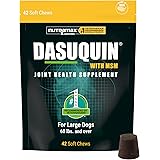
Nutramax Dasuquin for Large Dogs, Joint Health Supplement, Contains Glucosamine for Dogs, Plus Chondroitin, ASU, MSM and More, Supports Healthy Joints, Soft Chews, 42 Count
$34.99 (as of April 7, 2026 02:21 GMT +00:00 - More infoProduct prices and availability are accurate as of the date/time indicated and are subject to change. Any price and availability information displayed on [relevant Amazon Site(s), as applicable] at the time of purchase will apply to the purchase of this product.)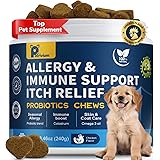
Dogs Allergy & Itch Relief Chews, Dog Probiotics for Skin & Immune Support Helps Relieve Itchy Skin & Ear, Dog Allergy Supplement for Paw Licking, Itching Skin Relief with Colostrum, Fish Oil (Brown)
$21.95 (as of April 7, 2026 02:21 GMT +00:00 - More infoProduct prices and availability are accurate as of the date/time indicated and are subject to change. Any price and availability information displayed on [relevant Amazon Site(s), as applicable] at the time of purchase will apply to the purchase of this product.)













Post Comment